
Baby safe window treatments: Style and safety in UK homes

Baby safe window treatments
TL;DR:
- Choosing modern, cordless, or motorised window treatments ensures UK families can enjoy stylish designs without child safety hazards. Regularly inspecting and correctly installing safety devices on older blinds prevents dangerous loops and entanglement risks. Bespoke shutters provide a cord-free, aesthetically pleasing, and permanently safe solution for children’s rooms and entire homes.
Choosing window treatments for a home with babies or young children feels, on the surface, like a simple matter of taste. Yet many parents select blinds and curtains purely for their look, unaware that the same products can harbour very real hazards for curious little hands and necks. The good news is that modern solutions have changed the picture entirely, offering genuinely safe options that are just as beautiful as anything you would find in a design catalogue. This guide walks you through what to watch for, which features matter most, and how bespoke, made-to-measure window treatments can give UK families both peace of mind and a home they are proud of.
Table of Contents
- Why window treatments matter for baby safety
- What to look for: Features of baby safe window treatments
- Arranging your child’s room: Practical layout for window safety
- Retrofitting and maintaining existing blinds: Making older homes safer
- Bespoke and made-to-measure: Getting child-safe style and function
- What most people miss about baby safe window treatments
- Explore bespoke baby safe solutions with Shutter World
- Frequently asked questions
Key Takeaways
| Point | Details |
|---|---|
| Go cordless for safety | Cordless, tensioned and motorised window treatments remove the main risks to babies and toddlers. |
| Furniture layout matters | Keep all cots, beds, and climbing furniture well away from windows and blinds to prevent accidents. |
| Upgrade older blinds | Retrofit safety devices to all pre-2014 blinds and check every cord or chain is out of reach. |
| Specify safety with bespoke | When commissioning custom solutions, insist on safe mechanisms and full device fitting. |
| Stay vigilant | Regularly inspect all window treatments, including for hidden cords, to keep your child’s environment secure. |
Why window treatments matter for baby safety
Window treatments are rarely the first thing parents think about when baby-proofing a home. Yet they are one of the most persistent, and overlooked, hazards in British family homes. Loose blind cords and chains can form loops at child height, creating a strangulation risk for babies, toddlers, and young children who are naturally drawn to anything they can reach and pull.
The risk is not trivial. Incidents involving blind cords continue to be recorded across UK homes every year, and many involve children under five. The stark reality is that a blind hanging in a living room or bedroom can look perfectly harmless while quietly presenting a serious danger.
“Cordless or ‘safe by design’ systems are generally the safest option because they remove loose operating cords and chains from reach entirely.”
Older blinds are a particular concern. Pre-2014 blinds may not meet current UK safety requirements, as products made before February 2014 can feature loop-forming cords or chains that pose an elevated risk. If you have older window treatments in your home, they need an urgent safety review, not a gradual one.
The encouraging counterpoint is that modern, ‘safe by design’ innovations have effectively engineered these risks out of the equation. Cordless operation, wand controls, and motorised systems mean families no longer have to choose between a stylish window and a safe one. Explore the kids safe window shutter tips we have compiled to see how shutters in particular offer a timeless solution.
Key risks posed by traditional window treatments include:
- Loose cords or chains forming accessible loops at child height
- Long, dangling pull cords that can entangle toddlers during play or sleep
- Looped continuous chains on roller or Venetian blinds, which can tighten under minimal weight
- Improperly tensioned inner cords within Roman or pleated blinds that are invisible from the front but still hazardous
- Unsecured cord ends that have worked free from cord tidies or cleats over time
Reviewing your child-friendly window treatments is one of the most important steps you can take before or shortly after a baby arrives. Even if your blinds appear modern and smart, age and wear may have compromised their original safety features.
What to look for: Features of baby safe window treatments
With the risks clear, knowing which features to insist upon makes your search far more focused and confident. Not all products labelled as ‘safe’ offer equivalent protection, so understanding the specifics helps you make an informed decision.
The most important features to prioritise are as follows:
- Cordless operation. This is the gold standard. Cordless blinds and shutters have no exposed operating cord or chain, eliminating the primary strangulation risk at source. Push-fit or spring-loaded cordless systems are widely available and just as easy to operate as traditional blinds.
- Wand or rod operation. A rigid wand used to tilt or adjust louvres is a safe alternative to a cord because it cannot form a loop. Wands are particularly common on Venetian and vertical blinds.
- Motorised operation. Remote-controlled or smart-home-integrated motorised blinds and shutters remove any physical cord from the equation. They are also ideal for hard-to-reach windows.
- Safety devices for any remaining cords. Where operating cords or chains are unavoidable, compliant safety devices include cord tidies, P-clips, tensioners, cleats, and breakaway connectors. All should be fitted correctly and checked regularly.
- Appropriate warning labels and fitting instructions. Any compliant product should carry clearly visible warning labels, particularly on products intended for use in rooms where children are present.
“Cordless or ‘safe by design’ systems are the safest option because they remove loose operating cords and chains from reach.”
| Feature | Safety level | Ease of use | Suitable for nurseries |
|---|---|---|---|
| Cordless (spring/push-fit) | Very high | High | Yes |
| Motorised / smart | Very high | Very high | Yes |
| Wand / rod operated | High | High | Yes |
| Corded with cleat and tidy | Moderate | High | Only if devices are correctly fitted |
| Corded without safety devices | Low | High | No |
Pro Tip: When visiting a showroom or reviewing a supplier’s catalogue, ask specifically whether the product is tested to BS EN 13120, the European standard for internal blinds. Compliant products should carry this certification and be accompanied by clear safety guidance for households with children.
Our guide on shutters and child safety explains how purpose-built interior shutters sidestep cord hazards entirely by design, making them one of the most naturally safe choices available to UK parents. If you are uncertain about what current UK rules require, reviewing the applicable window shutter regulations is a sensible starting point before you commission anything new.
Arranging your child’s room: Practical layout for window safety
Product choice is only half the story. Even a perfectly safe, cordless blind can become part of a dangerous situation if the furniture arrangement in your child’s room creates unexpected access points.
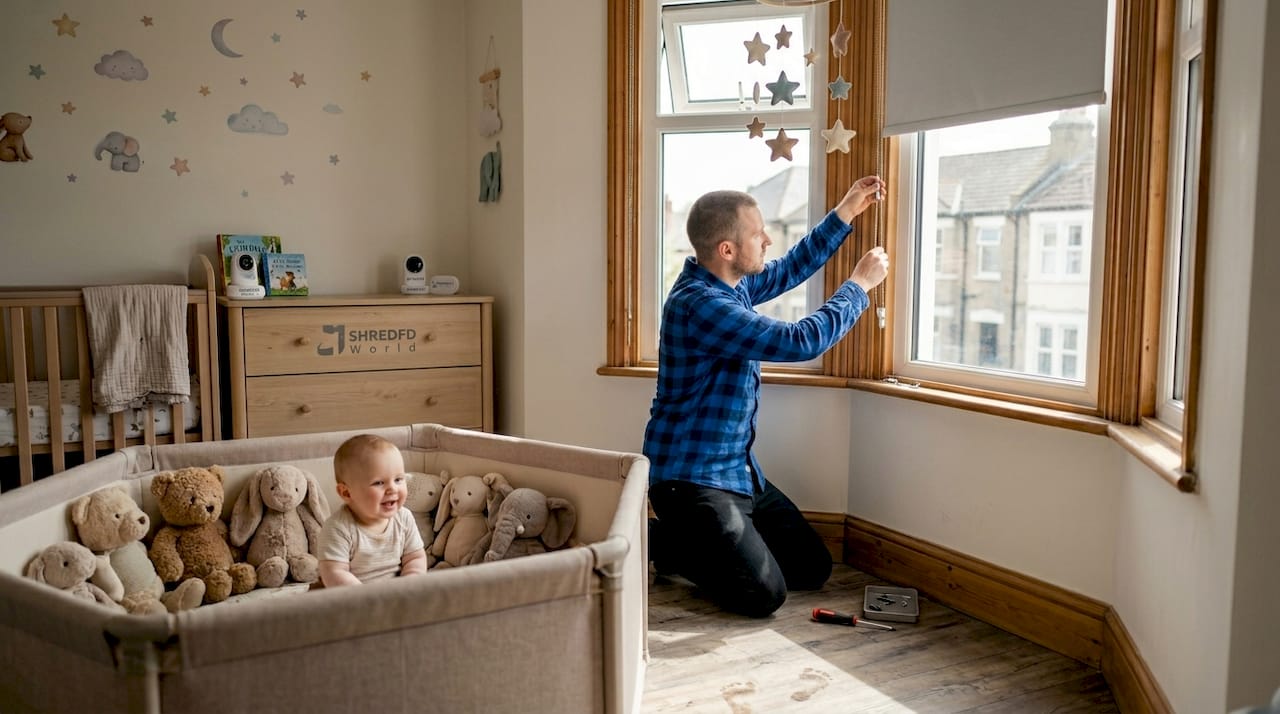
Furniture placement matters significantly: you should never position cots, beds, high chairs, playpens, or climbing furniture near windows or blinds where any cord, however short, could be reached by a curious child. This rule applies even when you believe cords are secured out of reach, because children climb, pull furniture, and find angles that adults never anticipate.
Practical steps to make any room layout safer:
- Move cots and beds at least one metre away from any window edge, ensuring no part of the bedding or frame is near a blind cord
- Remove step stools, toy boxes, or soft furnishings that could serve as a climbing platform within reach of a window
- Check the room from a child’s eye level, literally crouching down and looking up, to identify any cords or chains that appear accessible from unexpected positions
- Fit cord cleats at a minimum height of 1.5 metres and ensure cords are wound fully around the cleat rather than loosely looped
- Review the room layout regularly as your child grows, because a toddler’s reach extends quickly and what was safe for a six-month-old may not be safe for an eighteen-month-old
Pro Tip: A useful analogy is to treat window cords the same way you treat electrical cables. You would not leave a live cable trailing across a child’s play area; give window cords the same level of vigilance and deliberate placement.
Complementing these physical adjustments with good air quality in the nursery is also worth considering. Nursery air purification advice from sleep and childcare specialists offers helpful guidance on creating a healthy sleep environment alongside a safe one.
Retrofitting and maintaining existing blinds: Making older homes safer
If your home already has blinds installed, you are not necessarily faced with the cost of a full replacement to achieve an adequate level of safety. However, you do need to approach this methodically and honestly.
“Older blinds, particularly those installed before February 2014, may have loop-forming cords or chains and may not meet current UK safety requirements. They should be checked urgently.”
Here is a step-by-step approach to auditing and upgrading existing blinds:
- Identify the installation date. Check any product labels or previous purchase records. If you cannot confirm the blind was manufactured after February 2014, treat it as non-compliant until proven otherwise.
- Inspect every operating cord and chain. Pull each one gently to its full length and check whether a loop can form at any point. Loop-forming cords are high priority hazards.
- Check existing safety devices. Are cleats, cord tidies, and tensioners present, properly fitted, and still functioning? Devices that have come loose or been removed offer no protection.
- Install compliant safety devices where missing. Required devices include cord tidies, P-clips, breakaway connectors, cleats, and chain tensioners. These are available from reputable home improvement suppliers at modest cost.
- Consider replacement for the highest-risk rooms. Nurseries, children’s bedrooms, and playrooms warrant the most stringent approach. If an older blind cannot be reliably upgraded, replacing it with a cordless or shutter alternative is the right decision.
| Option | Cost | Safety outcome | Style impact |
|---|---|---|---|
| Retrofit safety devices to existing blind | Low | Moderate improvement | No change |
| Replace with modern corded blind plus devices | Moderate | Good | Updated look |
| Replace with cordless blind | Moderate to high | Very high | Updated look |
| Replace with bespoke interior shutters | Higher | Highest | Significant upgrade |
Reviewing the applicable UK window covering regulations will help you understand exactly what standard your retrofitted or replacement product needs to meet before you consider the work complete.
Bespoke and made-to-measure: Getting child-safe style and function
For parents who want a window treatment that is both visually outstanding and comprehensively safe, bespoke and made-to-measure solutions offer the most satisfying answer. The key is knowing what to specify and what questions to ask your supplier before you commit.
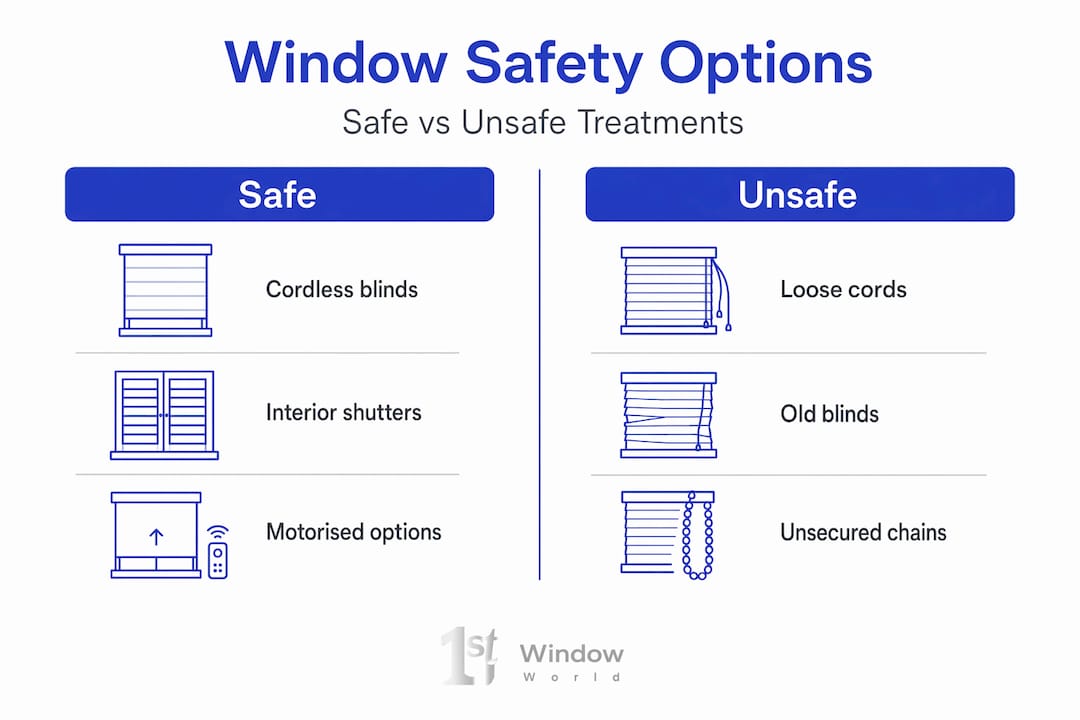
When commissioning any made-to-measure treatment, you should specify operation type and confirm whether the installation will be cordless, wand-operated, or motorised. If any operating cords or chains remain, confirm in writing that your supplier will fit all required safety devices and provide the appropriate installation documentation.
Points to cover when briefing a bespoke supplier:
- Operation mechanism: Insist on cordless, wand, or motorised operation wherever the room will be used by children
- Hidden and internal cords: Ask specifically about any internal lift cords within Roman, pleated, or cellular blind designs, as these can form loops inside the blind that are not visible from the front
- Safety device inclusion: Confirm that all required cleats, tensioners, and breakaway connectors are included in the installation, not offered as optional extras
- UK standards compliance: Ask which safety standards the product is tested to and request documentation
- Aftercare and adjustment: Ensure your installer explains how to maintain and re-secure safety devices over time
Interior shutters are a particularly strong choice for families because their louvre-based operation requires no cords at all. Our bespoke shutter blinds range is engineered to meet the needs of households where design and child safety must work together, not against each other. With precision-fitted panels and smooth tilt rods, they deliver exceptional light control and privacy while removing cord hazards entirely from your window recess.
What most people miss about baby safe window treatments
Here is a perspective we feel strongly about, and one that conventional advice tends to skip over entirely. Many parents and caregivers assume that once they have purchased a product labelled as compliant or ‘safe by design,’ their job is done. It is not.
Even products that are genuinely compliant at the point of sale can develop hazards over time. Safety devices work loose. Breakaway connectors degrade. Cords that were correctly wound around a cleat in November may have been tugged free by spring. A child who could not reach a cord at twelve months old can absolutely reach it at two years old, especially if a new piece of furniture has appeared nearby.
The Window Covering Safety Council highlights a particularly important edge case: inner and hidden cords within premium or bespoke blinds can create hazards that are invisible during a quick visual inspection. A thorough safety check must include every operating mechanism, not just the visible pull cord at the front of the blind.
We have also noticed, across many years of working with UK families, that parents tend to be most vigilant when a baby first arrives and then gradually relax their attention as life becomes busy. The period between ages one and three is actually when window cord accidents are most likely, because toddlers are mobile, strong, and endlessly curious. True child safety shutter insights point consistently to the same conclusion: safe design is not a one-off purchase decision. It is an ongoing commitment to regular checks, thoughtful room layout reviews, and a willingness to upgrade when a product is no longer performing its protective role.
Choosing shutters over blinds removes a significant portion of this ongoing vigilance requirement by eliminating the cord entirely. But even with shutters, periodic checks of fixings, panels, and louvre mechanisms remain a sensible habit.
Explore bespoke baby safe solutions with Shutter World
Families deserve window treatments that never ask them to compromise between a beautiful home and a safe one. At Shutter World, we design and install bespoke shutters precisely for homes where quality, style, and child safety must all be present in equal measure.
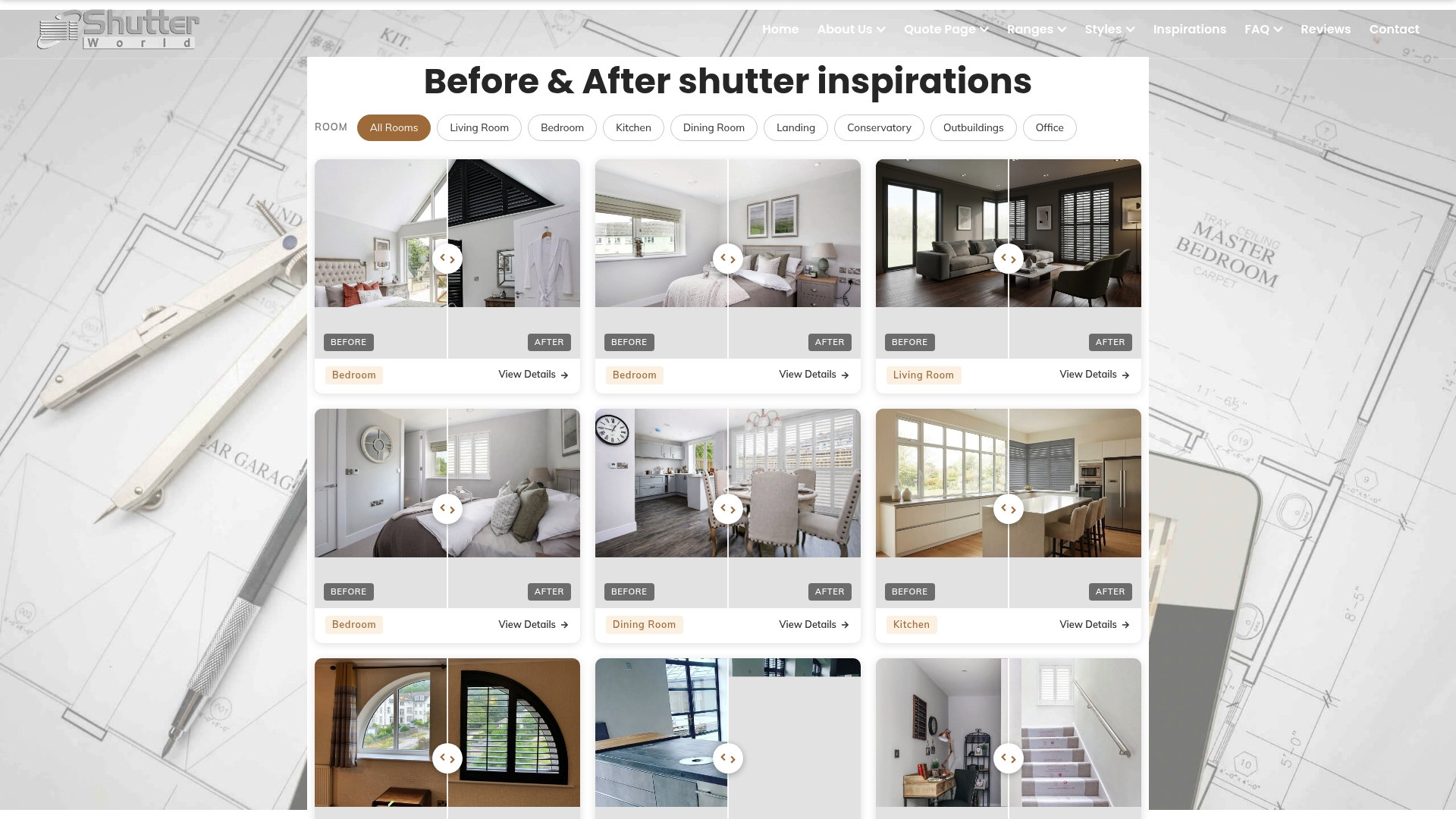
Our tailored internal shutters are cord-free by design, professionally surveyed and installed, and backed by decades of craftsmanship expertise. Whether you need a solution for a nursery, a playroom, or every window in your home, our made-to-measure shutters are engineered to fit perfectly and perform beautifully for years to come. Book your free in-home consultation today and let us help you create a home that looks exceptional and keeps your family safe.
Frequently asked questions
What is the safest type of blind for a nursery?
Cordless or motorised blinds are the safest choice for nurseries because they have no accessible cords or chains that could entangle a child. Interior shutters with tilt rods are equally safe and offer excellent light control.
How can I make my existing blinds safer for my baby?
Fit compliant safety devices such as cord tidies, cleats, and tensioners to all cords, and secure them at a height of at least 1.5 metres. Also review your room layout to ensure no furniture allows a child to access any secured cord.
Are there safety requirements for window treatments in UK homes?
Yes. Blinds sold after February 2014 must comply with current UK child safety standards, including the use of safety devices and appropriate warning labels. Pre-2014 products may not meet these requirements and should be checked or replaced.
Can made-to-measure blinds be child safe and stylish?
Absolutely. When you specify cordless operation or require full safety device installation from your supplier, bespoke window treatments can achieve both outstanding aesthetics and a very high level of child safety.
Do blackout blinds pose risks for children?
Blackout blinds are safe when they use cordless or tensioned mechanisms and are installed with no accessible cords. Always confirm the operation type before purchasing a blackout blind for a child’s room.