
Best material for window shutters: UK guide for 2026

Best material for window shutters
Many homeowners believe all shutters deliver the same results, but material choice profoundly influences style, durability, and long-term value. The right material transforms bespoke shutters from mere window coverings into architectural features that enhance your home’s character whilst meeting practical demands. This guide walks you through the key differences among hardwood, MDF, vinyl, and composite shutters, helping you choose the perfect material for your unique windows and lifestyle in 2026.
Table of Contents
- Why Material Choice Matters For Your Window Shutters
- Comparing The Best Shutter Materials: Hardwood, MDF, Vinyl And Composites
- Material Performance: Durability, Maintenance And Energy Efficiency
- Choosing Bespoke Shutters: Fitting Complex Window Shapes With The Right Material
- Explore Bespoke Window Shutters To Enhance Your Home
- Frequently Asked Questions About The Best Materials For Window Shutters
Key takeaways
| Point | Details |
|---|---|
| Material comparison | Hardwood, MDF, vinyl, and composites offer distinct benefits in style, durability, and cost for UK homes. |
| Property value boost | Premium hardwood shutters increase home value by up to 5%, making them a smart investment. |
| Performance varies | Maintenance needs, energy efficiency, and lifespan differ significantly across shutter materials. |
| Bespoke flexibility | Certain materials excel at fitting complex window shapes like bays, arches, and angles. |
| Climate considerations | UK moisture levels and temperature fluctuations affect material suitability and longevity. |
Why material choice matters for your window shutters
Your shutter material determines far more than aesthetics. It shapes how your shutters perform daily, how long they last, and whether they add genuine value to your property. Understanding these impacts helps you invest wisely rather than simply choosing based on initial cost.
The material you select influences four critical areas. First, durability varies dramatically, with some materials lasting decades whilst others require replacement within 10 years. Second, thermal insulation properties differ, affecting your heating bills and comfort throughout British winters. Third, maintenance demands range from occasional dusting to regular sealing and repainting. Fourth, aesthetic appeal evolves over time, with certain materials developing character whilst others simply age.
Premium hardwood shutters can increase property value by up to 5%, making them particularly attractive for homeowners planning to sell within five years. This value boost stems from hardwood’s perceived quality and timeless appeal. Estate agents consistently report that well-maintained wooden shutters create strong first impressions during viewings. Potential buyers recognise the investment in quality, viewing hardwood shutters as a premium feature rather than a basic window covering.
Material choice becomes even more crucial for bespoke installations on complex window shapes. Bay windows, circular windows, and angled designs demand materials that can be precisely machined and fitted without warping or cracking. The wrong material choice here leads to gaps, poor operation, and disappointing results that fail to showcase your home’s architectural features.
Consider these key factors when evaluating materials:
- Moisture resistance for bathrooms, kitchens, and high-humidity rooms
- Weight considerations for large windows or conservatory installations
- Colour stability under direct sunlight exposure
- Ease of repair if damage occurs
- Environmental impact and sustainability credentials
Pro Tip: Request material samples to examine in your actual room lighting before committing. Colours and textures appear dramatically different under natural daylight versus artificial lighting, and seeing samples against your walls prevents costly disappointments.
The relationship between shutters and resale value extends beyond mere aesthetics. Quality shutters signal to buyers that the property has been well maintained and thoughtfully upgraded. This psychological effect often translates into faster sales and stronger offers, particularly in competitive markets where differentiation matters.
Understanding why shutters increase home value helps frame your material decision as an investment rather than an expense. The right material choice pays dividends through reduced energy costs, minimal maintenance, and enhanced property appeal that compounds over the years of ownership.
Comparing the best shutter materials: hardwood, MDF, vinyl and composites
Each shutter material brings distinct characteristics that suit different priorities, budgets, and window environments. Let’s examine how hardwood, MDF, vinyl, and composite materials perform across the criteria that matter most to UK homeowners.
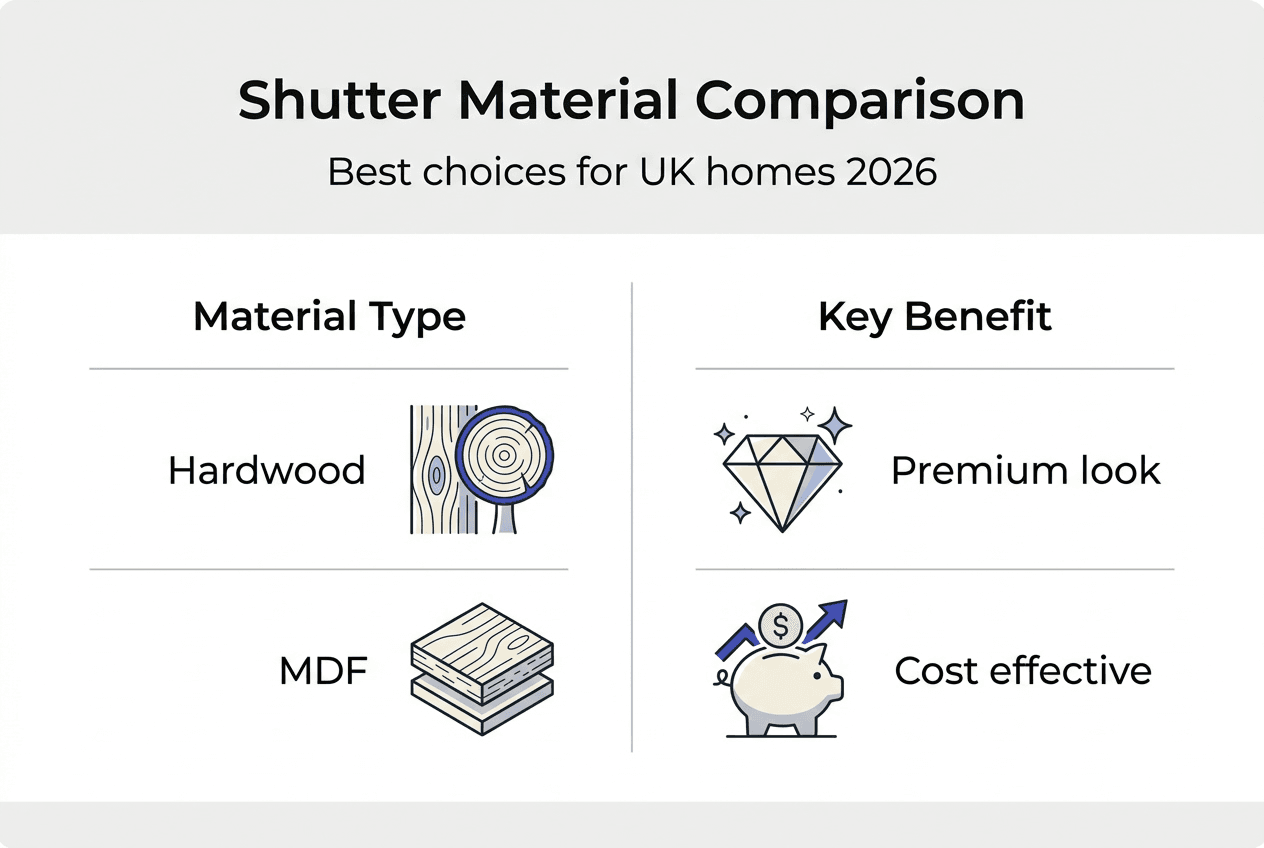
Hardwood shutters represent the premium choice, crafted from basswood, poplar, or cedar. These natural materials offer unmatched elegance with visible grain patterns that add warmth and character to any room. Hardwood excels at holding intricate shapes, making it ideal for bespoke designs on unusual windows. The material’s natural insulation properties help regulate room temperature, whilst its substantial weight creates a luxurious feel when operating louvres. Premium hardwood shutters provide long-lasting value and a luxury appearance that improves with age. Expect to pay £250 to £450 per square metre, with prices varying depending on the wood species and the complexity of the finish.

MDF shutters combine affordability with respectable performance, using engineered wood fibres compressed and coated with durable finishes. Modern MDF shutters feature extruded polypropylene coatings that resist moisture better than older generations, though they still suit drier rooms best. The material’s uniform density eliminates natural wood variations, ensuring consistent colour and preventing warping in stable environments. MDF costs roughly £150 to £250 per square metre, making it accessible for whole-home installations. The material machines cleanly for precise bespoke fitting, though very large panels may feel less substantial than hardwood equivalents.
Vinyl shutters dominate humid environments like bathrooms and coastal properties where moisture threatens other materials. Completely waterproof and requiring zero maintenance beyond occasional wiping, vinyl suits practical homeowners who prioritise function over traditional aesthetics. The material’s hollow construction keeps costs low at £120 to £200 per square metre, though this also creates a lighter, less premium feel. Vinyl’s limited colour range typically offers white and off-white options, with customisation restricted compared to painted wood alternatives. The material performs reliably but lacks the architectural presence that elevates room design.
Composite shutters blend engineered wood cores with protective outer layers, balancing durability and appearance. These hybrid materials resist moisture better than pure MDF whilst costing less than solid hardwood, occupying the middle ground at £180 to £320 per square metre. Composites accept paint finishes well, offering colour flexibility whilst maintaining structural stability. The material suits most UK rooms, though extreme humidity still favours vinyl for ultimate peace of mind.
This comparison table summarises key differences:
| Material | Cost per m² | Best for | Moisture resistance | Lifespan |
|---|---|---|---|---|
| Hardwood | £250-£450 | Living rooms, bedrooms, complex shapes | Moderate | 25+ years |
| MDF | £150-£250 | Bedrooms, dining rooms, budget installs | Low to moderate | 15-20 years |
| Vinyl | £120-£200 | Bathrooms, kitchens, coastal properties | Excellent | 15-25 years |
| Composite | £180-£320 | Most rooms, balanced performance | Good | 20-25 years |
UK climate considerations influence material selection significantly. British homes face temperature fluctuations, occasional condensation, and varying humidity levels that test shutter materials differently than continental climates. Coastal properties endure salt-laden air that accelerates deterioration in unsuitable materials, whilst urban homes contend with pollution that can discolour lighter finishes over time.
Pro Tip: For bay windows and complex shapes, prioritise materials that machine precisely without splitting. Hardwood and quality composites excel here, whilst budget MDF may chip during intricate cutting required for angled installations.
Exploring a comprehensive shutter materials comparison guide reveals additional nuances about grain patterns, finish options, and installation considerations. Understanding hardwood shutters benefits in depth helps justify the premium investment for homeowners seeking maximum property value and aesthetic impact.
Material performance: durability, maintenance and energy efficiency
How your shutters perform over years of daily use depends critically on material selection and proper care. Understanding realistic expectations for durability, maintenance demands, and energy contributions helps you choose materials that align with your lifestyle and commitment level.
Durability and lifespan vary dramatically across materials and installation environments. Hardwood shutters offer excellent longevity with proper maintenance, often exceeding 25 years in protected locations. The natural material withstands daily operation without degrading, though direct sunlight may gradually lighten stained finishes. MDF shutters typically last 15 to 20 years when kept dry, with failure usually occurring through moisture infiltration at joints rather than general wear. Vinyl’s waterproof nature ensures 15 to 25 years of service, though UV exposure can cause brittleness over time in south-facing installations. Composite materials generally achieve 20 to 25 years, benefiting from engineered stability that resists warping.
Environmental factors accelerate or extend these lifespans significantly. Shutters in bathrooms face condensation and temperature swings that challenge even moisture-resistant materials. Kitchen installations endure grease deposits and cooking humidity that demand regular cleaning. Conservatory shutters experience extreme temperature ranges and intense UV exposure that test material stability. Conversely, bedroom shutters in climate-controlled environments often outlast expectations, with minimal stress extending service life.
Maintenance requirements differ substantially:
-
Hardwood shutters need dusting weekly and deeper cleaning quarterly using barely damp cloths. Inspect annually for finish wear, touching up scratches or chips with matching stain or paint. Re-seal or repaint every 5 to 10 years depending on sun exposure and humidity levels. The investment in maintenance preserves beauty and protects the wood core.
-
MDF shutters require similar dusting but demand more cautious cleaning to avoid moisture damage. Never use wet cloths on unsealed edges where water can penetrate the core. Touch up paint chips promptly to prevent moisture infiltration. Consider professional refinishing every 7 to 10 years to refresh the appearance.
-
Vinyl shutters need only periodic wiping with damp cloths and mild detergent. No painting, sealing, or refinishing ever required. Check mounting hardware annually as the lightweight material can stress fixings over time.
-
Composite shutters follow maintenance similar to MDF but tolerate slightly more moisture during cleaning. Inspect painted surfaces annually, touching up as needed to maintain protective coating.
Energy efficiency contributions depend on material thickness, density, and installation quality. Solid hardwood provides excellent insulation through natural cellular structure, reducing heat transfer through windows by up to 30% compared to bare glass. This thermal performance lowers heating costs whilst improving comfort by eliminating cold spots near windows. MDF offers moderate insulation, better than vinyl but less effective than hardwood due to lower density. Vinyl’s hollow construction provides minimal insulation value, though the air gap between shutter and window still improves performance versus uncovered glass. Composite materials vary based on core construction, generally matching or slightly exceeding MDF performance.
Proper installation maximises energy benefits regardless of material. Shutters must fit tightly within frames, minimising air leakage around edges. Adjustable louvres should close completely, eliminating light gaps that also allow air movement. Professional measurement and fitting ensure these critical tolerances, preventing energy losses that undermine material advantages.
Following expert shutter maintenance tips extends lifespan and preserves appearance across all materials. Understanding how energy efficient shutters function helps you evaluate material claims against real-world performance. Comprehensive guidance on energy efficiency window coverings places shutters in context with alternative solutions, helping you make informed decisions.
Pro Tip: Document your shutters with photos immediately after installation, then annually thereafter. This visual record helps you spot gradual changes like fading or warping that you might otherwise miss, enabling proactive maintenance before minor issues become major problems.
Choosing bespoke shutters: fitting complex window shapes with the right material
Bespoke shutters transform challenging windows into stunning focal points, but success depends on selecting materials that accommodate precise machining and complex geometries. Understanding which materials excel at fitting unusual shapes prevents disappointing results and wasted investment.
Hardwood dominates complex installations for compelling reasons. The material’s grain structure provides strength in multiple directions, preventing splitting when cut into acute angles required for triangular or angled windows. Hardwood accepts precise machining without chipping, creating clean edges essential for professional appearance. The material’s natural flexibility allows slight adjustments during installation, accommodating the minor irregularities present in older properties. Hardwood’s substantial weight also helps arched shutters maintain shape over time, resisting gravity-induced sagging that plagues lighter materials.
Consider hardwood essential for these challenging applications:
- Circular or elliptical windows requiring curved frames and radiating louvre patterns
- Steep roof windows where angled mounting creates complex geometry
- Bay windows with multiple angles demanding precise mitre joints
- Arched windows needing curved headers that maintain smooth operation
- Conservatory installations with varied window sizes and shapes requiring visual continuity
Material thickness and flexibility affect fitting precision significantly. Thicker materials like solid hardwood resist flexing during installation, maintaining intended shapes even when mounting hardware applies pressure. This rigidity proves essential for large shutters where even slight warping creates visible gaps or operational issues. Thinner MDF panels may flex slightly, requiring additional mounting points to maintain flatness across expansive windows. Vinyl’s flexibility can actually assist certain installations, allowing gentle bending to accommodate slightly out-of-square openings common in older properties.
Bespoke shutters ensure style continuity across your home’s varied windows whilst maintaining consistent functionality. Matching materials, colours, and louvre sizes creates visual harmony that elevates overall interior design. This consistency becomes particularly important in open-plan spaces where multiple window styles remain visible simultaneously. The right material choice enables this continuity, with hardwood offering maximum customisation through staining and painting options that perfectly complement existing woodwork.
Expert advice proves invaluable when matching materials to window shapes. Experienced fitters recognise which materials suit specific geometries, preventing choices that technically work but deliver suboptimal results. They understand how British building variations affect installations, from stone cottage walls with irregular openings to modern developments with precise but challenging designs. Professional measurement accounts for material characteristics, ensuring specified shutters actually fit once manufactured.
Pro Tip: For properties with multiple unusual window shapes, consider investing in premium hardwood throughout rather than mixing materials. The visual and functional consistency justifies the additional cost, whilst simplifying future maintenance and potential refinishing projects.
Exploring bespoke internal window shutters reveals the craftsmanship involved in creating truly custom solutions. Understanding shutter design challenges unique windows present helps you appreciate why material selection matters so critically. Specific guidance for bay windows demonstrates how expert fitting transforms complex spaces into showcase features.
Explore bespoke window shutters to enhance your home
Choosing the right shutter material represents just the first step towards transforming your windows into architectural features that elevate your entire home. Shutter World specialises in guiding UK homeowners through material selection, bespoke design, and professional installation that delivers results exceeding expectations.
Our expertise spans the complete range of shutter materials, from entry-level MDF solutions to premium hardwood installations that become genuine property assets. We help you navigate the choices, explaining how different materials perform in your specific rooms and window configurations.
Whether you’re tackling straightforward rectangular windows or complex architectural features like angled bays and circular designs, our bespoke internal window shutters service ensures perfect fits that showcase your home’s character. Explore our plantation shutters range to see how different materials and styles transform real UK homes. Discover what makes shutters bespoke through our detailed process explanation, then request your free home consultation to begin your shutter journey with confidence.
Frequently asked questions about the best materials for window shutters
What causes the price difference between shutter materials?
Material costs reflect manufacturing complexity, raw material scarcity, and performance characteristics. Hardwood requires harvesting, seasoning, and careful machining of natural timber, whilst MDF uses engineered wood fibres that are processed more economically. Vinyl costs the least due to simple moulding processes, though quality varies significantly between manufacturers.
Which shutter material works best in damp UK bathrooms?
Vinyl shutters excel in high-humidity environments, offering complete waterproofing that prevents warping, swelling, or finish damage. Composite materials with waterproof coatings provide a close second, combining moisture resistance with more traditional aesthetics. Avoid standard MDF in bathrooms unless specifically rated for high-moisture applications.
How long should quality window shutters last?
Premium hardwood shutters typically last 25 years or more with proper maintenance, often outlasting the homeowner’s residence. MDF and composite materials generally achieve 15 to 25 years depending on environmental conditions and care quality. Vinyl shutters last 15 to 25 years, with UV exposure and temperature extremes affecting lifespan more than humidity.
Can all materials accommodate unusual window shapes?
Hardwood offers the greatest flexibility for complex geometries, machining precisely without splitting on acute angles required for triangular or arched windows. Quality composites handle most bespoke shapes adequately, though very intricate designs may exceed their capabilities. Vinyl suits simpler shapes best, with complex curves potentially revealing material limitations through visible joints or operational compromises.
Do shutter materials require different maintenance routines?
Maintenance varies substantially across materials. Hardwood needs periodic refinishing every 5 to 10 years plus regular dusting and careful cleaning. MDF requires similar care but greater caution around moisture. Vinyl demands only occasional wiping with no refinishing ever needed. Following manufacturer-specific guidance preserves warranties and maximises lifespan regardless of material choice.
How do shutter materials compare for energy efficiency?
Solid hardwood provides superior insulation through dense cellular structure, reducing window heat loss by up to 30%. MDF and composites offer moderate thermal performance, improving on bare glass but falling short of hardwood effectiveness. Vinyl contributes minimal insulation value, though properly fitted shutters of any material create air gaps that enhance energy efficiency versus uncovered windows.