
Budget shutters guide: get more for less in 2026

Budget shutters guide
TL;DR:
- Budget shutters offer an affordable alternative that combines style, light control, and privacy for UK homeowners. Full-height and café-style shutters are the most cost-effective options, with material choice largely influencing long-term value and durability. Proper measurement, strategic installation decisions, and comparison of per-square-metre costs ensure the most economical and reliable shutter purchase.
Budget shutters are defined as cost-effective interior window coverings that deliver the style, light control, and privacy of premium shutters at a fraction of the price. For UK homeowners and property renovators, they represent one of the most practical upgrades available. The main types include plantation shutters, full-height shutters, café-style shutters, and tier-on-tier designs, each available in materials ranging from vinyl and MDF to composite and real wood. This guide covers every decision point: style, material, installation, measurement, and smart buying tactics, so you can choose affordable window shutters with complete confidence.
What are the main types of budget shutters and how do they compare?
Full-height shutters are the most cost-efficient classic choice for UK homes. They cover the entire window in a single panel or pair, require fewer components than more complex styles, and suit almost every room. Because the design is straightforward, manufacturing and fitting costs stay lower, making them the natural starting point for anyone working to a tight budget.
Café-style shutters cover only the lower half of the window, which means less material and a lower price per window. They are particularly popular in street-facing rooms where ground-floor privacy matters but natural light from the upper pane is still welcome. The trade-off is reduced flexibility: you cannot close off the full window without adding a second tier.
Tier-on-tier shutters split the window into two independently operated sections. The upper and lower panels open and close separately, giving you precise control over light and privacy throughout the day. That flexibility comes at a cost. Tier-on-tier fitting starts around £454 per window and can exceed £1,000 for bespoke designs, making them the priciest standard style.
Tracked shutter systems suit wide windows, bay windows, and patio doors. Panels slide along a top track rather than hinging open, which works well where swing clearance is limited. They sit at the higher end of the budget shutter spectrum due to the additional hardware and precise alignment required during installation.
| Style | Typical cost position | Best suited for |
|---|---|---|
| Full-height | Lowest | Most rooms, standard windows |
| Café-style | Low to mid | Street-facing rooms, kitchens |
| Tier-on-tier | Mid to high | Bedrooms, living rooms needing dual control |
| Tracked systems | High | Bay windows, wide spans, patio doors |
- Full-height: simplest to measure, easiest to fit, widest material choice
- Café-style: reduces material cost by up to half compared to full-height
- Tier-on-tier: adds operational complexity and manufacturing precision
- Tracked: requires professional installation in most cases
Pro Tip: If your budget is tight, start with café-style shutters on your most-used rooms and add full-height panels to bedrooms later. The styles complement each other well and the phased approach spreads the cost.
How do shutter materials affect budget choices and longevity?
Materials drive 60 to 70% of the price variance in any shutter quotation. Choosing the right material is therefore the single most powerful lever you have over your total spend. It also determines how long your shutters will perform well, which affects the true cost per year of ownership.
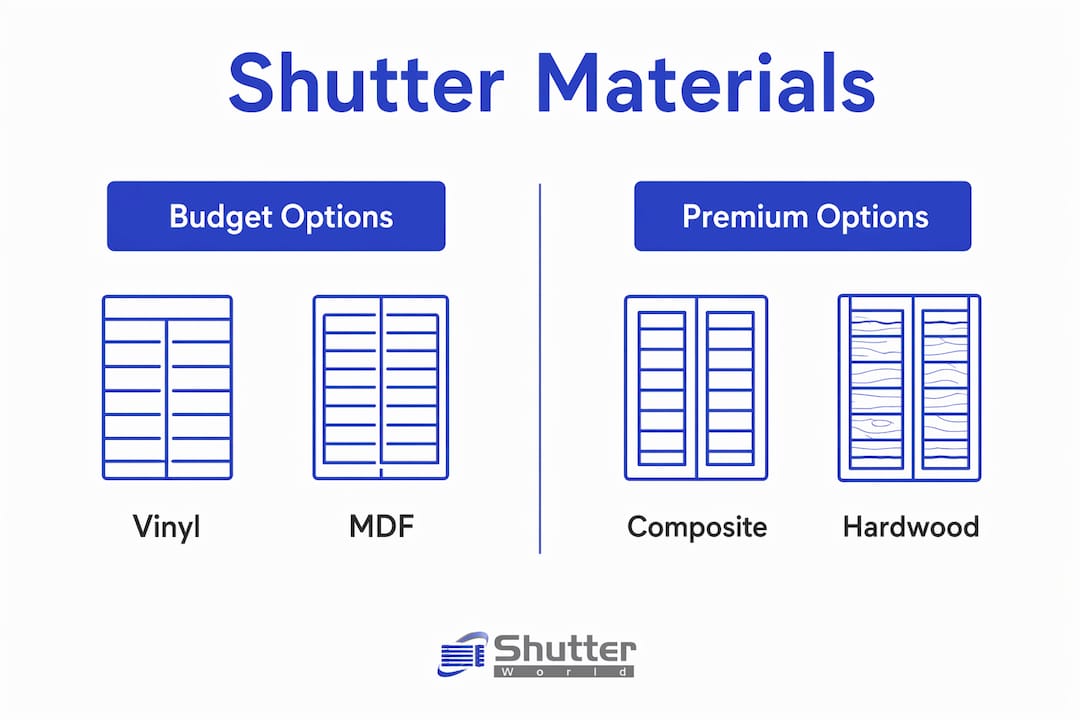
Vinyl is the entry-level option. It is lightweight, moisture-resistant, and the least expensive material available. Vinyl shutters start around £150 per window installed, making them genuinely accessible for large renovation projects. The limitation is rigidity: vinyl can warp under sustained heat or UV exposure, so it is best reserved for dry, stable interiors away from direct sunlight.
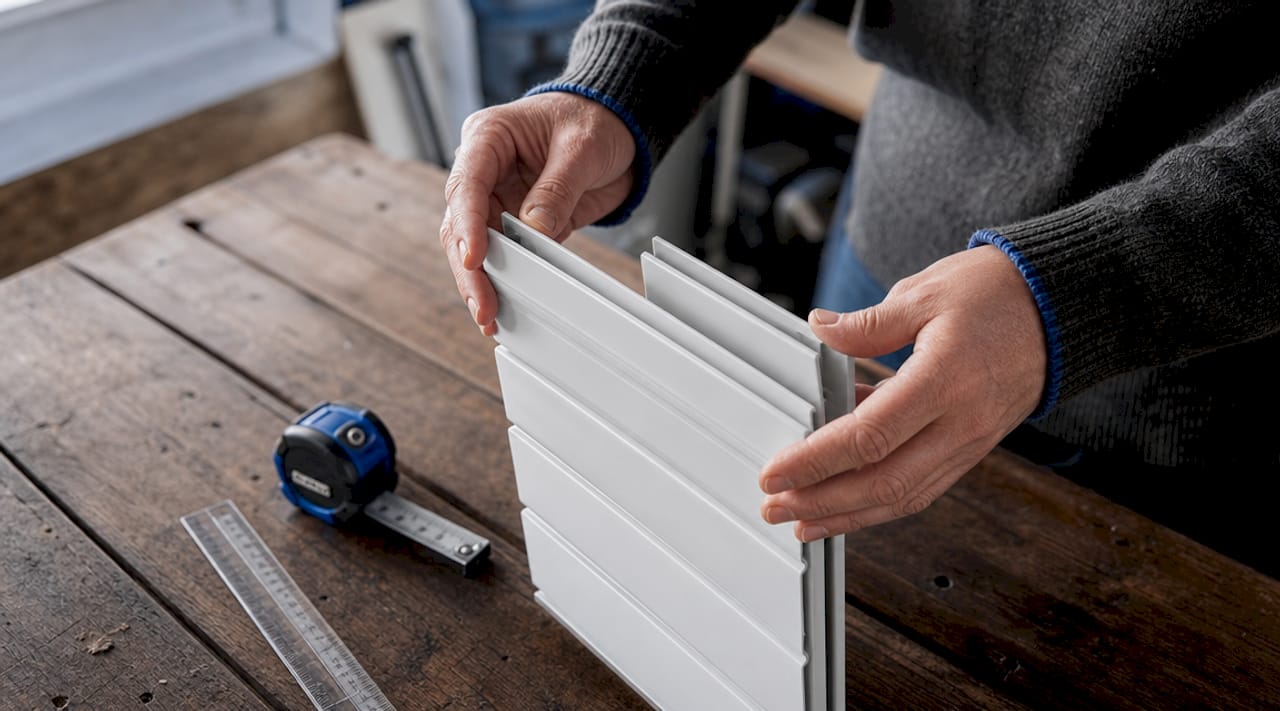
MDF sits one step up. Shutterworld’s Seattle range uses durable MDF with an extruded polypropylene coating, which improves moisture resistance and surface durability compared to bare MDF. It is a budget-friendly material that performs well in living rooms and hallways, though it is not the first choice for bathrooms or conservatories where humidity fluctuates significantly.
Composite and polymer shutters offer the best balance of cost and durability for most UK homes. Composite shutters resist warping and fading in humid environments far better than real wood or standard vinyl. While they cost more upfront than vinyl, typically £250 to £550 per window, their longer service life makes them the smarter long-term budget choice for kitchens, bathrooms, and coastal properties.
Real wood and premium hardwood shutters, such as those in Shutterworld’s Montana range, deliver a finish that no synthetic material fully replicates. Prices for real wood start around £400 and can reach £1,200 per window. They are worth the investment in principal rooms where aesthetics carry significant weight, but they are not the right call for high-humidity spaces.
| Material | Approx. cost per window | Best environment | Longevity |
|---|---|---|---|
| Vinyl | From £150 | Dry, stable interiors | Moderate |
| MDF/coated MDF | Mid-range | Living rooms, hallways | Good |
| Composite/polymer | £250 to £550 | Kitchens, bathrooms, coastal | Excellent |
| Real wood/hardwood | £400 to £1,200+ | Principal rooms, dry spaces | Very good with care |
Pro Tip: Calculate cost per year, not just cost per window. A composite shutter at £350 that lasts 20 years costs £17.50 per year. A vinyl shutter at £180 that warps after five years costs £36 per year. The cheaper option is rarely the most economical.
What installation options exist and how do they influence budget?
Professional installation adds 25 to 35% to the total cost of a shutter project. For a whole-house fit, that percentage represents a substantial sum. Understanding where professional expertise is genuinely necessary, and where confident DIY is a realistic option, is one of the most valuable shutter buying tips available.
DIY installation can save up to 40% on installation fees by removing measuring and fitting costs entirely. The savings are real, but so are the risks. Measurement errors of even 2 to 3mm can prevent shutters from opening correctly or leave visible gaps around the frame. Errors of this scale also commonly void manufacturer warranties, which removes your safety net if the product later develops a fault.
The steps for a successful DIY installation are as follows:
- Measure the window recess width at the top, middle, and bottom. Use the smallest measurement to order.
- Measure the height at the left, centre, and right. Again, use the smallest figure.
- Check the recess depth to confirm there is sufficient flat space for the chosen frame type.
- Select your frame: Z-Frame shutters overlap recess edges to cover uneven walls and are the more forgiving choice for DIY. L-Frame shutters mount flush inside the opening and require a precise, even recess.
- Follow the manufacturer’s fitting sequence precisely, securing the frame before hanging the panels.
When should you call a professional? Complex window shapes, uneven recesses, and bespoke designs all carry a meaningful risk of poor fit when self-installed. Arched windows, bay windows, and tier-on-tier configurations are the clearest cases where professional fitting pays for itself. The additional cost is far lower than the expense of reordering incorrectly sized shutters.
Before committing to DIY, review the DIY installation risks that UK homeowners commonly encounter. The list is instructive and may change your decision on specific windows even if you proceed with self-installation elsewhere.
Pro Tip: A hybrid approach works well for many renovators. Use a professional to measure every window accurately, then self-install on straightforward rectangular recesses. You protect the warranty, reduce the risk of errors, and still save a meaningful portion of the fitting cost.
How to measure your windows accurately for budget shutters
Precise measurement is the foundation of any successful shutter purchase. Measurement precision to within millimetres is critical: the smallest width and height readings across the recess determine whether your shutters fit without sticking, binding, or leaving gaps. A steel tape measure, not a fabric one, is the correct tool for this task.
Follow these steps for every window:
- Measure the internal width of the recess at three points: top, middle, and bottom. Record all three and use the smallest figure when ordering.
- Measure the internal height at three points: left side, centre, and right side. Use the smallest figure.
- Measure the recess depth from the front face of the window board to the glass. This confirms whether an L-Frame or Z-Frame is appropriate and whether any obstructions such as handles or hinges will interfere with the shutter panel.
- Note the window shape. Standard rectangular recesses are straightforward. Arched, angled, or bay windows require specialist templates and are best handled by a professional surveyor.
- Record all measurements in millimetres, not centimetres. Millimetre precision eliminates rounding errors that accumulate across multiple windows.
Choosing the right frame type influences both installation ease and the final appearance. Z-Frames hide imperfections in the surrounding plasterwork and are the more forgiving option for older UK properties where walls are rarely perfectly square. L-Frames provide a cleaner, flush finish but demand a consistent recess depth throughout the opening.
For a detailed walkthrough, Shutterworld’s step-by-step measuring guide covers every window type with clear diagrams and worked examples. It is worth consulting before you order, regardless of whether you plan to self-install or use a professional fitter.
Pro Tip: Measure every window individually, even if they appear identical. UK homes, particularly Victorian and Edwardian terraces, frequently have windows that differ by 5mm or more between floors due to settlement. Ordering from a single measurement across multiple windows is a common and costly mistake.
What tips can help you maximise value when buying budget shutters?
Getting the best price on low-cost shutters requires more than simply choosing the cheapest material. The following buying strategies consistently produce better outcomes for homeowners working to a defined budget.
- Request m² pricing breakdowns. Most shutter prices are quoted per square metre, so asking for a transparent m² cost from each supplier makes genuine comparison possible. A lower headline price can conceal a higher m² rate once hardware and fitting are added.
- Bundle multiple windows. Ordering shutters for several rooms in a single transaction frequently unlocks volume discounts. Suppliers reduce per-unit manufacturing and delivery costs when producing a larger batch, and many pass a portion of that saving on to the buyer.
- Time your purchase. Seasonal promotions and price matching can reduce final costs substantially. January and late summer are traditionally active periods for home improvement promotions in the UK.
- Request a free survey. Professional consultations and home surveys cost nothing with most reputable suppliers and help you avoid the expensive errors that come from self-measuring complex windows.
- Watch for hidden costs. Premium louvre sizes, decorative hardware, and non-standard frame finishes all add to the final invoice. Confirm what is included in any quotation before you commit.
- Consider the affordable shutter options available in entry-level ranges. A well-made MDF or composite shutter in a standard finish often delivers 90% of the visual impact of a premium hardwood product at 50% of the price.
As part of any broader home refresh, shutters pair particularly well with other cost-effective interior upgrades. If you are renovating a kitchen alongside your window treatments, low-cost kitchen makeover ideas from Happy Doors offer practical inspiration for keeping the whole project within budget.
Pro Tip: Ask your supplier to quote the plantation shutter price factors in writing, broken down by material, frame type, and installation. Suppliers who resist providing this level of detail are rarely the most competitive once all costs are visible.
Key takeaways
Composite shutters represent the best budget balance between cost, durability, and climate suitability for most UK homes, making material choice the most consequential decision in any shutter purchase.
| Point | Details |
|---|---|
| Material drives cost | Materials account for 60 to 70% of price variance; composite offers the best long-term value. |
| Style affects price | Full-height and café-style shutters cost less than tier-on-tier or tracked systems. |
| DIY saves up to 40% | Self-installation reduces costs significantly but requires precise measurement and carries warranty risk. |
| Measure in millimetres | Use the smallest width and height readings from three points across each recess. |
| Bundle and compare m² rates | Request transparent m² breakdowns and bundle windows to unlock volume discounts. |
Why I think most buyers get budget shutters wrong
People shopping for low-cost shutters almost always focus on the headline price per window. That instinct is understandable, but it consistently leads to poor decisions. The buyer who chooses vinyl to save £80 per window, then replaces warped panels three years later, has spent more than the person who chose composite from the outset.
The second mistake I see repeatedly is underestimating measurement. Homeowners who have confidently hung pictures and assembled flat-pack furniture assume shutter measurement is similarly forgiving. It is not. A 3mm error on a shutter order is not a minor inconvenience. It is a panel that will not close properly, a warranty that is void, and a reorder cost that wipes out every saving made by choosing a budget material in the first place.
My honest recommendation: spend your budget on material quality and professional measurement, then self-install on straightforward windows if you are confident and capable. That combination delivers the best result at the lowest realistic total cost. The energy efficiency gains from well-fitted shutters, particularly in older UK properties with draughty single-glazed windows, also add genuine long-term value that rarely features in the initial buying calculation but absolutely should.
— Ken
How Shutterworld can help you find the right shutters
Shutterworld’s range is built around the principle that quality and affordability are not mutually exclusive. The Seattle range, crafted from durable MDF with an extruded polypropylene coating, delivers a clean, timeless finish at an accessible price point. For rooms where a premium finish matters, the Montana hardwood range steps up without compromise.
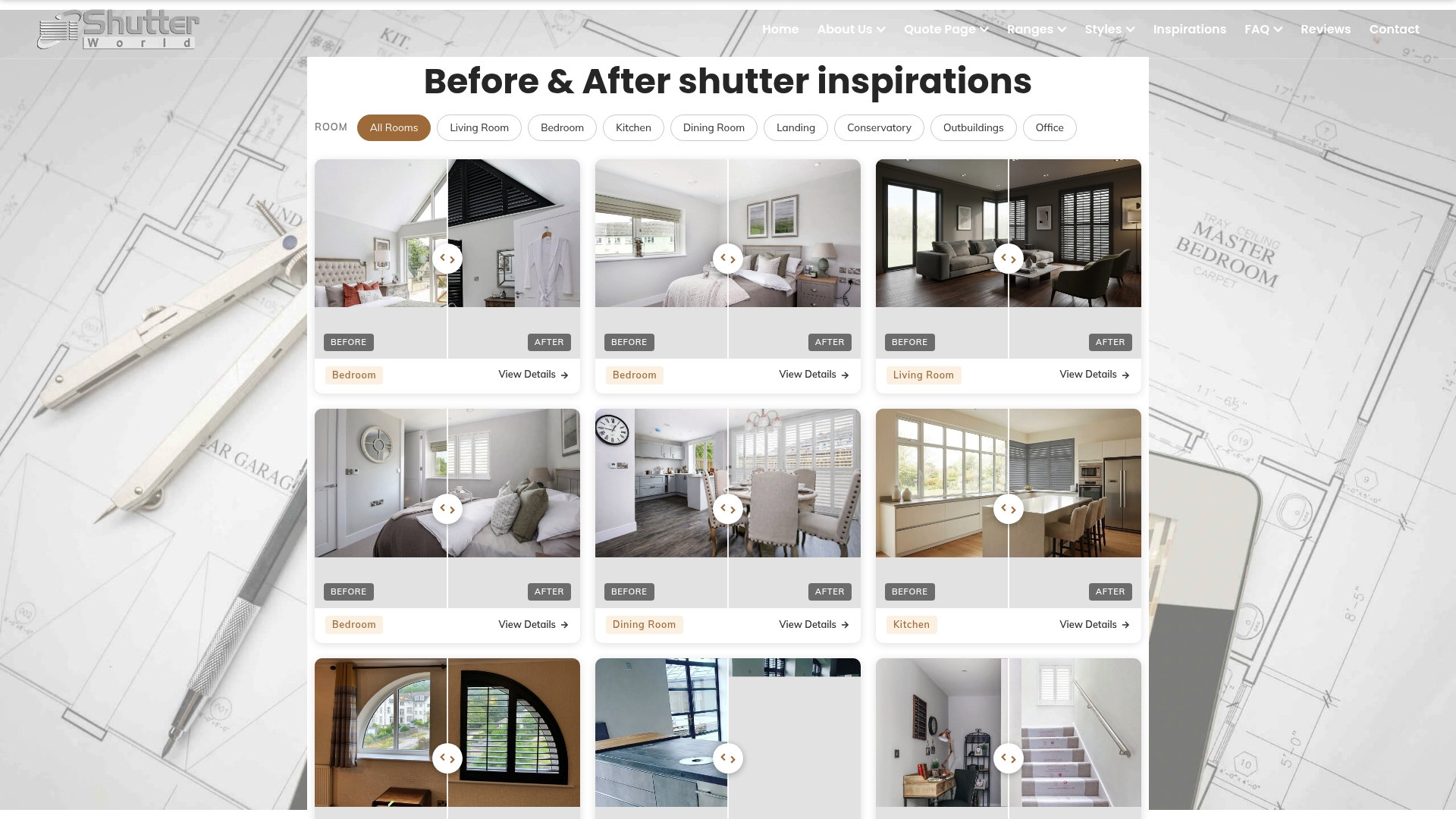
Every order begins with a professional in-home survey, accurate measurements, and a clear quotation with no hidden costs. Whether you are fitting shutters across a full renovation or starting with a single room, Shutterworld’s experienced team guides you through material choice, frame selection, and installation from start to finish. Explore the full range of plantation shutter installations or browse the interior plantation shutters collection to find the right solution for your home and your budget.
FAQ
What is the cheapest type of shutter for UK homes?
Full-height vinyl or coated MDF shutters are the most affordable options, with vinyl starting around £150 per window installed. They suit dry, stable interiors and offer a clean finish at the lowest entry price.
How much does professional shutter installation add to the cost?
Professional installation typically adds 25 to 35% to the total cost of a shutter project. For complex windows such as arched or bay designs, that cost is generally worth paying to avoid poor fit and voided warranties.
Can I install budget shutters myself?
DIY installation is achievable on standard rectangular windows and can save up to 40% on fitting costs. Accurate measurement in millimetres and the correct frame choice, Z-Frame for uneven recesses, are the two factors that determine success.
Which shutter material lasts longest in UK bathrooms and kitchens?
Composite and polymer shutters offer the best resistance to warping and fading in humid environments, outperforming both vinyl and real wood in kitchens, bathrooms, and coastal properties over the long term.
How do I compare shutter quotes accurately?
Request a per-square-metre cost breakdown from each supplier and confirm what is included in the price, covering frame type, hardware, and installation. Transparent m² pricing is the only reliable basis for comparing offers across different suppliers.