
Child safe shutters: the safest window covering for families

TL;DR:
- Child safe shutters eliminate cord hazards by being cordless and featuring sturdy, rigid construction suitable for homes with children and pets. Proper installation by professionals ensures a secure fit, preventing gaps or loose parts that could cause safety risks. They outperform other window coverings by combining durability, allergen resistance, and easy maintenance, making them the safest choice for family homes.
Child safe shutters are window coverings designed to prevent accidents by eliminating dangling cords and incorporating sturdy, secure construction suited to homes with young children and pets. Unlike traditional blinds or curtains, these shutters are cordless by design, removing the single greatest hazard associated with window coverings. The industry term used by safety bodies and manufacturers is “child-safe window treatments,” with plantation shutters representing the gold standard in this category. Organisations such as the British Blind & Shutter Association set the guidelines that govern how these products are designed, tested, and installed across the UK.
What makes child safe shutters inherently safer than blinds or curtains?
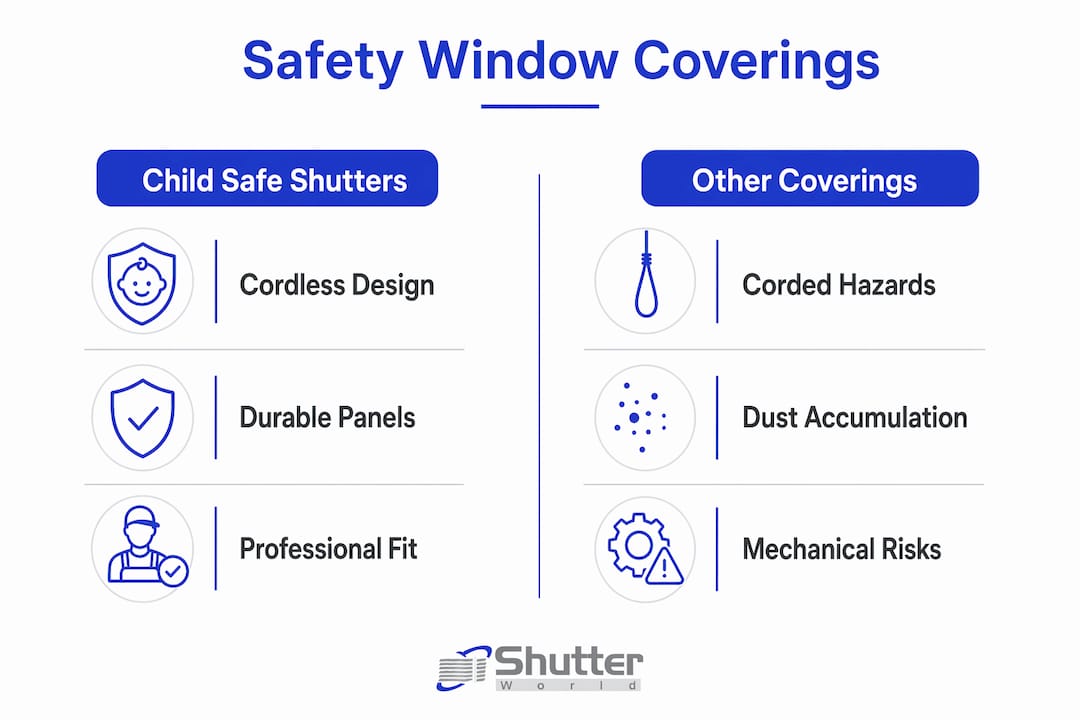
Shutters are cordless by design, with no dangling chains or tilt cords that could wrap around a child’s neck. This single characteristic separates them from virtually every other window covering on the market. Traditional roller blinds, Roman blinds, and venetian blinds all rely on cords or chains to operate, even when fitted with aftermarket safety devices.
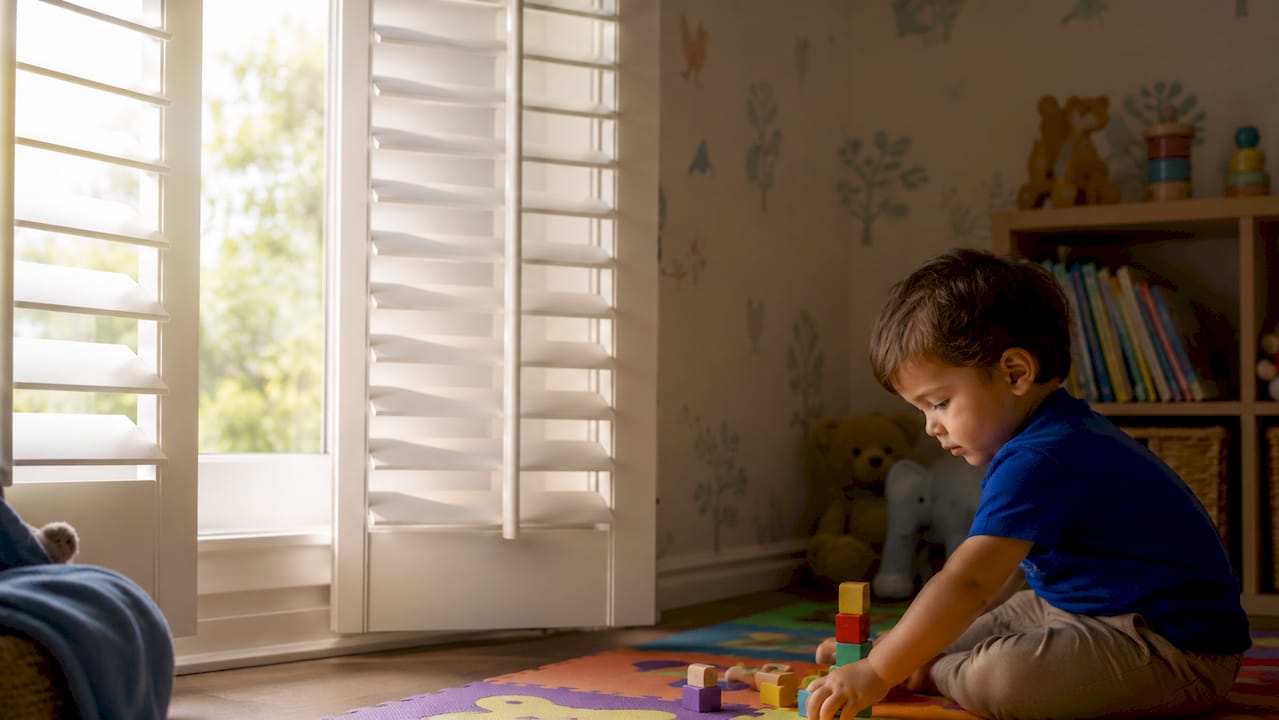
The risk is well documented. Cord loops and pull cords have led to documented child injuries, and modern safety regulations now enforce design changes to prevent cord access entirely. Products manufactured after 2018 must comply with these updated standards. Shutters sidestep the problem altogether because their louvre slats are controlled by a central tilt rod hidden within the panel, not by an external cord.
Beyond the cordless advantage, shutters offer structural benefits that blinds simply cannot match. The panels are mounted rigidly into a frame, so there are no loose or dangling parts to attract curious hands. The louvres themselves are robust enough to withstand the kind of daily contact that would destroy a fabric blind within months. Plantation shutters in particular use hidden tilt rods and resist wear from children and pets far better than fabric alternatives.
Shutters also comply with European standard EN13120, which governs the performance and safety of internal blinds and shutters. Australian standard AS/NZS 1754 similarly requires that internal window furnishings have secured or tensioned cords. Shutters meet both frameworks without modification because their mechanism requires no cords at all.
Key safety advantages of shutters over blinds and curtains:
- No cords, chains, or loops at any point in the operating mechanism
- Rigid panel construction prevents collapse or detachment under pressure
- Louvre slats controlled internally, not by external pull cords
- Solid frame mounting eliminates swinging or tangling hazards
- Durable materials resist breakage even with repeated rough handling
Does professional installation really improve child safety?
Professional installation is as critical as product choice for child-safe window coverings. A shutter fitted incorrectly can develop gaps between panels, loose hinges, or unstable frames. Any of these faults creates a risk that the product itself was designed to prevent.
Expert fitters measure each window precisely before a single component is manufactured. This matters most in older UK properties where window openings are rarely perfectly square. A bespoke shutter engineered to the exact dimensions of the opening sits flush and rigid, with no movement when pushed or pulled. An off-the-shelf blind adjusted to approximate dimensions will never achieve the same stability.
Bespoke shutters for complex windows eliminate the need for tensioning cords entirely by engineering each component for rigidity. This is a significant advantage over standard safety devices, which rely on correct tensioning to function. If a DIY installer sets the tension incorrectly, the safety device fails. A custom-engineered shutter has no such dependency.
For uPVC windows specifically, Perfect Fit Shutters offer a no-drill clip-in system that fits within the glass frame itself. The result is a secure, rigid installation that leaves no marks on the frame and can be removed and refitted without tools. This is particularly useful in rented properties or where window frames must remain undamaged.
Pro Tip: After any shutter installation, test every louvre, hinge, and panel latch before the room is used by children. Push each panel firmly from both sides to confirm it does not flex or detach. A professionally installed shutter should feel completely solid.
Shutterworld’s approach at every installation includes a full post-fit check, confirming that all mechanisms operate correctly and that the frame is secure. This removes the human error that DIY fitting inevitably introduces.
Child safe shutters vs other safety window coverings: how do they compare?
Cordless and motorised window treatments represent the safest category of window coverings for families. Within that category, the options include cordless cellular shades, cordless roller shades, motorised blinds, and plantation shutters. Each has genuine merits, but they differ significantly on durability, maintenance, and long-term value.
| Feature | Plantation shutters | Cordless roller shades | Motorised blinds | Fabric curtains |
|---|---|---|---|---|
| Cord hazard | None | None | None | None |
| Durability | Excellent | Moderate | Moderate | Low |
| Allergy-friendly | Yes | Moderate | Moderate | No |
| Maintenance | Wipe clean | Spot clean only | Professional service | Machine wash or dry clean |
| Aesthetic range | Wide | Limited | Moderate | Wide |
| Lifespan | 20+ years | 5–8 years | 5–10 years | 3–5 years |
| Cost | Higher upfront | Low | High | Low |
Cordless roller shades are a reasonable budget option, but their fabric surfaces trap dust and allergens. For children with asthma or hay fever, this matters. Plantation shutters do not accumulate airborne irritants the way curtains do and can be wiped clean with a damp cloth in minutes.
Motorised blinds remove cord hazards through automation, but they introduce a different risk. The motor mechanism and power supply require periodic professional servicing. A motor fault can leave the blind stuck in a position that blocks light or prevents ventilation. Shutters have no motor to fail and no battery to replace.
The child-friendly window treatments that consistently perform best in family homes combine three qualities: no cords, solid construction, and easy cleaning. Plantation shutters are the only option that delivers all three without compromise.
How to choose and maintain child safe shutters in a family home
Material choice is the first decision, and it directly affects both safety and longevity. Composite or faux wood shutters resist moisture and warping, making them the right choice for bathrooms, kitchens, and children’s bedrooms where humidity fluctuates. Real hardwood shutters, such as Shutterworld’s Montana range, offer a premium finish and exceptional durability in living rooms and bedrooms with stable conditions.
Aluminium shutters are worth considering for conservatories or rooms with high sun exposure. They do not warp, fade, or crack under temperature changes. The trade-off is a cooler aesthetic compared to timber, though modern powder-coat finishes have narrowed that gap considerably.
A practical selection and maintenance checklist for parents:
- Choose the right material. Composite for wet or humid rooms; hardwood for dry living spaces; aluminium for conservatories and high-heat environments.
- Confirm the louvre size. Wider louvres (89mm or 114mm) are easier to clean and provide better light control in larger rooms.
- Inspect the frame and hinges every six months. Check for any loosening at the fixing points and tighten if needed.
- Clean louvres monthly. A damp microfibre cloth removes dust without chemicals. Avoid abrasive cleaners on painted finishes.
- Test the tilt rod and panel latches annually. Confirm that each louvre moves smoothly and that panels close flush with no gaps.
Pro Tip: For made-to-measure shutters, always request a written guarantee covering both the product and the workmanship. This protects you if any component fails within the warranty period and confirms the installer stands behind their fitting.
Avoiding common installation mistakes is equally important. Never accept a shutter that requires forcing to close, as this indicates incorrect sizing. A properly fitted shutter should open, close, and tilt with light, consistent pressure. Any resistance suggests a measurement error that will worsen over time.
Key takeaways
Child safe shutters are the most reliable window covering for family homes because they eliminate cord hazards, resist damage, and require no complex maintenance to stay safe.
| Point | Details |
|---|---|
| Cordless by design | Shutters have no external cords or chains, removing the primary strangulation risk entirely. |
| Professional fitting matters | Expert installation and post-fit testing remove the human error that compromises safety device performance. |
| Material affects longevity | Composite suits humid rooms; hardwood suits dry spaces; aluminium suits conservatories. |
| Shutters outperform alternatives | Plantation shutters deliver cordless operation, durability, and allergy-friendly surfaces that other options cannot match together. |
| Regular inspection protects children | Check hinges, frames, and louvre mechanisms every six months to maintain the original safety standard. |
Why I think most parents underestimate the installation question
Parents spend a great deal of time researching which shutter to buy and very little time thinking about how it gets fitted. In my experience working with families across the UK, that is where most safety problems actually originate. A well-chosen shutter fitted poorly is not a safe shutter.
The most common issue I see is panels that have been installed slightly out of square. Over time, the frame shifts, the panel no longer closes flush, and a gap appears at the edge. That gap is not just an aesthetic problem. It is a point where a small child can get fingers trapped, or where the panel can be pulled free with enough force.
The second thing parents overlook is material selection for the specific room. I have seen hardwood shutters installed in bathrooms where the humidity eventually causes the louvres to swell and stick. The family then forces the mechanism, the tilt rod bends, and the shutter stops functioning correctly. Composite materials exist precisely to prevent this. Choosing the right material for the right room is not a luxury decision. It is a safety decision.
What I find genuinely reassuring about shutters and child safety is that the product itself is inherently sound. There are no cords to manage, no batteries to replace, and no moving parts that wear out quickly. The risk almost always comes from cutting corners on fitting or material choice. Get those two things right, and you have a window covering that will protect your children for decades without a second thought.
— Ken
Find bespoke child safe shutters from Shutterworld
Shutterworld has spent over 25 years helping UK families find window coverings that look beautiful and perform safely. Every shutter is made to measure, fitted by experienced professionals, and backed by product and workmanship guarantees.
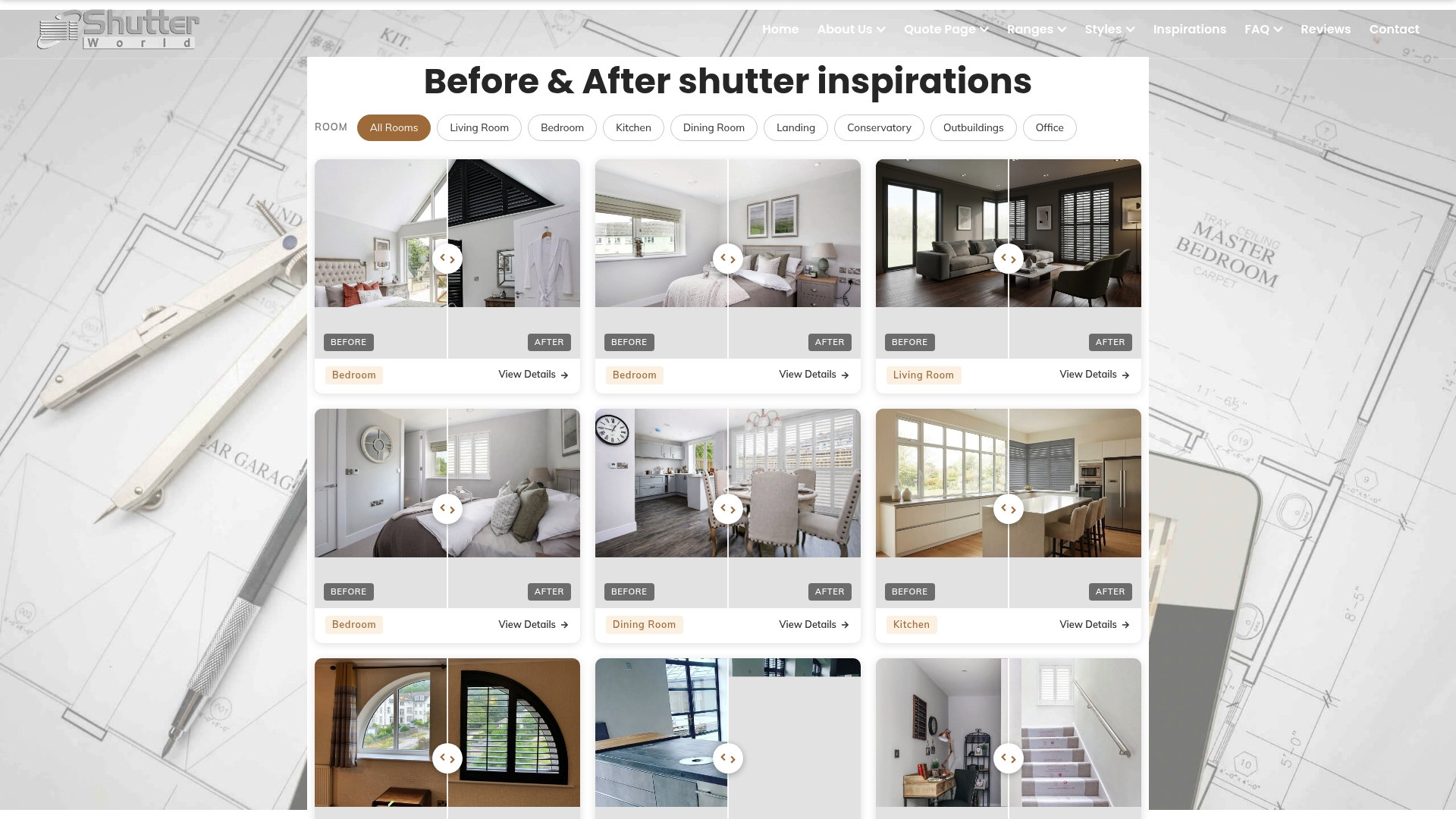
Whether you need plantation shutters for a nursery, a bay window in a family living room, or a complex shaped window that off-the-shelf products simply cannot cover, Shutterworld engineers a solution that fits perfectly and stays secure. The full service includes an in-home survey, accurate measurements, and a post-installation check to confirm every mechanism works as it should. Book your free consultation today and give your family the window covering they deserve.
FAQ
Are shutters completely cordless?
Yes. Plantation shutters operate via a central tilt rod inside the panel, with no external cords, chains, or loops at any point. This makes them inherently cordless and compliant with child safety standards without any modification.
What is the safest shutter material for a child’s bedroom?
Composite or faux wood shutters are the safest choice for children’s bedrooms because they resist moisture, do not warp, and are easy to wipe clean. Hardwood is suitable for dry rooms but should be avoided in humid environments.
Do shutters meet UK child safety regulations?
Shutters comply with European standard EN13120 and are consistent with the requirements of the British Blind & Shutter Association. Because they are cordless by design, they meet the post-2018 safety regulations without requiring additional safety devices.
How often should I check my shutters for safety?
Inspect hinges, frame fixings, and louvre mechanisms every six months. Confirm that panels close flush and that no gaps have developed at the frame edges. Annual testing of the tilt rod and panel latches maintains the original safety standard.
Can shutters be fitted to unusual window shapes safely?
Yes. Bespoke shutters for complex windows are engineered for rigidity without tensioning cords, making them safer than standard safety devices on off-the-shelf blinds. Shutterworld specialises in arched, angled, bay, and triangular windows across the UK.