
Curtains vs blinds: Which is better for your UK home?

Curtain vs blind
TL;DR:
- Layering curtains and blinds can reduce heat loss by up to 50 per cent.
- Bespoke window treatments offer a better fit, performance, and longevity for irregular-shaped windows.
- Choosing the right treatment depends on window type, energy priorities, style, and maintenance.
Choosing between curtains and blinds feels straightforward until you actually stand in front of your windows and weigh up every consideration. Style preferences, energy performance, window shape, and daily practicality all pull in different directions, and popular advice rarely accounts for the full picture. For UK homeowners, where draughty winters and architecturally varied properties add extra complexity, the decision carries real consequences for comfort and running costs. This guide cuts through the noise, offering a detailed, evidence-backed comparison so you can choose the window treatment that genuinely works best for your home.
Table of Contents
- How curtains and blinds impact home comfort and energy
- Comparing the style and versatility of curtains vs blinds
- Which is easier to maintain and more durable?
- Making the right choice for your space and priorities
- Our perspective: Why bespoke always wins for UK windows
- Discover bespoke shutters and window treatments for your home
- Frequently asked questions
Key Takeaways
| Point | Details |
|---|---|
| Layering boosts energy savings | Combining curtains and blinds can halve heat loss compared to using either alone in UK homes. |
| Bespoke fits every window | Bespoke treatments are essential for unusual shapes and provide a premium look and functionality. |
| Maintenance shapes your choice | Consider lifestyle and care routines when choosing between curtains or blinds for your window. |
| Style and material impact | Curtains and blinds each offer distinctive looks, but high-quality materials add durability and sustainability. |
How curtains and blinds impact home comfort and energy
Your windows are one of the most significant weak points in your home’s thermal envelope. In the UK, windows account for 18-20% of total home heat loss, which means the covering you choose directly influences your heating bills every single winter. That is not a trivial consideration when energy costs remain a persistent concern for households nationwide.
Both curtains and blinds offer meaningful insulation benefits, but the degree varies considerably depending on the product type and how you use it.
Key stat: Thermal blinds and curtains can each reduce heat loss by 20 to 30% independently. When you layer both together, that figure climbs to an impressive 50% reduction.
Honeycomb or cellular blinds are particularly effective because their structured air pockets trap warmth before it escapes through the glass. Heavy, lined curtains work differently, creating a physical barrier and a still-air buffer between the fabric and the window pane. Both mechanisms are valid. Neither is universally superior.
For maximum comfort in a UK home, consider these practical strategies:
- Close curtains at dusk to trap the day’s warmth before outdoor temperatures drop sharply.
- Ensure a tight fit at the sides and sill, as gaps allow cold air to circulate freely behind the fabric.
- Use thermal or blackout linings on curtains to significantly boost their insulating performance.
- Choose honeycomb blinds for rooms where you want insulation without losing natural light during the day.
- Layer treatments in north-facing or particularly draughty rooms for the greatest thermal benefit.
Fit is everything. A beautifully made curtain that hangs two centimetres short of the floor loses a disproportionate amount of its insulating value. The same principle applies to blinds with side gaps. If you are serious about reducing energy waste, exploring energy efficient shutters alongside curtains and blinds is well worth your time, particularly for older properties with single-glazed or slim-profile windows.
Pro Tip: If you want to understand how different window coverings affect your bills over time, our guide on how shutters reduce energy bills provides a clear breakdown that applies to the broader category of window treatments too.
The year-round impact matters as well. In summer, reflective blinds can deflect solar heat gain, keeping rooms cooler without air conditioning. Curtains with light-coloured linings achieve a similar effect. Thinking about both seasons when you choose your treatment will serve you far better than focusing on winter alone.
Comparing the style and versatility of curtains vs blinds
Energy efficiency is only part of the story. The visual character of your window treatment shapes the entire feel of a room, and this is where curtains and blinds diverge most dramatically.
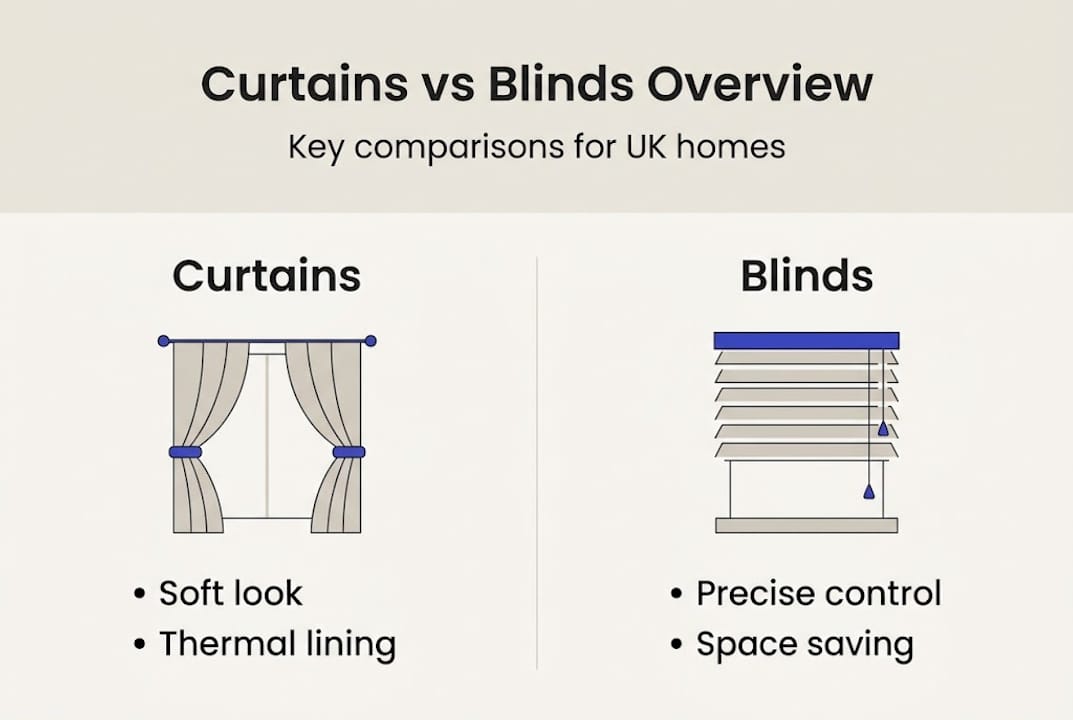
Curtains bring softness, warmth, and a sense of occasion to a space. Floor-length drapes in rich linen or velvet can anchor a room and give it a sense of considered elegance. They work particularly well in living rooms, bedrooms, and dining spaces where you want texture and depth. Blinds, by contrast, offer clean lines and a more restrained aesthetic. Roller blinds and Venetian blinds suit contemporary kitchens, home offices, and bathrooms where a streamlined look is the priority.
| Feature | Curtains | Blinds |
|---|---|---|
| Aesthetic | Soft, layered, traditional or contemporary | Sleek, minimal, modern |
| Light control | Good with linings; less precise | Excellent; adjustable slats or opacity |
| Bay windows | Possible but complex to hang | Fitted individually per pane |
| Angled windows | Challenging without bespoke solutions | Easier with made-to-measure options |
| Material range | Extensive fabrics, including linen, velvet, silk | Synthetics, wood, aluminium, fabric |
| Layering potential | High; pairs well with blinds | Moderate; works under curtains |
For bay windows, angled shapes, or any non-standard opening, the off-the-shelf route quickly becomes frustrating. Bespoke treatments ensure a perfect fit for irregular windows, using premium fabrics like linen that simply are not available in standard retail ranges. Exploring the full range of window treatment options available to you is the most reliable way to match both your window’s geometry and your interior vision.
Layering curtains over blinds is increasingly popular and for good reason. It gives you precise daytime light control via the blind, with the option to draw full curtains for evening privacy and insulation. This approach suits UK homes particularly well, where you need flexibility across seasons and times of day.
Which is easier to maintain and more durable?
Aesthetics aside, the practicality of maintenance and durability could tip the scales in your decision. The honest answer is that both curtains and blinds require care, but the nature of that care differs significantly.
Curtains made from natural fabrics such as linen, cotton, or wool need periodic washing or dry cleaning depending on the material. Lined curtains are more involved to launder and may need professional attention. However, premium bespoke materials like linen offer genuine longevity and sustainability advantages over off-the-shelf options, which often fade, shrink, or lose their structure within a few years.
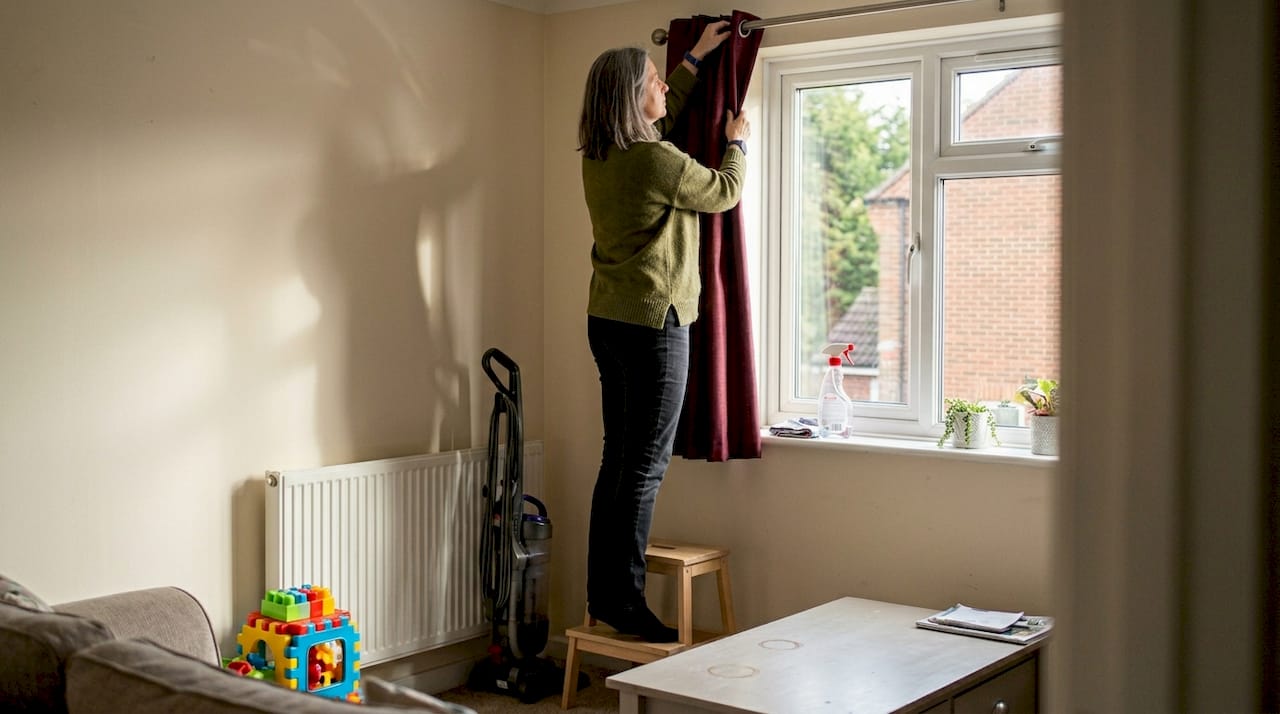
Blinds tend to collect dust on their slats or fabric surface and generally require more frequent light cleaning. Most hard blinds, such as Venetian or roller styles, can be wiped down easily, which is a practical advantage in kitchens or bathrooms. Fabric blinds are trickier and may need specialist cleaning.
Here is a straightforward overview of lifespan expectations:
- Quality lined curtains: 10 to 15 years with proper care and occasional relining.
- Roller blinds: 5 to 8 years before mechanisms or fabrics show significant wear.
- Venetian blinds (aluminium): 7 to 10 years; slats can warp in humid conditions.
- Wooden blinds: 8 to 12 years; susceptible to moisture damage if not treated.
- Bespoke fabric blinds: 8 to 12 years depending on fabric quality and UV exposure.
Households with children or pets face additional wear considerations. Curtains can be pulled, snagged, or stained more easily, while blind cords and mechanisms present safety concerns for young children. Cordless or motorised blind options address the safety issue but add to the initial cost.
Pro Tip: When assessing long-term value, look beyond the purchase price. A bespoke curtain in quality linen may cost more upfront but outlast three sets of budget alternatives. Exploring window covering materials in detail will help you make a more informed investment.
Repairability is another factor worth considering. Curtains can often be re-hemmed, re-lined, or re-hung as your interior evolves. Blind mechanisms, once broken, frequently require full replacement rather than repair, which adds to lifetime cost.
Making the right choice for your space and priorities
Now that you understand all the main differences, it is time to match the right option to your priorities and space. There is no single correct answer, but there are clear patterns that point towards one treatment or the other depending on your circumstances.
Start with your window type. Standard rectangular windows in a modern home suit almost any treatment. Bay windows, angled roof lights, arched frames, or period sash windows each present specific challenges that off-the-shelf products handle poorly. For these situations, a bespoke solution is not a luxury; it is the only way to achieve the performance and appearance you are looking for.
Consider these guiding questions before you decide:
- Is thermal performance your top priority? Layer both treatments. Curtains and blinds together can reduce window heat loss by up to 50%, which is the most effective non-glazing intervention available.
- Do you want precise light control? Blinds, particularly Venetian or pleated styles, give you far more granular adjustment than curtains alone.
- Is the room formal or relaxed? Curtains suit formal living and dining spaces; blinds work better in functional rooms like kitchens and home offices.
- Do you have non-standard windows? Bespoke is the only route that guarantees a proper fit and maximises every benefit.
- What is your maintenance tolerance? Blinds are generally easier to wipe clean; curtains require more periodic effort but are easier to repair.
“The most satisfied homeowners we speak with are those who stopped trying to force a standard product onto a non-standard window. Bespoke treatments change the entire experience.”
For UK homes specifically, the energy efficiency window coverings conversation is inseparable from the style conversation. The two are not in conflict. The right treatment, fitted precisely, delivers both.
Our perspective: Why bespoke always wins for UK windows
After weighing all the pros and cons, here is what many homeowners discover through real experience: the curtains versus blinds debate is often the wrong question entirely. The right question is whether your window treatment fits your specific window, your specific home, and your specific life.
Off-the-shelf products are designed for average windows. The UK housing stock is anything but average. Victorian terraces, Edwardian bay fronts, 1930s semis with curved bays, and modern new-builds with floor-to-ceiling glazing all demand different solutions. A ready-made blind dropped into an arched window or a standard curtain pole forced across a bay are compromises that cost you in energy, aesthetics, and longevity.
We have spent over 25 years working with homeowners who have tried the standard route and found it wanting. Bespoke engineering, whether for tricky-shaped windows or simply for achieving a flawless finish on a straightforward opening, consistently delivers superior satisfaction. The investment is higher upfront, but the result is a window treatment built into the very fabric of your home, one that stands the test of time.
Discover bespoke shutters and window treatments for your home
If this guide has clarified your thinking, the natural next step is to explore what a truly tailored window treatment could look like in your home. At Shutter World, we specialise in precision-crafted solutions that go far beyond the curtains and blinds conversation.

As a trusted bespoke shutter company with over 25 years of experience, we offer made-to-measure solutions for every window type, from standard rectangles to the most architecturally complex shapes. Our bespoke internal window shutters deliver outstanding light control, thermal performance, and timeless style, all backed by professional survey, installation, and workmanship guarantees. Book your free in-home consultation today and discover the difference a perfectly fitted window treatment makes.
Frequently asked questions
Which is more energy efficient, curtains or blinds?
Both curtains and blinds can cut heat loss by 20-30% independently, but layering both together can halve window heat loss in UK homes, making the combination the most effective approach.
Are bespoke window treatments worth the cost?
Bespoke treatments fit irregular windows using premium materials, ensuring a precise fit and lasting performance that off-the-shelf products simply cannot match, particularly for non-standard window shapes.
What maintenance do curtains and blinds require?
Curtains need periodic washing or dry cleaning depending on the fabric, while blinds can generally be wiped clean; premium fabrics like linen offer ease of care and impressive longevity.
When should I choose blinds over curtains?
Blinds are ideal for modern spaces, smaller windows, or rooms where precise light control is the priority, while curtains provide softness, warmth, and superior insulation for living rooms and bedrooms.