
Environmental impact of shutters

Environmental impact of shutters
Most UK homeowners assume shutters are purely decorative accents that add charm but little else. Yet timber shutters reduce heat loss by up to 33%, rivalling the thermal performance of double glazing. This guide reveals how bespoke interior shutters deliver energy savings, sustainable materials, and smart technology integration to reduce your environmental footprint while slashing heating bills. You’ll discover installation best practices, material choices that reduce wood consumption by 50%, and practical advice for selecting eco-friendly shutters tailored for UK homes.
Table of Contents
- Understanding How Shutters Improve Energy Efficiency
- Sustainable Materials and the Lifecycle of Bespoke Shutters
- Installation Best Practices for Maximising Energy Performance
- Smart Technology Integration for Enhanced Energy Management
- Common Misconceptions About the Environmental Impact of Shutters
- Practical Guidance for UK Homeowners on Choosing Eco-Friendly Shutters
- Explore Bespoke Shutters That Save Energy and Style Your Home
Key Takeaways
| Point | Details |
|---|---|
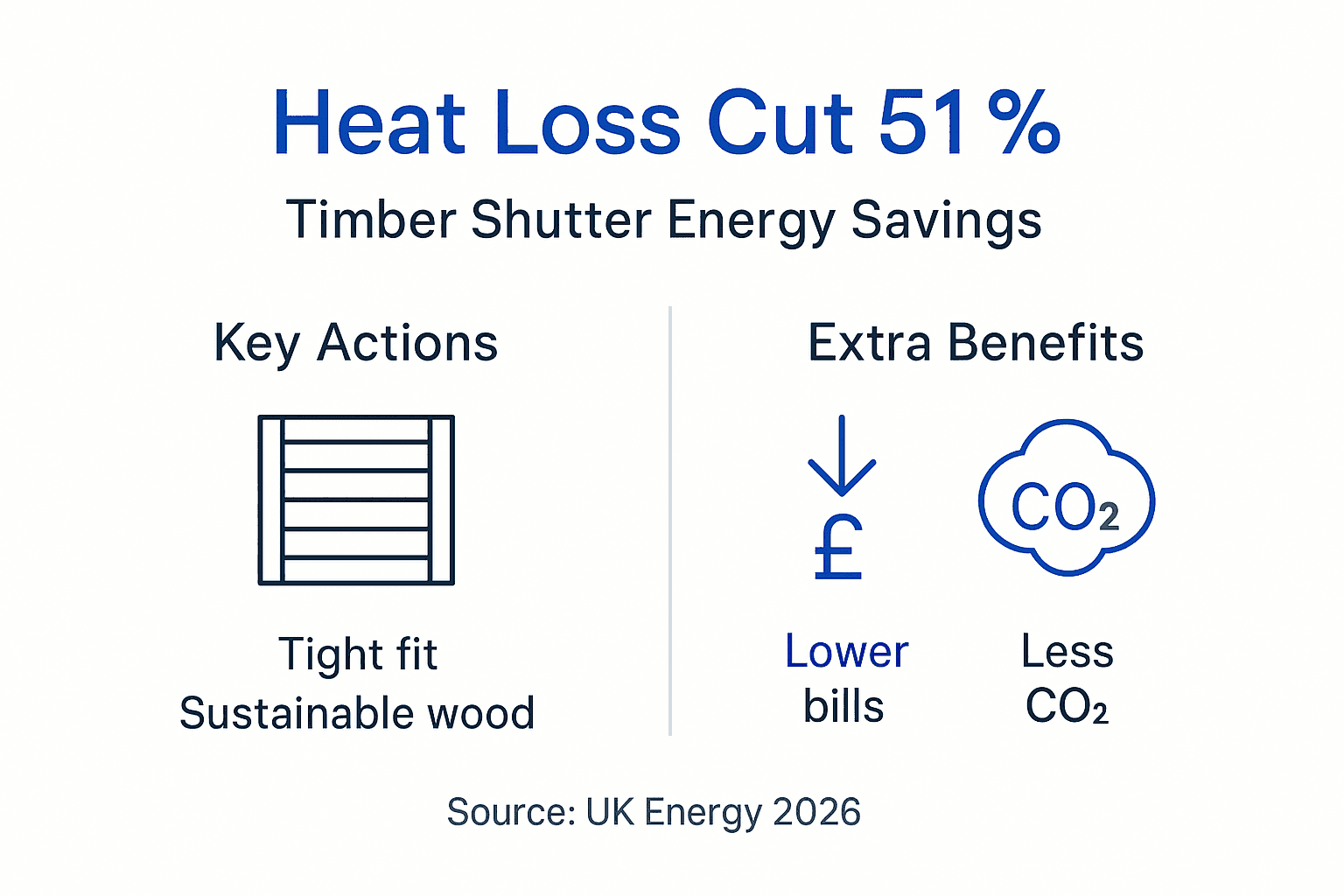
| Exceptional thermal insulation | Timber shutters reduce heat loss up to 51%, matching double glazing performance. |
| Sustainable material options | Recycled MDF and certified hardwood cut wood consumption by up to 50%. |
| Installation impacts savings | Professional fitting optimises energy savings up to 25% annually. |
| Smart technology integration | Motorised shutters adapt to conditions, reducing energy use dynamically. |
| Long lifespan reduces waste | Durable shutters last decades, minimising replacement cycles and environmental impact. |
Understanding How Shutters Improve Energy Efficiency
Interior shutters create a thermal barrier between your window glass and living space, trapping air in the gap to slow heat transfer. This insulating layer works year-round: keeping warmth inside during winter and blocking solar heat in summer.
The energy savings are substantial. Timber shutters reduce heat loss by up to 33%, a performance level comparable to upgrading single-pane windows to double glazing. This dramatic reduction occurs because the shutters add an extra insulating layer, reducing conductive heat loss through windows, which are typically the weakest thermal points in any home.
Beyond the raw numbers, strategic seasonal use amplifies savings. Closing shutters at night during winter months and keeping them shut during peak summer heat can save up to 25% on heating costs annually. Compare this to standard curtains, which offer minimal thermal resistance, or roller blinds, which leave gaps allowing air circulation and heat escape.
UK climate considerations matter here. With long, cold winters and unpredictable temperature swings, homes lose significant energy through poorly insulated windows. Energy-efficient shutters in UK homes address this vulnerability directly by:
- Creating an airtight seal when closed, preventing drafts
- Reflecting radiant heat back into rooms rather than letting it escape through glass
- Allowing precise control over light and temperature throughout the day
- Reducing reliance on central heating systems, cutting carbon emissions
The impact on heating bills becomes noticeable within the first billing cycle. Shutter insulation benefits extend beyond cost savings to include improved comfort, reduced condensation, and quieter interiors due to enhanced sound dampening properties.
Sustainable Materials and the Lifecycle of Bespoke Shutters
The environmental credentials of shutters depend heavily on material choice. Two sustainable options dominate the UK market: recycled MDF and responsibly sourced hardwood.
Recycled MDF shutters repurpose wood waste that would otherwise enter landfills. The manufacturing process compresses reclaimed wood fibers with resin, creating durable panels that perform exceptionally well in moisture-prone areas like bathrooms and kitchens. Certified hardwood shutters, sourced from forests managed under FSC or PEFC standards, ensure timber harvests support reforestation rather than deforestation.
Use of recycled MDF and responsibly sourced hardwood reduces wood consumption by up to 50% compared to conventional timber products. This reduction stems from efficient material utilization and the incorporation of post-consumer waste streams into production cycles.

Longevity amplifies sustainability benefits. Quality bespoke shutters last 20 to 30 years with minimal maintenance, far exceeding the typical 5 to 10-year lifespan of fabric blinds or curtains. This durability means fewer replacements, less manufacturing demand, and reduced waste generation over time.
Natural timber shutters also support carbon sequestration. Trees absorb CO2 as they grow, and this carbon remains locked in the wood throughout the shutter’s lifetime. When forests are sustainably managed with replanting programs, the net environmental impact becomes positive.
Recyclability at end of life further enhances credentials. Hardwood shutters can be repurposed into furniture or decorative items. MDF shutters, while less easily recycled, can be processed in specialized facilities or used as biomass fuel.
Key sustainable material features include:
- Zero-VOC finishes that improve indoor air quality
- Local UK manufacturing reducing transportation emissions
- Water-based paints and stains eliminating harmful solvents
- Minimal packaging using recyclable cardboard
Pro Tip: Always verify eco-certifications when selecting shutters. Request documentation proving FSC or PEFC compliance for hardwood options, or recycled content percentages for MDF. Reputable suppliers willingly provide this transparency, ensuring your purchase genuinely supports environmental goals.
How shutters save energy extends beyond immediate thermal performance to encompass lifecycle environmental impact. Choosing energy efficient shutter materials means investing in solutions that protect both your wallet and the planet. The benefits of energy efficient shutters compound over decades of use.
Installation Best Practices for Maximising Energy Performance
Even the highest-quality shutters fail to deliver promised energy savings if poorly installed. Airtight fitting is non-negotiable for thermal insulation. Gaps around frames allow cold air infiltration and warm air escape, undermining the entire investment.
Professional fitting can optimize energy savings up to 25% annually compared to DIY installations that leave thermal bridges and air leaks. Expert installers understand how to:
- Accurately measure window recesses accounting for architectural irregularities
- Select appropriate mounting methods based on wall construction and window type
- Install weatherstripping along all shutter edges to eliminate drafts
- Ensure panel alignment allows smooth operation while maintaining seal integrity
- Test closure mechanisms to confirm no light gaps remain when shutters are fully closed
Poor installation creates multiple problems. Warped panels that don’t close flush let heat escape continuously. Improper frame mounting stresses joints, causing premature failure. Inadequate sealing around the perimeter negates insulation benefits entirely.
Consider the difference in real-world performance. A professionally installed shutter system creates a near-hermetic seal, with thermal imaging showing minimal temperature differential across the window assembly. DIY installations often reveal bright spots indicating heat loss pathways that negate much of the shutter’s insulating potential.
Material-specific installation requirements also matter. Hardwood expands and contracts with humidity changes, requiring precise spacing allowances. MDF remains more dimensionally stable but demands careful moisture barrier installation in humid environments.
Pro Tip: Hire certified professional installers with verifiable experience in energy-efficient window treatments. Request references and ask to see thermal imaging results from previous projects. The installation cost represents a small fraction of total shutter investment but determines whether you capture the full energy-saving potential.
Shutters keep the heat in only when installed correctly. Cutting corners here means you’ll reduce energy bills with shutters far less than expected. Prioritize energy-efficient shutter installation to realize the substantial thermal performance benefits.
Smart Technology Integration for Enhanced Energy Management
Motorized shutters with home automation connectivity represent the cutting edge of energy-efficient window treatments. These systems dynamically adjust throughout the day, responding to temperature sensors, light levels, and your programmed preferences.
Smart controls can reduce energy use by adapting to conditions automatically. On cold winter mornings, shutters remain closed until the sun rises, then open on south-facing windows to capture free solar heating. As evening approaches, they close again to trap warmth inside. Summer routines reverse this pattern, blocking intense midday sun to reduce cooling loads.
The convenience factor is substantial. Voice commands or smartphone apps let you adjust shutters from anywhere. Geofencing triggers automatic closing when you leave home, ensuring no energy waste from open shutters during absences. Integration with smart thermostats creates coordinated energy management strategies.
Comparing manual versus smart options reveals interesting tradeoffs:
| Feature | Manual Shutters | Smart Shutters |
|---|---|---|
| Initial cost | Lower | Higher upfront investment |
| Energy optimization | Requires consistent user action | Automatic adaptation to conditions |
| Convenience | Physical adjustment needed | Remote and voice control |
| Maintenance | Minimal moving parts | Electronics require occasional updates |
| Energy savings potential | High with disciplined use | Maximised through automation |
Smart shutters excel when households have irregular schedules or multiple occupants with varying preferences. The system learns patterns and optimizes accordingly, capturing energy savings that manual operation might miss.
Key smart features include:
- Solar tracking that adjusts louver angles throughout the day
- Weather integration closing shutters ahead of storms
- Occupancy sensors opening shutters only in used rooms
- Energy monitoring showing real-time heating and cooling impact
The sustainability angle extends beyond direct energy savings. Reduced HVAC runtime means lower carbon emissions and extended system lifespan. Smart shutter solutions align modern convenience with environmental responsibility.
Benefits of shutter insulation multiply when combined with intelligent control systems. The result is a window treatment that actively participates in home energy management rather than passively insulating. Energy efficient shutters become even more effective with automation.
Common Misconceptions About the Environmental Impact of Shutters
Several persistent myths undermine homeowner confidence in shutters as eco-friendly solutions. Let’s correct the record with data.
Myth 1: Shutters are mainly decorative with minimal energy impact. Reality: Timber interior shutters can reduce heat loss by up to 51%, comparable to double glazing. This represents a substantial thermal upgrade for any home, particularly those with single-pane windows or poorly insulated frames.
Myth 2: All shutter materials have equivalent environmental credentials. Reality: Sustainability depends on material choice and lifecycle considerations. Recycled MDF and certified hardwood dramatically outperform vinyl or uncertified tropical hardwoods in environmental impact. Manufacturing processes, transportation distances, and end-of-life disposal options create significant differences.
Myth 3: Installation quality has little effect on energy performance. Reality: Poor installation can reduce thermal efficiency by 40% or more through air leaks and improper sealing. The gap between amateur and professional installation often determines whether shutters deliver meaningful energy savings or function primarily as decorative elements.
Myth 4: Curtains or blinds offer similar energy benefits. Reality: Standard window coverings lack the airtight seal and thermal mass of solid shutters. While heavy curtains provide some insulation, they cannot match the performance of properly fitted timber shutters with weatherstripping.
Common misconceptions about shutter energy savings include:
- Believing shutters only matter in extreme climates, when UK weather patterns create perfect conditions for thermal benefits
- Assuming newer homes don’t benefit, when even modern double-glazed windows lose significant heat that shutters reduce
- Thinking shutters require constant adjustment, when simple evening closing and morning opening routines capture most savings
- Expecting immediate dramatic bill reductions, when benefits accumulate gradually across heating and cooling seasons
Understanding why shutters matter requires looking beyond aesthetics to quantifiable energy performance. Addressing common myths about shutter energy savings helps homeowners make informed decisions based on evidence rather than assumptions.
Practical Guidance for UK Homeowners on Choosing Eco-Friendly Shutters
Selecting bespoke shutters that balance beauty, performance, and sustainability requires systematic evaluation. Follow these steps:
- Assess your windows and climate needs. Measure existing frames, note orientation (south-facing windows benefit most from solar control), and identify problem areas like drafty rooms or condensation-prone glass.
- Research material certifications. Choose bespoke shutters made from recycled or sustainably sourced materials for best eco-impact. Request FSC or PEFC documentation for hardwood, or recycled content verification for MDF options.
- Compare thermal performance specifications. Look for U-values (lower is better for insulation) and air tightness ratings. Quality suppliers provide technical data sheets showing tested performance metrics.
- Evaluate finish and coating options. Zero-VOC paints and water-based stains eliminate harmful chemical off-gassing while providing durable, cleanable surfaces. Avoid solvent-based finishes that compromise indoor air quality.
- Consider smart technology integration. Assess whether automation features justify the additional investment based on your household routines and energy management priorities.
- Verify professional installation services. Confirm installers have relevant experience and request examples of previous energy-efficient installations with measurable results.
- Review warranty and lifecycle support. Longer warranties indicate manufacturer confidence in durability. Ask about repair part availability and end-of-life recycling programs.
Pro Tip: Evaluate long-term durability as a primary sustainability factor. A hardwood shutter lasting 30 years has far less environmental impact than cheaper alternatives requiring replacement every decade. Calculate total lifecycle cost and waste generation rather than focusing solely on upfront price.
Practical considerations for UK homes include:
- Moisture resistance in coastal or high-humidity areas
- Fire safety ratings for properties with specific building regulations
- Child safety features for homes with young families
- Acoustic performance in urban environments with traffic noise
Bespoke interior window shutters offer customization addressing these specific needs while maximizing energy savings from shutters. Exploring smart shutter options adds another dimension to eco-friendly window treatments.
Explore Bespoke Shutters That Save Energy and Style Your Home
You’ve learned how the right shutters cut heat loss dramatically, use sustainable materials responsibly, and integrate smart technology for effortless efficiency. Now it’s time to see these benefits in your own home.
Shutter World specializes in bespoke internal window shutters crafted from recycled MDF and certified hardwood. Every installation is professionally fitted to create the airtight seal essential for maximum energy savings. Whether you prefer classic timber elegance or modern motorized convenience, you’ll find solutions perfectly matched to your aesthetic and environmental goals. Our nationwide service includes in-home surveys, precise measurements, transparent quotations, and expert installation backed by comprehensive warranties. Explore plantation shutters installations UK to discover how beautiful, sustainable window treatments transform homes while slashing energy bills year after year.
Frequently Asked Questions
How much can shutters realistically reduce my heating bills?
Timber shutters reducing heat loss by up to 51% typically translate to 15-25% lower annual heating costs, depending on your home’s existing insulation, window quality, and usage patterns. Savings are highest in poorly insulated properties with single-pane windows.
Are recycled MDF shutters as durable as solid hardwood?
Recycled MDF shutters offer excellent durability in most residential applications, lasting 15-20 years with proper care. Hardwood options extend lifespan to 25-30 years and provide superior performance in high-humidity environments like bathrooms, though both materials deliver comparable thermal insulation when properly installed.
Do I need to close shutters completely to gain energy benefits?
Partially open shutters still provide some insulation, but full closure creates the airtight seal necessary for maximum thermal performance. Adjustable louvers let you control light while maintaining reasonable insulation, though closing them entirely at night captures the greatest heating cost savings.
Can I install energy-efficient shutters myself?
DIY installation is possible but rarely achieves the airtight fitting that professional installation guarantees. Poor sealing can reduce energy savings by 40% or more through air leaks, making professional fitting a worthwhile investment that pays back through optimized performance.
How do smart shutters compare to standard motorized blinds?
Smart shutters provide superior insulation due to solid construction and precise fitting, while offering automation convenience similar to motorized blinds. The combination of thermal mass, airtight sealing, and intelligent control creates energy management capabilities that standard blinds cannot match.
What maintenance do eco-friendly shutters require?
Minimal upkeep preserves sustainability benefits. Wipe panels monthly with a damp cloth, vacuum louver gaps quarterly, and inspect weatherstripping annually for wear. Quality shutters need no refinishing for 10-15 years, and hinges require only occasional lubrication to maintain smooth operation.