
Find the best shutter designs to transform your home

Best Shutter Designs 2025
TL;DR:
- UK homeowners in 2025 have a wide range of stylish and functional shutter options.
- Selecting shutters requires considering room function, window shape, material, energy efficiency, and budget.
- Bespoke, made-to-measure shutters are ideal for unique window shapes and to ensure a perfect fit.
Choosing the right shutters for your home feels straightforward until you’re faced with dozens of styles, materials, and configurations, each promising to be the ideal solution. In 2025, UK homeowners have more options than ever, from timeless plantation shutters to smart-home-integrated designs with app controls. The challenge is not finding shutters; it is finding the right ones for your specific windows, your daily routine, and your interior vision. Whether your home has elegant bay windows, awkward angled frames, or simply a need for better privacy and warmth, this guide gives you the criteria, comparisons, and design insights to make a confident, lasting decision.
Table of Contents
- What to consider before choosing shutters
- Top 5 shutter designs for 2025
- Comparing the best shutter designs
- Design decisions for unique UK homes
- Why most homeowners get shutter designs wrong (and how to get it right)
- Find your perfect bespoke shutter design
- Frequently asked questions
Key Takeaways
| Point | Details |
|---|---|
| Tailor to your space | Bespoke shutters work for every shape and size of window, enhancing both function and design. |
| Think beyond trends | Timeless practicality often outlasts fleeting style preferences in shutter design. |
| Consider efficiency | Choosing energy-efficient shutters can cut utility costs and boost year-round comfort. |
| Expert advice counts | A consultation with a specialist helps avoid common installation and style pitfalls. |
What to consider before choosing shutters
Before you start browsing styles and finishes, it pays to think clearly about what your shutters actually need to do. The most beautiful shutter in any showroom catalogue can become a source of daily frustration if it does not suit your room, your windows, or the way you live.
Here are the key criteria to work through before making any design decision:
- Room type and function. A bedroom demands different priorities from a kitchen or lounge. In bedrooms, blackout performance and sound dampening matter most. In kitchens, moisture resistance and ease of cleaning are non-negotiable. Living rooms call for a balance of light control, aesthetics, and insulation.
- Window shape and dimensions. Standard rectangular windows are well served by most shutter designs, but many UK homes feature bay windows, arched frames, triangular skylights, or period-era casements that require precision bespoke engineering. Off-the-shelf products simply will not fit these correctly.
- Material choice. The three main material categories are hardwood, composite (MDF with a protective coating), and aluminium. Hardwood offers warmth and prestige, composite provides durability at a lower price point, and aluminium excels in wet environments like bathrooms and utility rooms.
- Energy efficiency benefits. Energy efficiency matters when choosing contemporary shutters, and a well-fitted shutter creates a thermal barrier that reduces heat loss in winter and prevents excessive solar gain in summer. This is especially valuable in older UK properties with single-glazed or draughty windows.
- Colour and finish. Your shutter should feel like it belongs to your interior, not just sits in front of a window. Explore shutter colours that complement your wall tones, flooring, and furniture. White and off-white remain perennially popular, but heritage greens, greys, and bespoke painted finishes are increasingly sought after.
- Budget and timeline. Bespoke shutters are an investment, and lead times vary depending on material and complexity. Set a realistic budget early and factor in professional installation costs, which are essential for a flawless, long-lasting result.
- Installation complexity. A straightforward rectangular window in a new build is relatively simple to fit. A Victorian bay with multiple angled returns requires an experienced installer who understands structural nuances.
Pro Tip: Before you speak to any supplier, write down your top three priorities based on your daily lifestyle. If you have young children, easy-clean surfaces matter. If you work night shifts, blackout performance is essential. Knowing your priorities sharpens every conversation you have with a designer. For a thorough grounding in choosing interior shutters for UK projects, specialist guidance makes a measurable difference.
Now that you are prepared to make a choice, let us break down the most popular shutter design options UK homeowners are selecting in 2025.
Top 5 shutter designs for 2025
Shutter trends 2025 reveal that contemporary designs blend function with visual appeal as a key priority for British homeowners. Style alone no longer drives decisions. Buyers want shutters that perform beautifully every single day.
Here are the five designs leading the market right now:
- Plantation shutters. These remain the most versatile and popular choice across UK homes. Featuring wide, adjustable louvres (typically 63mm to 89mm), plantation shutters give you precise control over both light and privacy. Tilt the louvres to filter afternoon sun, or open them fully to flood a room with natural light. They suit virtually every room and work in both contemporary and traditional interiors.
- Solid panel shutters. Where plantation shutters prioritise light control, solid panel shutters prioritise privacy and blackout performance. Each panel is a single, unbroken surface that, when closed, blocks light entirely. They carry a strong period character that suits Victorian, Georgian, and Edwardian properties particularly well, and they pair beautifully with exposed timber beams or original sash windows.
- Café-style shutters. These cover only the lower portion of a window, leaving the upper section open to natural light while maintaining street-level privacy. They are especially effective in ground-floor rooms facing busy roads or neighbours. Café-style shutters add a relaxed, European aesthetic that works well in kitchens, dining rooms, and informal sitting rooms.
- Tracked shutters. When you need to cover wide openings, bi-fold doors, or large patio-facing glazed walls, tracked shutters are the answer. They operate along a top track, folding or sliding neatly to one side. They are among the most practical solutions for open-plan spaces and conservatories. For further inspiration, explore shutters for smart homes where tracked systems are increasingly integrated with automated controls.
- Aluminium and composite shutters. Durability and moisture resistance place these firmly in kitchens, bathrooms, and utility rooms. They will not warp, swell, or deteriorate in humid conditions the way untreated timber can. Modern finishes mean they look just as refined as hardwood alternatives, and they are often easier to maintain.
“The best shutter design is not simply the most fashionable one. It is the one that fits your window perfectly, suits your daily routine, and still looks beautiful a decade from now.”
With these leading styles in mind, it is useful to compare them side by side on practical features.
Comparing the best shutter designs
Choosing between shutter styles becomes clearer when you lay the key factors out together. Materials and energy efficiency can be decisive factors in design selection, particularly for older properties where heat retention is a genuine priority.
| Shutter style | Best material | Ideal room | Price range | Key strength | Limitation |
|---|---|---|---|---|---|
| Plantation | Hardwood or composite | Any room | £££ | Light control and versatility | Less suitable for full blackout |
| Solid panel | Hardwood | Period homes, bedrooms | ££££ | Full blackout and heritage look | No light-filtering when closed |
| Café-style | Hardwood or composite | Kitchen, dining room | ££ | Street-level privacy, light at top | Leaves upper window uncovered |
| Tracked | Aluminium or composite | Conservatories, wide openings | ££££ | Covers large spans smoothly | Requires precise track installation |
| Aluminium/composite | Aluminium or MDF | Kitchens, bathrooms | ££ | Moisture resistance, easy cleaning | Less warmth aesthetically |
A few points deserve special attention when reading this comparison. Bay windows, which are so characteristic of UK Victorian and Edwardian terraces, typically suit plantation or solid panel shutters engineered with bespoke angled frames. Trying to force a standard shutter into a bay return causes gaps, poor light seal, and an untidy finish.
For rooms where thermal performance matters most, look closely at energy-efficient designs that are built to a tight tolerance. A shutter with even a small gap around its frame loses a significant proportion of its insulating value. This is where interior energy-efficient shutters built to exact measurements earn their price many times over through reduced energy bills.
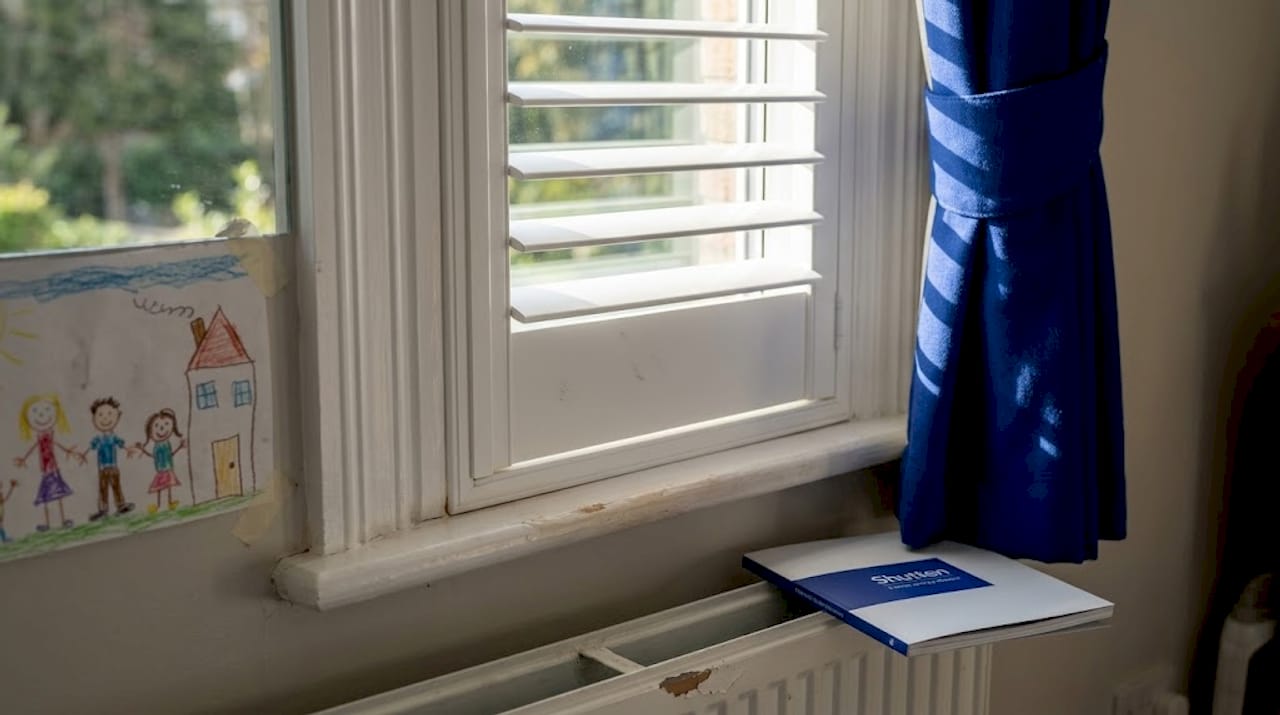
It is also worth noting that composite shutters have improved dramatically in recent years. Early MDF-core products had a reputation for being less refined, but today’s composite ranges feature hardwearing protective coatings that resist knocks, fading, and moisture, making them an excellent mid-range choice that does not compromise on appearance.
Once you have compared the practical elements, final selection comes down to your home’s unique needs.
Design decisions for unique UK homes
British homes are wonderfully varied, and that architectural character is precisely what makes them so special to live in. A well-chosen shutter celebrates those features rather than concealing them. Bespoke shutters are ideal for distinct window shapes and unique architectural elements, and this is where made-to-measure expertise genuinely sets the outcome apart from anything available off the shelf.
Here is how to approach some of the most common design challenges:
- Bay windows. These require individual panels crafted for each section of the bay, with accurate angled frames joining them seamlessly. The result frames the bay beautifully and allows each panel to open independently. Bay window shutters are one of our most frequently requested bespoke solutions, and the finished effect is consistently stunning.
- Arched and angled windows. Period properties often feature arched fanlights, Gothic-style pointed frames, or steeply angled roofline windows. Bespoke shutters for these shapes are engineered with curved or shaped top rails that follow the window’s geometry precisely. No filler panels, no compromise on fit.
- Triangular and skylight windows. These present real challenges for standard window coverings. A made-to-measure shutter panel shaped to the exact angle of the frame provides clean lines and functional light control where a blind or curtain simply cannot.
- Period features. Working with original sash windows, deep reveals, or ornate architraves demands sensitivity. Colour choices, frame profiles, and louvre widths all influence whether the shutter feels at home in a period interior or looks incongruous. Subtle, heritage-inspired finishes in soft whites, creams, or muted greys tend to honour original architecture beautifully.
- Contemporary new builds. Crisp, minimalist homes call for shutters with clean lines, wider louvres, and a sharp painted finish. Full-height plantation shutters in brilliant white or warm off-white are among the most requested designs for modern open-plan spaces.
- Custom colour matching. Whether you are working with a heritage colour palette or a bold, contemporary scheme, colour-matched shutters make the window covering feel integral to the room’s design rather than an afterthought.
Pro Tip: When contacting a specialist for advice or a quote, take clear photographs of your windows from both inside and outside, and include a wide shot showing the full wall context. This simple step speeds up the consultation process considerably and helps designers spot any potential complications before the survey visit.
With practical and style-driven solutions in mind, there is a big-picture lesson in what actually works for UK living spaces.
Why most homeowners get shutter designs wrong (and how to get it right)
After many years of working with homeowners across the UK, we have observed a pattern that repeats itself far too often. A homeowner sees a style they love, perhaps in a magazine spread or on a home renovation programme, and purchases that design without properly considering their own windows, their room’s function, or the practicalities of daily use. The result is a shutter that looks broadly right but performs poorly or creates unexpected annoyances.
The most common mistakes are telling. Choosing a wide-louvre plantation shutter for a bedroom without considering blackout performance. Selecting a solid panel design for a kitchen where light and airflow are vital. Ordering a standard rectangular frame for a bay window and discovering mid-installation that it cannot be made to fit without visible gaps.
Reviewing shutter trends perspective is genuinely worthwhile for understanding where the market is heading, but trends should inform rather than dictate your decision. The shutters that serve you best are those designed around your lifestyle first and your aesthetic preferences second. If you work from home and need to manage glare throughout the day, louvre adjustability is non-negotiable. If you have young children and wipe surfaces constantly, smooth, coated composite finishes will outlast painted timber every time.
Our strongest advice: resist the pull of purely visual decisions. Prioritise fit, function, and finish in that order. The style will follow naturally when you start from the right place.
Find your perfect bespoke shutter design
At Shutter World, we believe every home deserves shutters that feel built for it, not just fitted to it.

Our team of specialists works with homeowners across the UK, from straightforward rectangular windows to the most architecturally complex shapes imaginable. Whether you are drawn to the warmth of our plantation shutters installations or you need bespoke window shutters engineered for a genuinely unusual frame, we are here to guide you from your first question through to installation day and beyond. Curious about what makes shutters bespoke and why it matters for your home? Explore our resources and gallery, then book your free in-home survey. We will take care of everything else.
Frequently asked questions
Which shutter design is most energy-efficient for UK homes?
Full-height and plantation shutters made to an exact bespoke fit create the strongest thermal barrier, with insulating benefits of bespoke shutters most noticeable in older properties with draughty frames. The precision fit eliminates gaps that would otherwise allow heat to escape.
Are bespoke shutters suitable for bay windows or unusual shapes?
Absolutely. Bespoke solutions for unusual windows are precisely what made-to-measure shutters exist for, and a specialist will engineer each panel to follow the exact geometry of your window, including angled returns, arched tops, and non-standard depths.
How do I match my shutter colour to my décor?
Most specialist suppliers offer a wide palette and custom colour-matching services, and colour matching advice from an expert designer ensures your shutters integrate naturally with your walls, flooring, and furnishings rather than clashing.
What is the difference between plantation and solid panel shutters?
Plantation shutters feature adjustable louvres that allow you to control light and airflow with precision, while solid panel shutters are fixed surfaces that provide complete blackout and a strong period aesthetic when fully closed.
How can I make sure I pick the right shutter for my home?
Begin with your window shape, your room’s primary function, and your preferred aesthetic, then seek professional advice. Tips for choosing shutters from a specialist ensure you account for practical details that are easy to overlook when choosing independently.