
How to balance style and function with bespoke shutters

Balancing style and function shutters
TL;DR:
- Modern bespoke interior shutters combine timeless elegance with high performance, offering superior insulation, light control, and safety. Proper material choice, precise fitting, and suitable mechanisms are essential to achieve both aesthetic harmony and functional efficiency. Customized solutions ensure optimal fit, safety compliance, and long-term durability, making them a worthwhile investment for any home.
Many homeowners assume that choosing window shutters means a compromise: either you pick something beautiful that lets draughts in, or you opt for a purely practical solution that dulls your interior. That assumption is understandable, but it is also wrong. Today’s bespoke interior shutters are engineered to deliver both timeless elegance and genuine performance, whether that means better insulation, precise light control, or child-safe operation. This guide walks you through the evidence-backed strategies, key decisions, and practical considerations that will help you achieve the ideal balance in your own home.
Table of Contents
- Why balancing style and function matters in shutters
- Key factors: What influences style and practicality in shutters?
- Safe, stylish, and practical: Mechanism and accessory choices
- Common pitfalls and troubleshooting: Keeping shutters effective and beautiful
- Why the best shutters are always bespoke to your home
- Bring style and performance together in your home
- Frequently asked questions
Key Takeaways
| Point | Details |
|---|---|
| Style and function co-exist | Modern shutters can enhance aesthetics and improve thermal performance at the same time. |
| Material and fit are key | Careful material selection and precision installation drive both comfort and visual appeal. |
| Safety should not be sacrificed | Cordless mechanisms and compliant accessories keep shutters safe for families without losing style. |
| Bespoke solutions maximise value | Custom-made shutters deliver the best results for unique or complex window spaces. |
Why balancing style and function matters in shutters
The question of style versus function is one we hear constantly, and it is one worth taking seriously. Your windows are among the most prominent features in any room. They set the tone for natural light, frame your view of the outside world, and contribute significantly to the thermal efficiency of your home. Getting shutters wrong on either front, whether through poor aesthetics or inadequate performance, is a costly mistake that can linger for years.
Homeowners across the UK are increasingly aware that window treatments are not merely decorative. The rise in energy costs has focused attention on how well a shutter actually insulates a room, and there is compelling evidence that the right product genuinely makes a difference. As research highlighted on the Shutter World website confirms, precision fitting significantly reduces window heat loss, with performance depending heavily on fit quality and material choice. This is not a marketing claim. It is a practical outcome that rewards careful specification.
What is especially encouraging for homeowners is that style and function in architecture are not opposing forces. When a shutter is designed and fitted with genuine precision, the clean lines that result from a perfect fit are also the same lines that eliminate gaps and improve insulation. The qualities that make a shutter look outstanding, meticulous measurement, quality materials, and expert installation, are precisely the qualities that make it perform outstandingly too.
Consider the practical benefits that well-specified interior shutters deliver:
- Superior thermal insulation, reducing heat loss through your windows in winter and minimising heat gain in summer
- Precise light control, allowing you to filter or block light exactly as you need throughout the day
- Enhanced privacy, without sacrificing the ability to let in natural light
- Improved acoustic performance, particularly valuable in properties near busy roads or urban centres
- Added property value, as bespoke shutters are widely recognised as a premium feature by buyers and valuers alike
“The best shutters do not ask you to choose between looking beautiful and working brilliantly. When the specification is right, every design decision reinforces the performance outcome.”
With this foundation in place, the next step is understanding exactly which factors determine both the look and the practical utility of your shutters.
Key factors: What influences style and practicality in shutters?
Understanding the controllable variables is what separates a genuinely informed shutter decision from a gamble. There are four principal factors at work, and each one influences both how your shutters look and how effectively they perform.
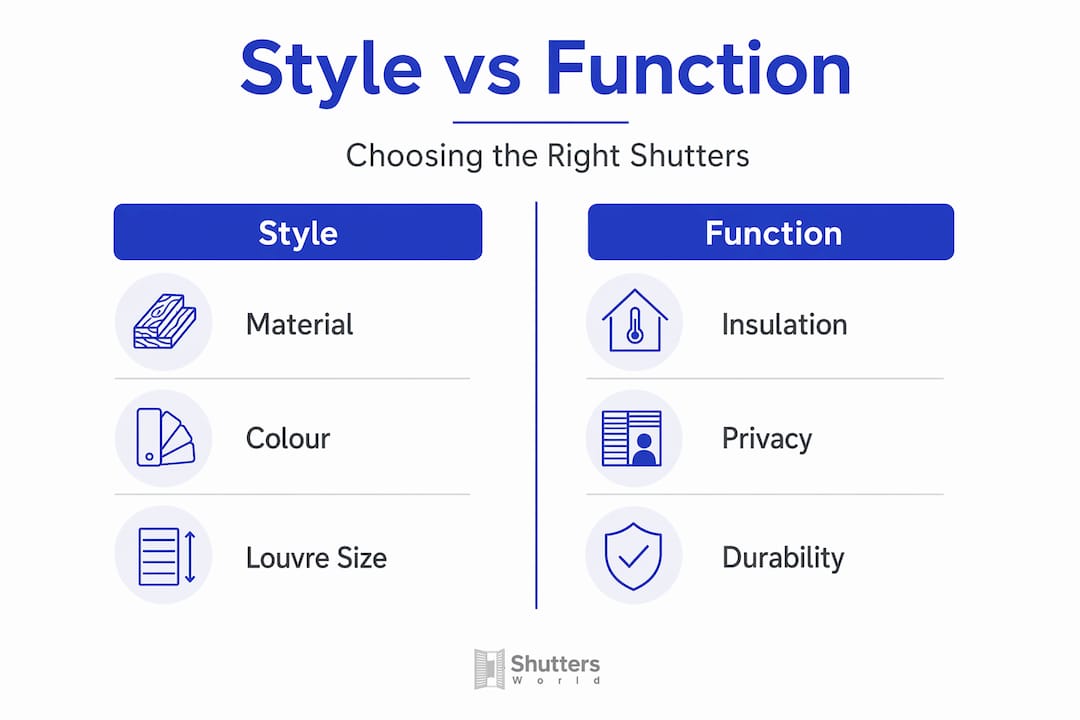
Material selection is arguably the most important starting point. MDF shutters with a polypropylene coating, such as those in our Seattle range, offer excellent moisture resistance and durability, making them ideal for kitchens and bathrooms. Hardwood shutters, such as those in our premium Montana range, bring a richness of grain and finish that is genuinely difficult to replicate, and they perform exceptionally in living spaces and bedrooms. Explore best shutter materials in depth if you want to compare options before committing.
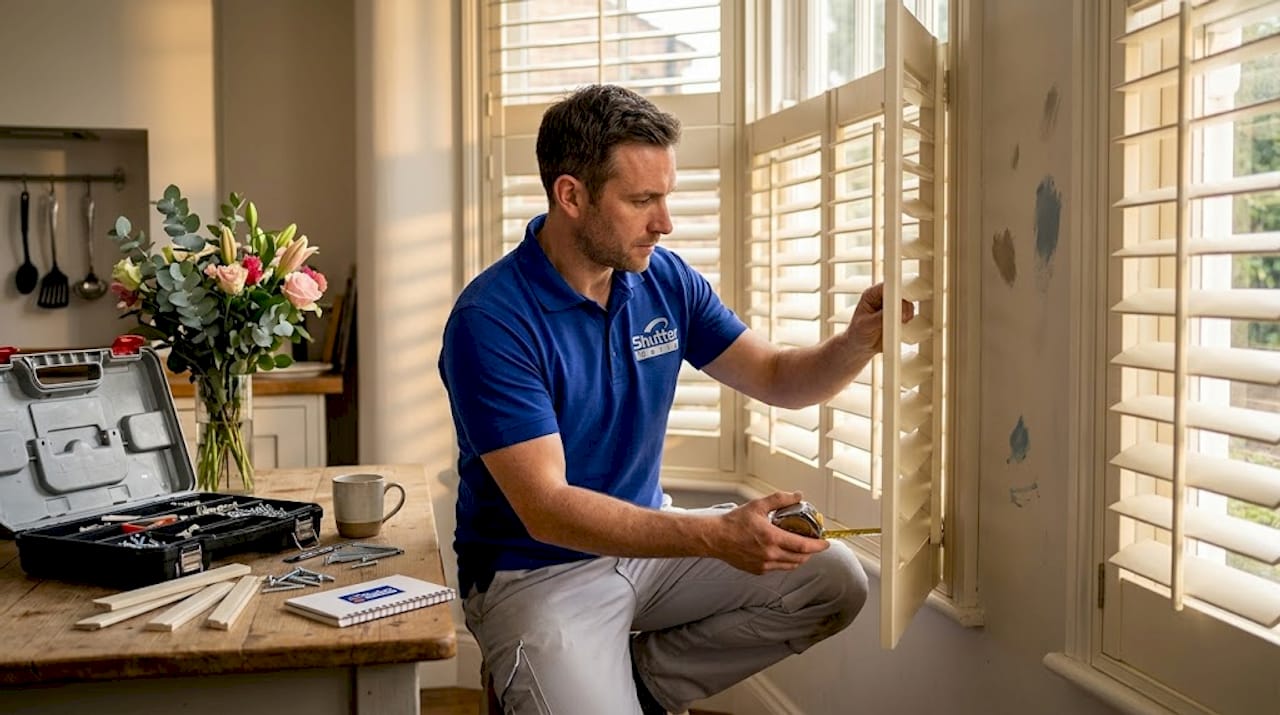
Precision fit is the factor that most dramatically separates bespoke shutters from off-the-shelf alternatives. As the practical evidence shows, gap minimisation drives performance far more than the product label alone. A shutter that leaves even a modest gap around its frame will underperform thermally and look noticeably less refined. Expert measurement and installation eliminate this risk.
Louvre width, frame style, and finish set the visual tone of the shutter and have a meaningful impact on how the room feels. Wider louvres, typically 89 mm or 114 mm, provide a more open, contemporary look and allow more light through when open. Narrower louvres suit period properties and more traditional interiors. The frame profile, whether a full frame, café style, or solid panel, changes the proportion of glass on show and the overall character of the window.
Window context matters enormously. The shape, size, and glazing specification of your window will determine which shutter solution is optimal. A standard sash window calls for a different approach than a deep bay, an arched fanlight, or a large conservatory roof panel.
| Factor | Effect on style | Effect on function |
|---|---|---|
| Material (hardwood vs. MDF) | Grain, finish, and colour depth | Moisture resistance, durability, thermal performance |
| Precision fit | Clean, flush, professional appearance | Insulation, draught exclusion, light seal |
| Louvre width | Contemporary vs. traditional aesthetic | Light volume, ventilation control |
| Frame type | Architectural proportion and character | Coverage, privacy level, ease of operation |
| Glazing context | Visual integration with window architecture | Optimal thermal and acoustic benefit |
Pro Tip: Always request a professional in-home survey before committing to a specification. Measurements taken by an experienced fitter account for subtle irregularities in your window frame that a tape measure in an untrained hand will simply miss.
Safe, stylish, and practical: Mechanism and accessory choices
Once you have settled on materials and style lines, the mechanism and hardware choices are where the detail really matters. These decisions affect both how your shutters operate day to day and how they look when closed.
For families with young children, the regulatory picture in the UK is clear. Compliance with EN 13120, EN 16433, and EN 16434 is the relevant standard framework for internal window coverings. The core requirement is the elimination of hazardous looped cords or chains that pose a strangulation risk. As Shutter World’s safety guidance confirms, cordless shutter mechanisms operated by tilt rods or motorised systems are the most straightforward way to achieve full compliance. For practical guidance specific to family homes, our resource on kid-safe shutters is well worth reading.
The choice between a visible tilt rod and a hidden or “hide-tilt” mechanism is one that also has a strong aesthetic dimension. A traditional tilt rod, running vertically through the centre of the louvre stack, is perfectly functional and has a classic, honest quality that suits many interiors. A hidden mechanism, by contrast, gives the shutter front a completely uninterrupted appearance, which many homeowners with modern or minimalist schemes strongly prefer. As detailed in our accessories guide, concealed tilt and magnetic closures change the entire visual character of the finished shutter while also ensuring a secure and smooth close every time.
Here is a clear comparison of the main mechanism options:
| Mechanism type | Aesthetic quality | Safety compliance | Ease of operation |
|---|---|---|---|
| Visible tilt rod | Classic, traditional | Fully compliant (cordless) | Very straightforward |
| Hidden/hide-tilt | Modern, uninterrupted | Fully compliant (cordless) | Smooth, slightly premium feel |
| Motorised | Seamless, no visible hardware | Fully compliant | Effortless, remote-controlled |
| Corded (legacy) | Standard appearance | Not compliant for family homes | Functional but outdated |
The practical steps for choosing the right mechanism are as follows:
- Assess your household. Families with young children or pets should prioritise cordless or motorised options without exception.
- Consider your aesthetic priorities. If clean, unbroken lines matter to your scheme, a hide-tilt or motorised solution will reward the investment.
- Evaluate the window size and weight. Larger, heavier panels benefit from motorised mechanisms or reinforced hinges to maintain smooth operation over time.
- Think about cord-free shading solutions more broadly. The shift away from cords and chains is a long-term trend across all window coverings, not just shutters.
“Choosing the right mechanism is not just a safety decision. It is a design decision. The hardware you select shapes the personality of the finished shutter as much as any colour or louvre width.”
Pro Tip: Silent magnetic closures are a small but genuinely satisfying upgrade. They ensure the shutter panels close with a precise, quiet click rather than rattling in draughty conditions, and they contribute to that refined, premium feel that distinguishes a truly well-specified installation.
Common pitfalls and troubleshooting: Keeping shutters effective and beautiful
Even the finest shutters can disappoint if installation is imprecise or if they are not maintained thoughtfully. Understanding where things can go wrong gives you the confidence to protect your investment for the long term.
The most common issues we see with shutters that underperform fall into two categories: installation errors and operational wear. Both are largely avoidable with the right approach from the outset.
Installation pitfalls to watch for include:
- Uneven frame alignment, which causes panels to sit skewed and creates visible gaps that compromise both appearance and insulation
- Incorrect louvre tension, leaving louvres that either flop open without holding position or require excessive force to adjust
- Inadequate fixings, particularly in older properties where window surrounds may not be fully square or structurally sound
- Mismatched panel widths on multi-panel configurations, which creates an unbalanced visual rhythm across the window
Operational reliability is something we consider from every angle, and as guidance on troubleshooting common shutter issues confirms, misalignment and jamming are the most frequent problems reported. The fix, in most cases, is a careful check of alignment, hinge condition, and whether the panel is catching on the frame. Addressing these issues early prevents them from compounding into more significant problems.
For ongoing maintenance, a few simple habits make a significant difference:
- Wipe louvres regularly with a slightly damp cloth to prevent dust build-up that can accumulate around the pivot points and cause stiffness over time
- Inspect hinges and tilt rods every six months, tightening any loosened screws before they cause misalignment
- Avoid slamming panels when closing, as repeated impact gradually damages the frame joints and weakens the hinge fixings
- Check for swelling or warping in rooms with significant temperature or humidity variation, particularly in kitchens and bathrooms
For a broader picture of how shutters contribute to home energy performance over time, our energy-saving shutter guide covers the relationship between maintenance quality and sustained thermal performance in practical detail.
Pro Tip: If your louvres have started to droop and no longer hold position when adjusted, the internal tension spring within the louvre stile may need adjustment. This is a quick fix for a professional fitter and far less costly than replacing a panel.
Why the best shutters are always bespoke to your home
Here is the perspective we hold with genuine conviction, built on over 25 years of specifying and installing shutters in homes of every conceivable type across the UK: generic advice and off-the-shelf products almost always disappoint.
Most guides on window shutters focus on aesthetics in isolation, giving you colour palettes and louvre sizes without addressing whether the chosen product will actually fit your window, perform in your glazing context, or comply with current safety requirements. The result is that homeowners often make decisions based on showroom appeal and then discover, once installed, that the shutter does not sit flush, does not insulate as expected, or looks noticeably out of proportion with the architectural character of the room.
The uncomfortable truth is that no amount of careful style selection compensates for an imprecise fit. A beautifully painted hardwood shutter that does not align perfectly with the frame is, in functional terms, no better than a budget alternative. The visual quality suffers too, because the gaps and misalignments that signal a poor fit are immediately visible to any discerning eye.
Bespoke shutters, specified from precise measurements taken in your home, are the only solution that genuinely accounts for all the variables simultaneously. Your window shape, whether a standard rectangle or a complex arch, bay, or angled rooflight, your glazing specification, your interior design priorities, and your household’s safety requirements are all different from your neighbour’s. Our bespoke shutter solutions are designed precisely around that individuality, which is why the results are consistently more satisfying in both form and function than anything a catalogue product can deliver.
The homeowners who tell us they are most satisfied are not always those with the largest budgets. They are the ones who invested time in the specification process, asked the right questions, and trusted expert guidance over generic trend advice. That approach pays dividends every single day the shutter is on the window.
Bring style and performance together in your home
If this guide has helped you move from uncertainty to clarity, the next step is to see what a truly bespoke shutter solution looks like for your specific windows.
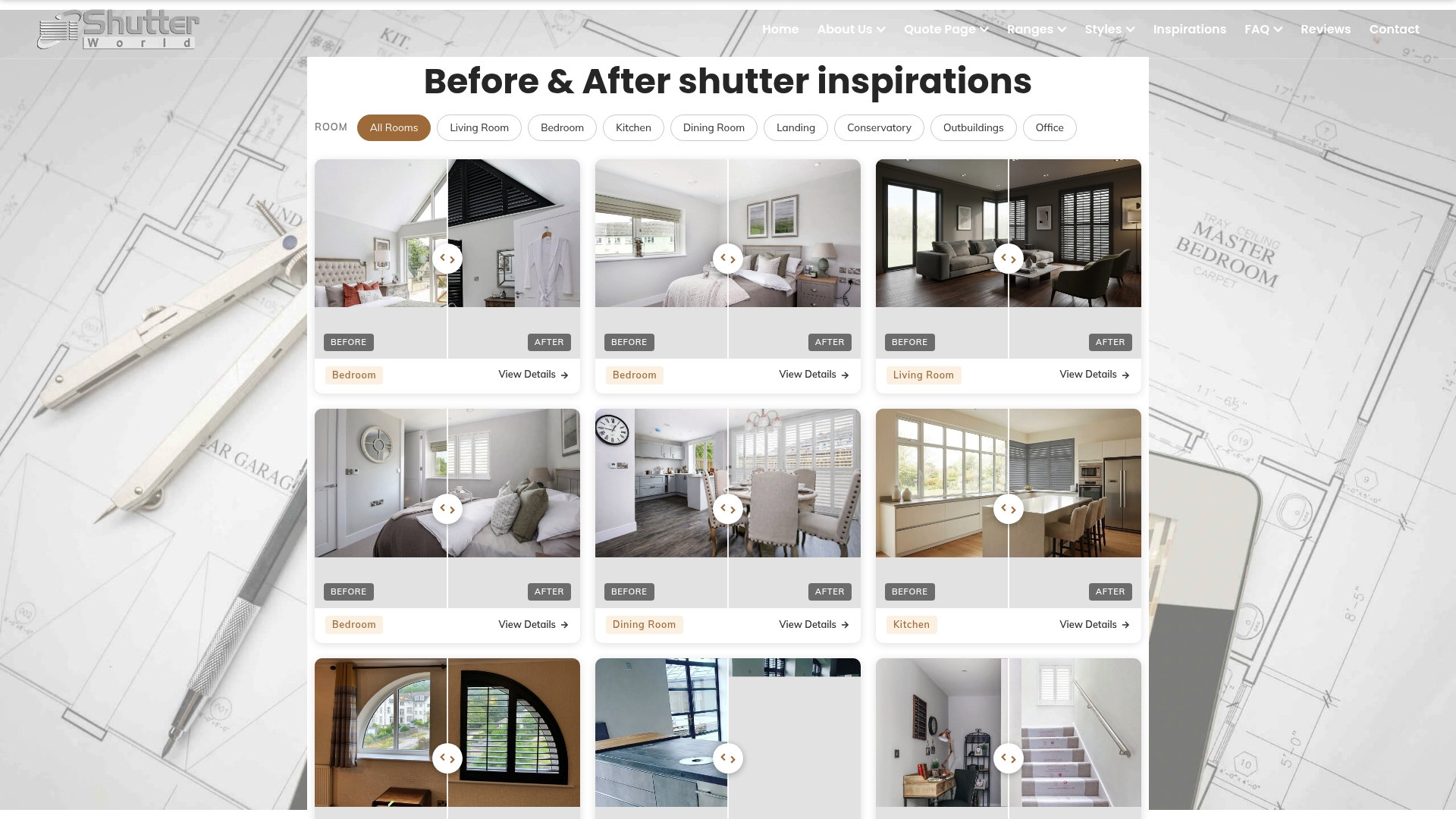
At Shutter World, we specialise in turning the style-and-function balance from a theoretical ideal into a practical reality. Whether you are exploring plantation shutter installations for a classic finish, looking for made-to-measure shutters for an unusual window shape, or simply want to understand your options with no obligation, our team is ready to help. As the bespoke shutter company trusted by homeowners across the UK, we provide a complete service from survey to installation, backed by full product and workmanship guarantees. Book your free in-home survey today and discover what precision-crafted shutters can do for your home.
Frequently asked questions
How much can shutters reduce heat loss?
Internal plantation shutters can reduce window heat loss by up to 28% on double-glazed windows, with insulation effectiveness depending on material quality and precision of fit.
What makes shutters child-safe in UK homes?
Cordless designs operated by tilt rods or motorised mechanisms, built to comply with EN 13120, EN 16433, and EN 16434, are the most reliable way to ensure shutters are safe for children in UK family homes.
How do I keep my shutters looking and working their best?
Regular alignment checks, gentle operation, and periodic cleaning of louvre pivot points prevent the most common issues; as troubleshooting guidance confirms, catching misalignment early is far simpler than addressing a fully jammed panel.
Are bespoke shutters worth the extra cost?
Bespoke shutters are precisely measured and engineered to fit your exact window, delivering better insulation, superior aesthetics, and longer-lasting performance than any off-the-shelf alternative can match.