
How to complement shutters: colour, fabric, and style

TL;DR:
- Complementing window shutters involves coordinating colors, fabrics, and hardware to create a cohesive interior design statement. Proper selection and placement enhance both the look and functionality of your window treatment, emphasizing balance over matching. Key principles include the 60-30-10 color rule, testing undertones in natural light, and mounting hardware at appropriate heights for optimal operation.
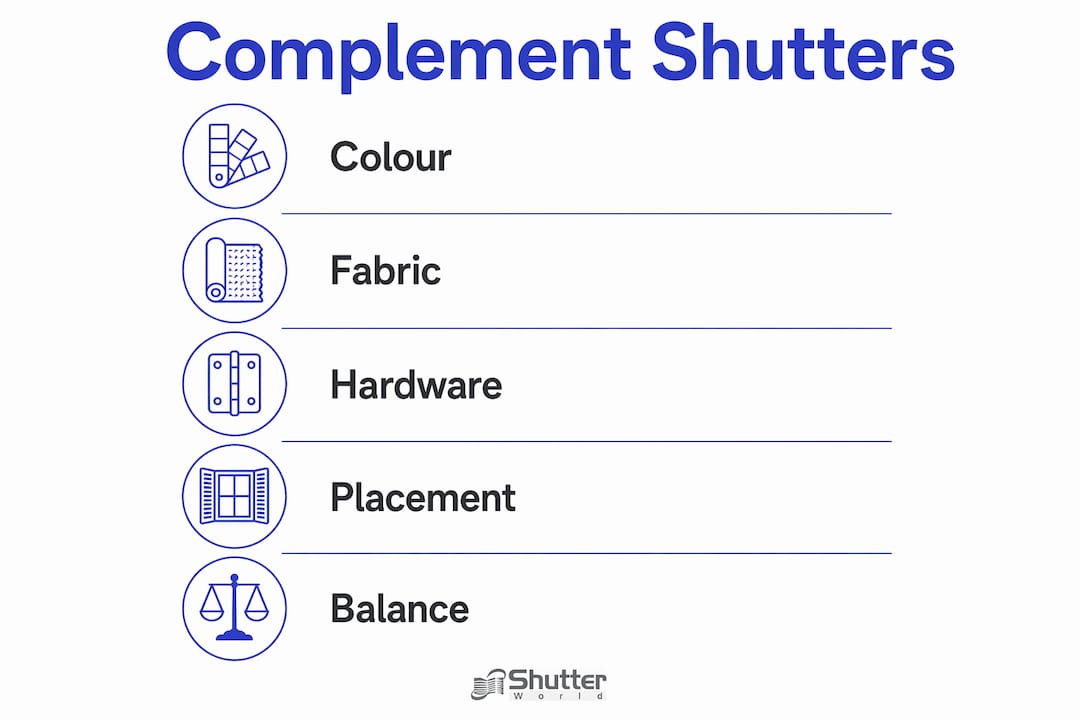
Complementing window shutters is the practice of coordinating colours, fabrics, and hardware to create a unified window treatment that enhances both the look and function of your interior. Done well, it transforms shutters from a practical fitting into a deliberate design statement. The approach draws on established principles such as the 60-30-10 colour rule, thoughtful curtain placement, and coordinated hardware finishes. Whether you have plantation shutters in a period townhouse or contemporary full-height panels in a new build, knowing how to complement shutters makes the difference between a room that feels considered and one that feels unfinished.
How to complement shutters with colour
Colour is the single most powerful tool for tying shutters into your wider interior scheme. The first decision is whether to complement or contrast. Neutral shutters fit seamlessly in minimalist or monochromatic rooms, while bold colours create architectural interest in modern or industrial spaces. Neither approach is wrong. The choice depends entirely on the mood you want to set and the architecture you are working with.

Matching undertones, not just shades
The most common colour mistake is matching shades without checking undertones. A warm white shutter placed against a cool grey wall will look slightly off, even if both colours appear neutral at first glance. Soft whites and light greys create a balanced look with light wall colours, while lighter shutter colours work best against deep blue or dark walls to prevent the window from feeling heavy. Always test paint swatches in the actual room light before committing.
Room lighting changes everything. A north-facing room in Yorkshire will read colours differently from a south-facing room flooded with afternoon sun. Warm-toned shutters in cream or ivory suit rooms with warm artificial lighting. Cool-toned shutters in pure white or pale grey suit rooms with natural daylight or cool LED lighting.
Here are the key colour principles to follow:
- Complementary pairing: Choose a shutter colour within two shades of your wall colour for a calm, layered effect.
- Contrasting pairing: Select a shutter colour from the opposite side of the colour wheel for a bold, architectural statement.
- Warm tones: Cream, ivory, and soft taupe shutters pair well with terracotta, ochre, and warm sage walls.
- Cool tones: Pure white, pale grey, and soft blue shutters suit walls in navy, charcoal, and cool stone.
- Dark walls: Lighter shutters prevent the window from disappearing into the wall and maintain a sense of depth.
You can explore Shutterworld’s dedicated guidance on selecting shutter colours to see how different finishes interact with real UK interiors.
Pro Tip: Take a physical paint chip from your wall colour to your shutter consultation. Viewing them side by side under natural light is far more reliable than comparing digital swatches on a screen.
Which curtain styles and fabrics work best with shutters?
Curtains paired with shutters serve a different purpose than curtains used alone. Drapes should serve primarily as aesthetic framing rather than as the main light blockers, since the shutters already handle light control and privacy. This distinction changes everything about how you select and hang them.
The 60-30-10 colour rule is the most reliable framework for combining shutters, curtains, and hardware. Shutters represent 60% of the colour scheme, curtains represent 30%, and hardware accounts for the remaining 10%. This proportion keeps the window treatment balanced without any single element overpowering the others.
Curtain types that work well with plantation shutters
- Stationary side panels: These hang either side of the shutter frame and never move. They add softness and colour without interfering with shutter operation. This is the most popular choice for plantation shutters.
- Sheer voile panels: Lightweight sheers add a layer of texture and diffuse light gently. They work particularly well in bedrooms where a soft, layered look is desirable.
- Eyelet curtains in linen or cotton: These fabrics hang with a natural drape and avoid competing with the structured lines of shutters. Avoid heavy interlined curtains, which add bulk and can obstruct the shutter frame.
- Tab-top panels: These sit neatly on a rod and create a relaxed, informal look that suits coastal or Scandinavian-inspired interiors.
Fabric and pattern guidance
| Fabric type | Works with shutters? | Why |
|---|---|---|
| Linen | Yes | Natural texture complements shutter louvres without competing |
| Sheer voile | Yes | Adds softness and light diffusion without bulk |
| Heavy velvet | With care | Works as stationary panels only; avoid if shutters need full clearance |
| Busy printed cotton | No | Busy patterns detract from the structured lines of shutters |
| Silk or faux silk | Yes | Adds elegance; suits formal rooms with painted shutters |
Busy patterns on curtains detract from the clean, structured lines that make shutters so appealing. Solid colours or subtle textures are the safer and more enduring choice. If you want pattern, keep it to a single, low-contrast motif such as a fine stripe or a tone-on-tone weave.
Pro Tip: Hang curtain fabric samples next to your shutter louvres before ordering. The way fabric falls in natural light reveals whether the combination feels cohesive or cluttered.
How does hardware placement affect shutter styling?
Hardware is the detail that separates a well-considered window treatment from one that looks assembled by accident. Matching shutter hinges with curtain rod finishes creates intentional design cohesion. If your shutters have brushed nickel hinges, choose brushed nickel curtain rods. If the hinges are antique brass, carry that finish through to your rod, rings, and tiebacks.
Rod height and width: the numbers that matter
Curtain rods should be mounted 8–12 inches above the window frame and extend 8–12 inches beyond the sides to avoid blocking shutter operation. This is standard practice for any shutter and curtain combination. Mounting the rod too close to the frame forces the curtain fabric to sit over the shutter panel, which prevents the louvres from opening fully and disrupts the clean sight lines that shutters are chosen for.
Curtain rod placement extending 4–6 inches beyond the shutter frame is the minimum required to support full shutter operation and neutral layering. The wider the extension, the more generous the curtain drape will appear, which suits larger windows and higher ceilings.
Key hardware considerations at a glance:
- Rod finish: Match to shutter hinge finish for a unified look.
- Rod height: Mount 8–12 inches above the frame to create the illusion of height.
- Rod width: Extend 8–12 inches beyond each side of the frame to keep shutters fully operable.
- Tiebacks: Use tiebacks in a complementary metal or fabric to hold stationary panels neatly in place.
- Bracket style: Choose slim, low-profile brackets that do not project far from the wall and avoid clashing with the shutter frame.
Layering sheers behind stationary curtain panels adds dimension without detracting from the shutters. The sheer sits closest to the glass, the shutter operates independently in front of it, and the stationary curtain panel frames the entire arrangement. This three-layer approach is particularly effective in living rooms and dining rooms where you want texture, warmth, and light control all working together.
What mistakes should you avoid when styling shutters?
The most damaging mistake is mounting curtain hardware too close to the shutter frame. When the rod sits directly above the frame or extends only a few inches beyond it, the curtain fabric drapes over the shutter panel and prevents the louvres from tilting. The shutter becomes decorative rather than functional, which defeats the purpose of installing it.
Here are the four most common errors and how to correct them:
- Blocking shutter operation: Mount rods at least 8 inches above and beyond the frame. If your rods are already in place and too close, use extended brackets to push the rod further from the wall and gain clearance.
- Choosing busy curtain patterns: Solid or subtle patterns are preferred when pairing curtains with shutters. If you have already purchased patterned curtains that compete visually, consider replacing them with a plain linen in a colour drawn from the pattern itself.
- Mismatched undertones: A warm shutter against a cool wall creates visual tension that no amount of styling will resolve. The fix is to repaint the wall or replace the shutter finish. Preventing this error with undertone testing before purchase is far less costly.
- Ignoring hardware scale: Oversized curtain rods with large decorative finials look clumsy against the clean geometry of plantation shutters. Choose rods with a diameter of 25–35mm and simple, understated finials.
“The shutter is the architecture of the window. Everything else is decoration. When the decoration competes with the architecture, the room loses its sense of order.”
This principle holds true across every interior style, from a Georgian townhouse in Edinburgh to a contemporary apartment in Manchester. The shutter sets the tone. Your curtains, colours, and hardware should support it, not fight it.
Key takeaways
Complementing shutters effectively requires coordinating colour, fabric, and hardware so that each element supports the shutter rather than competing with it.
| Point | Details |
|---|---|
| Apply the 60-30-10 rule | Shutters take 60% of the colour scheme, curtains 30%, and hardware the remaining 10%. |
| Check undertones before committing | Warm and cool tones clash even when shades appear similar; always test swatches in room light. |
| Mount rods at the right height | Position curtain rods 8–12 inches above and beyond the shutter frame to preserve full operation. |
| Choose stationary curtain panels | Stationary panels frame shutters without obstructing louvres or interfering with light control. |
| Match hardware finishes | Coordinate curtain rod and tieback finishes with shutter hinge finishes for a deliberate, cohesive look. |
Why balance matters more than matching
I have spent years advising homeowners on window treatments, and the single most liberating shift in thinking I have seen is when someone stops trying to match their shutters and starts trying to balance them. Matching is rigid. It assumes every element should share the same colour family, the same finish, the same weight. Balance is more generous. It allows a warm linen curtain to sit alongside a cool white shutter because the proportions are right, even if the tones are not identical.
UK interior trends in 2026 are moving firmly towards layered, textural rooms where shutters anchor the window and softer furnishings build around them. The rise of warm neutrals, earthy greens, and aged brass hardware means there has never been a better moment to experiment with contrast rather than defaulting to safe, matchy-white schemes.
My honest advice: do not be afraid of a shutter colour that stands apart from your walls. A deep sage green shutter in a room with warm plaster walls is far more interesting than another white-on-white combination. The key is to carry that colour through at least one other element in the room, whether that is a cushion, a lampshade, or a piece of artwork. That repetition is what makes a bold choice feel intentional rather than accidental.
The functional constraint is real, though. No amount of beautiful styling excuses curtains that block your shutters from opening. Get the hardware placement right first. Everything creative follows from that foundation. You can read more about matching shutters to your interior style to see how different design approaches translate into real rooms.
— Ken
Discover bespoke shutters designed to complement your home
If you are ready to move from inspiration to installation, Shutterworld’s team of specialists is here to help you find the perfect shutter and styling combination for your home.

Shutterworld offers a full range of bespoke plantation shutters crafted to fit any window shape, from standard rectangular frames to arched, bay, and angled windows across the UK. Every shutter is made to measure, so the proportions, colour, and finish are chosen specifically for your space. The team provides expert guidance on pairing shutters with curtains, coordinating hardware finishes, and selecting colours that work with your existing décor. With over 25 years of experience and a fully managed service from survey to installation, Shutterworld takes the guesswork out of creating a window treatment that is both beautiful and built to last. Book your free in-home survey today.
FAQ
What is the 60-30-10 rule for shutters and curtains?
The 60-30-10 rule divides the colour scheme so shutters represent 60%, curtains 30%, and hardware 10%. This proportion keeps the window treatment visually balanced without any single element dominating.
Can you hang curtains with plantation shutters?
Yes, curtains work well with plantation shutters when hung as stationary side panels on rods mounted 8–12 inches above and beyond the shutter frame. This preserves full shutter operation while adding softness and colour to the window.
What curtain fabrics complement shutters best?
Linen, sheer voile, and faux silk are the best fabrics for pairing with shutters. Solid colours and subtle textures are preferable to busy printed patterns, which compete with the structured lines of the shutter louvres.
Should shutters match the wall colour or contrast with it?
Either approach works depending on your interior style. Neutral shutters that sit close to the wall colour suit minimalist and monochromatic rooms, while contrasting shutter colours create architectural interest in modern or bold interiors.
How do I coordinate shutter hardware with curtain fittings?
Match your curtain rod and tieback finish to your shutter hinge finish. If your shutters have brushed nickel hinges, choose brushed nickel rods. This small detail creates a deliberate, cohesive look across the entire window treatment.