
Stylish solutions for dressing hard-to-fit bay windows

My bay windows are hard to dress
Bay windows add character and light to your home, but dressing them can feel like solving a puzzle. Their protruding angles and irregular shapes often leave homeowners frustrated, convinced that achieving a polished look is beyond reach. Yet with the right approach, bay windows become stunning focal points rather than styling headaches. This guide walks you through practical, accessible solutions that balance beauty with function, helping you transform your bay windows into features you’ll love for years to come.
Table of Contents
- Understanding The Challenges Of Bay Window Dressing
- Exploring Popular And Bespoke Dressing Options For Bay Windows
- Measuring And Fitting Your Bay Window Dressings For Perfect Results
- Maintaining And Styling Tips To Enhance Your Bay Window Dressing
- Enhance Your Bay Windows With Bespoke Shutter Solutions
- Frequently Asked Questions
Key takeaways
| Point | Details |
|---|---|
| Structure matters | Understanding your bay window’s unique angles and depth is essential before choosing any dressing solution. |
| Custom fits best | Bespoke treatments like plantation shutters offer superior results compared to off-the-shelf options for irregular shapes. |
| Measure precisely | Accurate measurements of each pane, angle, and recess depth ensure your chosen dressing fits perfectly and functions properly. |
| Multiple options exist | From tailored curtains to shutters and blinds, several practical dressing styles suit different budgets and preferences. |
| Maintenance extends life | Regular cleaning and seasonal adjustments keep your bay window dressings looking fresh and performing optimally. |
Understanding the challenges of bay window dressing
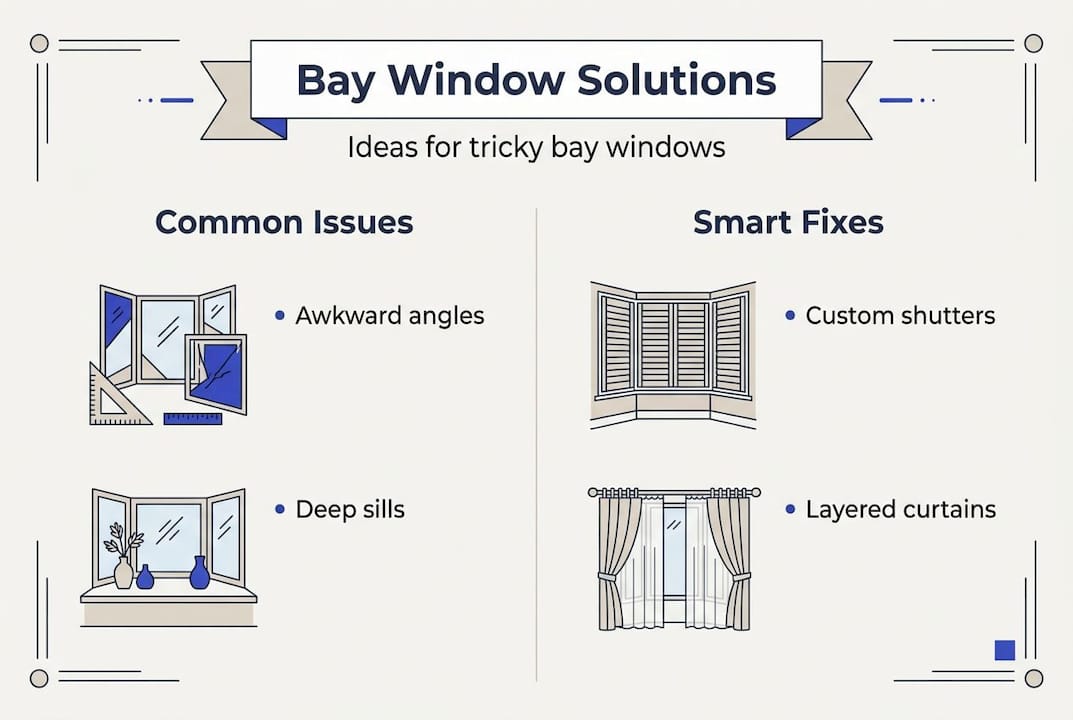
Bay windows create architectural interest, but their distinctive structure presents real obstacles when you’re selecting window treatments. Unlike flat windows, bays protrude outward with angled panes creating irregular shapes that standard curtains or blinds simply can’t accommodate gracefully. The angles between each section vary depending on your window’s design, whether it’s a classic three-panel configuration or a more complex five-panel arrangement.
These structural quirks mean off-the-shelf solutions rarely work. Standard curtain poles won’t follow the angles properly, leaving awkward gaps or bunched fabric. Ready-made blinds designed for rectangular windows can’t adapt to the bay’s depth and shape, often blocking light unevenly or creating visual clutter. The protruding nature of bay windows also affects how treatments hang and operate, particularly if your window sits in a tight corner or near furniture.
Several factors complicate the dressing process:
- Frame depth varies between window styles, affecting whether treatments fit inside or outside the recess
- Angled joins between panes require flexible or segmented dressing systems
- Protruding structure demands treatments that don’t obstruct the room or interfere with radiators below
- Light control becomes trickier across multiple angled surfaces compared to single flat windows
- Privacy needs differ depending on whether your bay faces a street, garden, or neighbouring properties
Room layout adds another layer of complexity. Bay windows often create cosy seating nooks or display areas, so your chosen dressing must complement these functions rather than hinder them. Heavy curtains might overwhelm a small bay, whilst minimal blinds could look sparse in a grand Victorian setting. Getting the balance right requires understanding both your window’s physical constraints and your room’s aesthetic needs. Professional installation of bay window shutters addresses these challenges through precise engineering tailored to your exact specifications.
Exploring popular and bespoke dressing options for bay windows
Once you’ve grasped why bay windows resist standard treatments, exploring your options becomes far more productive. Each dressing style offers distinct advantages, and understanding their strengths helps you match solutions to your specific situation.
Curtains remain a traditional choice, bringing softness and warmth to bay windows. However, they require specialised curved or angled poles that follow your window’s shape, or flexible track systems that bend around corners. Fabric selection matters enormously here. Lightweight materials drape more elegantly around angles, whilst heavier fabrics can bunch awkwardly at joins. Curtains excel at creating a cosy atmosphere and provide excellent insulation when closed, but they can reduce natural light significantly and may obstruct window access for cleaning.
Blinds offer a tidier appearance, particularly when fitted inside each window section. Roller blinds provide clean lines and easy operation, whilst Roman blinds add textured elegance. Venetian blinds allow precise light control through adjustable slats. The main limitation? Blinds fitted to angled bays create visual fragmentation, with each panel operating independently. This can look disjointed compared to unified treatments. They work brilliantly in modern interiors where minimalism is valued, but may feel too stark in period properties.
Plantation shutters represent the bespoke option designed specifically for complex window shapes. Custom shutters are engineered to fit each angled section perfectly, creating a seamless appearance whilst offering unmatched light and privacy control through adjustable louvres. Unlike curtains or blinds, shutters become permanent architectural features that enhance property value. They’re exceptionally durable, require minimal maintenance, and provide superior insulation. The investment is higher upfront, but longevity and performance justify the cost for many homeowners.

| Treatment Type | Best For | Light Control | Installation Complexity | Approximate Cost Range |
|---|---|---|---|---|
| Curtains with tracks | Traditional aesthetics, warmth | Moderate (open/closed only) | Medium (requires specialist poles) | £200-£800 |
| Roller blinds | Modern minimalist spaces | Good (adjustable height) | Low to medium | £150-£500 |
| Roman blinds | Textured elegance | Moderate (staged positions) | Medium | £250-£700 |
| Plantation shutters | Architectural permanence, precision | Excellent (adjustable louvres) | High (professional fitting essential) | £800-£2500+ |
Combination treatments offer creative flexibility. Pairing shutters with sheer curtains, for instance, gives you privacy control through shutters whilst softening the look with fabric. Layering Roman blinds inside the recess with curtains outside creates depth and versatility. Your choice ultimately depends on budget, aesthetic preferences, and how you use the space around your bay.
Pro Tip: Before committing to any treatment, observe how light moves through your bay window throughout the day. Morning sun might require different control than afternoon glare, and understanding these patterns helps you select the most functional solution. Visit the best shutters for bay windows comparison to see detailed performance analyses, or explore comprehensive bay windows options suited to various UK home styles.
Measuring and fitting your bay window dressings for perfect results
Precise measurement separates successful bay window dressing from disappointing outcomes. Unlike standard windows, where a few millimetres’ variance barely matters, bay windows demand exactness because treatments must accommodate multiple angled sections working together as a unified system.
Start by measuring each individual pane systematically:
- Measure the width of each window section at the top, middle, and bottom, recording the smallest measurement to ensure your treatment fits throughout.
- Measure the height from the top of the frame to the sill on both sides of each pane, again using the smallest figure.
- Calculate the angles between adjoining panes using a protractor or angle finder, as this determines how treatments connect at corners.
- Measure the recess depth from the window frame to the wall, checking whether sufficient space exists for inside-mounted treatments.
- Note any obstructions like radiators, window handles, or architrave details that might interfere with installation or operation.
- Record the distance from the window to the floor if you’re considering full-length curtains, accounting for any skirting boards.
Deciding between inside and outside mounting significantly impacts the final appearance and function. Inside mounting, where treatments fit within the window recess, creates a sleek, integrated look that maximises wall space around the bay. This approach works beautifully for shutters and blinds but requires adequate recess depth. Outside mounting extends treatments beyond the frame, useful when recess depth is limited or when you want to make windows appear larger. Curtains typically mount outside, whilst shutters and blinds can work either way depending on your frame configuration.
Accurate measurements are critical for bespoke shutters because they’re manufactured to your exact specifications with no room for adjustment after production. Professional measuring services eliminate guesswork and costly errors. Specialists account for factors DIY measurers often miss, like frame irregularities, wall plumbness, and thermal expansion allowances.
Installation complexity varies dramatically between treatment types. Curtain tracks require secure fixings into masonry or timber lintels, with brackets positioned to support fabric weight around curves. Blinds need precise bracket placement for each section, ensuring smooth operation without binding. Shutters demand the highest installation precision, with frames fixed perfectly square and level to ensure louvres open and close smoothly across all panels.
Timelines for bespoke solutions typically run 6 to 10 weeks from final measurement to installation. This includes manufacturing time for custom components, quality checks, and scheduling professional fitting. Rush services exist but may incur premium charges. Planning ahead, particularly if you’re coordinating window dressing with broader renovations, prevents frustrating delays.
“The difference between adequate and exceptional bay window dressing lies entirely in measurement accuracy. We’ve seen countless homeowners attempt DIY measuring only to face gaps, overlaps, or operational issues. Professional measurement isn’t an unnecessary expense, it’s the foundation of a solution that works flawlessly for decades.”
Pro Tip: Take photographs of your bay window from multiple angles before measuring. These visual references help suppliers understand your window’s configuration and spot potential challenges during the quotation process. Detailed photos of any unusual features, like curved glass or decorative glazing bars, ensure nothing gets overlooked. For comprehensive guidance, consult the measuring bay windows guide which walks through every measurement step with illustrated examples.
Maintaining and styling tips to enhance your bay window dressing
Installing beautiful bay window treatments is just the beginning. Proper care and thoughtful styling ensure your investment remains attractive and functional for years whilst enhancing your room’s overall design.
Regular maintenance prevents deterioration and keeps treatments operating smoothly:
- Dust shutters, blinds, and curtain tracks monthly using a soft cloth or vacuum brush attachment to prevent buildup that can jam mechanisms
- Wipe shutter louvres with slightly damp microfibre cloths every few months, avoiding harsh chemicals that might damage finishes
- Check curtain pole brackets and blind fixings annually, tightening any loose screws before they cause sagging or failure
- Vacuum curtain fabric seasonally or follow manufacturer cleaning instructions to maintain colour and texture
- Inspect cords, chains, and operating mechanisms for wear, replacing components promptly to prevent sudden failures
Seasonal adjustments optimise comfort and energy efficiency. During winter, close shutters or draw curtains at dusk to trap heat and reduce energy bills. Summer calls for different strategies: open louvres during cooler morning hours to ventilate, then adjust them to deflect harsh afternoon sun whilst maintaining airflow. This active management of your window dressings can reduce heating costs significantly whilst protecting furnishings from UV damage.
Styling your bay window area amplifies its impact as a room feature. Bay windows naturally create alcoves perfect for seating, display, or workspace. Coordinate your window dressing colours with cushions, throws, or upholstery in the bay area to create visual harmony. Neutral shutter tones provide versatile backdrops for changing soft furnishings, whilst bold curtain colours make dramatic statements.
Layering adds depth and flexibility. Sheer curtains behind shutters soften the look when louvres are open, whilst providing daytime privacy. Combining roller blinds with decorative pelmets or valances introduces architectural detail without the bulk of full curtains. Even simple additions like coordinating tiebacks or decorative finials on curtain poles elevate the overall presentation.
Consider the view both from inside and outside your home. Bay window dressings are visible from the street, contributing to your property’s kerb appeal. Uniform external appearance across multiple bays creates cohesion, whilst mismatched treatments can look chaotic. Shutters excel here because their consistent panel structure presents an elegant facade regardless of whether louvres are open or closed.
Furniture placement around bay windows affects both function and aesthetics. Window seats built into bays need dressings that don’t obstruct access or interfere with cushions. Reading nooks benefit from adjustable treatments that provide task lighting control. Display shelves in bay windows require dressings that frame rather than hide your carefully arranged objects.
Pro Tip: Photograph your bay window at different times of day and in various seasons. This visual record helps you spot maintenance needs early, like fading fabric or shifting brackets, and inspires styling updates as light and usage patterns change. The gallery at incorporating shutters in UK homes showcases how homeowners have styled bay windows across different interior design schemes, offering practical inspiration for your own space.
Enhance your bay windows with bespoke shutter solutions
Transforming your bay windows from challenging features into stunning focal points requires expertise that goes beyond off-the-shelf solutions. Bespoke shutters engineered specifically for your window’s unique angles and dimensions deliver unmatched precision, durability, and style.
Professional measurement and installation services eliminate the guesswork and frustration of DIY approaches. Specialists assess your bay window’s exact configuration, recommend optimal materials and finishes for your interior style, and manufacture shutters that fit perfectly from day one. This tailored approach means no gaps, no binding mechanisms, and no compromises on appearance or function.

Whether you’re drawn to the clean lines of contemporary shutters or the traditional elegance of plantation styles, bespoke solutions adapt to your vision whilst solving the practical challenges bay windows present. Expert fitting ensures smooth operation, proper insulation, and long-term reliability that mass-produced alternatives simply can’t match. Explore the full range of bay windows bespoke shutters designed for UK homes, discover classic plantation shutters installations that blend heritage charm with modern performance, or learn how bespoke internal window shutters are tailored precisely to your needs and preferences.
Frequently asked questions
Can I use standard curtains on bay windows?
Standard curtains rarely work well on bay windows because their straight poles can’t follow the angled shape, creating awkward gaps and bunched fabric at corners. You’ll need specialised curved curtain poles or flexible track systems designed to navigate bay window angles smoothly. Even with adapted hardware, achieving a polished look requires careful fabric selection and often professional installation to ensure curtains hang properly across all sections without interfering with window operation.
What is the best window dressing for a bay window?
Bespoke plantation shutters consistently rank as the best choice for bay windows because they’re engineered to fit each angled section precisely, whilst offering superior light control, privacy, and insulation. Their adjustable louvres let you fine-tune brightness and airflow throughout the day, and they become permanent architectural features that enhance property value. Alternative options like tailored Roman blinds or custom curtain systems can work beautifully depending on your budget, aesthetic preferences, and how formally you want to dress the space, but shutters deliver unmatched versatility and longevity.
How do I measure my bay window for shutters?
Measuring bay windows for shutters requires recording the width and height of each pane, the angles between adjoining sections, and the recess depth from frame to wall. Measure at multiple points because frames often aren’t perfectly square, and always use the smallest dimension to ensure shutters fit throughout. Professional measuring services are strongly recommended because specialists account for subtleties like frame irregularities and thermal expansion that DIY measurers typically miss. Even small measurement errors can result in shutters that don’t fit or operate properly, making professional assessment a worthwhile investment for such a visible, permanent feature. Consult the comprehensive measuring bay windows guide for detailed instructions with visual examples.
How long do bay window shutters typically last?
Quality plantation shutters installed professionally typically last 20 to 30 years or more with minimal maintenance, far exceeding the lifespan of curtains or blinds. Their durability stems from robust construction using materials like hardwood or engineered composites designed to resist warping, fading, and mechanical wear. Unlike fabric treatments that require periodic replacement due to sun damage or style changes, shutters remain timeless architectural features that adapt to evolving interior trends through simple styling updates in surrounding décor. Regular dusting and occasional wipe-downs keep them looking pristine for decades, making them exceptionally cost-effective over their lifetime despite higher initial investment compared to temporary solutions.