
Pet friendly shutters: the complete owner’s guide

TL;DR:
- Pet-friendly shutters must be durable, cordless, and easy to clean to ensure safety and longevity with pets. Composite and aluminium options provide the best protection against damage and hazards, while proper fitting and maintenance are vital. Safety standards increasingly favor cordless or motorized shutters, making them the ideal choice for homes with pets.
Not all shutters are created equal, and if you share your home with a dog or cat, that distinction matters more than you might think. Pet friendly shutters need to withstand scratching, pawing, and the occasional full-body collision, while posing zero risk to the animals living alongside them. Yet many homeowners install beautiful window treatments only to discover they are unsafe, fragile, or impossible to keep clean. This guide cuts through the confusion, covering everything from materials and safety standards to maintenance and style, so you can make a genuinely informed choice for your home and your pets.
Table of Contents
- Key takeaways
- What makes shutters genuinely pet friendly
- Comparing shutter types for pet owners
- Safety standards and what they mean for your home
- Choosing, fitting, and caring for pet safe blinds and shutters
- Style that holds up under real conditions
- My honest view on pet safe shutters
- Transform your home with shutters built for real life
- FAQ
Key takeaways
| Point | Details |
|---|---|
| Cordless designs are non-negotiable | Traditional cords attract pets to chew and play, creating serious strangulation and entanglement hazards. |
| Material durability equals safety | High-density composite and ABS-coated shutters resist damage and prevent sharp edges that could injure pets. |
| UK regulations are tightening | Safety standards globally are pushing mandatory cordless and motorised designs, making compliance the smart long-term choice. |
| Maintenance is built into the right choice | Smooth, non-porous shutter surfaces make cleaning pet hair, muddy prints, and odours a straightforward task. |
| Bespoke fit protects both pets and interiors | Made-to-measure shutters leave no gaps for curious paws, reducing the risk of injury and damage. |
What makes shutters genuinely pet friendly
The phrase “pet friendly shutters” is used loosely in the home improvement world, but there are specific, measurable qualities that separate a genuinely safe option from one that simply looks the part. Understanding these features before you buy will save you time, money, and worry.
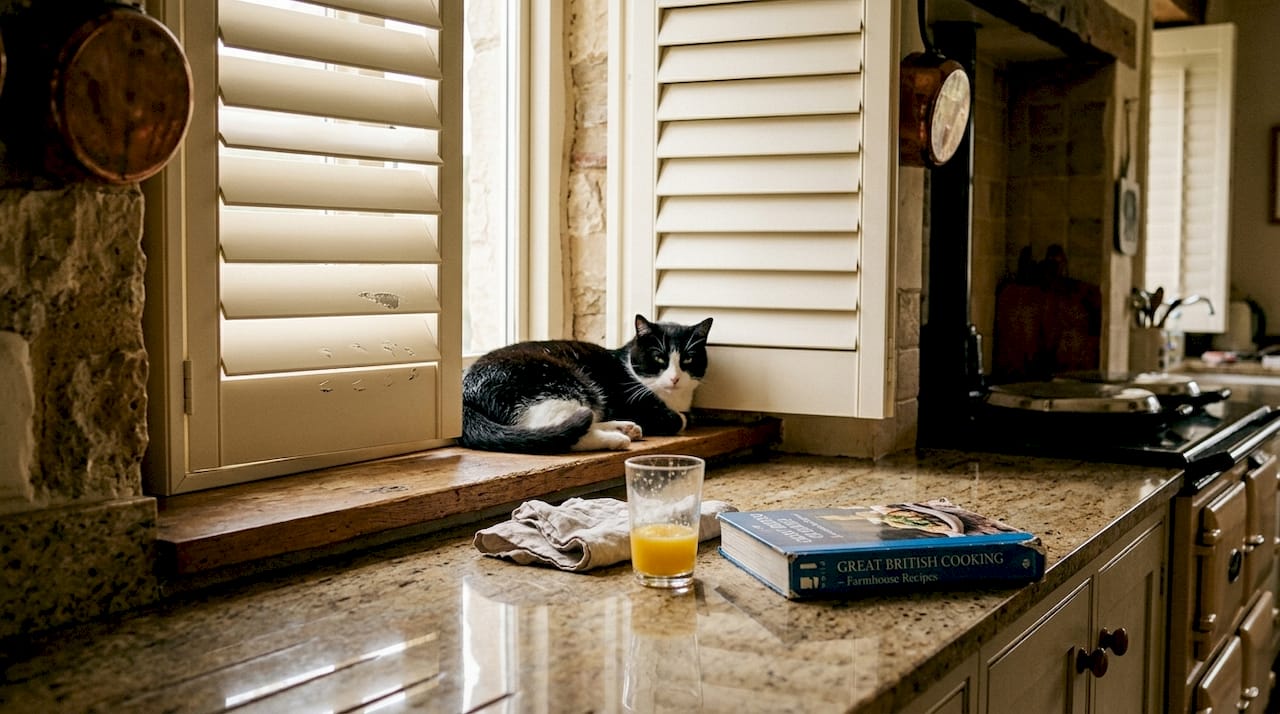
Material resilience. Durable composite shutters prevent sharp edges or choking hazards if your pet manages to damage a panel. High-density MDF with an extruded polypropylene or ABS coating, such as Shutterworld’s Seattle range, resists scratching, moisture, and impact far better than untreated wood. If a louvre does take a knock, it bends rather than splinters.
Cordless operation. Cordless designs eliminate strangulation and entanglement risks entirely. Traditional cords are genuinely dangerous. Dogs and cats are instinctively drawn to dangling objects, and a looped cord can trap a paw, a collar, or worse. Choosing a cordless or motorised shutter removes the hazard at source rather than relying on supervision.
Non-toxic, easy-to-clean surfaces. Low-VOC, stain-resistant materials improve indoor air quality and make hygiene manageable. Pets groom themselves and spend time near windows, so surface chemistry genuinely matters. A shutter with a sealed, moisture-resistant finish can be wiped down with a damp cloth without releasing harmful residues.
Here are the design features to prioritise when evaluating shutters for households with pets:
- Tight louvre spacing to prevent small paws or snouts becoming trapped between slats
- Secure panel fittings that resist being pushed open by a determined nose or shoulder
- Smooth, non-porous surfaces that do not trap pet hair, dander, or odours
- No protruding hardware at paw height that could catch a collar or cause injury
- Moisture-resistant coating to handle drool, muddy paws, and the occasional wet nose print
Pro Tip: If you have a cat that habitually sits on the window ledge, specify deeper louvres in a wider pitch. A 76mm or 89mm slat size gives cats room to look through without pushing the louvres out of alignment.
Comparing shutter types for pet owners
Different window treatment types carry very different risk and durability profiles for pet households. The table below sets out a practical comparison to guide your decision.
| Shutter or treatment type | Durability for pets | Safety profile | Ease of cleaning | Best suited to |
|---|---|---|---|---|
| Composite plantation shutters | Excellent | High (cordless, no cords) | Very easy (wipe clean) | Dogs, cats, all rooms |
| Hardwood plantation shutters | Good | High (cordless) | Easy (dust and wipe) | Low-humidity rooms, decorative focus |
| Aluminium shutters | Excellent | High (cordless) | Very easy | Utility rooms, kitchens, bathrooms |
| Roller shades (cordless) | Moderate | High (cordless designs) | Easy (smooth surfaces) | Rooms with minimal pet contact |
| Traditional corded blinds | Poor | Low (strangulation risk) | Moderate | Not recommended for pet households |
Composite plantation shutters stand out as the best shutters for pets across almost every measure. Their solid panel construction means there are no dangling elements, no fragile slats that snap under pressure, and no cord mechanisms to attract curious animals. Hardwood options like Shutterworld’s Montana range offer the same structural advantages in rooms where humidity is not a concern, bringing a warmth of finish that composite cannot quite replicate.
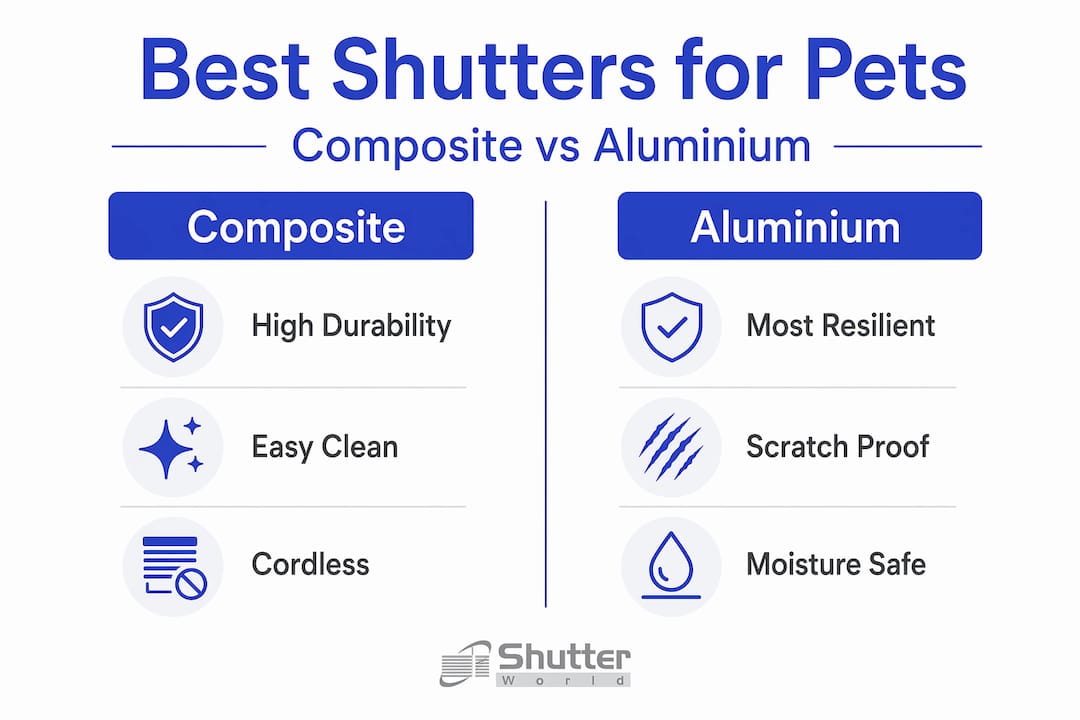
Aluminium shutters deserve more attention in pet households than they typically receive. They are virtually indestructible, completely moisture-proof, and wipe clean in seconds. For utility rooms, boot rooms, or anywhere a muddy dog routinely enters the house, aluminium is a genuinely practical choice that will outlast almost any other window covering.
Roller shades with cordless operation are the one non-shutter treatment worth considering. Pet hair slides off roller shade fabrics easily, reducing daily maintenance. However, they offer less structural protection than solid shutters and are more vulnerable to claw damage along their lower edge.
Safety standards and what they mean for your home
Safety regulation around window coverings has shifted significantly, and for pet owners, that shift is entirely positive. As of June 2024, corded window coverings are banned in new installations across the United States and Canada, mandating cordless or motorised designs. While UK regulations follow a distinct framework, the direction of travel is clear: dangling cords are being designed out of the market entirely.
Canada’s SOR/2019-97 regulation enforces a complete ban on hazardous operating cords throughout 2026, and UK shutter safety compliance guidance continues to tighten in line with this global direction. Understanding the UK window shutter regulations relevant to your home is worth the time before you specify any new window treatment.
The key principle underpinning all of these standards is straightforward. Behavioural controls like supervision are insufficient. Product design must eliminate hazards rather than rely on the owner to manage them. You cannot watch your pet every minute of the day, and the window treatment itself should not require you to.
For pet owners conducting a home safety audit, safety professionals recommend a room-by-room approach:
- Identify any remaining corded blinds or shades throughout the property
- Prioritise rooms where pets spend unsupervised time, such as bedrooms and lounges
- Replace corded treatments with compliant cordless or motorised shutters rather than attempting to modify existing products
- Check that any existing shutters have no loose fittings or protruding fixings at animal height
Motorised shutters offer the highest level of passive safety by removing all operating elements from the physical environment entirely. Scheduled operation means shutters open and close without any manual interaction, keeping your pets well clear of any moving parts.
Choosing, fitting, and caring for pet safe blinds and shutters
Selecting the right shutter is only part of the process. How you fit and maintain it will determine whether it performs well for years or begins to show wear within months.
- Assess your pet’s specific behaviour before specifying. A Labrador that charges at the window during thunderstorms places very different demands on a shutter than a cat that occasionally bats a louvre. Be honest about what your windows will face and specify materials accordingly.
- Opt for full-height shutters over café style in high-traffic areas. Full-height panels leave no exposed lower section for dogs to push through or scratch at. They also provide complete privacy without any gap at the bottom where a curious snout might investigate.
- Prioritise a precise, made-to-measure fit. Off-the-shelf shutters that leave gaps around the frame invite pets to push panels aside, which both damages the shutter and creates a potential entrapment hazard. A professionally measured and fitted shutter sits flush with the reveal and offers no such opportunity.
- Establish a simple cleaning routine. Wipe composite or aluminium shutters with a damp cloth weekly to remove pet hair and surface dust. For deeper cleaning after muddy incidents, a mild soap solution and a soft brush handle most deposits without affecting the finish.
- Inspect fixings and hinges every six months. Pets are persistent. Even the best-fitted shutter can experience loosening fixings over time if it is regularly nudged or leaned against. A quick inspection catches minor issues before they become structural problems.
Pro Tip: For households with large or boisterous dogs, ask your shutter installer to use additional mid-rail fixings on taller panels. This reduces panel flex when a dog leans against the shutter and significantly extends the working life of the product.
The Shutterworld guide to baby safe window treatments also contains useful step-by-step advice for evaluating your existing window treatments, much of which applies directly to pet safety assessments.
Style that holds up under real conditions
Durability and good design are not in opposition. Many of the most physically resilient shutter options also happen to suit a wide range of contemporary interior styles, which means you are not forced to choose between a beautiful home and a pet-safe one.
Here are the style considerations that work particularly well for pet owners:
- White and off-white composite shutters are the most forgiving in terms of visible wear. Scratches and marks are far less apparent on a matte or satin white finish than on a dark or natural timber tone.
- Textured powder-coated finishes on aluminium shutters disguise surface contact marks from paws and noses better than gloss alternatives, while still offering a contemporary aesthetic.
- Full-height solid panel configurations read as architecturally clean and modern, and they also happen to give pets the least opportunity to interact with individual components.
- Neutral tones that sit close to the wall colour create a calm, continuous visual line that minimises the visual impact of the occasional paw print between cleaning sessions.
- Custom RAL colour matching means your shutters can be specified in a colour that genuinely suits your interiors rather than defaulting to a standard off-the-shelf finish.
Shutterworld’s bespoke interior shutter range includes options across all of these categories, with finishes that are chosen as much for their practicality in a lived-in home as for their visual appeal. The craftsmanship that goes into each panel is built to endure both the scrutiny of a careful eye and the attentions of a lively household.
My honest view on pet safe shutters
After many years working with homeowners across the UK, I’ve noticed a consistent pattern. People underestimate the hazard posed by corded window treatments and overestimate how much a well-chosen shutter needs to compromise on style to be genuinely pet safe.
The shift towards cordless and motorised designs is not a passing trend. It reflects a fundamental understanding that passive product safety will always outperform the best intentions of a watchful owner. I’ve seen homes where a single remaining corded blind in a back bedroom posed a genuine risk, simply because no one thought about it.
What I’ve also found is that pet owners who invest in well-specified, properly fitted shutters almost never need to revisit the decision. The durability is real. A quality composite or hardwood shutter in a home with two dogs will still look and function well after a decade of use, whereas cheaper blinds or fabric treatments often need replacing within two or three years.
My advice is this: do not treat pet safety as a separate category to style and longevity. The best shutter for a pet household is the same shutter that a design-focused homeowner without pets would choose. It’s well made, properly fitted, easy to maintain, and built to last. Pets simply raise the stakes for getting that right.
— Ken
Transform your home with shutters built for real life
If you share your home with pets, you deserve window treatments that are genuinely up to the task, beautiful enough to be proud of and tough enough to handle whatever your animals bring to them.
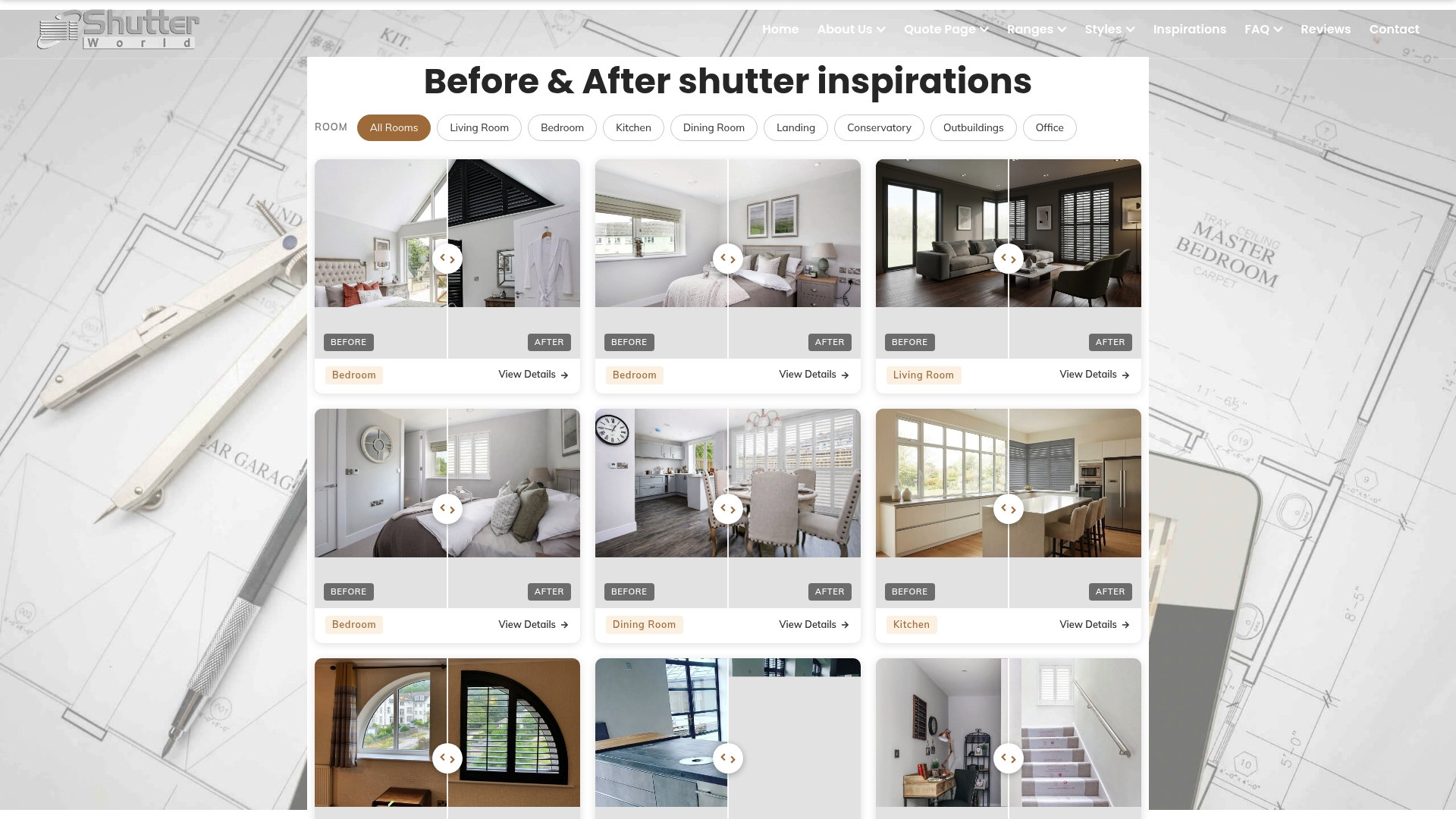
Shutterworld’s plantation shutters are a natural first choice for pet owners. Crafted from premium materials, fitted to precise measurements, and finished without a cord in sight, they combine lasting durability with the kind of timeless style that enhances any room. For something entirely tailored to your space, our bespoke shutter service allows you to specify every detail, from panel configuration to finish colour, so your shutters work perfectly for both your home and your pets. Request a free consultation today and let our experts find the right solution for you.
FAQ
Are plantation shutters good for homes with dogs and cats?
Yes. Plantation shutters are among the best shutters for pets because they are cordless by design, made from durable materials that resist scratching and impact, and easy to wipe clean. Their solid panel construction removes the dangling elements that attract pets to play or chew.
What shutter materials are safest for pet households?
High-density composite shutters with an ABS or polypropylene coating are the most durable and pet safe option, as they resist sharp edges if damaged. Aluminium shutters are equally safe and add complete moisture resistance, making them ideal for rooms where pets frequently enter.
Do cordless shutters really make a difference for pet safety?
Absolutely. Cordless designs eliminate strangulation, entanglement, and chewing hazards entirely. Traditional cords attract pets instinctively, and no amount of supervision reliably substitutes for removing the hazard from the environment.
How do I keep shutters clean in a home with pets?
Composite and aluminium shutters require only a damp cloth for routine cleaning of pet hair and surface marks. A mild soap solution handles more stubborn deposits. Their non-porous surfaces mean pet odours do not absorb into the material the way they do with fabric treatments.
Are motorised shutters worth considering for pet owners?
Yes, particularly for households where pets are frequently left unsupervised. Motorised shutters remove all operating hardware from the physical environment, allow scheduled opening and closing, and keep window coverings entirely out of your pet’s reach throughout the day.