
A complete guide to shutter accessories for UK homes

Shutter accessories guide
TL;DR:
- Choosing high-quality, compatible accessories ensures the durability and smooth operation of bespoke shutters. Finishes like brushed brass, matte black, and satin chrome enhance both style and longevity. Proper planning and expert guidance prevent costly mistakes and preserve your interior design vision.
Selecting the wrong accessories for your bespoke shutters is one of the most common and costly mistakes UK homeowners make. You invest in beautifully crafted, made-to-measure shutters, and then the whole effect is undermined by ill-fitting hinges, mismatched handles, or flimsy lock mechanisms that rattle within months. Accessories are far more than an afterthought. They determine how smoothly your shutters operate every single day, how long they last, and whether the overall look feels polished or slightly off. This guide cuts through the confusion and gives you a clear, practical framework for choosing every accessory with confidence.
Table of Contents
Key Takeaways
| Point | Details |
|---|---|
| Accessories impact durability | Choosing the right accessories ensures your shutters last longer and function smoothly. |
| Style must match décor | Finishes and hardware choices should harmonise with your home’s overall design for the best effect. |
| Custom solutions for unique windows | Special shapes such as bays and rounds demand tailored accessories to work correctly and look great. |
| Plan for maintenance | Ordering spare moving parts and prioritising easy-to-replace options reduces frustration later on. |
| Professional guidance pays off | Complex windows and interiors benefit from expert advice to avoid costly mistakes or regrets. |
Why shutter accessories matter for bespoke window treatments
Most homeowners focus almost entirely on shutter style, louvre size, and material when planning their window treatments. That makes sense, because those decisions are highly visible. But the moment your shutters are installed and you reach for a handle that sticks, or a panel that refuses to close flush, you realise very quickly that the hardware beneath the surface matters enormously.
“Accessories influence both the look and long-term performance of shutters.” Getting this stage right is not optional. It is the difference between a window treatment that functions flawlessly for decades and one that disappoints within a year.
The right accessories do several things simultaneously. They ensure smooth, effortless daily operation. They protect the structural integrity of each panel by distributing load correctly across hinges and frames. They also create the visual continuity that ties your shutters into the wider interior design of a room. Understanding shutter popularity in the UK makes it clear that homeowners are choosing shutters precisely because they want quality and longevity. Skimping on accessories contradicts that logic entirely.
Consider non-standard windows specifically. An arched, triangular, or bay window demands accessories engineered to accommodate unique geometry. Standard off-the-shelf hardware simply will not work. The wrong fitting creates stress on the frame, causes warping over time, and compromises both privacy and light control. Key reasons why accessories matter so much include:
-
Durability: High-quality hinges and rods reduce wear on panels and frames.
-
Smooth operation: Precision-engineered moving parts prevent stiffness and rattling.
-
Security: Robust locks and magnets keep shutters firmly closed when required.
-
Aesthetics: Well-matched finishes elevate the entire room’s design coherence.
-
Compatibility: The right accessories ensure your chosen shutter material performs as intended.
The essential types of shutter accessories explained
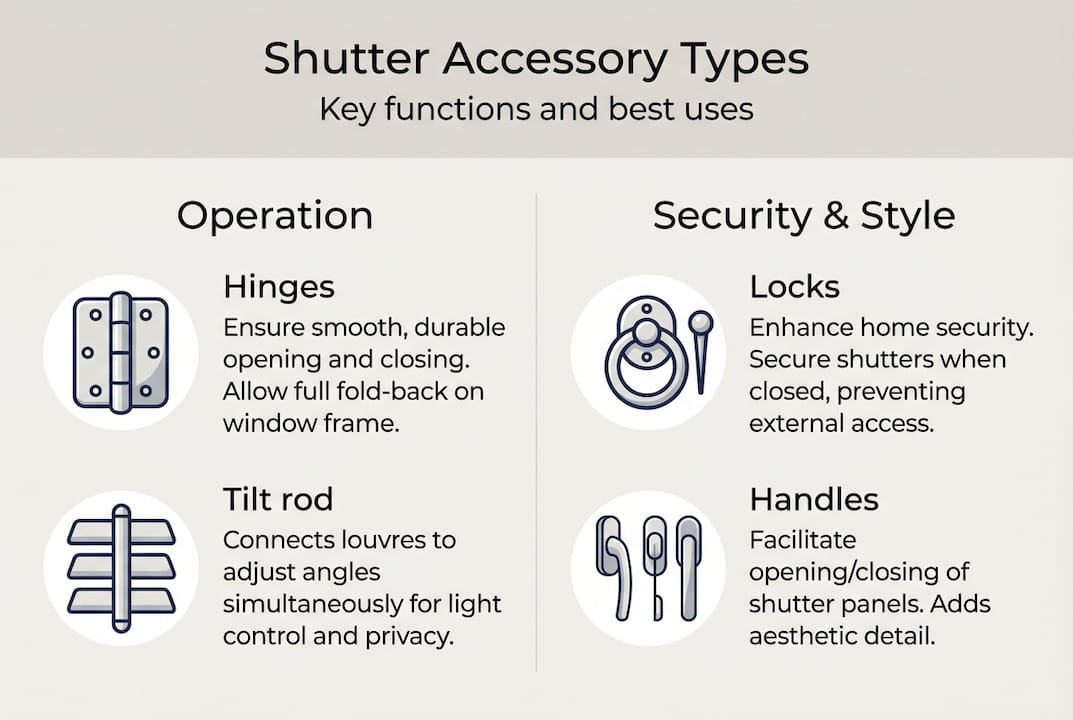
Understanding what each accessory category does helps you make informed choices rather than guessing at the point of purchase. There are six primary categories to consider: hinges, handles, locks, tilt rods, frames, and magnets. Each plays a distinct functional role, and each interacts differently with various shutter materials and window configurations.
Hinges are arguably the most critical moving part. They bear the full weight of each panel every time the shutter is opened or closed, and in a busy household that can mean hundreds of cycles per week. Heavy-duty stainless steel hinges suit hardwood shutters from ranges like our Montana collection, while lighter composite shutters pair well with precision-engineered polymer hinges.
Handles are both functional and decorative. They set the tone for the entire fitting’s visual personality. A slim, matte black bar handle reads as distinctly contemporary, while a curved, brushed brass drop handle instantly signals a more traditional sensibility.
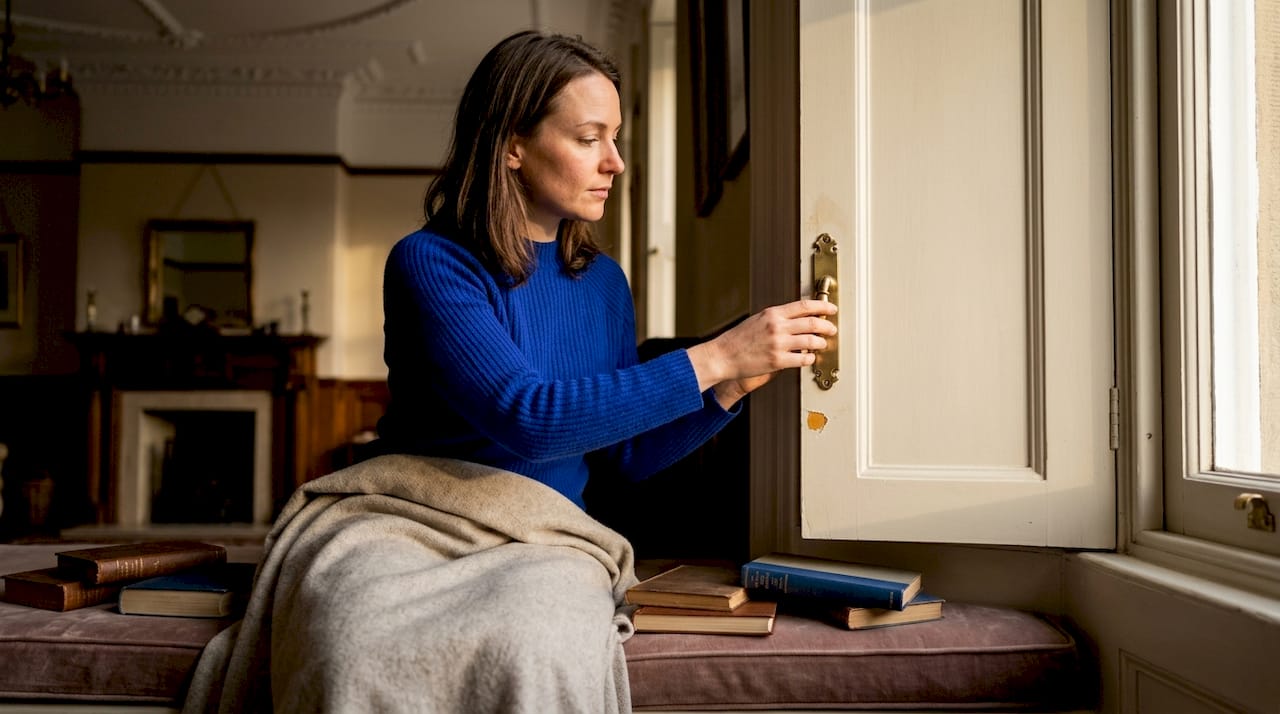
Locks and magnets work together to keep panels secure in their closed position. Magnetic closures are particularly popular for interior shutters because they are virtually silent, require no key, and leave no visible mechanism when the shutter is shut.
Tilt rods connect the louvres and allow you to adjust the angle of the blades in a single, smooth movement. Hidden tilt rods (sometimes called rear tilt rods) create a cleaner visual line, while traditional centre-mounted rods offer a classic plantation shutter look.
Frames form the structural border that anchors the entire installation. For shaped windows, bespoke curved or mitred frames are essential. Shutter hardware options vary considerably across different styles and window configurations, meaning there is no universal answer. Getting professional advice here pays dividends.
| Accessory | Primary function | Best suited to | Key benefit | Potential limitation |
|---|---|---|---|---|
| Stainless steel hinge | Load-bearing pivot | Hardwood shutters | Exceptional durability | Higher cost |
| Polymer hinge | Lightweight pivot | Composite/MDF shutters | Rust-resistant | Less suited to heavy panels |
| Magnetic closure | Panel retention | All interior shutters | Silent, invisible fixing | Needs precise alignment |
| Hidden tilt rod | Louvre control | Modern/minimalist styles | Clean visual finish | Harder to replace |
| Centre tilt rod | Louvre control | Traditional shutters | Easy adjustment | Visible on panel face |
For complex window shapes such as round, angled, or triangular designs, bespoke accessories are non-negotiable. These windows require curved frames, adjustable hinges with extended swing arcs, and custom magnets positioned precisely to the geometry of the panel. Good shutters and home decor guidance always connects accessory choice directly to the window’s unique architecture rather than treating hardware as a separate decision.
Pro Tip: When ordering shutters for an angled or shaped window, ask your installer to specify every accessory by name and grade in the quotation. Vague references to “standard hardware” on complex installations are a red flag.
Choosing accessory styles to suit your interior vision
Once you understand the functional categories, the next decision is about finish and style. This is where accessories stop being purely practical and start contributing actively to the mood of a room. The good news is that UK shutter style trends in 2025 and into 2026 show a clear appetite for bold, expressive finishes that make the hardware itself a design feature rather than something to hide.
The three most popular finishes among UK homeowners right now are brushed brass, matte black, and satin chrome. Each has a distinct character:
-
Brushed brass adds warmth and a subtle vintage quality. It works beautifully in period properties and rooms decorated in earthy tones, terracotta, sage green, or warm whites.
-
Matte black is the contemporary choice. It reads as sharp and architectural, complementing grey, charcoal, navy, and crisp white interiors with equal confidence.
-
Satin chrome sits between the two. It is versatile, slightly cooler in tone than brass, and works well in bathrooms, kitchens, and rooms where existing fixtures already feature a chrome element.
The table below can help you match accessory finish to common room colour palettes:
| Room colour palette | Recommended finish | Style era |
|---|---|---|
| Warm whites and naturals | Brushed brass | Traditional, Scandi |
| Cool greys and navy | Matte black | Contemporary, industrial |
| Sage green and terracotta | Antique bronze | Period, eclectic |
| Crisp white and charcoal | Satin chrome | Transitional, modern |
| Dark forest tones | Gunmetal | Contemporary, dramatic |
For period homes, the instinct is often to match accessories to the era of the property. A Victorian terrace pairs naturally with antique bronze or polished nickel rather than ultra-modern matte black. However, many homeowners are now intentionally contrasting historic architecture with contemporary hardware, and the result, when executed well, is genuinely striking. The key is commitment. Mixing styles works when it is a deliberate design statement, not an accidental mismatch.
Pro Tip: Mixing two metal finishes in a single room is increasingly accepted in interior design, but only if one finish dominates and the other acts as an accent. For example, matte black shutters with brushed brass handles, used alongside brass light fittings, creates a cohesive and intentional look. Avoid introducing a third metal unless you are very confident in the result.
Understanding how shutters and décor interact is essential before finalising any finish decision. A small sample or swatch test in your specific room lighting can prevent costly regret.
How to choose the right accessories for your shutters
With a clear picture of the types and styles available, the practical task is selecting the right accessories for your specific situation. We recommend working through the following steps in order, because each decision informs the next.
-
Define your primary purpose. Are you prioritising privacy, thermal insulation, light control, or pure aesthetics? High-insulation installations benefit from tight-fitting magnetic closures and full-surround frames. Light-filtering priority shifts attention to louvre width and tilt rod mechanism.
-
Assess your window shape and accessibility. Standard rectangular windows offer the widest choice of accessories. Bay, arched, or triangular windows narrow the field to bespoke or adjustable hardware. Windows that are difficult to reach, high up or behind furniture, benefit from hidden tilt rods that allow single-point louvre adjustment without stretching.
-
Match accessories to your shutter material. Hardwood shutters from our Montana range need heavy-duty, rust-resistant hinges rated for their weight. Lighter MDF shutters from our Seattle range work well with polymer or lighter steel hardware. Mismatching material and hardware grade is a common cause of premature wear.
-
Check compatibility with your existing décor and desired lifespan. A finish that clashes with your door handles, light switches, or radiator valves will irritate you every day. Hardware that matches existing metalwork creates visual calm. Think also about how your décor might evolve over the next ten years. A timeless finish like satin chrome or brushed brass ages gracefully with most interior directions.
-
Consider ease of replacement for moving parts. Hinges, tilt rods, and magnets do eventually wear, especially in high-use rooms like kitchens or living areas. Choosing accessories from a manufacturer with a consistent, long-running product range means replacements will be available years down the line. Reading through choosing shutter styles reveals that similar logic applies to the shutters themselves: longevity planning is always worthwhile.
-
Budget proportionally. Accessories typically represent a small percentage of the total shutter investment. This is not the place to cut corners. Upgrading from basic to premium hardware on a full set of shutters often adds a modest sum to the overall cost but can double the operational lifespan of the moving parts.
Pro Tip: When your shutters are installed, ask your fitter to order one spare set of the key moving parts, particularly hinges and magnetic closures. Store them somewhere accessible. If a component fails in five years, you will be very glad you did not have to source obsolete hardware.
What most homeowners miss when choosing shutter accessories
After years of working with homeowners across the UK, we have noticed a consistent pattern. The most thoughtful, design-literate clients, people who agonise over louvre width and finish for weeks, sometimes give accessory selection just a few minutes. And then, a year later, they call us because something does not feel right.
The most common oversight is not quality, it is compatibility planning. Specifically, people choose accessories based on how the room looks today, not how it might look in three or five years. A homeowner who installs gunmetal hardware throughout a dark, moody sitting room and then decides to redecorate in lighter tones will find that the hardware jars with the new palette. Had they chosen a more adaptable finish like satin chrome or even a warm brass, the transition would have been seamless.
The second overlooked issue is replacement cycle planning. Moving parts wear out. That is not a flaw, it is physics. But when homeowners choose accessories from short-run or imported ranges without UK stockists, they find themselves unable to source matching replacements. This forces a full hardware swap, which is both expensive and disruptive. As our step-by-step shutter style guide makes clear, ignoring compatibility and future needs creates regret and costly changes down the line.
There is also a false economy trap. Bargain hardware, particularly hinges sourced cheaply to reduce upfront cost, can begin to corrode or loosen within eighteen months in high-humidity rooms like bathrooms and kitchens. Replacing them means removing and refitting panels, which often incurs labour costs that dwarf the original saving. Our advice is always to invest in the hardware as seriously as the shutter itself. The best bespoke shutters in the world will underperform if they are held together by components not built to the same standard. Professional guidance at the accessory selection stage is not a luxury, it is insurance.
Where to find bespoke shutter accessories and advice
Choosing the right accessories for your shutters does not have to feel overwhelming. The key is working with a trusted expert who understands both the technical and aesthetic sides of the decision, and who can assess your windows in person before making recommendations.

At Shutter World, we source accessories that meet the same exacting standards as our shutters themselves, from heavy-duty hinges for our hardwood Montana range to precision-engineered polymer fittings for the Seattle collection. Whether you are fitting plantation shutters to a straightforward sash window or need a fully engineered solution for a curved bay or triangular skylight, our team will specify every component with care. Our bespoke shutter solutions include a complete in-home survey, detailed quotation, and professional installation, so nothing is left to guesswork. Book your free consultation today and let us help you get every detail right.
Frequently asked questions
What accessories do I need for bay window shutters?
You need flexible hinges, longer tilt rods, and custom frames to ensure smooth operation and complete coverage across the angled panels of a bay window. Special frames and hardware are specifically designed for bay window applications to handle the geometry correctly.
Can I retrofit new accessories to existing shutters?
Yes, many accessory types, such as handles, magnets, and locks, can be upgraded without replacing the shutters themselves, provided the new hardware is compatible with the original panel specification. Hardware options allow retrofitting and updates in many cases, but always check with a professional before ordering.
Are there specific accessories needed for round or angled windows?
Curved or adjustable hardware, along with custom frames and precisely positioned magnets, is typically required for round or angled shutter designs to ensure a clean fit and smooth function. Bespoke accessories suit shaped window installations and should always be specified by an experienced fitter.
How do I match accessories to my home’s interior style?
Select finishes and hardware profiles that complement your existing colour palette and the era of your property, using popular UK style references as a starting point for decision-making. Current trends include bold and expressive finishes such as brushed brass and matte black, which suit a wide range of British interiors.
What should I consider when selecting accessories for high-use windows?
Prioritise durable materials and moving parts that are easy to source and replace for windows that are adjusted frequently, such as those in living rooms or kitchens. Durability and longevity depend on correctly matching the accessory grade to the frequency and intensity of use.