
Shutter benefits for tenants: Improve comfort and privacy

Shutter benefits for tenants
TL;DR:
- Shutters are a practical and transformable window treatment option for tenants, offering improved privacy, insulation, and light control. They can significantly reduce heat loss, enhance comfort, and adapt to various window shapes, making rental homes more livable and energy-efficient. Properly chosen and installed, shutters provide lasting value and personal styling benefits, even in temporary accommodations.
Shutters are not just for homeowners, and it’s time that myth was firmly set aside. As a tenant, you face real, everyday challenges that the right window treatment can quietly but powerfully address: draughty rooms, unwanted street-level glare, paper-thin privacy in a ground-floor flat, and fluctuating energy bills that seem impossible to control. Many renters dismiss shutters as an upgrade reserved for people who own their homes, yet this overlooks a genuinely transformative opportunity. This article sets out exactly how shutters can work for you as a tenant, what to look for, and how to make the most of every advantage they offer.
Table of Contents
- Why shutters are a smart choice for tenants
- Boosting comfort and energy efficiency with shutters
- Privacy, light control and style: Everyday benefits
- Solving the tricky window problem: Shutters for bays, arched, and awkward frames
- A tenant-focused perspective: What most renters overlook about shutters
- Next steps: Explore bespoke shutter solutions for tenants
- Frequently asked questions
Key Takeaways
| Point | Details |
|---|---|
| Up to 33% heat-loss reduction | Evidence shows shutters can measurably improve a home’s insulation and comfort. |
| Ideal for tricky windows | Bespoke and made-to-measure shutters solve covering problems for non-standard or bay windows in rentals. |
| Enhanced privacy and light control | Shutters offer daily privacy and adjustable daylight, vital for many UK tenants in overlooked or shared homes. |
| Tenant-friendly styling boost | Upgrading with shutters adds visual appeal and can make any rental property feel more like home. |
Why shutters are a smart choice for tenants
It’s easy to assume that investing in window treatments is only worthwhile if you own the property. After all, why spend money improving someone else’s home? But this thinking misses something important. Shutters are not simply a cosmetic flourish; they are a functional upgrade that directly improves your daily living experience. Comfort, warmth, privacy, and noise reduction are benefits you enjoy from the moment shutters are fitted, and those benefits belong to you throughout your tenancy.
Modern shutter options are also far more versatile than many renters realise. We now offer styles and materials at a range of price points, from practical MDF-based options to premium hardwood ranges, meaning there is a solution suited to most budgets. And because made-to-measure shutters are fitted to the window frame rather than the walls, many installations can be removed cleanly at the end of a tenancy, making them far less “permanent” than they might appear.
The everyday pain points that tenants most commonly raise are remarkably consistent:
- Draughts seeping through poorly sealed windows, making rooms cold and uncomfortable
- Noise intrusion from busy streets or shared living spaces
- Privacy concerns, particularly on ground floors or in overlooked city properties
- Glare and heat from direct sunlight, especially in south-facing rooms
“Shutters offer a layered solution that addresses thermal comfort, privacy, and light control simultaneously, making them one of the most practical investments a tenant can make in their living environment.”
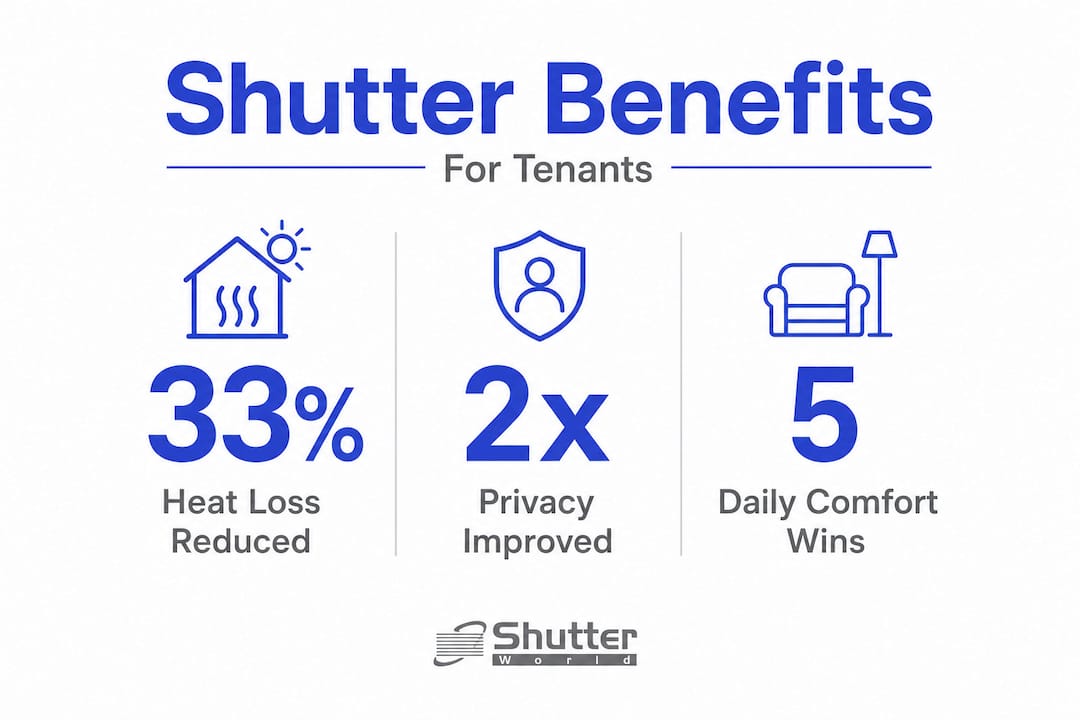
Research confirms the thermal argument. Closing shading can save heat in winter, with shutters capable of reducing heat loss through windows by up to 33%. That is a meaningful figure for anyone paying utility bills monthly. Exploring the benefits for rental properties in more detail reveals just how significant these gains can be across an entire tenancy.
Boosting comfort and energy efficiency with shutters
Once you understand why shutters make sense for tenants, the next question is how they actually deliver on that promise. Thermal performance is where the evidence is most compelling, and it matters enormously in a rental context where you cannot always improve wall insulation or upgrade the boiler.
Windows are one of the primary sources of heat loss in a typical UK home. Single-glazed windows and even older double-glazed units can allow significant warmth to escape during cold months. Shutters create an additional insulating layer by trapping a pocket of still air between the shutter panel and the glass. This layer slows the transfer of heat outward on cold nights, keeping the room warmer for longer without requiring extra heating.
The evidence is clear: heat-loss reduction of up to 33% is achievable depending on how shutters are used. Crucially, the benefit depends on a straightforward behavioural habit: opening your shutters on sunny days to allow solar warmth to enter, then closing them at night to retain that warmth. It costs nothing to develop this habit, and the cumulative savings over an autumn and winter are real.
Here is a practical guide to getting the most from your shutters across the seasons:
- Morning (sunny days, winter): Open louvre blades and panels fully to allow direct sunlight to warm the room naturally. This free solar gain reduces reliance on central heating.
- Late afternoon (winter): Close shutters before the temperature drops outside. This seals in accumulated warmth and prevents cold air from dragging heat away through the glass.
- Night-time (all year): Keep shutters closed. Even in summer, closed shutters on cooler evenings help regulate indoor temperature.
- Hot summer days: Close shutters on south and west-facing windows during peak afternoon hours to block direct heat gain and keep rooms noticeably cooler.
- Work-from-home days: Angle louvre blades to reduce glare on screens without losing natural daylight entirely, eliminating the need for artificial lighting.
| Season | Recommended usage | Primary benefit |
|---|---|---|
| Winter mornings | Open fully during daylight | Solar heat gain |
| Winter evenings | Close fully before dark | Heat retention |
| Summer afternoons | Close or angle louvres | Block heat gain |
| All year, night | Closed | Insulation and privacy |
Pro Tip: A shutter with a mid-rail divide (known as a “café style” configuration at the lower panel) gives you independent control over upper and lower sections. This lets you close the bottom for privacy while the top remains open for light and ventilation. It’s particularly useful in ground-floor rental properties.
For tenants keen to explore how shutters contribute to lower energy consumption, our guides on saving energy with shutters and energy saving with shutters cover the topic in greater depth. You can also read more about shutters for comfort throughout the year.
Privacy, light control and style: Everyday benefits
Thermal performance is only part of the story. The day-to-day lifestyle improvements that shutters bring are often the ones tenants appreciate most, particularly in urban or semi-urban rental settings where privacy feels like a constant negotiation.

In a ground-floor flat on a busy street, standard net curtains rarely offer a satisfying solution. They diffuse light, they collect dust, and they still allow people outside to see movement inside after dark when interior lights are switched on. Shutters are fundamentally different because they give you layered control. When the louvres are angled correctly, you can see the street clearly from inside while making it extremely difficult for anyone outside to see in. At night, closing the shutters completely eliminates this concern entirely.
For work-from-home renters, glare control is a genuine productivity issue. Screens become unusable in direct sunlight, yet closing blinds or curtains means losing all natural light. Shutters allow you to angle the louvres precisely, directing light upward toward the ceiling and diffusing it softly across the room without any glare on your screen.
The style factor is worth addressing honestly. Rental properties often feel impersonal. They are furnished to be inoffensive rather than to reflect your tastes, and landlords rarely invest in distinctive window treatments. A well-fitted set of shutters transforms a room visually in a way that curtains or roller blinds simply cannot match. They add structure, depth, and a sense of considered design that makes a rental feel genuinely yours.
Consider the practical advantages for renters specifically:
- Minimal maintenance: Unlike fabric curtains, shutters require only a light wipe with a damp cloth. No dry-cleaning, no shrinkage, no fading from sunlight.
- Allergy-friendly: Shutters do not trap dust mites or pet dander the way fabric treatments do, which is valuable in rented properties where you may be sharing an older building.
- No specialist cleaning: Regular household cleaning is entirely sufficient to keep shutters looking flawless year-round.
- Durable for shared living: In house shares or properties with high footfall, shutters withstand daily use far better than delicate blinds or curtains.
Research consistently confirms that shutter benefits are maximised when they are correctly measured and fitted. This is particularly important for windows with unusual shapes or proportions, a point we address in the next section. For tenants interested in the environmental and cost-saving dimensions, our overview of energy efficient shutters provides further context.
Pro Tip: If you are considering shutters for a bright room where you frequently use a laptop or television, ask about louvre blade width when choosing your shutters. Wider blades (89mm or 114mm) offer broader control over light direction and are ideal for managing glare effectively.
Solving the tricky window problem: Shutters for bays, arched, and awkward frames
One of the most common and frustrating experiences for tenants is discovering that their rental property has windows that simply do not suit off-the-shelf solutions. Bay windows, arched frames, triangular skylights, corner windows, and slanted frames are all common in the UK’s varied housing stock, from Victorian terraces to modern new-builds. Standard roller blinds and ready-made curtains often look awkward or provide incomplete coverage on these shapes, leaving gaps where light, draughts, and prying eyes can still enter.
This is where bespoke, made-to-measure shutters offer something genuinely different. Because every panel is engineered precisely to the dimensions and geometry of your specific window, there are no gaps, no ill-fitting edges, and no compromises.
Here is what bespoke shutters achieve that off-the-shelf products cannot:
- Full perimeter sealing on bay windows, eliminating cold air ingress at the joins between panels
- Perfectly curved or pointed top sections for arched and angled windows, maintaining a clean, intentional aesthetic
- Structural integrity in corner configurations, where two windows meet at an angle and standard products simply cannot turn the corner
- Consistent light control across the entire window area, rather than patchy coverage from ill-fitting blinds
🏠 Bespoke shutters fitted to bay windows can reduce draughts at window joins significantly, a crucial consideration in Victorian and Edwardian rental properties where original window frames are often worn.
The approach to landlord conversations is worth addressing here. Many tenants assume landlords will refuse any modification, but a well-framed conversation often produces a different result. Position shutters as an upgrade that adds insulation value, reduces maintenance, and protects the property’s window frames from condensation damage. Landlords who are focused on long-term property value are frequently more receptive than tenants expect. Custom fit is crucial for performance in unique-shaped windows, and presenting this evidence can strengthen your case.
For guidance on specific situations, our resources on covering tricky windows and dedicated solutions for shutters for bay windows offer detailed, practical starting points.
Pro Tip: When approaching your landlord about shutters, propose a written agreement confirming that you will restore the windows to their original state if you choose to remove the shutters at the end of your tenancy. This removes the main source of hesitation for most landlords and typically makes approval straightforward.
A tenant-focused perspective: What most renters overlook about shutters
Here is an honest observation from our years of working with customers across the UK: most tenants who enquire about shutters are already behind the curve. They come to us after a cold winter has left them frustrated with their heating bills, or after months of feeling exposed in a ground-floor flat. The regret is almost universal: “I wish I had done this sooner.”
What strikes us most is how consistently tenants underestimate the negotiating position they actually hold. Landlords are not universally opposed to improvements. In fact, many welcome them. An upgrade that reduces condensation, protects window frames, improves energy efficiency, and makes the property more attractive to future tenants is a net positive for any responsible landlord. The tenant who frames the conversation professionally and backs it with evidence is far more likely to get a yes than one who asks without preparation.
There is also a missed opportunity in how renters think about the return on investment. A set of well-fitted shutters, used correctly throughout a tenancy, can reduce heating costs meaningfully over two or three years. The energy benefits of shutters are not theoretical; they are measurable in real households. Spread those savings across a longer tenancy and the financial case becomes genuinely compelling, even before you account for the daily quality-of-life improvement.
Perhaps most importantly, shutters do something that no other window treatment achieves quite as effectively: they make a rental feel like a home. That sense of ownership over your own space has real value that is difficult to quantify but immediately felt. A room with well-crafted shutters has character, intention, and warmth, qualities that generic blinds simply cannot replicate.
Next steps: Explore bespoke shutter solutions for tenants
If this article has prompted you to think seriously about shutters for your rental home, the most valuable next step is speaking with someone who understands the full picture. At Shutter World, we work with tenants as well as homeowners, and we know how to recommend solutions that are practical, removable where needed, and genuinely suited to rented properties.
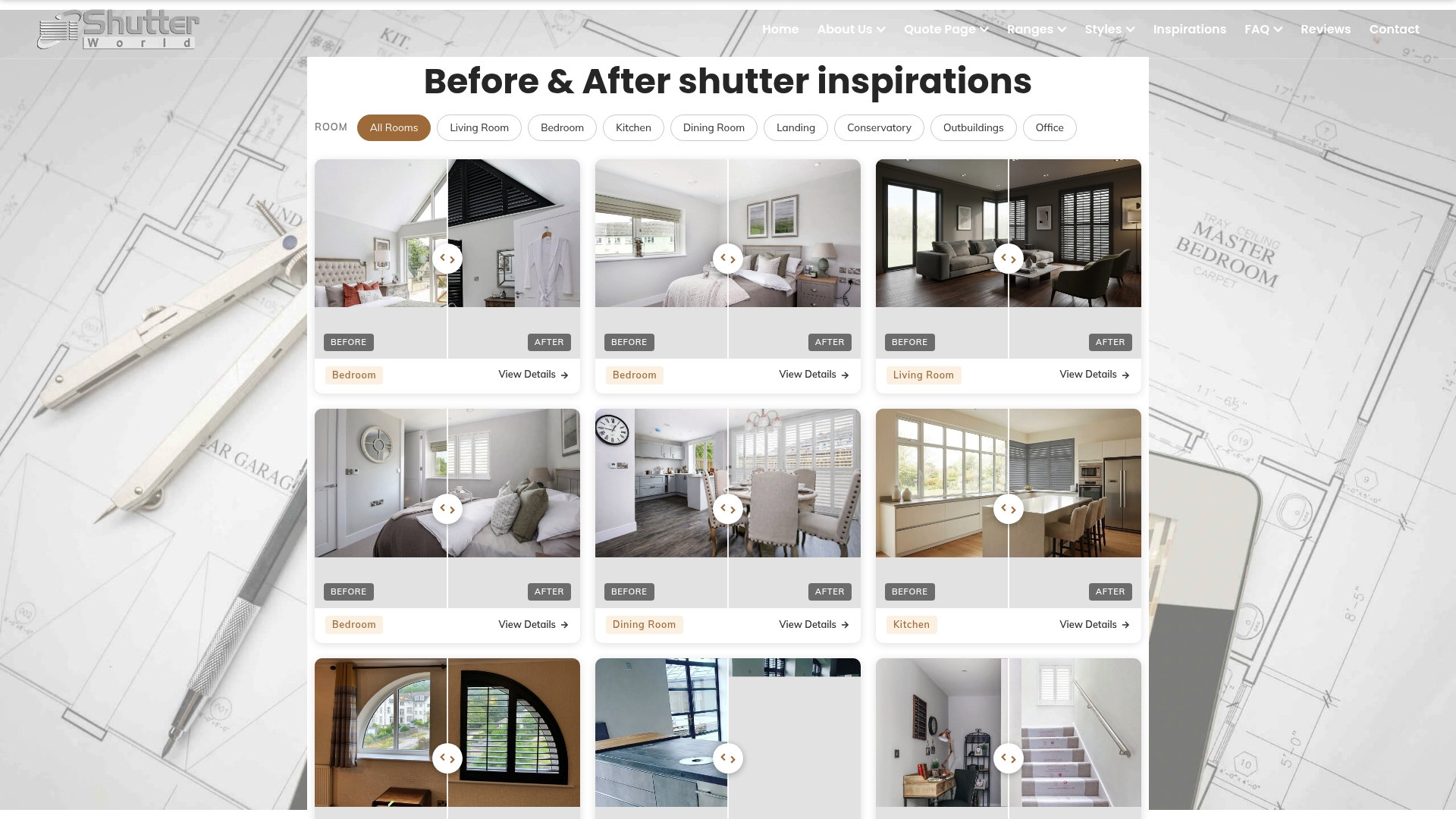
Our team can guide you through options suited to your specific windows, budget, and tenancy situation. Whether you are interested in exploring what our bespoke shutter company can offer, browsing the full range of tailored shutter options, or understanding the specifics of installing shutters in awkward windows, we are here to help at every stage. Book a free in-home survey and discover how much of a difference the right shutters can make to your rented home.
Frequently asked questions
Can tenants install shutters without landlord permission?
Tenants should always seek landlord approval before installing shutters as they are a semi-permanent fixture, but many landlords are open to upgrades that add value and improve energy efficiency. Presenting clear evidence of the practical benefits tends to make approval much easier to obtain.
How much can shutters reduce heat loss in a rented home?
Shutters can reduce heat loss through windows by up to 33% when used as part of a correctly specified and properly fitted system. This translates into meaningful savings on heating bills over the course of a full tenancy.
Are there shutter solutions suitable for bay or awkward-shaped windows?
Yes, made-to-measure and bespoke shutters are specifically engineered for bay, arched, angled, and non-standard windows to ensure a precise fit and optimal performance. Unique window shapes benefit significantly from this tailored approach, as off-the-shelf alternatives rarely provide adequate coverage or sealing.
Can shutters help reduce both summer heat and winter draughts?
When used correctly, shutters help keep homes cooler in summer by blocking direct heat gain and warmer in winter by retaining heat overnight. The benefit depends on closing shutters at night and opening them on sunny days to maximise solar gain, a simple habit that makes a measurable difference across all seasons.