
Shutter frames vs panels: Make the right choice

Shutter frame vs panel
TL;DR:
- Understanding the difference between shutter frames (support) and panels (light/privacy control) is essential.
- Material and shape of frames (wood, aluminium, Z or L profiles) impact insulation, durability, and fit.
- Proper installation and matching frames/panels to window conditions ensure long-term performance and satisfaction.
Choosing shutters often feels like a purely visual decision. You pick a colour, a finish, and perhaps a louvre size, and you assume the rest will take care of itself. But the real determinant of how well your shutters insulate, fit, and transform your room lies in a distinction most homeowners overlook entirely: the difference between the shutter frame and the panel. Get this pairing wrong, and you risk beautiful shutters that let in draughts, sit unevenly, or simply fail to deliver the comfort you expected. This guide cuts through the jargon, explains both components clearly, and gives you the practical knowledge to make a confident, informed choice.
Table of Contents
- What is the difference between a shutter frame and a panel?
- Types of shutter frames: Shapes, materials, and when to choose each
- Panel styles: Solid vs louvred and how they shape comfort
- Practical factors: Fitting, installation, and durability
- How to decide: Matching shutter frames and panels to your home
- Our expert perspective: What most guides miss about frames and panels
- Ready to transform your interior with the perfect shutters?
- Frequently asked questions
Key Takeaways
| Point | Details |
|---|---|
| Frames set the foundation | Shutter frames provide crucial support, shape the fit, and affect how well panels operate for your home. |
| Panel choice drives comfort | Solid panels excel at insulation and privacy; louvred panels make daily light control easy. |
| Material matters | Wooden frames suit period homes and insulate better, while aluminium and composite frames offer modern low-maintenance solutions. |
| Fit and installation count | A mismatched frame or poor fit undermines even the best-looking shutters—professional fitting yields the best results. |
| Tailor to your home | Choose frame and panel combinations based on window shape, home style, and personal priorities for comfort and maintenance. |
What is the difference between a shutter frame and a panel?
Think of a shutter frame as the skeleton and a panel as the moving body within it. Each plays a distinct role, and understanding both is the foundation of any good shutter decision.
Shutter frames are the structural outer components fixed to the window recess or wall, providing the support and anchor point for everything else. The frame is what gets secured first during installation. It determines how squarely and securely the shutters sit within your window opening, and it directly influences the finished appearance from both inside and outside the room.
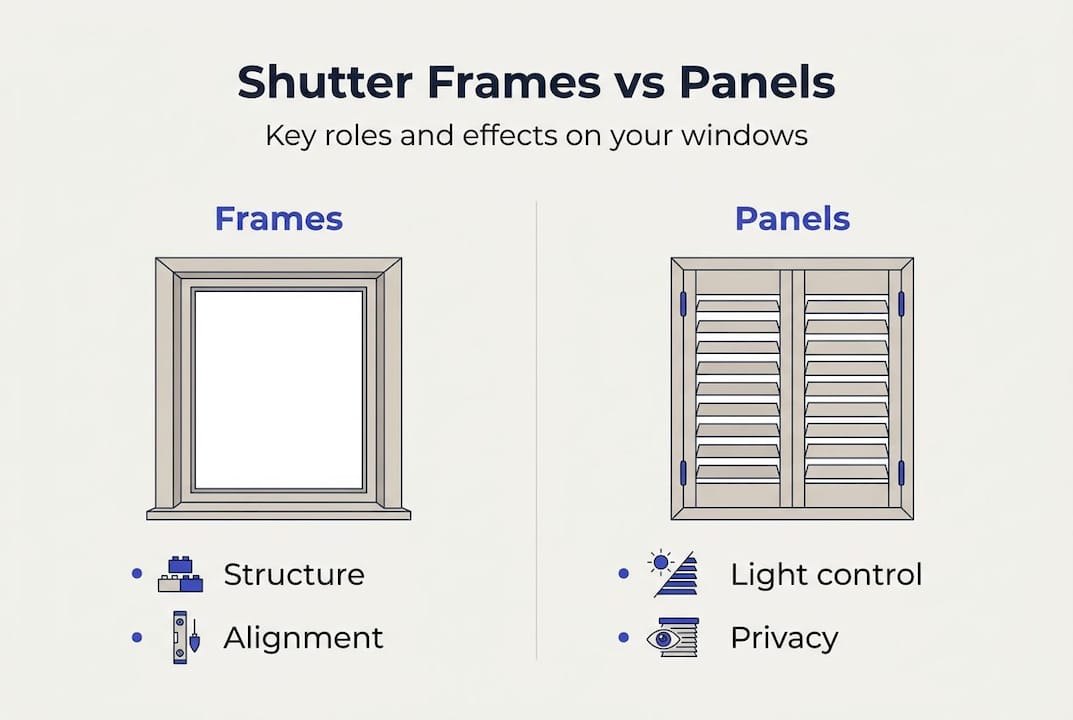
Panels swing or fold inside the frame and may be solid or louvred, which affects light control and privacy in very different ways. Panels are the parts you interact with daily, tilting louvres to adjust the light or folding panels back to open the window fully.
Here is a quick overview of what each component contributes:
What each component does:
- Frame: Provides structural support, determines mounting method, conceals gaps around the window recess, and sets the visual border
- Panel: Controls light, airflow, and privacy; moves on hinges within the frame; available in solid or louvred configurations
- Together: The frame and panel combination determines insulation performance, ease of operation, and the overall aesthetic
| Component | Primary role | Affects |
|---|---|---|
| Frame | Structural mount | Fit, alignment, appearance |
| Panel | Operational element | Light, privacy, insulation |
| Both combined | Complete shutter unit | Comfort, style, durability |
Exploring the full range of shutter frame options available is a worthwhile first step before committing to any style or material.
Types of shutter frames: Shapes, materials, and when to choose each
Once you understand what a frame does, the next step is choosing the right type. The three most common frame profiles each suit different window conditions and installation scenarios.
Common types include L-frames, Z-frames, and Deco frames, each with distinct advantages. L-frames are the most versatile, suitable for both inside and outside mounts on standard, square window recesses. Z-frames are engineered for irregular or out-of-square windows, wrapping around the window edge to conceal imperfections and uneven plaster. Deco frames offer a more decorative profile, adding architectural detail that suits period properties particularly well.
Our detailed framing methods guide explores these options further, but here is a practical comparison:
| Frame type | Best for | Key advantage | Consideration |
|---|---|---|---|
| L-frame | Standard recesses | Versatile, clean finish | Requires square opening |
| Z-frame | Irregular windows | Conceals gaps and imperfections | Slightly wider profile |
| Deco frame | Period or feature windows | Decorative, architectural look | Higher cost |
Material choice matters enormously too. Wooden frames offer up to three times the insulation of aluminium, making them a natural choice for period homes or rooms where thermal performance is a priority. Aluminium frames, however, are exceptionally durable and require virtually no upkeep, making them well suited to modern interiors or high-humidity spaces like bathrooms. Composite frames sit between the two, offering good insulation with lower maintenance demands.
“The right frame material is not just about looks. In a draughty Victorian terrace, a well-fitted wooden frame can make a measurable difference to warmth and energy bills.”
Pro Tip: If your window recess is even slightly out of square, choose a Z-frame. It will conceal the gap neatly and save you considerable frustration during fitting. You can also review frame materials for UK homes to match your property type with the right option.
Panel styles: Solid vs louvred and how they shape comfort
With your frame type in mind, the panel decision is where your daily experience of the shutters really takes shape. The two principal options are solid panels and louvred panels, and they serve quite different purposes.

Solid panels enhance thermal regulation more effectively than slatted alternatives, and shutters as a whole can reduce noise by 40 to 50 per cent, making them a genuinely practical investment for homes on busy streets. Solid panels close flush, creating a near-seamless barrier against both cold and sound. They suit bedrooms, front-facing rooms, and any space where privacy and insulation are the priority. They also carry a timeless, period aesthetic that works beautifully in traditional interiors.
Louvred panels, by contrast, offer adjustable control. Tilt the louvres and you can filter light without sacrificing privacy, or open them fully for maximum airflow. Solid panels are low-maintenance but less flexible for airflow, which is precisely where louvred panels earn their place in living rooms, kitchens, and south-facing spaces where you want to manage glare without blocking the light entirely.
Solid panels: Pros and cons
- ✔ Superior thermal insulation
- ✔ Excellent noise reduction
- ✔ Clean, classic appearance
- ✘ No airflow adjustment
- ✘ Blocks all light when closed
Louvred panels: Pros and cons
- ✔ Adjustable light and ventilation
- ✔ Flexible for daily use
- ✔ Works in most room types
- ✘ Slightly less insulating when closed
- ✘ Louvres require occasional dusting
| Room type | Recommended panel | Reason |
|---|---|---|
| Bedroom | Solid | Privacy, noise, insulation |
| Living room | Louvred | Light flexibility, airflow |
| Kitchen | Louvred | Ventilation, easy adjustment |
| Home office | Either | Depends on street noise/light |
For further guidance on selecting shutter panels for your specific window type, our detailed resource walks you through every consideration.
Practical factors: Fitting, installation, and durability
Even the finest shutter components will underperform if the installation is not handled correctly. Your choice of frame and panel directly affects how complex the fitting process will be, and how long the result will last.
Professional installation is preferred for precise alignment, particularly when Z-frames or complex mounting configurations are involved. The difference between a shutter that operates flawlessly and one that catches or sits unevenly often comes down to the quality of fitting, not the product itself.
Here are the key stages involved in achieving a professional, lasting fit:
- Survey the window recess for level, plumb, and square before ordering. Measurements taken at multiple points reveal any irregularities early.
- Select your mount type (inside or outside the recess) based on window depth and the frame profile you have chosen.
- Fit the frame first, ensuring it is perfectly aligned before any panels are hung.
- Hang and adjust the panels, checking that they open, close, and tilt without resistance.
- Inspect the finished installation for gaps, alignment, and smooth operation before signing off.
Maintenance requirements vary considerably by material. Wooden frames need periodic checking for warping or paint wear, particularly in rooms with fluctuating humidity. Composite and aluminium frames demand very little beyond an occasional wipe down. Hybrid frames offer a balance between wood aesthetics and modern, low-maintenance durability, making them an increasingly popular choice for homeowners who want the look of timber without the upkeep.
Pro Tip: Always use a spirit level to check the window recess before fitting begins. Even a slight tilt in the frame will compound into visible misalignment once the panels are hung. Our guides on shutter installation tools and installation mistakes to avoid are worth reviewing before any fitting day.
How to decide: Matching shutter frames and panels to your home
With a clear understanding of frames, panels, materials, and installation, the final step is matching all of these to your specific home and priorities. There is no single correct answer, but there is a right answer for your situation.
Start by asking yourself these questions:
- What is the shape and condition of my window recess? Is it square, irregular, or unusually deep?
- Is my home a period property or a modern build, and which aesthetic do I want to reinforce?
- Is my priority insulation and noise reduction, or flexibility and light control?
- How much ongoing maintenance am I prepared to carry out?
- Do I have any non-standard window shapes, such as bay, arched, or angled frames?
For UK homeowners, choose frame type by window shape and condition: L-frames for standard recesses, Z-frames for imperfect openings, and panels by need: louvred for versatility, solid for insulation and privacy. The most reliable pairings tend to follow a clear logic.
| Home type | Recommended frame | Recommended panel | Key benefit |
|---|---|---|---|
| Victorian or Edwardian | Wood, Deco or L | Solid | Insulation, period look |
| Modern new-build | Composite or aluminium, L | Louvred | Low maintenance, flexibility |
| Irregular or bay window | Z-frame or Deco | Either | Neat fit, conceals imperfections |
| Bathroom or kitchen | Aluminium or composite | Louvred | Moisture resistance, ventilation |
If you are drawn to a clean, contemporary look, our range of contemporary shutters for modern homes offers inspiration tailored to current interior trends. And whenever you are unsure, professional advice from an experienced fitter will always produce a more satisfying result than guesswork.
Our expert perspective: What most guides miss about frames and panels
Most articles about shutters focus heavily on aesthetics: the louvre size, the paint finish, the panel configuration. What they rarely address is the long-term cost of getting the frame and panel combination wrong.
In our experience, the most common regret we hear from homeowners who have purchased shutters elsewhere is not about colour or style. It is about heat loss, rattling panels, or frames that never quite sat flush. All too often, style is prioritised over substance, yet lasting satisfaction comes from looking at function first.
Here is what real UK installations have taught us:
- A mismatched frame and panel combination creates gaps that undermine insulation, regardless of how premium the materials are individually
- Z-frames on irregular windows are not a cosmetic fix; they are a structural necessity that prevents long-term movement and misalignment
- The lifetime cost of a wooden frame with proper care is often lower than replacing a poorly fitted composite frame twice over
- Panels chosen purely for looks frequently disappoint in rooms where light management or noise reduction were the actual need
Investing in professional shutter installation from the outset protects both your budget and your satisfaction for years to come.
Ready to transform your interior with the perfect shutters?
You now have a clear picture of how frames and panels work together, and what to prioritise for your home. The next step is putting that knowledge into action with expert support behind you.
At Shutter World, we specialise in tailored window shutters that are measured, crafted, and fitted to your exact window and lifestyle requirements. Whether you have a straightforward sash window or a challenging bay with irregular angles, our team handles every detail with meticulous care. As a trusted bespoke shutter company with over 25 years of experience, we guide you from survey to installation with no surprises. Browse our window shutter inspiration gallery and book your free in-home consultation today.
Frequently asked questions
Which is more important, the shutter frame or panel?
Both are equally crucial: frames provide structure and fit while panels control light and privacy, so the best results come from balancing both choices thoughtfully rather than prioritising one over the other.
Do shutter frames make a difference in insulation?
Yes, significantly. Wooden frames have three times the insulation properties of aluminium, making material selection a meaningful factor for UK homes where thermal performance matters.
Are solid panels better than louvred panels?
Solid panels enhance thermal regulation and noise reduction more effectively, while louvred panels give you greater versatility for light and airflow control, so the better choice depends on the room’s purpose.
What is the best frame type for out-of-square or tricky windows?
Z-frames help with out-of-square windows and can hide imperfections neatly, while Deco frames offer a more decorative solution for period or feature window openings.
Should I try to install bespoke shutters myself?
Expert installation ensures proper fit and lasting durability, so professional fitting is strongly advised, particularly for complex frames, irregular windows, or multi-panel configurations.