
Shutter louver sizes: the complete UK guide for 2026

Shutter louver sizes
TL;DR:
- Choosing the right shutter louvre size significantly influences a room’s look, light, and privacy levels.
- The most popular size in the UK is 76mm, suitable for most standard windows with versatile style and function.
Choosing the right shutter louvre sizes is one of the most consequential decisions you will make when fitting plantation shutters. The standard louvre sizes generally range from small to large, each producing a distinctly different look, light quality, and level of privacy, although exact millimetre values are not verified here. Your choice shapes how a room feels every single day.
Here is a quick summary of what each size delivers:
- 47mm (roughly 2 inches): fine, traditional slats; maximum privacy; suits small or narrow windows
- 63mm (approximately 2.5 inches): classic look; excellent privacy; ideal for bathrooms and bedrooms
- 76mm (3 inches): the most versatile louvre option; balances light, privacy, and style for most window sizes
- 89mm (3.5 inches): modern aesthetic; generous light and airflow; works well on medium to large windows
- 114mm (4.5 inches): bold, contemporary statement; maximises views and ventilation; best suited to large windows with adequate frame depth
The right size depends on your window dimensions, the room’s function, and how you want light to behave in the space.
What are the standard shutter louvre sizes in the UK?
Standard louvre sizes run from 47mm through to 114mm, and each sits in a distinct category of style and function. Understanding the full range helps you match the shutter to the window rather than simply defaulting to whatever looks familiar in a showroom.
47mm louvres are the finest slat available. They produce a tightly stacked, almost Venetian appearance that reads as deeply traditional. Because there are more slats per panel, they offer the tightest control over light and the greatest privacy when tilted closed. They suit cottage-style properties, sash windows, and any window where a period aesthetic matters.
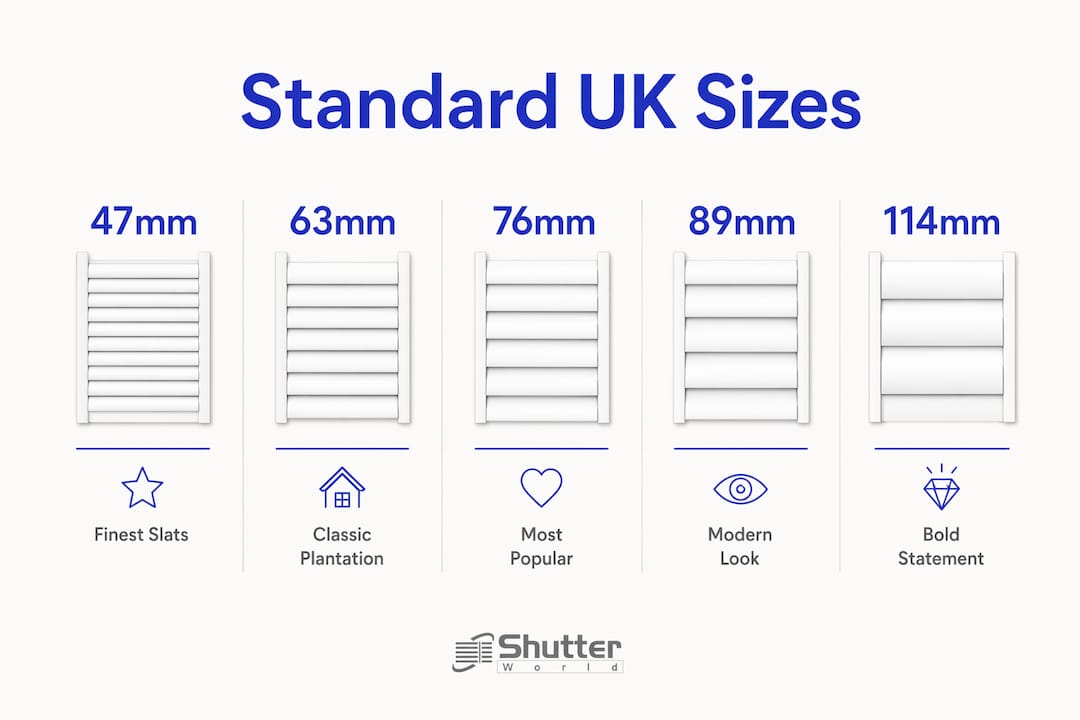
63mm louvres are the classic plantation shutter size. They carry the same privacy advantages as the 47mm but with slightly broader slats that feel a little more open. Bathrooms and bedrooms are their natural home, particularly where windows are modest in size.
76mm louvres are currently the most popular choice across the UK market. They suit most standard window sizes, operate easily, and sit comfortably between traditional and contemporary in terms of style. If you are unsure which size to choose, 76mm is the reliable starting point.
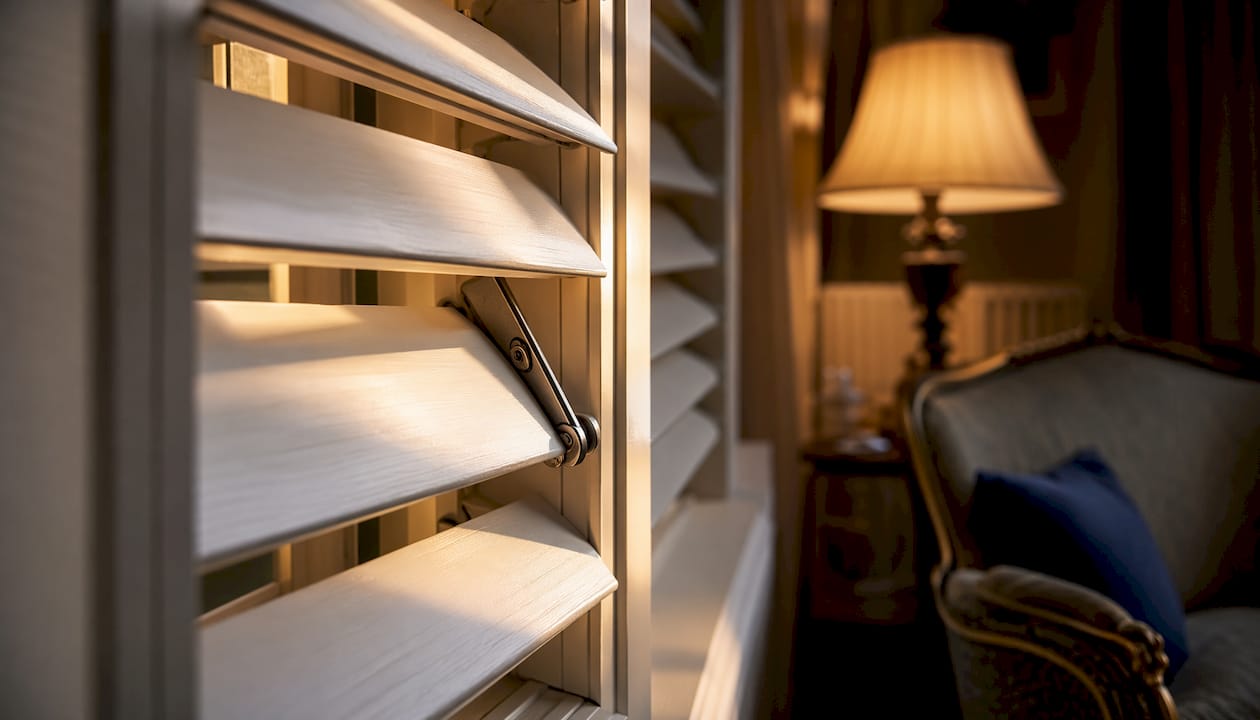
89mm louvres step into genuinely modern territory. Fewer slats per panel means a cleaner, more minimal look, and when open they allow considerably more light and air to pass through. They work proportionally on medium to large windows and are a popular choice for open-plan living rooms and kitchen extensions.
114mm louvres are the widest standard option. They create a bold architectural statement and, when open, offer near-unobstructed views through the glass. The trade-off is panel weight: fewer but larger slats mean each panel is heavier, and the window recess must be deep enough to accommodate smooth rotation.
Frame depth requirements
Louvre size is not purely an aesthetic choice; exploring Sonnenschutz mit Duette Wabenplissee – DuetteShop offers valuable insights into light and privacy control options similar to shutters. Each size requires a minimum recess depth to rotate without catching the glass or frame:
Louvre size affects the minimum recess depth required for proper operation; larger louvres require deeper recesses to avoid binding against the glass when tilted. Measure your recess depth before committing to a size.
How do you choose the right louvre size for your room and window?
Room function is the single most reliable guide. Privacy-sensitive spaces call for smaller louvres; light-hungry, sociable spaces benefit from larger ones.
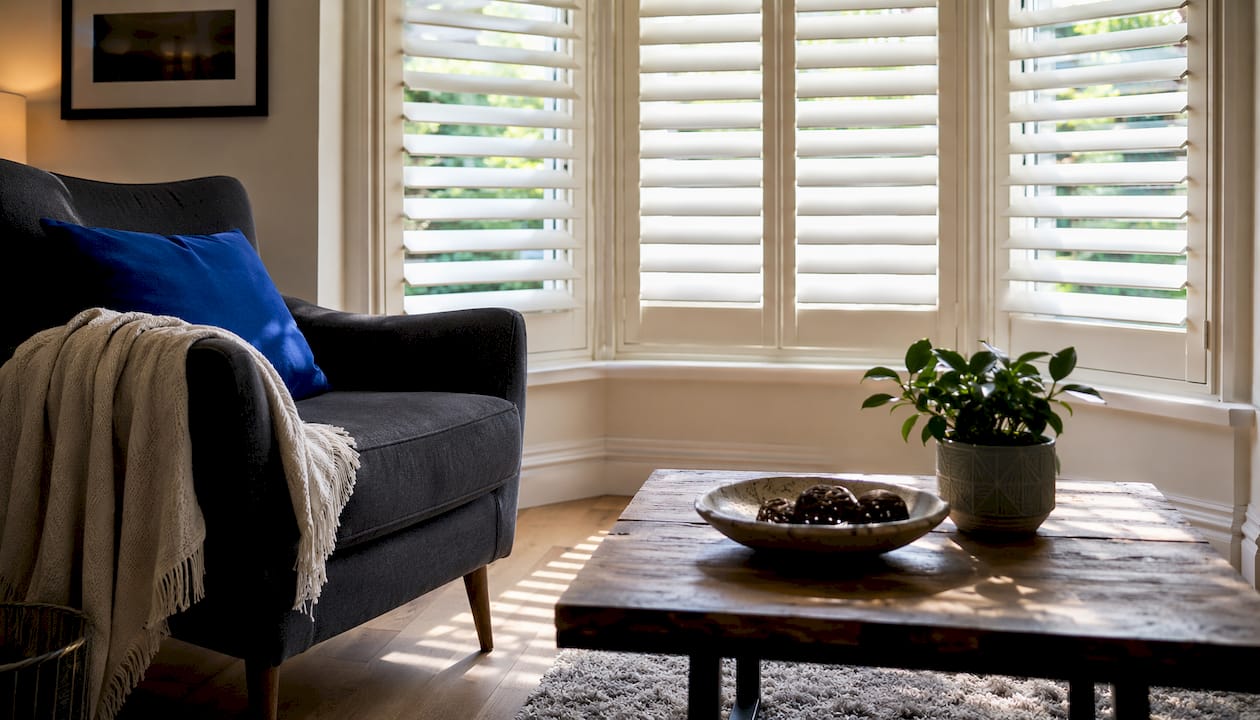
Bedrooms and bathrooms typically suit smaller-sized louvres well. The tighter slat spacing provides finer control when shutting out early morning light or maintaining privacy at street level. For bedroom shutter choices, the 63mm size consistently delivers the coverage homeowners want without sacrificing style.
Living rooms and kitchen extensions often benefit from medium to larger louvres. These rooms enjoy generous natural light and good airflow, with broader slats providing enhanced openness when tilted. South-facing living windows can be flooded with light by larger louvres in a way smaller ones cannot match.
Window proportions matter too. A small, narrow window fitted with 114mm louvres looks visually top-heavy because there are so few slats in the panel. Conversely, a tall bay window fitted with 63mm louvres can look fussy and over-detailed. As a general rule, window size and louvre width should scale together.
Style goals also steer the decision. Traditional and period properties tend to look most at home with 47mm or 63mm louvres, where the fine slat pattern echoes the detailing of older architecture. Contemporary new builds and open-plan spaces suit 89mm or 114mm louvres, where the clean lines reinforce a modern interior.
Pro Tip: Consider how sunlight travels across your room throughout the day before settling on a louvre size. Larger louvres create sweeping, dramatic light patterns across walls, which can be beautiful in a north-facing room but overwhelming in one that receives direct afternoon sun. Smaller louvres diffuse that same light softly, reducing glare without blocking the view entirely.
Why Shutterworld’s expertise makes the difference when selecting louvre sizes
Shutterworld has spent over 25 years helping UK homeowners navigate exactly these decisions. Based in Ossett, West Yorkshire, the team works nationwide and brings genuine craft knowledge to every project, from a straightforward Victorian terrace to a complex glazed extension.
Two ranges sit at the heart of what Shutterworld offers. The Seattle MDF range uses durable MDF with an extruded polypropylene coating, making it an excellent choice for kitchens and bathrooms where moisture resistance matters. The Montana Hardwood range is crafted from premium hardwood for homeowners who want a genuinely luxurious finish that stands the test of time. Both ranges are available across the full spectrum of louvre sizes, and both can be specified for made-to-measure shutters on windows of any shape.
Shutterworld’s bespoke capability extends to angled, triangular, arched, bay, skylight, bi-fold, and conservatory windows. For these complex shapes, getting the louvre size right is even more critical, because the geometry of the frame directly affects how each slat operates. The professional in-home survey removes the guesswork entirely, with accurate measurements taken on-site and a clear quotation provided before any commitment is made.
- Professional in-home survey and precise measurements
- Expert guidance on louvre size relative to window proportions and room use
- Full installation by experienced fitters
- Product and workmanship guarantees for long-term confidence
- Project gallery to help you visualise finished results before ordering
Maintenance and durability across different louvre sizes
Louvre size has a direct bearing on how easy your shutters are to clean and how they hold up over years of daily use.
Smaller louvres (47mm and 63mm) have more slats per panel, which means more surfaces to dust. A standard 900mm tall panel fitted with 63mm louvres will have noticeably more individual slats than the same panel fitted with 89mm louvres. For homeowners who want low-maintenance window coverings, this is worth factoring in. That said, each slat is lighter and places less mechanical stress on the tilt rod and hinges over time.
Medium louvres (76mm) offer a practical middle ground. There are fewer surfaces to clean than with smaller sizes, and the slats are not so large that they create significant panel weight. The 76mm size is also the easiest to operate for most people, which reduces the wear on the tilt mechanism across years of daily adjustment.
Larger louvres (89mm and 114mm) are the quickest to clean because there are simply fewer slats. A wipe-down with a damp cloth takes half the time compared to a fine-slat panel. The downside is panel weight: a 114mm louvre panel on a large window is considerably heavier than its 63mm equivalent, and over time this places greater demand on the frame fixings and hinges. Quality installation and premium materials, such as Shutterworld’s Montana Hardwood range, mitigate this significantly. For energy-efficient shutter performance, the broader louvre also provides a more effective seal when closed, reducing draughts and heat loss.
Key takeaways
Louvre size governs style, privacy, light quality, and long-term maintenance in equal measure, making it the most important single specification in any shutter project.
| Point | Details |
|---|---|
| Five standard UK sizes | 47mm, 63mm, 76mm, 89mm, and 114mm cover traditional through to contemporary styles. |
| 76mm is the most popular | It suits most standard windows and balances light control, privacy, and ease of operation. |
| Frame depth determines fit | A 114mm louvre requires at least 64mm of recess depth to rotate without catching the glass. For 63mm louvres, a minimum of 38mm is needed. |
| Room function guides size | Bedrooms and bathrooms suit 63mm; living rooms and kitchens benefit from 76mm or 89mm. |
| Larger louvres need less cleaning | Fewer slats mean faster maintenance, but panel weight increases with louvre width. |
FAQ
What size are shutter louvres?
Standard UK shutter louvres come in five sizes: 47mm, 63mm, 76mm, 89mm, and 114mm. The right size depends on your window dimensions, room function, and preferred balance of light and privacy.
What are the standard sizes for plantation shutters?
Plantation shutters are most commonly specified with 63mm, 76mm, or 89mm louvres in the UK market, with 76mm being the most widely chosen for its versatility across different window sizes and interior styles.
What minimum frame depth does each louvre size need?
A 63mm louvre requires approximately 38mm of recess depth, and a 114mm louvre requires at least 64mm. Fitting a louvre into a shallower recess than recommended will prevent it from rotating freely.
What is the difference between 89mm and 114mm louvres?
The 89mm louvre suits medium to large windows and offers a modern look with good light and airflow. The 114mm louvre is wider still, creating a bolder statement and near-unobstructed views when open, but it increases panel weight and requires a deeper window recess.
Which louvre size is best for privacy?
Smaller louvres, particularly 47mm and 63mm, provide the tightest privacy control because more slats per panel means finer adjustment. For shutter privacy guidance tailored to your specific rooms, a professional in-home survey will identify the most appropriate size for each window.