
Shutter privacy levels: a homeowner’s guide 2026

TL;DR:
- Shutter privacy levels are primarily determined by louver size, fit quality, and material durability, ensuring consistent privacy. Proper installation and tight seals are crucial to prevent gaps that compromise privacy, regardless of the shutter’s design. Choosing the appropriate shutter type and material for each room maximizes privacy, light control, and style.
Shutter privacy levels are defined as the degree of visual and light barrier that window shutters provide, determined by louver size, fit quality, and material composition. Unlike curtains or blinds, shutters create consistent privacy because they mount firmly within the window frame and offer controlled, adjustable visibility. The key variables are louver width, how tightly the shutter closes, and whether the material resists warping over time. Plantation shutters and louvered shutters are the most popular choices for UK homeowners seeking this balance, and understanding how each design element affects privacy will help you choose with confidence rather than guesswork.
What do shutter privacy levels actually mean?
Shutter privacy levels describe how much of your interior is visible from outside, and how much light passes through, at any given louver position. The term is not a formal industry classification but a practical framework used by shutter specialists to help homeowners compare options. The recognised industry concept behind it is light and vision control, which covers both the opacity of the shutter when closed and the adjustability of the louvers when open.
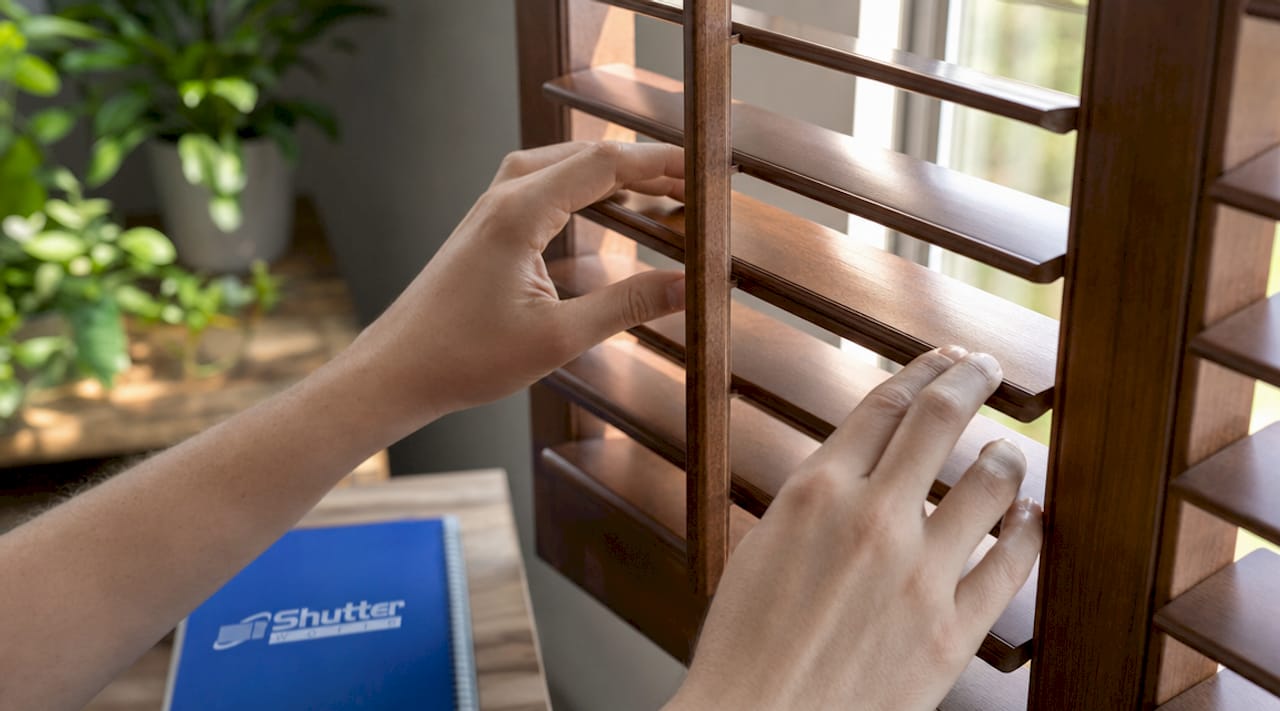
Three factors govern where any shutter sits on the privacy spectrum. Louver size determines how much overlap occurs when the slats close. Fit quality determines whether gaps exist at the frame, edges, or panel joins. Material determines whether the shutter holds its shape over time, preserving that fit. Get all three right and you achieve the privacy outcome you want. Miss one and the result will disappoint, regardless of how attractive the shutter looks in a showroom.
How does louver size affect privacy and light control?
Louver size is the single most visible design variable in any shutter, and it directly shapes how much privacy and natural light you can achieve simultaneously. Standard interior louver widths run from 1.25 inches through to 4.5 inches, each suited to different window scales and privacy priorities.
Here is how each size performs in practice:
- 1.25 inch louvers. The narrowest option, common in traditional and period properties. The tight slat overlap means excellent light blocking when closed, but the small blade size limits your outside view when the shutters are open.
- 2.5 inch louvers. The most widely specified size for UK homes. Smaller louvers provide more overlap and stronger light blocking when closed, making this size a reliable choice for bedrooms and street-facing rooms.
- 3.5 inch louvers. The contemporary standard for living rooms and larger windows. Wide enough to frame an attractive view when open, but the reduced overlap means privacy depends more on louver angle than on the closed position alone.
- 4.5 inch louvers. The widest option, favoured for floor-to-ceiling glazing and bi-fold doors. Visually striking, but larger louvers require careful angling to maintain sightline control, and the gap between slats when partially open is more pronounced.
The counter-intuitive truth here is that louver size affects view-through when open far more than it affects privacy when fully closed. A well-fitted 4.5 inch shutter closed completely will block as much visibility as a 2.5 inch shutter in the same position. The difference emerges the moment you tilt the louvers to let light in.
Pro Tip: Many homeowners choose large louvers for their open appearance but find everyday privacy is compromised because the louvers must be angled at positions that expose the interior. Decide on your typical operating angle before committing to a louver width, not just how the shutter looks fully open.
Does installation quality really change your privacy outcome?
Fit quality is the most underestimated factor in window shutter privacy, and it is where the gap between a bespoke shutter and an off-the-shelf product becomes most apparent. Manufacturing tolerance for light gaps at louver edges can reach up to 1/16 inch, which is barely visible in daylight but becomes a noticeable strip of light at night when your interior is illuminated. This matters most in bedrooms and bathrooms where privacy expectations are highest.
The most common installation errors that reduce privacy are:
- Inaccurate measurements. Even a few millimetres of excess clearance at the frame creates a visible gap. Professional measurement accounts for window reveal depth, frame squareness, and wall projection.
- Loose panel joins. On tier-on-tier shutters, the split between the upper and lower panels must align precisely. A misaligned join creates a horizontal light strip across the middle of the window.
- Unsecured frame seals. The shutter frame should sit flush against the window reveal. Gaps at the sides or top allow both light and visibility through the perimeter.
- Ignoring divider rails. For shutters taller than 66 inches, a divider rail adds stability and allows independent tilt control for the upper and lower sections, giving you far greater flexibility in managing privacy and light simultaneously.
“Achieving maximum privacy requires addressing gaps at louver edges, frame seals, and panel joins. Professional installation and tight seals are as critical as louver design.” — Louver Shutters Interior: Complete Buyer’s Guide 2026
Pro Tip: Ask your installer specifically how they handle frame squareness and what tolerance they work to. A reputable specialist will measure to the nearest millimetre and account for any wall irregularities before fabricating your shutters.
Comparing shutter types by privacy level and room use
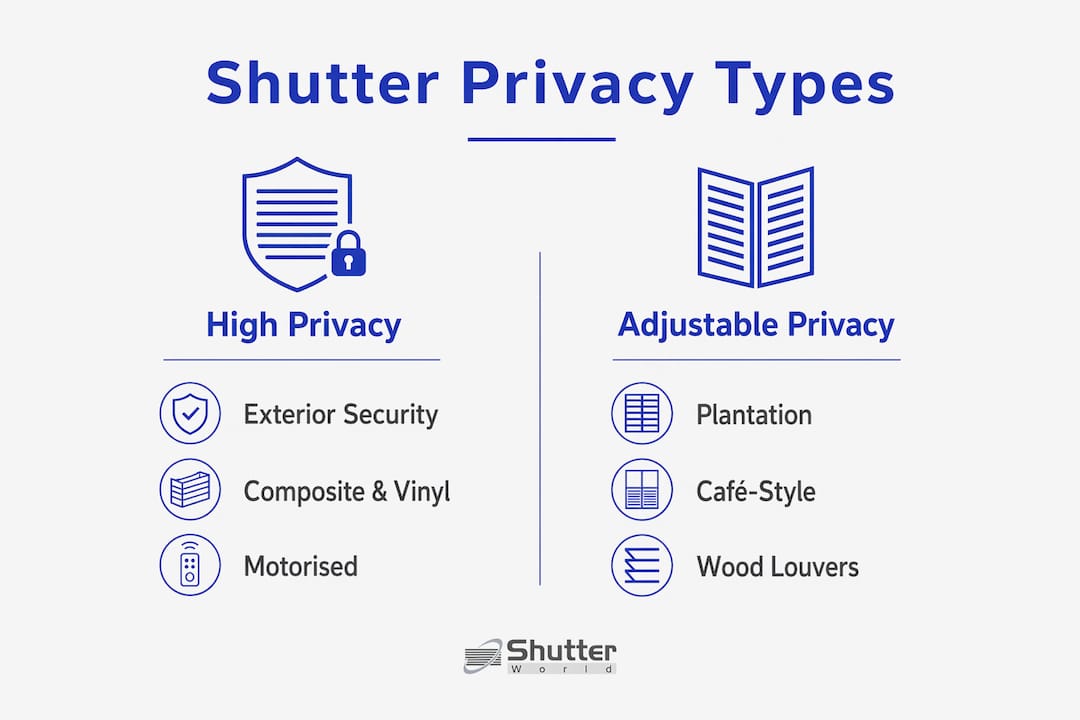
Not all shutters deliver the same privacy outcome, and the right choice depends on the room, the window position, and how you live in the space. The table below summarises the main shutter types available to UK homeowners.
| Shutter type | Privacy level | Light control | Best room use | Maintenance |
|---|---|---|---|---|
| Plantation (louvered) | High (adjustable) | Excellent | Living rooms, bedrooms, hallways | Low |
| Solid panel / board-and-batten | Maximum | Full blackout | Bedrooms, media rooms | Very low |
| Composite / vinyl | High | Excellent | Bathrooms, kitchens | Very low |
| Café-style | Partial (lower half) | Moderate | Street-facing kitchens, dining rooms | Low |
| Exterior security shutters | Maximum | Full blackout | Any room, storm or security risk | Moderate |
Plantation shutters with wide louvers allow adjustable privacy by tilting to block sightlines while still admitting natural light. Closing them fully achieves total privacy. This adjustability makes plantation shutters the most versatile privacy control window treatment available for everyday residential use.
Composite and vinyl shutters offer high privacy alongside moisture resistance, making them the practical choice for bathrooms and kitchens where timber would warp. They require less maintenance than wood and hold their shape in humid conditions, preserving the tight fit that privacy depends on.
Café-style shutters cover only the lower portion of the window, protecting you from street-level sightlines while leaving the upper glass clear for natural light. They work well on ground-floor rooms facing a pavement or road, where the primary concern is passers-by rather than overlooking neighbours.
Exterior security shutters sit at the top of the privacy spectrum. They block views entirely, darken rooms completely, and protect against intrusion. The trade-off is cost and the loss of natural light when deployed, which makes them a specialist choice rather than an everyday solution for most homes.
For homeowners who want flexible privacy control without manual adjustment, motorised shutters can be programmed for different privacy settings throughout the day. They are particularly useful on hard-to-reach windows such as skylights or high-level glazing, where manual operation is impractical.
How to choose shutters that balance privacy, light, and style
Selecting the right shutter for each room requires a room-by-room approach rather than a single specification applied across the whole house. The privacy requirements of a street-facing bedroom differ significantly from those of a first-floor study or a rear-facing kitchen.
- Bedrooms. Prioritise 2.5-inch louvres for maximum overlap when closed, and consider a solid panel option if you need complete blackout. Blackout shades combined with shutters improve light blocking further, as shutters alone cannot eliminate every edge gap.
- Bathrooms. Specify composite or vinyl shutters for moisture resistance. A full-height shutter with a tight frame seal delivers the privacy level a bathroom demands without the maintenance burden of painted timber.
- Living rooms. Larger louvres, typically 3.5 inches, suit the scale of most living room windows and allow generous natural light when open. Pair with a shutter privacy approach that uses tier-on-tier panels if you want independent control of the upper and lower sections.
- Street-facing rooms. Café-style shutters are considered a solution where the view out matters as much as privacy. They protect the lower half of the window while keeping the room bright.
- Historic and period properties. Narrower louvres, 1.25 or 2.5 inches, complement traditional architecture more sympathetically than wide plantation blades. The tighter slat pattern also provides stronger light blocking, which suits rooms where original glazing admits more light than modern double glazing.
Material choice should follow the room’s humidity and temperature profile. Hardwood shutters, such as those in Shutterworld’s Montana range, suit living areas and bedrooms where appearance is paramount. MDF with a polypropylene coating, as used in the Seattle range, offers durability and moisture resistance at a more accessible price point.
Pro Tip: For windows wider than 1.2 metres, specify multiple narrower panels rather than one wide panel. Narrower panels close with less flex and maintain a tighter seal across the full width, which directly improves privacy performance.
Combining shutters with privacy-enhancing shades is worth considering for bedrooms where total darkness is the goal. Shutters handle the daytime privacy and light control; a blackout roller blind fitted behind them addresses the residual edge gaps at night.
Key takeaways
The most effective shutter privacy outcome depends on louver size, installation precision, and material choice working together, not on any single factor in isolation.
| Point | Details |
|---|---|
| Louver size governs adjustability | Smaller louvers block more light when closed; larger louvers offer better views when open but need careful angling for privacy. |
| Fit quality determines real-world privacy | Gaps at louver edges, frame seals, and panel joins undermine privacy regardless of louver design. |
| Material must match the room | Composite and vinyl suit humid rooms; hardwood and MDF suit living areas and bedrooms. |
| Shutter type sets the privacy ceiling | Solid panels and exterior security shutters deliver maximum privacy; plantation shutters offer the best adjustable balance. |
| Professional installation is non-negotiable | Precise measurement and expert fitting are as important as the shutter specification itself. |
What I have learned from years of shutter installations
After working with homeowners across the UK on hundreds of shutter projects, the pattern I see most consistently is this: people spend considerable time choosing louver width and finish, then underestimate how much the installation itself determines the final privacy outcome. A beautifully specified plantation shutter fitted with a 5mm gap at the frame will disappoint every time. The shutter is only as private as its weakest seal.
The second error I see regularly is choosing louver size based on how the shutter looks in a showroom or a photograph, fully open, in a well-lit space. That is the best-case scenario. The question worth asking is how the shutter performs at the angle you will actually use it on a Tuesday afternoon when the sun is low and a neighbour can see directly into your front room. That is the test that matters.
I am also genuinely enthusiastic about motorised shutters for clients who have complex window arrangements or who simply want the convenience of programmed privacy settings. The technology has matured considerably, and the ability to set different louver positions for morning, afternoon, and evening without touching the shutter is a practical benefit that goes well beyond novelty.
My honest recommendation is always to treat the survey and measurement stage as the most important part of the process, not a formality before the interesting decisions begin. The shutters you choose will be part of your home for decades. Getting the fit right from the start is the single best investment you can make in their long-term performance.
— Ken
How Shutterworld’s bespoke shutters deliver the privacy you need
If this guide has confirmed that privacy, fit, and material quality are inseparable, Shutterworld’s approach is built precisely around that principle. Every shutter is made to measure following a professional in-home survey, with tolerances that eliminate the light gaps that off-the-shelf products cannot avoid.
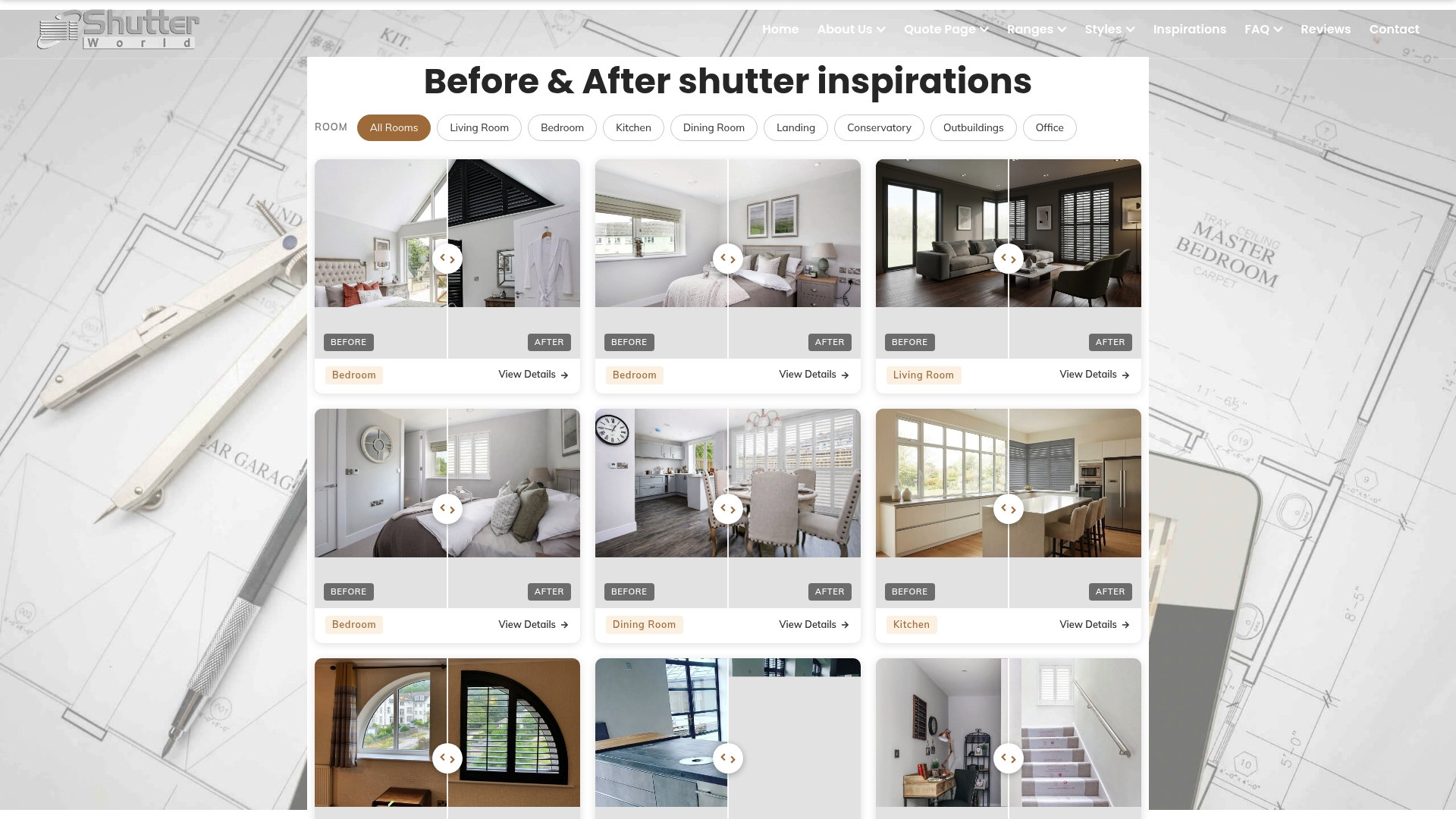
Shutterworld’s plantation shutter range covers everything from the durable Seattle MDF collection to the premium Montana hardwood range, with louver widths from 1.25 to 4.5 inches to suit every window scale and privacy requirement. Moisture-resistant composite options are available for bathrooms and kitchens. For homeowners who want a complete picture of what is possible, the bespoke internal shutter range covers even the most architecturally complex windows. Contact Shutterworld today to arrange your free survey and take the first step towards shutters that genuinely perform.
FAQ
What are shutter privacy levels?
Shutter privacy levels describe the degree of visual and light barrier a shutter provides, controlled by louver size, fit quality, and material. They range from partial privacy in café-style shutters to complete blackout in solid panel and exterior security shutters.
Which louver size gives the best privacy?
Smaller louvers, typically 2.5 inches, provide more overlap and stronger light blocking when closed, making them the most reliable choice for bedrooms and street-facing rooms where privacy is the priority.
Do shutters provide more privacy than blinds or curtains?
Yes. Shutters mount firmly within the window frame and offer adjustable louver control that curtains and blinds cannot replicate. They form a permanent part of the window structure, giving consistent and controllable privacy at every position.
What shutter material is best for bathrooms?
Composite and vinyl shutters are the correct choice for bathrooms and kitchens. They resist warping in humid conditions and require less maintenance than timber, while maintaining the tight fit that privacy performance depends on.
Can shutters achieve complete blackout?
Shutters alone rarely achieve complete blackout because manufacturing tolerances create small gaps at louver edges. Combining shutters with a blackout roller blind fitted behind them addresses these residual gaps and delivers total darkness for bedrooms.