
Best Shutter Styles for Small Rooms in the UK 2025

Shutter styles for small rooms
Shutters are quickly becoming a top choice for small rooms across the UK, and a good reason. You might think curtains were always the obvious answer, but one switch can make all the difference. Window shutters can reduce heat loss by up to 25 per cent compared to traditional curtains, and that is a win no one expects when it comes to making a space feel bigger and brighter. Wait until you see how the right style can make your room look and feel twice the size.
Table of Contents
- Why Choose Shutters For Small Rooms
- Top Shutter Styles That Save Space
- How To Select The Right Shutter Material
- Tips For Installing Shutters In Compact Spaces
Quick Summary
| Takeaway | Explanation |
|---|---|
| Shutters enhance space illusion | Shutters create a clean look, making rooms appear larger compared to traditional curtains. |
| Choose versatile shutter styles | Tier-on-tier and café-style options allow homeowners to adjust light and privacy effectively in compact spaces. |
| Select appropriate shutter materials | Different materials offer durability and aesthetics; choose based on specific room conditions like humidity and temperature. |
| Accurate measurements are crucial | Ensure precise measurements for proper fitting; even slight inaccuracies can disrupt visual balance in small areas. |
| Consider strategic installation methods | Use techniques like recess mounting to maximise space efficiency and enhance the appearance of compact rooms. |
Why Choose Shutters for Small Rooms
Transforming small rooms requires strategic design choices that maximise both aesthetics and functionality. Window shutters emerge as an exceptional solution for compact spaces, offering a unique blend of style, practicality, and spatial optimisation.
Space Enhancement and Visual Illusion
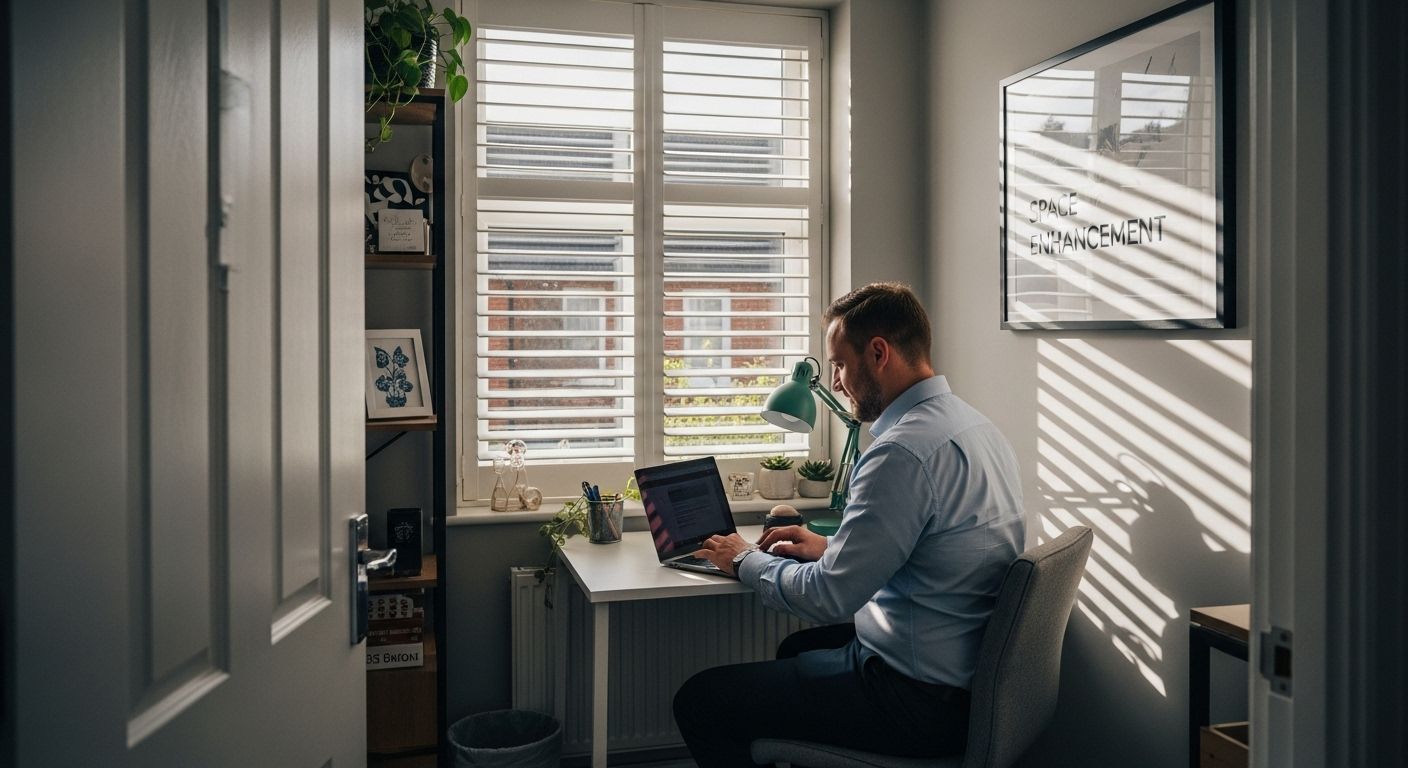
Shutters provide an ingenious way to create the illusion of more space in smaller rooms. Unlike bulky curtains that can overwhelm limited square footage, plantation shutters sit flush against windows, creating clean lines and minimalist visual appeal. Learn more about room enhancement techniques with our expert design insights.
The slim profile of custom shutters allows maximum light penetration while maintaining privacy. According to Historic England research, window treatments like shutters can reduce heat loss by up to 25% compared to traditional curtains, making them not just a design element but an energy-efficient upgrade for compact living spaces.
Versatile Design and Functionality
Modern shutter styles offer unprecedented versatility for small rooms. Tier-on-tier and café-style shutters provide flexible light control and privacy management. These designs allow partial window coverage, enabling homeowners to adjust natural illumination without compromising on aesthetic appeal.
The U.S. Department of Energy highlights that window shutters serve as an additional insulation layer, helping regulate indoor temperatures. In small rooms where temperature fluctuations can feel more pronounced, this becomes a significant advantage.
Customization and Practical Benefits
Custom shutters are tailored to fit even the most challenging window configurations in compact spaces. Narrow windows, awkward angles, and unconventional shapes become opportunities for personalized design rather than limitations. Homeowners can select from various materials like hardwood, MDF, or waterproof options to suit specific room requirements.
Beyond aesthetic considerations, shutters offer practical benefits. They are easier to clean compared to fabric window treatments, resist moisture and dust accumulation, and provide superior light filtering capabilities. For small rooms that demand both style and functionality, shutters represent an intelligent investment in home decor.
Choosing shutters for small rooms is not merely a design decision but a strategic approach to spatial optimisation. By combining visual elegance, energy efficiency, and practical benefits, these window treatments transform limited spaces into comfortable, stylish environments.
Top Shutter Styles That Save Space
Navigating small room design requires innovative window treatment solutions that maximise spatial efficiency. Selecting the right shutter style can dramatically transform compact spaces, creating an illusion of openness while maintaining functionality and aesthetic appeal.
Here is a comparison table summarising the key space-saving shutter styles discussed and their main features for use in small rooms:
| Shutter Style | Key Features | Ideal For |
|---|---|---|
| Accordion (Folding) | Hinged panels, minimal stacked footprint, soft rippled look, flexible use | Maximising window area, rooms where floor space is tight |
| Full-Height | Floor-to-ceiling installation draws the eye upward | Making ceilings feel higher, increasing the sense of space |
| Roller Blinds | Sleek, sits close to the window, minimal profile | Freeing up wall/floor space, minimalist decor |
| Tier-on-Tier | Top and bottom panels open independently | Flexible light/privacy control, partial window coverage |
| Café-Style | Covers the lower portion, the upper area is open | Privacy on a lower level, maintaining natural light |
Compact Folding and Sliding Shutter Designs
Accordion shutters represent a revolutionary approach to space-saving window treatments. Explore innovative shutter configurations that redefine room dynamics. As shutter design experts explain, these hinged panels fold in a zigzag pattern, creating a narrow stacked footprint when open. This design allows homeowners to maximise window area without compromising valuable floor space.
The unique folding mechanism provides remarkable flexibility. When extended, accordion shutters create soft rippled visual barriers that can subtly define spaces without permanent structural changes. Their adaptable nature makes them ideal for rooms where every centimetre counts.
Vertical Space Optimisation Techniques
Shutter design research confirms that full-height shutters can create a powerful visual expansion effect. By drawing the eye upward, floor-to-ceiling shutters generate an illusion of increased room height and spaciousness. This technique is particularly effective in compact rooms with limited square footage.
According to Shady Blinds design experts, roller blinds offer another minimalist solution for space-constrained environments. These sleek window treatments fit closely to the window, occupying minimal room and freeing up both wall and floor space. Their streamlined profile ensures maximum functionality without visual clutter.
Multifunctional Shutter Configurations
Modern shutter designs transcend traditional window coverage. Tier-on-tier and café-style shutters provide unprecedented flexibility in small spaces. These configurations allow partial window coverage, enabling precise light control and privacy management without overwhelming the room’s visual landscape.
Custom shutters can be tailored to unique architectural challenges. Narrow windows, awkward angles, and unconventional room layouts become opportunities for creative design solutions. Homeowners can select materials like lightweight MDF, hardwood, or waterproof options that complement the room’s specific requirements.
Choosing the right shutter style is more than an aesthetic decision—it’s a strategic approach to spatial optimisation. By combining innovative design, material selection, and intelligent configuration, shutters can transform limited spaces into visually expansive, functional environments that feel significantly larger than their actual dimensions.

How to Select the Right Shutter Material
Selecting the appropriate material for shutters in small rooms is a critical decision that impacts aesthetics, functionality, and long-term performance. Different materials offer unique advantages, and understanding their characteristics helps homeowners make informed choices tailored to their specific spatial requirements.
To help you easily compare the materials and benefits discussed for small room shutters, see the table below:
| Material | Key Benefits | Ideal Room Conditions |
|---|---|---|
| Hardwood | Natural elegance, robust structure | Living rooms, bedrooms, low moisture |
| MDF | Cost-effective, moisture-resistant, stable | Kitchens, bathrooms, areas with humidity |
| PVC/Composites | Waterproof, resists warping and swelling | High moisture: bathrooms, kitchens |
| Aluminium | Lightweight, contemporary, minimal bulk | Modern designs, sun-exposed windows |
| Hybrid Materials | Customisable balance of looks and function | Mixed-use, variable temperatures |
Material Durability and Performance Considerations
Explore our comprehensive guide to shutter frame materials to understand the nuanced choices available for modern homes. Hardwood remains a premium option, offering natural elegance and robust structural integrity. Engineered wood products like MDF provide a cost-effective alternative with enhanced moisture resistance and dimensional stability.
The UK government’s fire safety guidelines emphasise the importance of selecting materials with appropriate fire resistance. Class 0-rated materials ensure enhanced safety in interior applications, making them particularly suitable for rooms with specific safety requirements.
Acoustic and Environmental Performance
Recent acoustic research highlights the potential of advanced materials in small room design. Acoustic metamaterial studies demonstrate how innovative materials can control sound reverberation, offering potential benefits for rooms with challenging acoustic characteristics. This becomes particularly relevant in compact spaces where sound management is crucial.
Waterproof materials like PVC and specialised composite shutters excel in high-moisture environments such as bathrooms or kitchens. These materials resist warping, swelling, and moisture-related degradation, ensuring longevity and maintaining aesthetic appeal in challenging conditions. Homeowners can select from a range of finishes that mimic natural wood textures while providing superior environmental resistance.
Customisation and Practical Considerations
Modern shutter materials offer unprecedented customisation options. Lightweight materials like aluminium provide sleek, contemporary designs with minimal visual bulk. Hybrid materials combining different substrates can optimise performance, balancing aesthetic appeal with practical functionality.
Consider the specific environmental conditions of your room. Factors such as direct sunlight exposure, humidity levels, and temperature fluctuations should guide material selection. For instance, rooms with significant temperature variations benefit from materials with low thermal expansion coefficients, preventing warping or structural changes.
Choosing the right shutter material is a nuanced process that extends beyond mere aesthetics. By carefully evaluating performance characteristics, environmental adaptability, and specific room requirements, homeowners can select materials that not only enhance visual appeal but also provide long-lasting, functional window treatments perfectly suited to small room environments.
Tips for Installing Shutters in Compact Spaces
Installing shutters in compact spaces requires meticulous planning and precision to maximise both aesthetic appeal and functional efficiency. The right installation approach can transform limited areas, creating an illusion of spaciousness while ensuring optimal window treatment performance.
Precise Measurement and Preparation
Discover our comprehensive shutter measurement guide to ensure a perfect fit in small rooms. Accurate measurements are crucial in compact spaces where even millimetres can impact visual balance and functionality. Begin by carefully measuring window recesses, accounting for any architectural irregularities such as uneven walls or window frames.
The UK government’s home safety guidelines emphasise the importance of secure fixture installations. In small rooms, this means ensuring shutters are mounted securely to prevent potential hazards, particularly in homes with children or high-traffic areas.
Strategic Installation Techniques
The Good Homes Alliance shading guidance highlights the critical role of precise window treatment installation in controlling light and temperature. For compact spaces, consider recess mounting, which allows shutters to sit within the window frame, minimising protrusion and preserving valuable room space.
When working with unusual window configurations, custom mounting solutions become essential. Consider using specialised brackets that allow for minimal projection, ensuring shutters sit as close to the window as possible. This approach is particularly effective in rooms where every centimetre of space matters.
Maintenance and Long-Term Considerations
Professional installation goes beyond initial fitting. Select installation methods that facilitate easy future maintenance. Choose hardware that allows for simple panel removal and cleaning, crucial in small spaces where dust and moisture can accumulate quickly.
Consider the room’s specific environmental conditions when installing shutters. In high-humidity areas like bathrooms or kitchens, ensure proper sealing and use moisture-resistant mounting techniques. This prevents potential warping or damage that could compromise the shutter’s performance and appearance.
Installing shutters in compact spaces is an art that combines precise technical skills with creative spatial planning. By focusing on accurate measurement, strategic mounting, and long-term maintenance, homeowners can transform small rooms with window treatments that are both functional and visually stunning. The key lies in understanding that in limited spaces, every installation detail matters, from the initial measurement to the final mounting technique.
Frequently Asked Questions
What are the advantages of using shutters instead of curtains in small rooms?
Shutters create a clean, minimalist look that can enhance the illusion of space. They provide better insulation, reducing heat loss by up to 25%, and are easier to maintain than fabric window treatments.
Which shutter styles are best suited for small spaces?
Accordion (folding), tier-on-tier, and café-style shutters are ideal for small rooms. These designs optimise light control and privacy while maintaining a compact profile.
How do I choose the right material for shutters in a small room?
Consider materials based on the room’s conditions. Hardwood offers elegance, while MDF is moisture-resistant and cost-effective. Waterproof materials like PVC are suitable for high-humidity areas like bathrooms.
What are some installation tips for shutters in compact spaces?
Accurate measurements are crucial. Recess mounting is recommended to minimise protrusion into the room. Use special brackets for unusual window shapes to ensure a snug fit without wasting valuable space.
Transform Your Small Room with Custom-Fit Shutters
Are you struggling to make your compact space feel brighter, warmer and more open? The article highlighted how bulky curtains or ill-fitting window treatments can crowd a room, blocking precious light and wasting energy. Many homeowners want sharp lines and enhanced privacy but worry about finding the right style that fits small or awkwardly shaped windows. That is where we can help. For residents in West Yorkshire and surrounding areas, discover the dedicated service for your region. Enjoy tailored advice and personalised fitting for even the trickiest spaces.

With Shutter World, you receive beautifully crafted interior plantation shutters that make tiny rooms feel larger, boost insulation and add lasting value. Select from a wide range of styles and materials, knowing your investment is backed by expert installation and a solid guarantee. Begin the journey to a more spacious and energy-efficient home today. Visit Shutter World now for your free consultation and see the difference a custom solution can make.