Shutter insulation, in tested figures
In 2023 the British Blind and Shutter Association had window coverings tested at the University of Salford's Energy House. With a plantation shutter closed over a modern double-glazed window, 30% less heat passed through the glass.
- 30%less heat through the glass, louvres closed
- 1.52 to 1.06U-value of the glass, in W/m²K
- 72 hoursper test, 20°C inside and 4.5°C outside
- U-value, centre of the glass
- 1.06 W/m²K
Shutters against blinds in the same test
Each covering was fitted to the same double-glazed window and measured for three days. The bars show how much of the bare window's heat loss still passed through the centre of the glass, so a shorter bar keeps in more warmth.
Does the range make a difference?
The laboratory tested a louvred plantation shutter, and no one has tested our five ranges side by side, so we do not publish a separate rating for each. Every range is built the same way: louvred panels in a frame, made to fit your window. What changes is the material, shown here on one scale.
-
Seattle
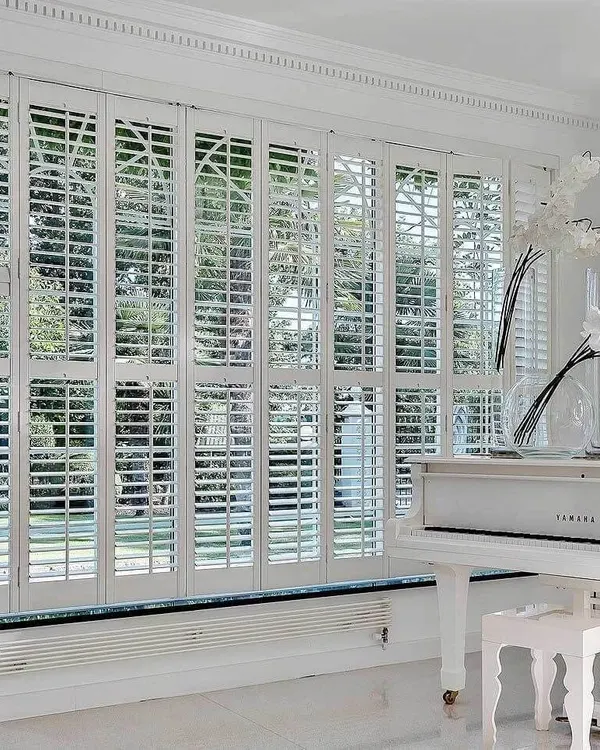
Engineered wood core with a polymer coat
0.14 to 0.18 W/m·K
Solid louvres sealed in a tough coat, built on the same lines as the shutter in the test.
-
Hollywood
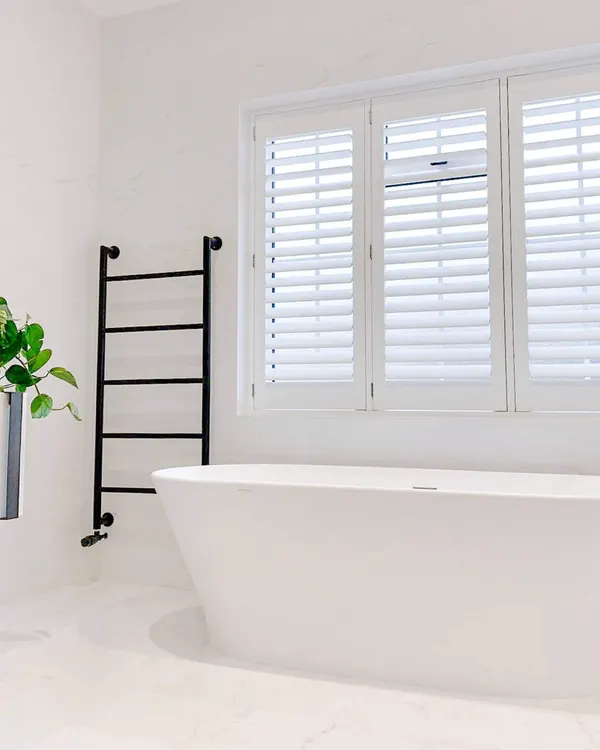
ABS frames and louvres
0.14 to 0.21 W/m·K
ABS passes heat at much the same rate as engineered wood, and it will not warp in a steamy room.
-
Boston
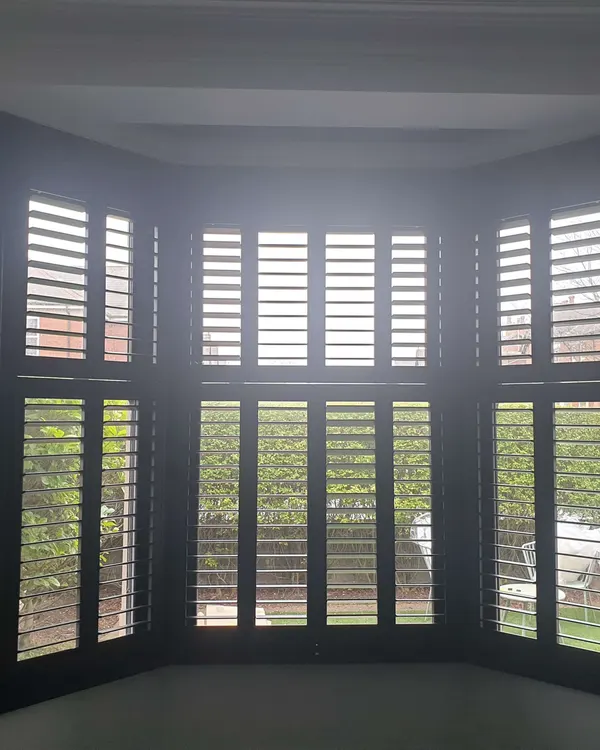
Hardwood panels in engineered wood frames
0.12 to 0.18 W/m·K
Hardwood louvres, which conduct a little less heat than engineered wood or plastics.
-
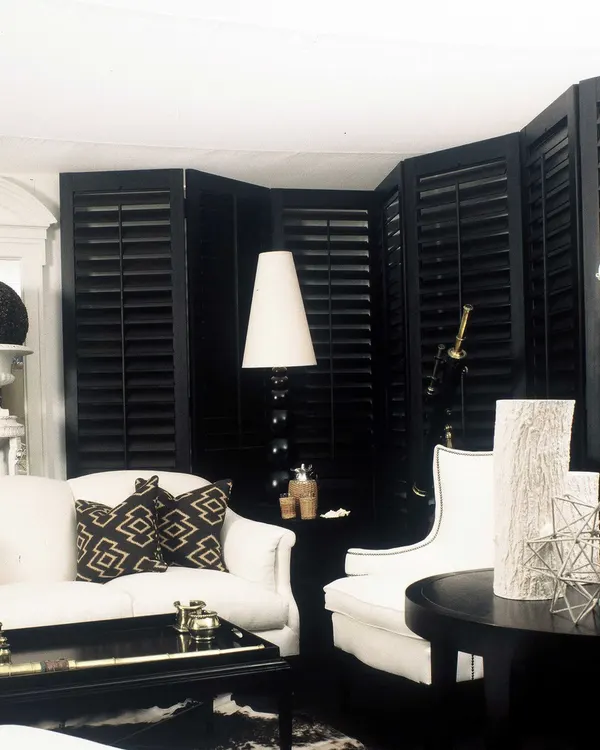
Georgia
Polymer louvres in engineered wood frames
0.17 W/m·K
Polymer louvres sit close to engineered wood in how they handle heat, with wider panels for big windows.
-
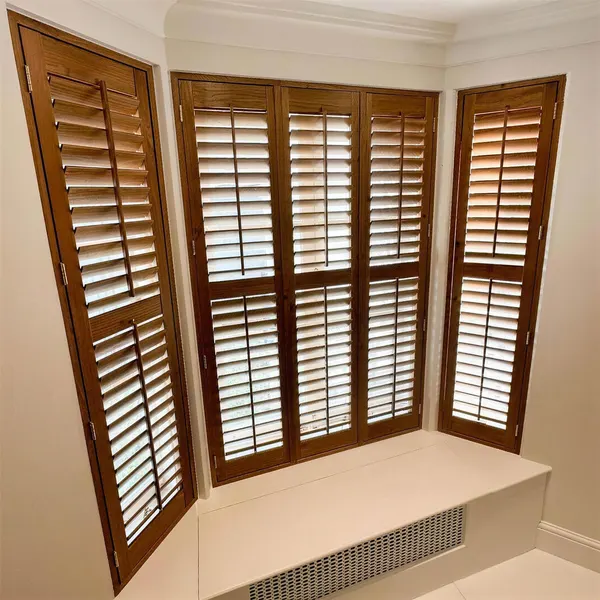
Montana
Premium hardwood
0.12 to 0.18 W/m·K
Hardwood throughout, and the only range we also make as solid panels with no louvre gaps at all.
How to read the bars: each shows how readily the range's main material conducts heat, on a scale from 0 to 0.25 W/m·K, so a shorter bar insulates slightly better. They are typical published values: timber, fibreboard and PVC from BS EN ISO 10456, and ABS from published test data. A louvre is thin, so the still air it traps and a close fit matter far more than the material. Compare prices and colours

Getting the most warmth from your shutters
The material matters less than how the shutter covers and fits the window, and how you use it. These are the points we look at on every design visit.
-
1
Close the louvres when the light goes
The figures above were measured with the shutter closed. Tilt the louvres shut at dusk to hold a layer of still air against the glass.
-
2
Cover the whole window
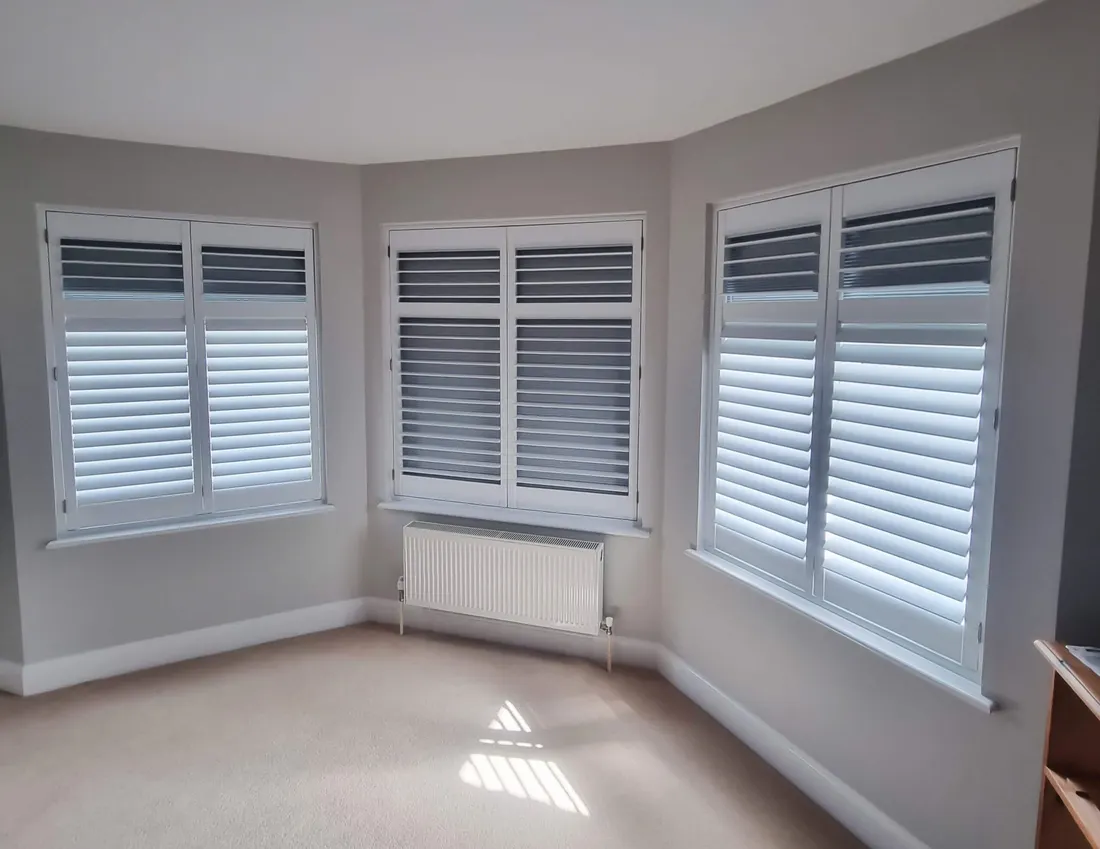
Full-height and tier-on-tier shutters cover all of the glass. Café style shutters leave the top of the window bare.
-
3
Make sure it fits closely
The tested shutter sat 86mm from the glass with gaps of only 5mm. We measure every window ourselves and make each shutter for its recess.
-
4
Add a blind behind the shutter
Shutter & Shade adds a honeycomb blind behind Seattle and Montana shutters. Tested alone, a honeycomb blind cut heat through the glass by 28% to 34%.
Your questions about warmth
If you are weighing up shutters for a cold room, we are happy to discuss it on the phone or at your free design visit.
Ask us directlyRing us on 08707 545 300, open 7 days, 9am to 6pm.
Do shutters carry an energy rating, like windows?
No. Windows and doors can carry a BFRC energy rating label, but internal shutters are not given a label of that kind. Independent laboratory tests, such as the Salford Energy House study on this page, are the most reliable guide to how well they insulate.
Which of your ranges keeps in the most heat?
Boston and Montana have hardwood louvres, which conduct slightly less heat than the engineered wood, polymer and ABS used in our other ranges. The difference is small compared with closing the louvres and having a shutter that fits closely, so we recommend choosing the range that suits the room and your budget.
Will shutters lower my heating bills?
They reduce the heat lost through the windows they cover while the louvres are closed. How much you save depends on the size and number of your windows, the glazing you have and how warm you keep your home, so we cannot promise a figure for your bills.
Do shutters help in summer as well?
Yes. Closing the louvres on a sunny window keeps direct sunlight out of the room, which helps it stay cooler on hot days. The Salford tests measured heat loss in winter conditions only, so there is no laboratory figure for summer.
Were the tests done on old single glazing?
No. The tests used a modern double-glazed window with a low-emissivity coating and argon gas, which already loses far less heat than single glazing. The researchers listed single glazing as a subject for further testing.
Keep more warmth in your own rooms
We'll bring samples of all five ranges, measure each window and recommend the styles that cover the most glass. Your quote is clear and comes with no obligation.
- Call us08707 545 300
- OpenOpen 7 days, 9am to 6pm
- WhereOssett in West Yorkshire, and we fit UK-wide
- Tested30% less heat through the glass, louvres closed
Tell us what you need
We'll phone you back and book a time that works for you.