
Shutters and sustainable design: a practical guide

Shutters and sustainable design
TL;DR:
- Sustainable shutters boost energy efficiency by creating a sealed insulation barrier that reduces heat loss and solar gain.
- Choosing durable, responsibly sourced materials like FSC-certified timber or engineered composites maximizes lifespan and environmental benefits.
- Proper installation and usage routines are essential to achieving optimal performance and long-term sustainability.
Sustainable shutters are defined as window coverings that combine energy-saving thermal performance with responsibly sourced materials to reduce a home’s carbon footprint without compromising on style. The British Blind and Shutter Association (BBSA) and the Energy Saving Trust both recognise window treatments as a meaningful part of home energy efficiency, and shutters sit at the top of that category. Unlike curtains or roller blinds, well-fitted interior shutters create a sealed air gap that actively insulates your home in every season. This guide covers how shutters and sustainable design work together, which materials deliver the best environmental credentials, and how to get the most from your investment.
How do shutters contribute to sustainable design and energy savings?
Interior shutters improve energy efficiency through a mechanism that most homeowners underestimate: the insulating air gap. When shutters are closed and fitted tightly against the window reveal, they trap a layer of still air between the glass and the room. That layer acts as a thermal buffer, slowing the transfer of heat in both directions.
The numbers are significant. Properly fitted shutters can reduce heat loss through windows by between 33% and 51%, with potential annual energy bill savings of up to 25%. That figure means a meaningful reduction in both household running costs and carbon emissions over the lifetime of the product. Interior shutters achieve R-values between 2.5 and 4.0 when closed, compared to a single-pane window at R-1 and a standard double-glazed unit at R-2. The practical implication is that shutters can double or quadruple the insulating performance of your existing glazing without replacing it.
Solar gain control adds another layer of benefit. Adjustable louvres let you angle the slats to admit diffused daylight while blocking direct solar radiation during summer afternoons. Closing shutters during peak summer hours can reduce radiant heat gain by 33% to 70%, which directly lowers cooling costs. In winter, the same shutters retain warmth that would otherwise escape through the glass overnight.
Durability is the sustainability factor that rarely gets discussed. Curtains and off-the-shelf blinds typically need replacing every five to ten years. A well-made hardwood or composite shutter, properly maintained, will outlast several generations of fabric window dressings. Long-lasting shutters outperform short-life window dressings environmentally because the embodied carbon of manufacturing is spread across decades rather than years.
Key energy benefits at a glance:
- Heat loss reduction of 33% through windows
- Solar heat rejection of 55% to 70% during peak summer hours
- R-values of 2.5 to 4.0, significantly above standard double glazing
- Up to 25% potential reduction in annual energy bills
- Air leakage reduction of up to 33% with tight-fitting installation
What are the most sustainable shutter materials?
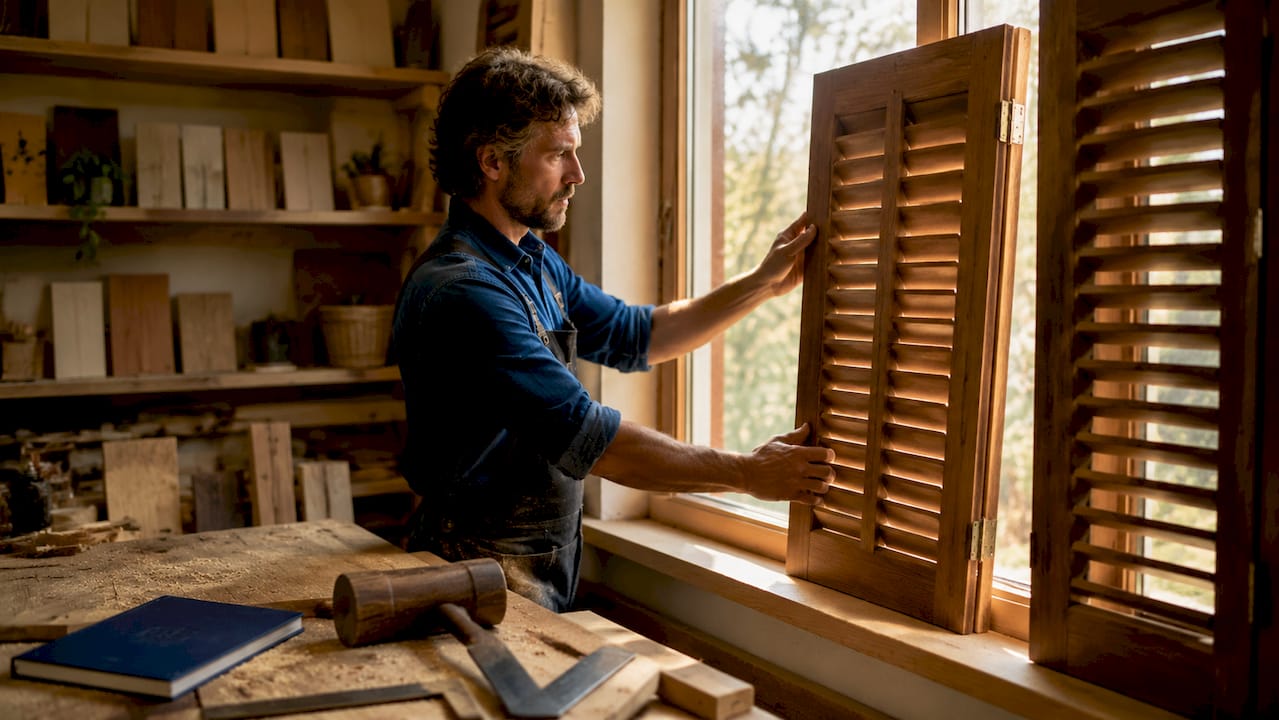
Material choice is where eco-conscious homeowners and designers can make the greatest difference. The four main options are sustainably harvested timber, engineered or composite wood, aluminium, and MDF with protective coatings. Each carries a different environmental profile across manufacturing, lifespan, and end-of-life disposal.
| Material | Typical lifespan | Sustainability strengths | Key considerations |
|---|---|---|---|
| Sustainably harvested timber | 15 to 30 years | Renewable, biodegradable, low processing energy | Requires FSC or PEFC certification to confirm responsible sourcing |
| Engineered or composite wood | 25 to 40 years | Longer lifespan, uses recycled wood fibre, dimensionally stable | Not biodegradable; check for low-VOC adhesives and finishes |
| Aluminium | 20 to 35 years | Fully recyclable, highly durable, low maintenance | High energy cost in primary production; recycled aluminium is far greener |
| MDF with polypropylene coating | 15 to 25 years | Affordable, moisture-resistant, consistent finish | Contains resins; best suited to bathrooms and kitchens where timber warps |
Composite shutters often carry a lower lifetime carbon footprint than natural wood because their extended lifespan reduces the frequency of replacement. Engineered wood also tends to be dimensionally more stable in the UK’s variable climate, meaning less warping, less maintenance, and a longer service life. That said, a timber shutter certified to Forest Stewardship Council (FSC) or Programme for the Endorsement of Forest Certification (PEFC) standards remains one of the most genuinely renewable options available.
For UK homes, the best window shutter materials depend on the room’s humidity levels, the window’s orientation, and the desired aesthetic. Hardwood suits period properties and south-facing rooms where thermal mass is an advantage. Composite or MDF-based shutters are the practical choice for bathrooms, conservatories, and north-facing rooms prone to condensation.
Pro Tip: When specifying timber shutters, always ask for FSC or PEFC certification documentation. A supplier who cannot provide it cannot confirm the wood was responsibly sourced, regardless of how it is described in the brochure.
How to choose and install sustainable shutters for maximum impact
Selecting the right shutter is only half the equation. Installation quality determines whether those energy-saving properties are actually realised in practice.
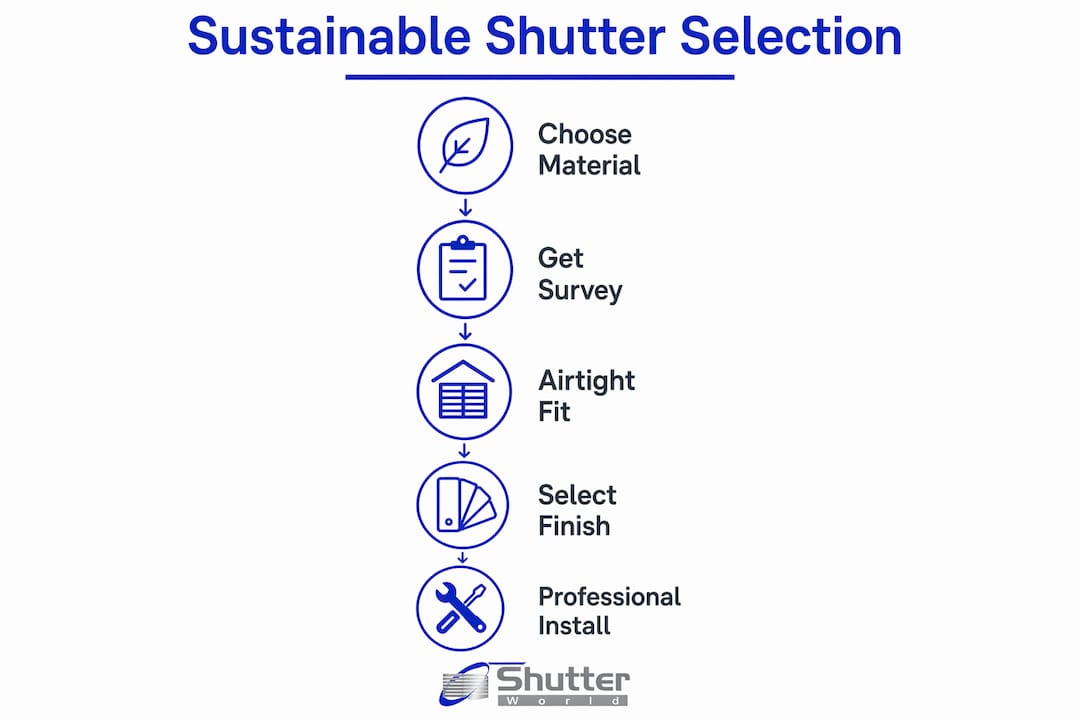
- Commission a professional survey. A shutter that does not fit the reveal precisely will leave gaps around the frame, allowing warm air to escape and cold air to infiltrate. Tight-fitting shutters reduce air leakage by up to 40% compared to untreated windows. That figure drops sharply if the fit is poor.
- Choose your colour and finish deliberately. Light-coloured or white finishes reflect solar radiation in summer, keeping rooms cooler. Darker finishes absorb heat and support passive warming in winter. Light reflective finishes improve summer cooling while darker shades aid winter heat retention, so south-facing rooms benefit most from a finish that can be adapted seasonally.
- Adopt a usage routine. Opening shutters in the morning and closing them at night can reduce heat loss by up to 33%. This simple habit costs nothing and compounds the thermal benefit of the shutter itself.
- Combine shutters with complementary upgrades. Shutters work best as part of a fabric-first approach alongside draught-proofing, loft insulation, and improved glazing. Pairing shutters with double or triple glazing creates a multi-layer insulation system that can achieve R-values of R-8 to R-10, comparable to a well-insulated wall.
- Avoid the common pitfall of over-specifying for aesthetics alone. A shutter chosen purely for its visual appeal, without considering louvre size, panel configuration, and reveal depth, will underperform thermally. Work with a specialist who understands both the design and the physics.
Pro Tip: For bay windows and unusual shapes, bespoke engineering is not a luxury. It is the only way to achieve the airtight fit that delivers genuine energy savings. Off-the-shelf shutters leave gaps that negate the insulation benefit entirely.
How do sustainable shutters enhance interior design?
Sustainability and interior design are not competing priorities. The most considered interiors treat them as the same decision. A shutter that is well-made, responsibly sourced, and correctly fitted will also be the most beautiful option in the room, because quality and longevity are visible in the finish and the fit.
The design versatility of shutters is genuinely broad:
- Classic full-height plantation shutters suit Georgian and Victorian properties, framing tall sash windows with architectural precision
- Café-style shutters covering only the lower half of a window balance privacy with natural light, ideal for ground-floor rooms facing the street
- Solid panel shutters in painted hardwood complement contemporary and Scandi-influenced interiors
- Tier-on-tier configurations allow the upper and lower panels to operate independently, giving precise control over both light and privacy
Sustainability preferences are increasingly shaping design choices at the brief stage. Interior designers working with eco-conscious clients are specifying low-VOC paints alongside FSC-certified timber shutters, natural fibre rugs, and reclaimed furniture. The shutter becomes an anchor piece in that palette: durable, tactile, and free from the synthetic off-gassing associated with some PVC blinds. For designers, incorporating energy-efficient interior shutters into a client brief is a straightforward way to demonstrate that sustainable choices do not require aesthetic compromise.
Colour selection also carries design weight. A warm white shutter in a period property reads as timeless and considered. A deep charcoal or forest green in a contemporary space adds depth and character while still delivering the thermal performance of any other finish. The material and the colour work together to define the room’s character, and both can be chosen with sustainability in mind.
Key takeaways
Sustainable shutters deliver measurable energy savings, reduced environmental impact, and lasting design value when material, fit, and usage are all considered together.
| Point | Details |
|---|---|
| Energy savings are substantial | Properly fitted shutters reduce heat loss by 28% to 51% and can cut energy bills by up to 25% annually. |
| Material choice matters | Composite and FSC-certified timber shutters offer the strongest combination of longevity and responsible sourcing. |
| Installation quality is non-negotiable | A precise, airtight fit reduces air leakage by up to 40%; poor fitting negates the thermal benefit. |
| Usage routine amplifies performance | Opening shutters in the morning and closing them at night maximises heat retention and reduces energy use. |
| Design and sustainability align | Responsibly sourced shutters in considered colours and styles deliver both aesthetic and environmental value simultaneously. |
Why I think most homeowners are still underestimating shutters
After years of working in this industry, the pattern I see most often is homeowners who have invested in new boilers, loft insulation, and even solar panels, but have left their windows completely untreated. Windows account for a disproportionate share of heat loss in most UK homes, and yet the window treatment is still treated as a decorative afterthought rather than a performance component.
The fabric-first principle, which the BBSA and the Energy Saving Trust both advocate, puts the building envelope before the heating system. Shutters are one of the most accessible ways to improve that envelope without structural work. They require no planning permission, no building regulations approval, and no major disruption to the home.
What I find most compelling is the longevity argument. A quality hardwood or composite shutter, fitted by a specialist, will still be performing in 30 years. The curtains it replaces would have been washed, faded, and discarded three or four times in that period. The embodied carbon of the shutter is a one-time cost. The embodied carbon of repeated replacement is cumulative and largely invisible to the homeowner making the purchase decision.
My honest recommendation: treat your shutters as infrastructure, not decoration. Choose the material and finish that will serve the room for decades, commission a professional installation, and adopt the seasonal usage habits that unlock the full thermal benefit. That combination delivers more genuine sustainability than almost any other single change you can make to a room.
— Ken
Discover bespoke sustainable shutters from Shutterworld
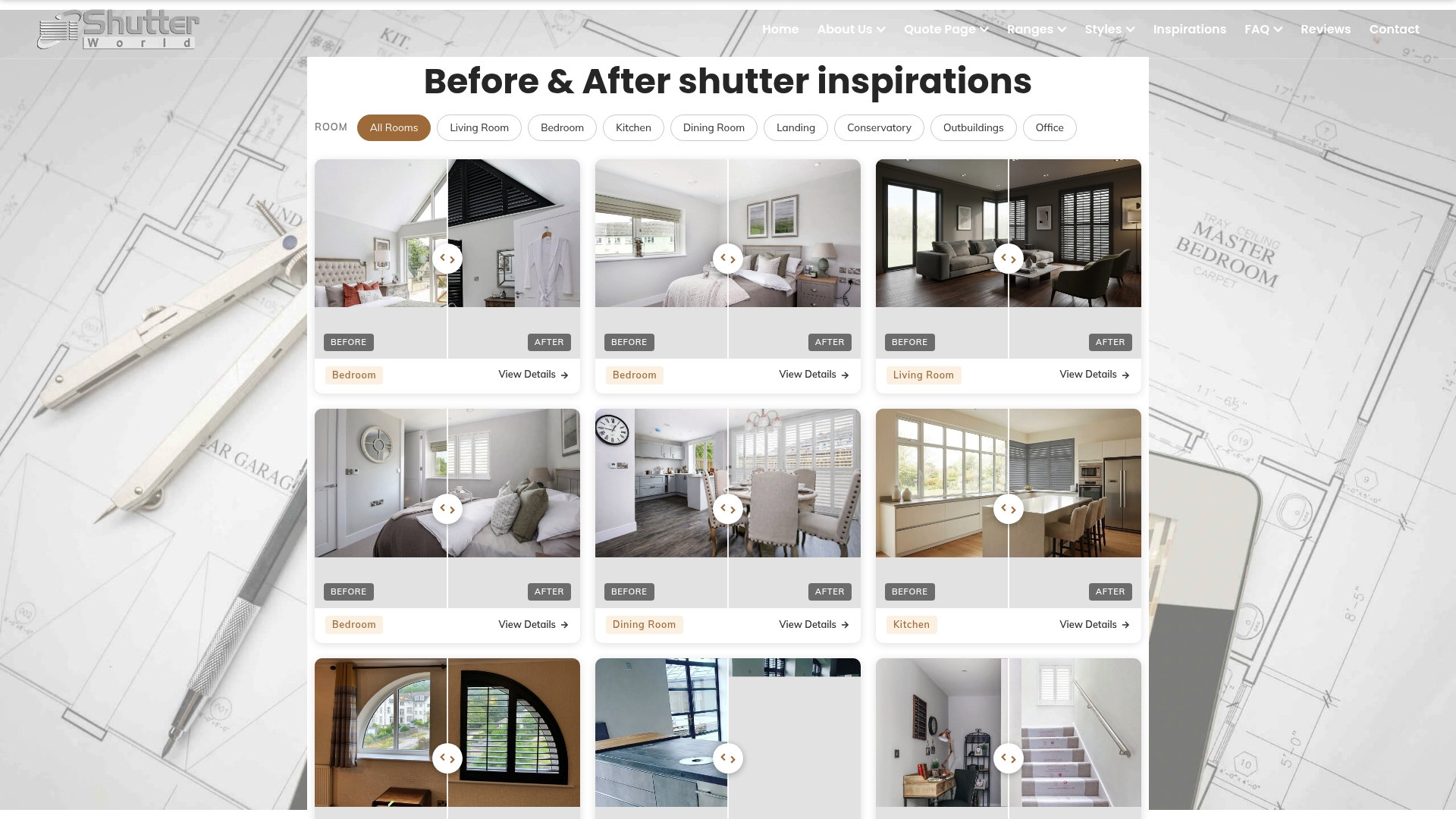
Shutterworld designs and installs made-to-measure shutters across the UK, with a range of materials that includes FSC-certified hardwood, engineered composites, and moisture-resistant MDF options suited to every room and climate. Every shutter is measured and fitted by experienced specialists to achieve the airtight seal that delivers real energy savings, not just the promise of them. From the premium Montana hardwood range to the durable Seattle composite collection, each product is backed by workmanship guarantees and over 25 years of craft expertise. Explore our plantation shutter installations or discover the full range of bespoke internal window shutters tailored to your home’s specific needs. Book your free in-home survey today.
FAQ
How much energy can shutters actually save?
Properly fitted interior shutters can reduce heat loss through windows by between 28% and 51%, with potential annual energy bill savings of up to 25%, according to the BBSA. The actual saving depends on the quality of the fit, the material, and how consistently the shutters are used.
What is the most eco-friendly shutter material?
FSC-certified or PEFC-certified timber is the most genuinely renewable option, while composite shutters often carry a lower lifetime carbon footprint due to their longer lifespan of 25 to 40 years. Engineered wood made from recycled wood fibre with low-VOC finishes is a strong choice for both sustainability and durability.
Do shutters work better than double glazing for insulation?
Shutters do not replace double glazing, but they significantly enhance it. Combining interior shutters with double or triple glazing creates a layered insulation system that can achieve R-values of R-8 to R-10, comparable to a well-insulated wall, which far exceeds what either solution delivers alone.
How do I choose sustainable shutters for my home?
Prioritise FSC or PEFC-certified materials, commission a professional survey to achieve an airtight fit, and select a finish appropriate to the room’s orientation and humidity levels. Pairing shutters with draught-proofing and improved glazing as part of a fabric-first approach delivers the greatest combined environmental benefit.
Are shutters better for the environment than curtains or blinds?
Yes, over a full product lifecycle. Shutters last 15 to 40 years depending on material, while curtains and most blinds require replacement every five to ten years. The reduced frequency of replacement means lower cumulative embodied carbon, less manufacturing waste, and a smaller overall environmental footprint.