
Shutters Enhancing Room Privacy

Shutters enhance room privacy
Shutters once signalled luxury but are now a smart necessity for anyone seeking true privacy at home. Modern designs do more than just look stylish. In fact, windows treated with shutters can cut external visibility by up to 90% compared to basic blinds. Yet the real surprise is not how much they block prying eyes but how they give you precise control over light, warmth and your personal sense of space—all with a simple tilt.
Table of Contents
- What Are Shutters And Their Role In Privacy?
- Why Room Privacy Matters In Home Design
- How Shutters Work To Enhance Privacy
- Different Types Of Shutters For Privacy Solutions
- Practical Considerations For Choosing Shutters
Quick Summary
| Takeaway | Explanation |
|---|---|
| Shutters enhance room privacy effectively | Unlike curtains or blinds, shutters block visibility while allowing light control. |
| Adjustable louvres provide granulated control | Homeowners can tilt louvres for varying levels of visibility and light. |
| Various shutter materials offer unique benefits | Choices like hardwood, composite, and aluminium cater to different needs and aesthetics. |
| Shutter selection should consider architectural compatibility | Proper measurements and fitting ensure seamless integration with existing window designs. |
| Shutters are a long-term investment | Evaluate costs against benefits like energy savings and increased property value. |
What are Shutters and Their Role in Privacy?
Shutters are sophisticated window coverings designed to provide superior light control, thermal insulation, and most critically, room privacy for homeowners. Unlike traditional curtains or blinds, shutters offer a comprehensive solution that transforms how we manage interior spaces and personal boundaries. Explore our detailed guide on privacy solutions to understand their strategic importance.
Understanding Shutter Functionality
Window shutters serve multiple functions beyond mere aesthetic enhancement. They act as robust barriers between interior living spaces and external environments, creating an impenetrable shield that prevents unwanted visibility. The engineering behind these window treatments involves precise mechanisms that allow homeowners to control light penetration and visual access simultaneously.
Key privacy features of shutters include:
- Adjustable louvres that can be tilted to block the direct line of sight
- Solid panel configurations offering complete visual obstruction
- Customisable design options matching specific window dimensions
Modern shutters are constructed using materials like hardwood, composite, and aluminium, each offering unique privacy characteristics. Hardwood shutters provide classic elegance with superior light-blocking capabilities, while composite materials offer durability and moisture resistance for spaces like bathrooms and kitchens.
Strategic Privacy Engineering
According to architectural privacy research from the Royal Institute of British Architects, window treatments play a critical role in urban residential design. Shutters represent a strategic engineering solution that goes beyond traditional window coverings. They enable granular control over visual transparency, allowing residents to adjust their privacy levels with precision.
The mechanism involves carefully designed louvres that can be angled to redirect or completely block external viewing angles. This means homeowners can maintain natural light while preventing direct visual access from outside. Such sophisticated design transforms windows from potential vulnerability points into controlled, secure interfaces between private and public spaces.
By integrating shutters, residents gain not just privacy, but a comprehensive approach to managing interior environments, balancing light, temperature, and personal boundaries with remarkable efficiency.
Why Room Privacy Matters in Home Design
Room privacy has transformed from a simple architectural consideration to a fundamental aspect of psychological wellbeing and personal comfort in modern living spaces. Learn more about smart privacy solutions that address contemporary residential challenges.
Psychological Dimensions of Privacy
Privacy is not merely about physical barriers but represents a complex psychological need deeply rooted in human experience.
VIDEO:video_content] Research from the [Environmental Psychology Institute suggests that individuals require controllable personal spaces that provide psychological sanctuary from external stimuli and social interactions.
Key psychological privacy requirements include:
- Creating safe emotional territories within living environments
- Establishing personal boundaries and controlling sensory inputs
- Managing social interactions and personal exposure levels
Modern urban living increasingly challenges traditional privacy paradigms, making intentional design more crucial than ever. Residential spaces now serve multiple functions simultaneously workplace, relaxation zone, and social interaction hub necessitating sophisticated privacy management strategies.
Privacy as Personal Autonomy
According to architectural psychology research, privacy directly correlates with individual autonomy and mental health. Spaces that offer controlled visibility and sensory management contribute significantly to residents’ psychological comfort. Window treatments like shutters become critical architectural elements that mediate between personal sanctuary and external world.
The ability to modulate visual access transforms living spaces from passive environments into dynamic, responsive domains. Homeowners gain unprecedented control over their immediate surroundings, creating microenvironments that adapt to changing personal and functional requirements. This granular control represents more than aesthetic choice it is a fundamental expression of personal agency within domestic landscapes.
Ultimately, room privacy transcends physical separation it is about creating environments that respect individual emotional needs, support psychological wellbeing, and provide genuine personal control in an increasingly interconnected world.
How Shutters Work to Enhance Privacy
Shutters deliver exceptional privacy through sophisticated architectural design that enables precise control over visual boundaries and sensory exposure. Discover the top benefits of strategic shutter installation for comprehensive home privacy management.
Precision Light and Visibility Control
The core mechanism of privacy enhancement in shutters revolves around strategically engineered louvres and panel configurations. Architectural research demonstrates that moveable barriers between interior and exterior spaces provide dynamic visual management capabilities.
Key privacy engineering features include:
- Adjustable horizontal and vertical louvres that redirect viewing angles
- Solid panel options for complete visual obstruction
- Multiple closure positions allow granular light and visibility control
Modern shutter designs incorporate precision engineering that allows homeowners to create instant visual barriers. By rotating louvres at specific angles, residents can block direct lines of sight while simultaneously maintaining natural light penetration a critical aspect of maintaining both privacy and environmental comfort.
Architectural Privacy Mediation
Shutters function as sophisticated architectural interfaces that transform windows from potential vulnerability points into controlled environmental barriers. The mechanism involves intricate design principles where physical materials become dynamic privacy management tools.
The technical sophistication lies in their ability to:
- Fragment external visual access through strategic angle adjustments
- Create layered visual barriers without complete light elimination
- Provide seamless transition between open and closed privacy states
Unlike traditional window treatments, shutters offer unprecedented control over visual permeability. Homeowners can instantaneously adjust their environment from completely open to fully private, creating adaptive living spaces that respond to changing personal and functional requirements.
By integrating advanced materials and precision engineering, shutters represent more than simple window coverings they are intelligent architectural solutions that transform how we conceptualise and experience domestic privacy.
Different Types of Shutters for Privacy Solutions
Shutter designs have evolved dramatically, offering nuanced privacy solutions tailored to diverse architectural requirements and personal preferences. Explore our comprehensive guide to shutter types to understand the sophisticated range of privacy options available.
Full Height Shutters: Comprehensive Coverage
Full-height shutters represent the most comprehensive privacy solution, providing complete window coverage from top to bottom. Modern privacy innovations demonstrate that these shutters offer exceptional visual obstruction while maintaining architectural elegance.
Key characteristics of full-height shutters include:
- Seamless floor-to-ceiling coverage
- Uniform visual barrier across the entire window
- Adaptable louvre configurations for precise light management
These shutters are particularly effective in ground floor rooms, street facing windows, and spaces requiring maximum privacy protection.
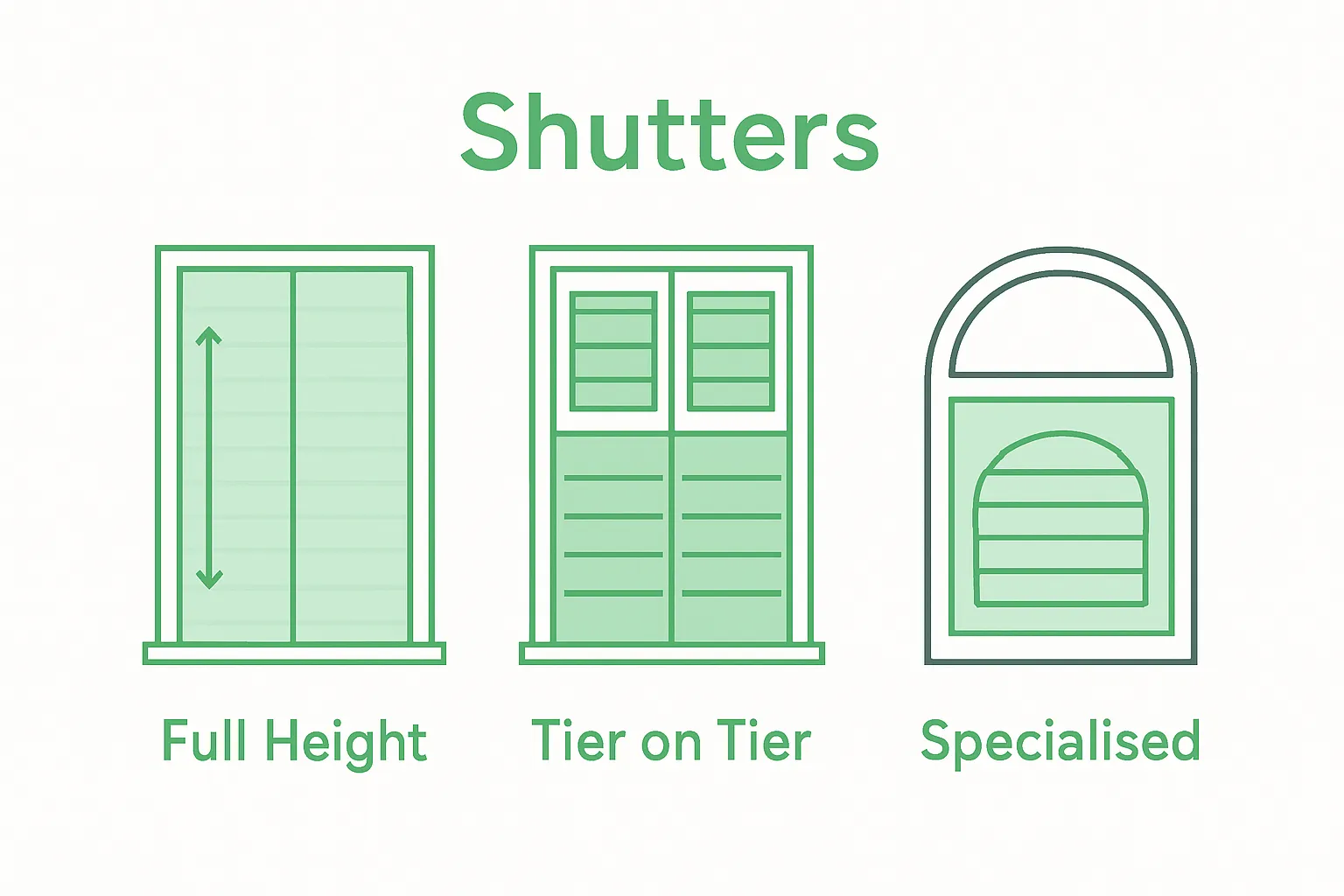 Their design allows homeowners to create an impenetrable visual barrier without compromising natural light transmission.
The following table compares the main types of shutters discussed in the article, highlighting their privacy features and suitable applications to help readers choose the best option for their needs.
| Shutter Type | Privacy Capability | Key Features | Best Suited For |
|---|---|---|---|
| Full Height Shutters | Maximum privacy | Top-to-bottom coverage, uniform visual barrier | Ground floor rooms, street-facing |
| Tier on Tier Shutters | High, with flexible adjustment | Separate top/bottom panels for independent control | Living rooms, bedrooms |
| Specialised Shutters | Tailored to unique window shapes | Custom-fit for bays, arches, and architectural styles | Unique or non-standard windows |
Tier on Tier Shutters: Modular Privacy Control
Tier on tier shutters introduce unprecedented flexibility in privacy management. This innovative design features independently operating top and bottom panels, enabling granular control over visual exposure and light penetration.
Unique privacy benefits include:
- Independent upper and lower panel adjustment
- Ability to open top panels while maintaining bottom privacy
- Versatile configuration for different room orientations
Homeowners can strategically manage visibility by opening upper sections to invite natural light while keeping lower panels closed, creating dynamic and adaptable privacy environments. This design is particularly suitable for living rooms, bedrooms, and street-facing windows where maintaining visual boundaries is crucial.
Specialised Privacy Configurations
Beyond standard designs, specialised shutter configurations address unique architectural challenges. Shaped shutters for bay windows, arched windows, and unconventional architectural spaces provide tailored privacy solutions that integrate seamlessly with existing interior design.
By offering multiple material options, hardwood, composite, aluminium and diverse operational mechanisms, modern shutters transcend traditional window coverings. They represent intelligent architectural interfaces that transform how we conceptualise and experience domestic privacy.
Practical Considerations for Choosing Shutters
Selecting the right shutters involves a sophisticated analysis of architectural requirements, aesthetic preferences, and functional performance. Explore our comprehensive guide to interior shutters to make an informed decision for your living spaces.
Window Design and Architectural Compatibility
Building conservation experts emphasise that shutter selection must harmonise with existing architectural characteristics. Window dimensions, frame structures, and room orientation play crucial roles in determining the most appropriate shutter configuration.
Key architectural compatibility factors include:
- Precise measurement of window width and height
- Assessment of window frame depth and structural integrity
- Evaluation of room orientation and natural light patterns
Professional measurements ensure that shutters integrate seamlessly, preventing potential installation challenges and maintaining the structural aesthetic of the living space.
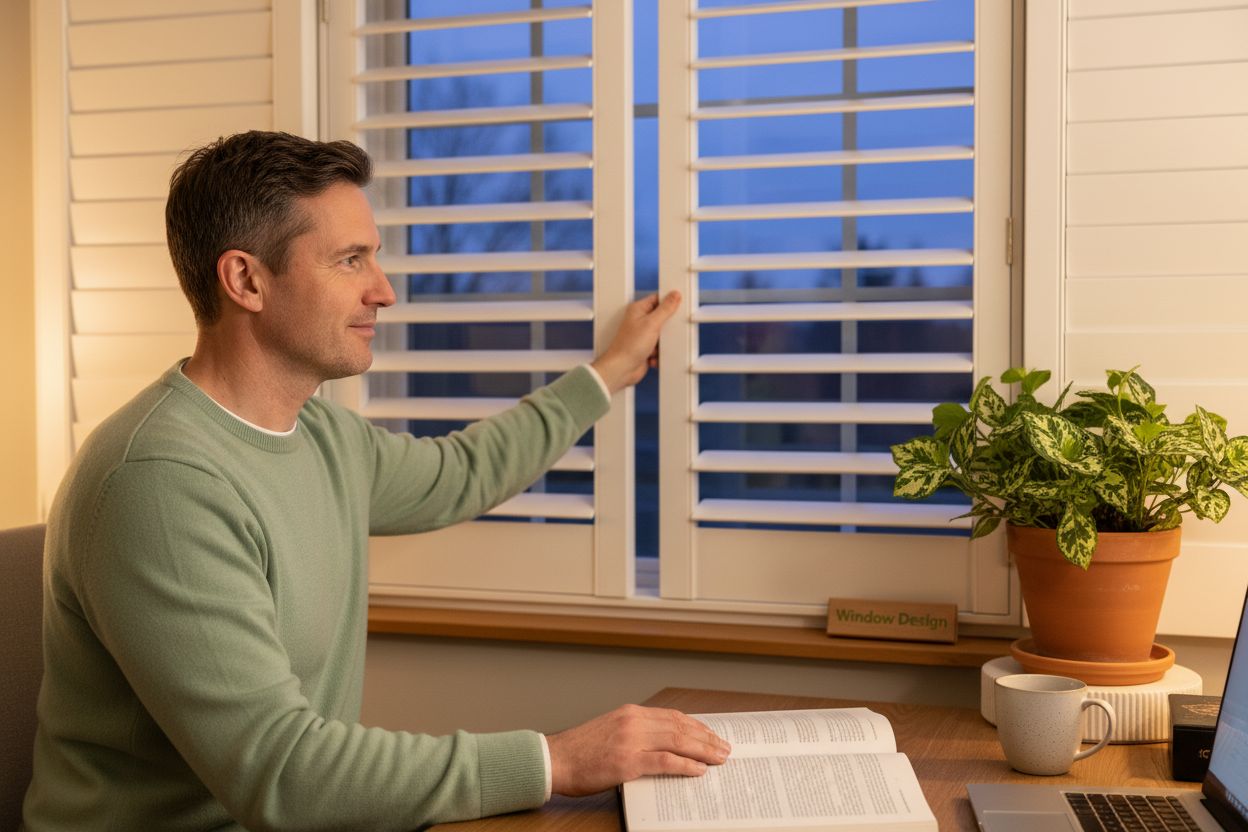 Homeowners should consider professional consultation to guarantee precise fitting and optimal performance.
Material Selection and Performance Characteristics
Shutter materials significantly impact privacy, durability, and thermal efficiency. Different materials offer unique advantages suited to specific environmental and functional requirements.
Material performance considerations include:
- Hardwood shutters provide classic elegance and natural insulation
- Composite materials offering moisture resistance and durability
- Aluminium options delivering exceptional strength and minimal maintenance
Beyond aesthetic appeal, material selection influences long-term performance.
This table summarises the unique characteristics, advantages, and considerations associated with the three primary materials used for modern shutters, making it easier to assess which option best matches environmental and design requirements.
| Material | Key Characteristics | Advantages | Considerations |
|---|---|---|---|
| Hardwood | Classic, elegant, natural insulation | Excellent privacy, aesthetic appeal | Higher cost, care required |
| Composite | Durable, moisture-resistant | Suitable for humid spaces, long-lasting | Less traditional appearance |
| Aluminium | Strong, modern, minimal maintenance | High durability, easy care | Less insulating, more modern |
Budget and Long-Term Investment
Shutters represent a strategic home improvement investment that extends beyond immediate privacy requirements. Homeowners must balance initial expenditure with potential long term benefits such as energy efficiency and property value enhancement.
Consider evaluating shutters through a comprehensive investment lens that encompasses:
- Initial purchase and installation costs
- Potential energy savings from improved thermal management
- Enhanced property aesthetic and potential market value increase
By approaching shutter selection as a holistic investment, homeowners can make informed decisions that balance immediate functional requirements with long term economic and aesthetic considerations.
Experience True Privacy with Bespoke Shutters from Shutter World
Are you struggling to create a genuine sense of privacy and comfort in your rooms? The article highlights how essential carefully designed shutters are for managing light, blocking unwanted views, and giving you real control over your living environment. At Shutter World, we understand that privacy is not just a luxury but a necessity for wellbeing. Our custom shutters are crafted to address exactly these challenges, blending flawless engineering with elegant design to protect your sanctuary without sacrificing style. You can explore the variety of local solutions and see examples of installations for inspiration on our West Yorkshire shutters page.

Why wait when you can start enjoying enhanced privacy and peace of mind today? Discover our full range of shutter styles tailored to your unique needs, or browse our specialist Ossett Plantation shutters for even more options. Visit our website now and take the first step towards transforming your home with expertly made shutters. Secure your personal space with a free quote or an easy online appointment today.
Frequently Asked Questions
What are shutters, and how do they enhance privacy?
Shutters are window coverings designed to provide light control, thermal insulation, and privacy. They create barriers against outside visibility, allowing homeowners to adjust viewing angles for enhanced privacy while still letting in natural light.
How do adjustable louvres in shutters help with privacy?
Adjustable louvres allow homeowners to tilt them at specific angles to block direct lines of sight from outside while managing the amount of light that enters a room. This feature offers personalised visual access control.
What are the different types of shutters available for privacy?
Shutter types include full height shutters for complete coverage, tier on tier shutters for flexible control over light and visibility, and specialised configurations for uniquely shaped windows. Each type caters to different privacy needs and architectural styles.
How do I choose the right material for my shutters?
Choosing the right material depends on various factors such as desired aesthetics, durability, and thermal efficiency. Hardwood offers elegance and insulation, while composite materials are durable and moisture-resistant, making them suitable for humid areas. Aluminium provides strength and low maintenance.