
Bespoke shutters for multi-unit buildings: solutions for developers

Shutters for multi-unit buildings
TL;DR:
- Bespoke shutters address specific architectural challenges and improve thermal performance in multi-unit buildings.
- They enhance energy efficiency, tenant satisfaction, and long-term property value through precise design and durability.
- Professional installation is crucial to maximize insulation benefits and ensure performance in complex window configurations.
Property developers and landlords across the UK are beginning to recognise what forward-thinking designers have known for years: a one-size-fits-all approach to window treatments simply does not work in multi-unit buildings. Every floor, every aspect, every room type presents a different challenge. Bespoke shutters address these challenges head-on, delivering measurable gains in thermal performance, tenant satisfaction, and long-term asset value. This article covers everything you need to make informed decisions for your development, from material selection and compliance considerations through to installation timelines and the true return on your investment.
Table of Contents
- Why bespoke shutters matter for multi-unit buildings
- Material options and style choices for diverse windows
- Insulation, energy savings and compliance advantages
- Installation steps, timing, and pitfalls to avoid
- A developer’s-eye view: why bespoke shutters are worth it
- Explore bespoke shutter solutions for your project
- Frequently asked questions
Key Takeaways
| Point | Details |
|---|---|
| Custom fit benefits | Bespoke shutters offer solutions for irregular windows, boosting aesthetics and property value. |
| Superior insulation | Plantation shutters reduce heat loss by up to 28%, outperforming basic blinds and improving energy ratings. |
| Long-term durability | Professionally installed shutters can last 25 years or more, withstanding rental turnover. |
| Expert installation required | Using specialists for measurement and fitting avoids costly mistakes, especially in large projects. |
| High tenant appeal | Shutters are associated with increased tenant demand, safety, and comfort in multi-unit buildings. |
Why bespoke shutters matter for multi-unit buildings
Multi-unit buildings come with a level of complexity that off-the-shelf window coverings were never designed to handle. Standard roller blinds and curtains might suit a single flat in isolation, but they buckle quickly under the wear and tear of rental turnover and offer little in the way of genuine performance. Bespoke shutters are built into the very fabric of each window opening, engineered to exact measurements and built from materials chosen for longevity.
The key drivers for choosing bespoke shutters in larger developments are clear:
- Energy efficiency: Shutters provide meaningful thermal insulation, reducing heat loss and lowering energy bills for both landlords and tenants.
- Visual consistency: A uniform shutter specification across a development creates a polished, professional appearance that adds immediate kerb appeal.
- Regulatory compliance: Part L of the Building Regulations places strict demands on thermal performance in new builds. Shutters help meet those standards.
- Child safety: Cordless shutter designs eliminate strangulation risks, a non-negotiable consideration in family-orientated rental properties.
- Durability for high turnover: Shutters withstand repeated use far better than fabric alternatives, making them a smarter long-term investment in a rental context.
The window configurations found across a typical residential block add another layer of challenge. Bay windows, angled rooflines, narrow sash openings, and floor-to-ceiling glazing all demand precision. As noted in our guidance on bespoke shutters for developers, bespoke solutions fit irregular windows, comply with Part L, are child-safe, durable, and boost property value.
“Investing in bespoke shutters across our development was one of the best decisions we made. The finish is flawless, the tenants love them, and we haven’t had a single maintenance call related to the windows since installation.”
BBSA research confirms that closing internal shading saves meaningful heat during winter months, a fact that resonates strongly with developers mindful of EPC ratings. Studies also show that the key benefits for rentals extend well beyond aesthetics, with 60% of renters preferring properties fitted with shutters over those with standard blinds. Paired with a 3 to 5% property value uplift linked to quality window treatments, the financial case is compelling.
Material options and style choices for diverse windows
Choosing the right material for a multi-unit project is not simply a question of taste. It is a practical decision that affects longevity, maintenance requirements, and suitability for specific rooms. As our overview of plantation shutter installations explains, bespoke plantation shutters are made-to-measure from hardwood, faux wood, or aluminium and tailored for unique window shapes.
Here is a comparison of the main material options available:
| Material | Best suited for | Life expectancy | Maintenance |
|---|---|---|---|
| Hardwood (paulownia, basswood, ash) | Living rooms, bedrooms | 20 to 30 years | Low; occasional wipe down |
| Faux wood (PVC composite) | Kitchens, bathrooms | 15 to 25 years | Very low; fully moisture resistant |
| Aluminium | Commercial areas, large glazing | 25 to 35 years | Minimal; corrosion resistant |
Beyond material, style is equally important in a multi-unit setting:
- Full-height shutters span the entire window and offer maximum privacy and insulation. These are the go-to choice for bedrooms and street-facing living rooms.
- Tier-on-tier shutters allow independent control of the upper and lower panels, ideal for ground-floor flats where residents want daylight without sacrificing privacy.
- Café-style shutters cover only the lower half of the window. They suit kitchen areas where natural light is valued throughout the day.
- Special shapes including arched, angled, and triangular panels can be precision-engineered to mirror unusual architectural features without compromise.
Pro Tip: When specifying materials across an entire development, consider using hardwood for living areas and bedrooms while opting for faux wood in bathrooms and kitchens. This approach balances aesthetics with practicality and keeps long-term maintenance costs low across your entire portfolio.
You can explore energy efficient shutters for specifications and guidance relevant to larger projects, and our dedicated bay window solutions page covers the full range of options for non-standard configurations.
Insulation, energy savings and compliance advantages
The thermal performance of shutters in a multi-unit setting goes well beyond comfort. It directly affects your EPC rating, tenant energy bills, and your building’s compliance with Part L of the Building Regulations. These are not abstract considerations; they translate directly into commercial outcomes for your development.
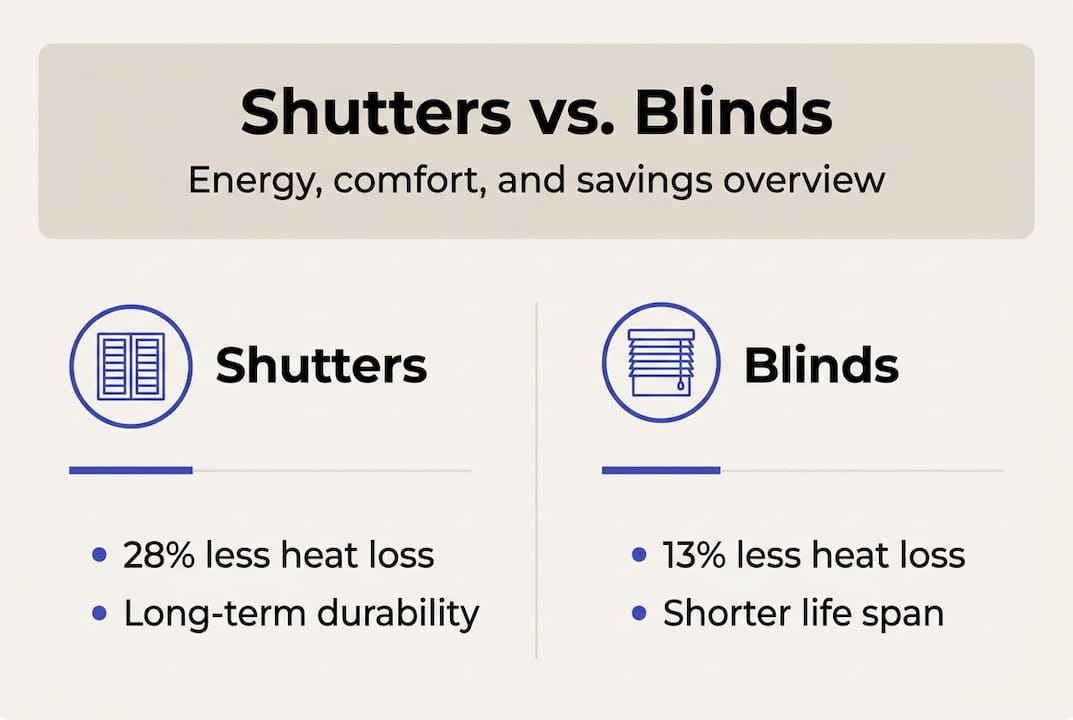
The headline statistic is striking. Internal plantation shutters reduce heat loss through double glazing by 28%, compared with just 13% for a standard roller blind. That is more than double the thermal protection from a single upgrade.
| Window treatment | Heat loss reduction | Annual saving potential |
|---|---|---|
| Roller blind | 13% | Minimal |
| Curtains (lined) | 18 to 22% | Low to moderate |
| Plantation shutters | 28% | £180 to £340 per unit |
For a developer managing twenty or thirty units, those per-unit savings accumulate into a figure that commands attention. Evidence from our shutters for rental homes resource confirms that shutters can deliver £180 to £340 in annual heating savings in a typical three-bedroom home and are associated with a 3 to 5% uplift in property value.
From a compliance standpoint, shutters contribute meaningfully to achieving higher EPC bands, which are becoming increasingly important as UK legislation moves towards minimum energy performance standards for rental properties. Improving your energy savings potential through quality window treatments is one of the most straightforward interventions available during a new build or retrofit programme.
Pro Tip: Encourage tenants to close their shutters at night. It sounds simple, but this single behavioural change can account for a significant share of the annual energy saving. Include guidance in your tenancy welcome pack to maximise the return on your specification.
For a fuller breakdown of how shutters compare to other treatments in real-world conditions, our guide on reducing energy bills is an excellent starting point.
Installation steps, timing, and pitfalls to avoid
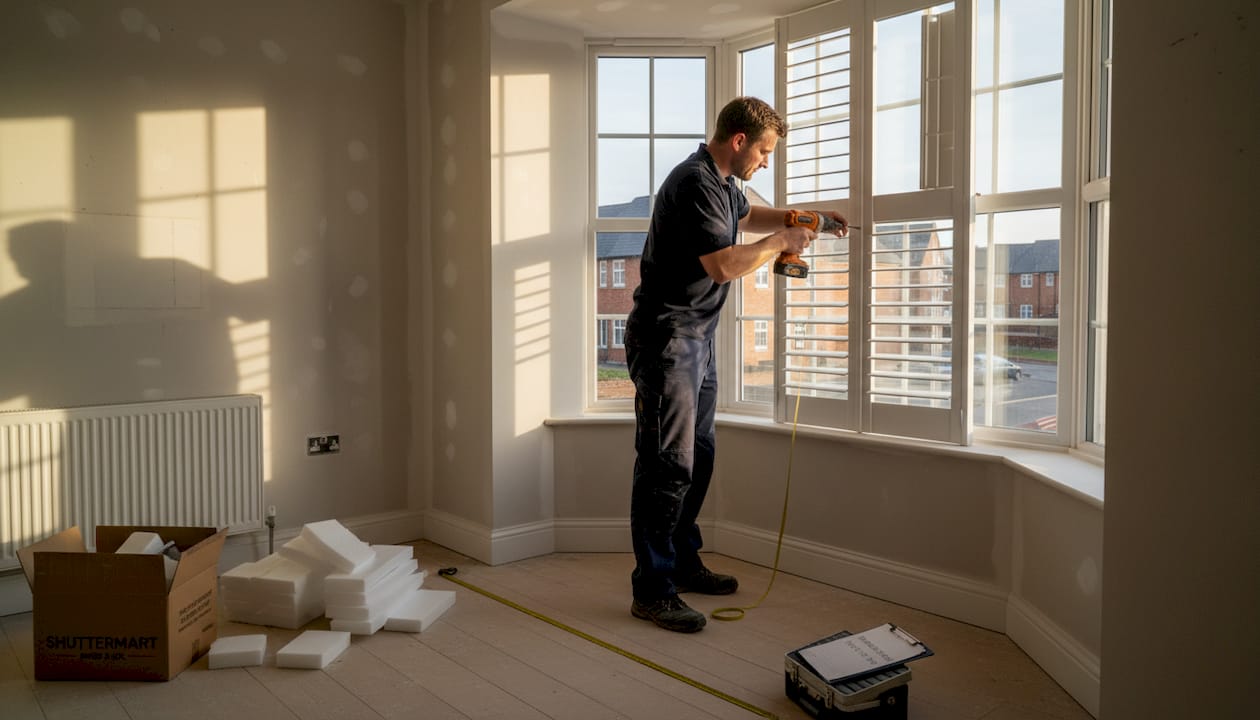
Getting the installation right is where the value of bespoke shutters is either confirmed or lost. A poorly fitted shutter is not just an aesthetic problem; it is a performance failure. The seal between shutter and frame is critical to delivering the insulation figures cited above, and any gap significantly undermines that outcome.
A professional installation follows a clear sequence:
- Initial consultation: A specialist reviews your window types, room functions, and project timeline to recommend the most appropriate specifications.
- Accurate measurement: Every window is measured on-site by an experienced surveyor. Precision at this stage determines everything that follows.
- Bespoke manufacture: Panels are crafted to exact dimensions, with louvre sizes, frame profiles, and materials confirmed against your specification.
- Secure fixing: Frames are anchored correctly to the wall or window reveal, with appropriate allowances for movement and expansion.
- Adjustment and alignment: Each panel is hung, adjusted, and checked for smooth operation and consistent alignment across the full installation.
- Sealing and aftercare: Any gaps are addressed, and the client receives guidance on care, cleaning, and adjusting louvres for optimum performance.
As our plantation shutter installation guide outlines, the full installation process for a new build development typically runs 4 to 8 weeks from survey to completion, allowing adequate time for manufacture and site coordination.
Important: Data shows that improper installation reduces insulation benefit by up to 90%, and 60% of DIY attempts end in dissatisfaction. For multi-unit projects, always engage a specialist.
Coordinating with your main contractor is essential on new build sites. Survey access, sequencing after plastering and decoration, and protection during the final construction phase all need to be factored into your programme.
Pro Tip: Schedule shutter surveys after internal plastering is complete but before final decoration. This ensures measurements capture the true finished reveal dimensions, preventing costly remakes.
A developer’s-eye view: why bespoke shutters are worth it
Over more than 25 years working with property developers across the UK, one pattern becomes clear: the developments that hold their value, retain tenants, and attract favourable EPC assessments are almost always the ones where quality decisions were made at the specification stage.
Standard blinds look adequate on day one. By month eighteen, after a change of tenant and the inevitable rough handling, they rarely do. Shutters are a different proposition entirely. They are built to last decades, not seasons, and they require almost no intervention between tenancies.
The contrarian view worth considering is this: bespoke shutters are not a luxury specification. They are, in fact, the low-maintenance option when measured across a development’s full lifecycle. The upfront cost is higher, but the ongoing cost is negligible. When you factor in tenant satisfaction, reduced void periods, and the regulatory ease that comes from stronger EPC performance, the argument for going bespoke through enhancing your development becomes difficult to dismiss. Do not let short-term budget pressure drive a long-term compromise.
Explore bespoke shutter solutions for your project
If you are planning a new build, managing a retrofit, or simply looking to elevate the specification of your portfolio, partnering with a specialist makes all the difference. At Shutter World, we work directly with property developers and landlords to deliver precision-fitted shutters that perform as well as they look.

Our team offers end-to-end support, from initial consultation through to installation and aftercare, with guaranteed workmanship and a full range of materials and styles to suit every window type. Whether you need bespoke developer solutions for a complex new build or tailored window shutters for an existing property, we are ready to help. Book your free consultation today and discover what the right shutter specification can do for your project.
Frequently asked questions
What materials are best for shutters in kitchens and bathrooms?
Faux wood (PVC composite) shutters are the ideal choice for moisture-prone areas like kitchens and bathrooms, as they resist warping, are fully washable, and require minimal upkeep. Moisture-prone areas are best served by faux wood for durability and low maintenance.
How long does it take to install shutters in a new build development?
Typically, the full process including survey, bespoke manufacture, and fitting takes 4 to 8 weeks for multi-unit new builds. The full installation timeline allows for accurate measurement and quality manufacture without rushing the process.
Do shutters really improve energy efficiency in flats and apartments?
Yes. Internal shutters reduce heat loss through double glazing by up to 28% versus roller blinds at 13%, and can meaningfully reduce annual heating bills across a multi-unit portfolio.
Are there any pitfalls in shutter installation for multi-units?
Poor fitting can reduce insulation performance by up to 90%, and 60% of DIY attempts result in dissatisfaction. Always use an experienced specialist for non-standard or multi-unit installations to protect your investment.
How do shutters compare with blinds for tenant satisfaction?
60% of renters prefer properties fitted with shutters over standard blinds, citing child safety, durability, and aesthetics as the primary reasons for their preference.