
Shutters for Natural Ventilation: Enhancing Home Comfort

Shutters for natural ventilation
Finding the perfect balance between fresh air and elegant style can be challenging when your windows aren’t a standard shape. With more British homes in West Yorkshire featuring unique architectural details, over 60 percent of homeowners are searching for custom solutions that fit their space and lifestyle. Discover how bespoke interior shutters make natural ventilation effortless while transforming the look and feel of any room, no matter the window design.
Table of Contents
- Shutters For Ventilation: Core Principles Explained
- Types Of Interior Shutters For Improved Airflow
- How Shutters Enhance Ventilation And Comfort
- Choosing Materials For UK Homes
- Common Pitfalls And Alternative Solutions
Key Takeaways
| Point | Details |
|---|---|
| Effective Shutter Design | Strategic placement and adjustable louvres in shutters enhance natural ventilation and indoor climate control. |
| Material Selection Matters | Choose materials like hardwood or polymer composites for optimal durability and humidity resistance in UK homes. |
| Professional Installation is Key | Ensure precise measurements and high-quality hardware during installation to avoid common performance issues. |
| Cross Ventilation Strategies | Position adjustable louvred shutters on opposite walls to maximise airflow and create comfortable living spaces. |
Shutters for Ventilation: Core Principles Explained
Natural ventilation through window shutters represents a sophisticated method of managing indoor air quality and thermal comfort in residential spaces. Understanding the core principles requires examining how architectural design and material selection interact with environmental airflow dynamics.
At the heart of effective natural ventilation lies the strategic placement and configuration of shutters. The British Standard ventilation principles outline how architectural elements can leverage wind pressure and temperature differentials to facilitate air movement. Shutters play a critical role in this process by providing controllable apertures that modulate airflow, allowing homeowners precise control over indoor climate conditions.
The mechanics of shutter-based ventilation depend on several key factors. Wind pressure creates differential air movement across building surfaces, while thermal stratification generates vertical air currents. Well-designed shutters can harness these natural forces by offering adjustable louvres that direct airflow, promote cross ventilation, and manage indoor temperature gradients. Strategic positioning near complementary openings enhances these natural ventilation principles, enabling efficient air exchange without mechanical intervention.
Pro tip: Position adjustable louvred shutters on opposite walls to create optimal cross ventilation pathways and maximise natural air circulation in your living spaces.
Types of Interior Shutters for Improved Airflow
Interior shutters represent a sophisticated solution for managing indoor air circulation, with various designs offering unique advantages for natural ventilation. Understanding the different types of shutters can help homeowners optimise airflow and create more comfortable living environments.
Traditional full-height shutters provide comprehensive coverage and excellent ventilation control. These floor-to-ceiling installations allow precise adjustment of louvres, enabling fine-tuned airflow management. Homeowners can select energy-efficient interior shutters that not only enhance ventilation but also contribute to thermal regulation. Café-style shutters offer an alternative approach, covering only the lower portion of windows, which creates interesting airflow patterns while maintaining privacy and allowing substantial natural light.
Material selection plays a crucial role in shutter ventilation performance. Wooden shutters with adjustable louvres provide excellent breathability and thermal insulation, while polymer-based options offer durability and moisture resistance. Bi-fold and sliding shutter configurations introduce additional flexibility, allowing larger opening areas that can dramatically improve air circulation. These designs enable homeowners to create wide ventilation channels, promoting effective cross-ventilation and reducing indoor humidity.
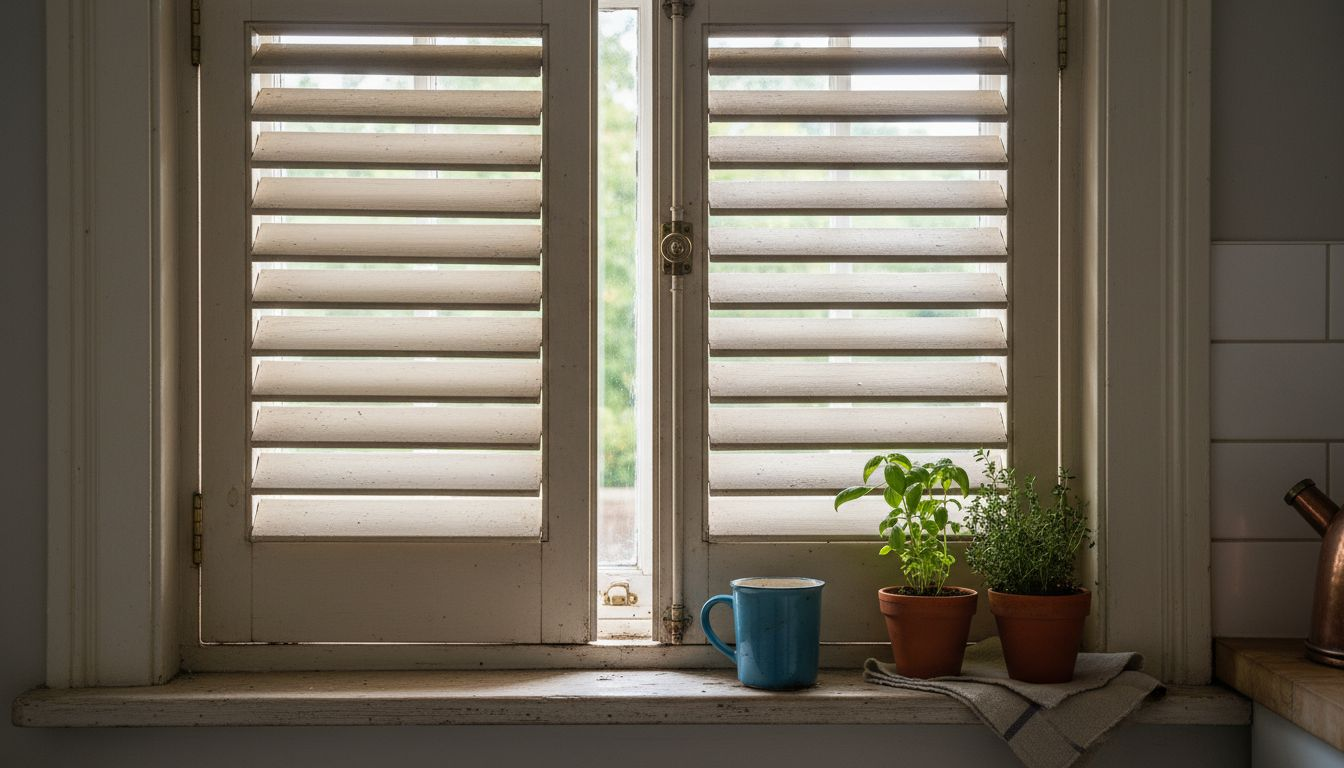
Here is a comparison of popular interior shutter types and their impact on ventilation and comfort:
| Shutter Type | Ventilation Efficiency | Light Control | Suitability for UK Homes |
|---|---|---|---|
| Full-height | Excellent, adjustable | High, floor-to-ceiling | Ideal for various climates |
| Café-style | Moderate, lower window | Strong at lower level | Best for privacy/light mix |
| Bi-fold/Sliding | Outstanding, wide opening | Variable, wide panels | Suited to modern designs |
| Solid Panel | Limited, non-adjustable | Complete when closed | Suitable for period homes |
Pro tip: Choose shutters with wider louvre blades and smooth adjustability mechanisms to maximise your control over indoor air circulation and comfort.
How Shutters Enhance Ventilation and Comfort
Shutters represent a sophisticated architectural solution that transforms indoor environmental control, offering far more than simple window coverings. Sustainable building assets like shutters provide homeowners with an intelligent method of managing indoor climate, creating spaces that breathe and adapt to changing environmental conditions.
The ventilation mechanisms of well-designed shutters are remarkably nuanced. By enabling precise control over airflow, shutters can create microclimate zones within living spaces. Adjustable louvres allow residents to direct air currents, manage temperature gradients, and modulate indoor humidity levels. Strategically positioned shutters can generate natural convection currents, drawing cooler air from lower levels while expelling warmer air through upper openings, effectively creating a self-regulating thermal environment.
Beyond temperature management, shutters contribute significantly to overall home comfort. Their ability to filter and diffuse natural light reduces glare and prevents harsh direct sunlight, while maintaining visual connectivity with the external environment. The acoustic properties of carefully constructed shutters also provide an additional layer of sound insulation, creating more tranquil indoor spaces. Materials like hardwood and specialised polymers enhance these comfort-enhancing properties, offering durability alongside thermal and acoustic performance.
Pro tip: Install shutters with adjustable louvres on multiple walls to create natural cross-ventilation pathways that maximise air circulation and temperature control.
Choosing Materials for UK Homes
Selecting the ideal shutter materials for British homes requires careful consideration of local climate conditions, architectural styles, and performance characteristics. Shutter frame materials for UK homes must withstand unique environmental challenges, including high humidity, temperature variations, and potential moisture exposure.
Traditional hardwoods like oak and basswood remain popular choices for UK homeowners, offering exceptional thermal properties and aesthetic versatility. These natural materials provide excellent insulation, absorb sound effectively, and can be precisely engineered to suit period properties and modern architectural designs. Engineered wood alternatives and polymer-based composites have emerged as robust alternatives, delivering enhanced durability and resistance to warping, particularly in areas experiencing significant moisture fluctuations.
Modern shutter materials extend beyond traditional options, incorporating advanced synthetic polymers and aluminium alloys that offer unprecedented performance. Polymer shutters with extruded coatings provide remarkable resistance to humidity, temperature changes, and UV degradation – critical considerations for UK homes. Aluminium frames deliver lightweight strength and minimal maintenance requirements, making them increasingly popular in contemporary residential settings. The selection process involves balancing aesthetic preferences, thermal efficiency, acoustic performance, and long-term durability.
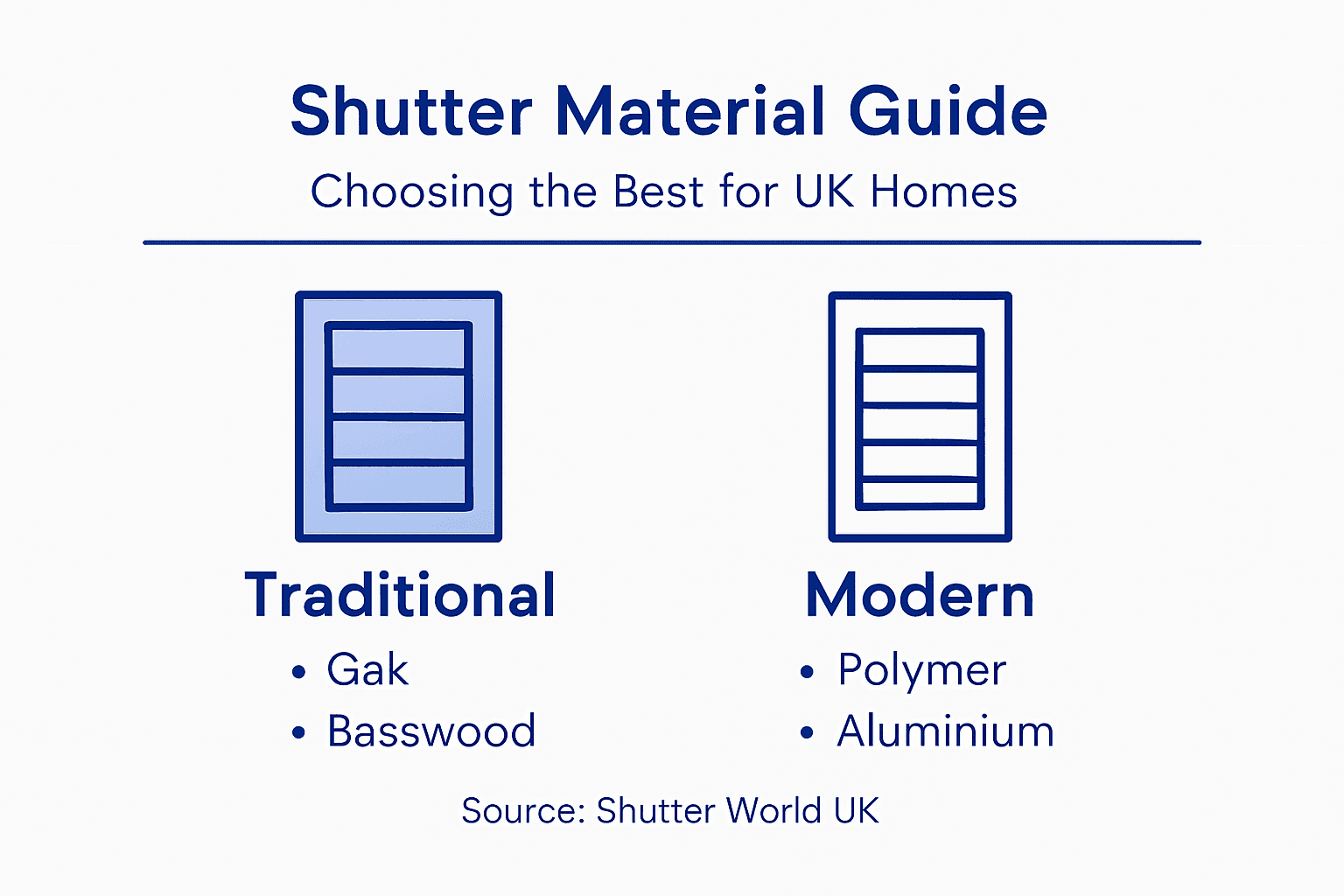
This table summarises how different shutter materials address key challenges for British homes:
| Material | Humidity Resistance | Thermal Insulation | Maintenance/ Durability |
|---|---|---|---|
| Hardwood (e.g. oak) | Fair, needs treatment | Excellent | Requires regular upkeep |
| Engineered Wood | Good, resists warping | Good | Low maintenance |
| Polymer Composite | Excellent, moisture proof | Moderate | Very high, easy to clean |
| Aluminium Alloy | Superior, no swelling | Moderate | Minimal, very durable |
Pro tip: Consider your specific room’s humidity levels and sunlight exposure when selecting shutter materials to ensure optimal performance and longevity.
Common Pitfalls and Alternative Solutions
Navigating shutter selection involves understanding potential challenges that can compromise performance and aesthetics. Common shutter problems require strategic solutions, with homeowners needing to anticipate potential issues before installation.
Moisture management represents a critical consideration for British homes. Wooden shutters are particularly vulnerable to warping, swelling, and structural deterioration when exposed to high humidity environments. Alternative solutions include selecting engineered wood composites, polymer-based materials, and aluminium frames that resist environmental fluctuations. Professional installation becomes paramount, ensuring precise measurements and minimising potential light gaps or alignment issues that can compromise both functional performance and visual appeal.
Technical considerations extend beyond material selection. Poor hardware choices can result in louvres that fail to maintain position, panels that catch or bind, and finishes that degrade prematurely. Homeowners should prioritise professional surveying, invest in high-quality coating technologies, and select specialist hardware designed for long-term durability. Custom-manufactured shutters offer significantly improved outcomes compared to generic, mass-produced alternatives, addressing architectural nuances and delivering superior functional performance.
Pro tip: Invest in a professional survey and precise measurement service to mitigate potential installation challenges and ensure optimal shutter performance.
Elevate Your Home’s Comfort with Bespoke Ventilating Shutters from Shutter World
Natural ventilation through adjustable shutters offers a powerful solution to common homeowner challenges such as managing indoor air quality, reducing humidity, and improving thermal comfort. If you are seeking precise control over airflow, light, and temperature in your living spaces, Shutter World specialises in crafting custom interior shutters tailored to your unique windows and lifestyle. Our expertise extends to unusual shapes and complex installations throughout West Yorkshire and beyond.
Discover the transformative benefits of made-to-measure shutters made from premium materials designed to withstand the UK’s climate. With over 25 years of experience, Shutter World provides a complete service from accurate home surveys to professional installation, ensuring your new shutters support natural ventilation while enhancing privacy and insulation. Don’t wait to improve your home’s atmosphere and value. Visit our FAQ page for expert advice and explore options within the Ossett Plantation shutters range today. Your ideal shutter solution is just a click away at https://shutterworld.co.uk/faq-page.
Frequently Asked Questions
What are the benefits of using shutters for natural ventilation?
Shutters provide controllable apertures that modulate airflow, enhancing indoor air quality and thermal comfort. They can create microclimates, helping to manage temperature gradients and humidity levels effectively.
How do adjustable louvres in shutters work for ventilation?
Adjustable louvres allow homeowners to direct airflow, promoting cross-ventilation and enhancing air circulation while preventing direct sunlight and glare.
What materials are best for shutters to withstand humidity?
Wooden shutters provide good thermal insulation but may require treatment for moisture resistance. Engineered wood, polymer composites, and aluminium alloys offer improved durability and humidity resistance, making them ideal choices for variable climates.
How can I improve the airflow in my home using shutters?
Position adjustable louvred shutters on opposite walls to create optimal cross ventilation pathways. This setup maximises natural air circulation and ensures a more comfortable indoor environment.
Recommended
- Shutters and Insulation: A 2025 Guide for Stylish, Energy-Efficient Homes | Shutter World
- Top Summer Shutters Benefits for UK Homes in 2025 | Shutter World
- Energy-Efficient Shutters: Smart Solutions for UK Homes 2025 | Shutter World
- Boost Your Home’s Value with Energy Efficiency: 2025 Guide for Homes | Shutter World
- Best Bamboo Roller Blinds of 2025: Top Picks for Every Budget