
Shutters and insulation: cut heat loss by 33% in 2026

Impact of shutters on insulation
TL;DR:
- Internal plantation shutters can reduce heat loss by up to 33% in UK homes.
- The insulation effectiveness depends heavily on the material and precision fit of the shutters.
- Well-fitted shutters outperform curtains and blinds in energy saving, offering long-term durability and aesthetic benefits.
Windows are one of the most overlooked sources of heat loss in any UK home, yet the evidence is striking. Internal plantation shutters reduce heat loss by 28% on double-glazed windows, according to research from the British Blind and Shutter Association. That is not a marginal gain — it is a meaningful reduction that translates directly into lower heating bills and a warmer, more comfortable home. This guide walks you through the data, the practical science, and the key decisions you need to make to choose the right window covering for your property. Whether you are renovating or simply looking to improve comfort, the case for bespoke interior shutters is compelling.
Table of Contents
- Why window insulation matters in the UK
- How shutters reduce heat loss: the science explained
- Shutters versus blinds, curtains, and other window coverings
- Maximising energy savings with custom-made internal shutters
- What most guides miss about shutters and insulation
- Upgrade your insulation with bespoke shutters
- Frequently asked questions
Key Takeaways
| Point | Details |
|---|---|
| Shutters cut heat loss | Internal shutters can reduce window heat loss by up to 28% based on UK studies. |
| Outperform blinds and curtains | Plantation shutters offer better insulation than most standard blinds and curtains. |
| Fit and material matter | Custom fitting and choosing the right materials maximise your insulation gains. |
| Year-round comfort boost | Shutters help keep your home warmer in winter and cooler in summer. |
Why window insulation matters in the UK
The UK climate is famously unpredictable, with cold, damp winters that put pressure on heating systems from October through to April. For most homeowners, the boiler works overtime, and energy bills reflect that reality. Yet one of the biggest culprits is hiding in plain sight: your windows.
“Windows account for a significant proportion of heat loss in UK homes, making them a priority for any serious insulation upgrade.” — BBSA research
Even modern double-glazed windows allow substantial heat to escape, particularly overnight when outdoor temperatures drop sharply. Single-glazed windows, which are still found in millions of older UK properties, perform considerably worse. The result is a constant drain on your heating system, your energy budget, and your comfort.
Here is why this matters in practical terms:
- Higher energy bills. Heat escaping through windows means your boiler runs longer and harder to maintain a comfortable temperature.
- Cold spots and draughts. Windows without effective coverings create uncomfortable cold zones near glass, reducing the usable comfort of a room.
- Condensation problems. Poor insulation at the window plane can encourage moisture build-up, which leads to mould and damage over time.
- Environmental impact. Every unit of heat that escapes unnecessarily means more fuel burned and more carbon emitted.
Smarter homeowners are turning to energy efficient shutters as a practical, long-lasting solution. Unlike curtains or blinds, well-fitted shutters address the insulation challenge at the window itself, creating a physical barrier that slows heat transfer significantly. For a deeper look at the numbers, our shutters energy saving guide sets out the evidence clearly.
The good news is that improving your window insulation does not require replacing your glazing. The right internal shutter, fitted precisely to your window, can deliver measurable results at a fraction of the cost of new windows.
How shutters reduce heat loss: the science explained
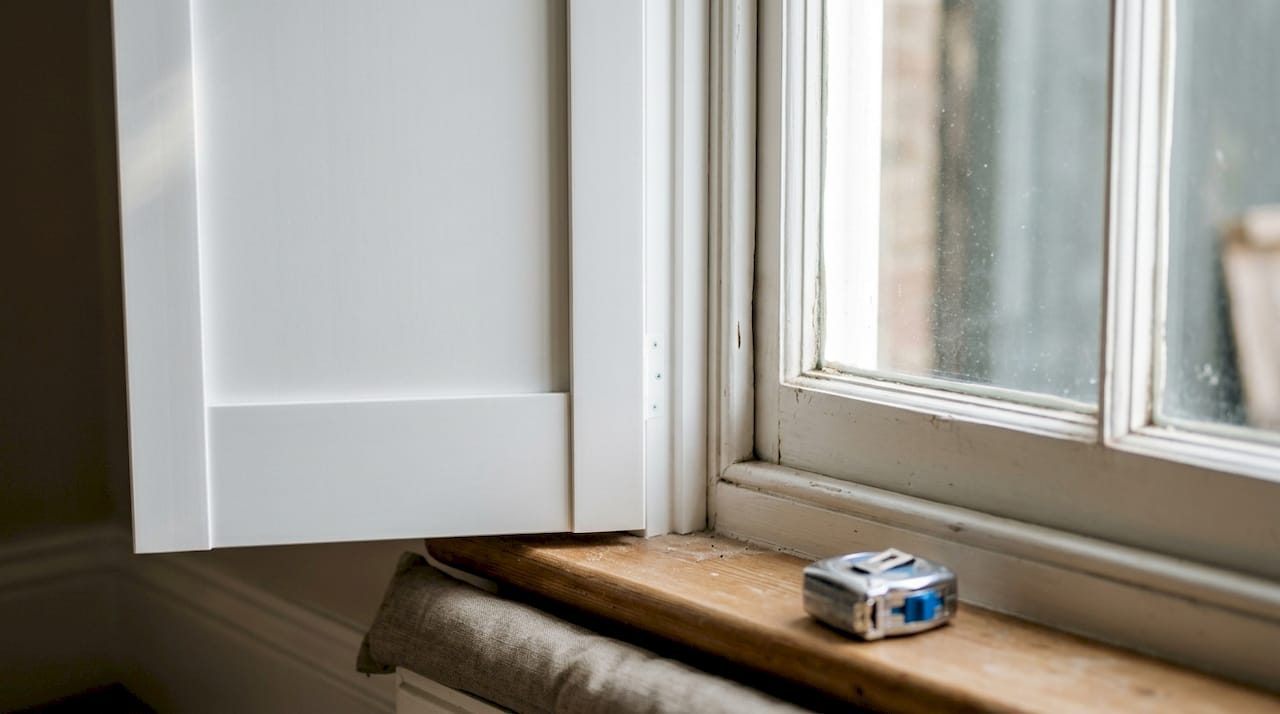
Understanding why shutters work so well for insulation comes down to one key principle: the air cavity. When a shutter panel is closed against a window, it traps a layer of still air between the glass and the shutter surface. Still air is an excellent insulator. It resists heat flow far more effectively than moving air or solid materials alone.
Research published in the Materials journal confirms that internal plantation shutters create a stable air cavity that increases thermal resistance at the window. The more stable and consistent that air layer, the better the insulating effect. This is why fit matters enormously: gaps around the edges of a shutter allow air to circulate, which undermines the cavity and reduces performance.
“The thermal resistance improvement from internal shutters depends heavily on the quality of fit and the stability of the air cavity formed between shutter and glass.”
The study also examined polyurethane-core shutters specifically, finding that their improved U-value performance made a measurable difference to overall window thermal resistance. A lower U-value means less heat escaping — and polyurethane-filled louvres outperformed hollow alternatives in controlled conditions.
Here is a simplified comparison of U-value improvements by shutter type:
| Shutter type | Approximate U-value improvement | Air cavity quality |
|---|---|---|
| Hollow MDF shutter | Moderate | Good with close fit |
| Solid hardwood shutter | Good | Very good with close fit |
| Polyurethane-core shutter | Best | Excellent with close fit |
What most people get wrong is assuming all shutters perform equally for insulation. They do not. The material, the louvre thickness, and critically, the precision of the fit all determine real-world results. A shutter that leaves gaps at the frame edges will always underperform relative to one engineered to sit flush.
Pro Tip: When reviewing shutter options, ask specifically about the air gap between the closed shutter and your glass. A tighter, more consistent gap delivers noticeably better thermal performance in practice.
For a detailed breakdown of how different construction methods affect performance, our guide on improving insulation with shutters is worth reading before you commit to a purchase.
Shutters versus blinds, curtains, and other window coverings
Once you understand how shutters work, comparing them to other window treatments becomes straightforward. The data tells a clear story.
According to BBSA research, plantation shutters outperform standard roller blinds for heat loss reduction. This is not surprising when you consider the mechanism: roller blinds sit close to the glass but rarely form a sealed air cavity. They allow convection currents to develop between the blind and the window, which carries heat away rather than trapping it.
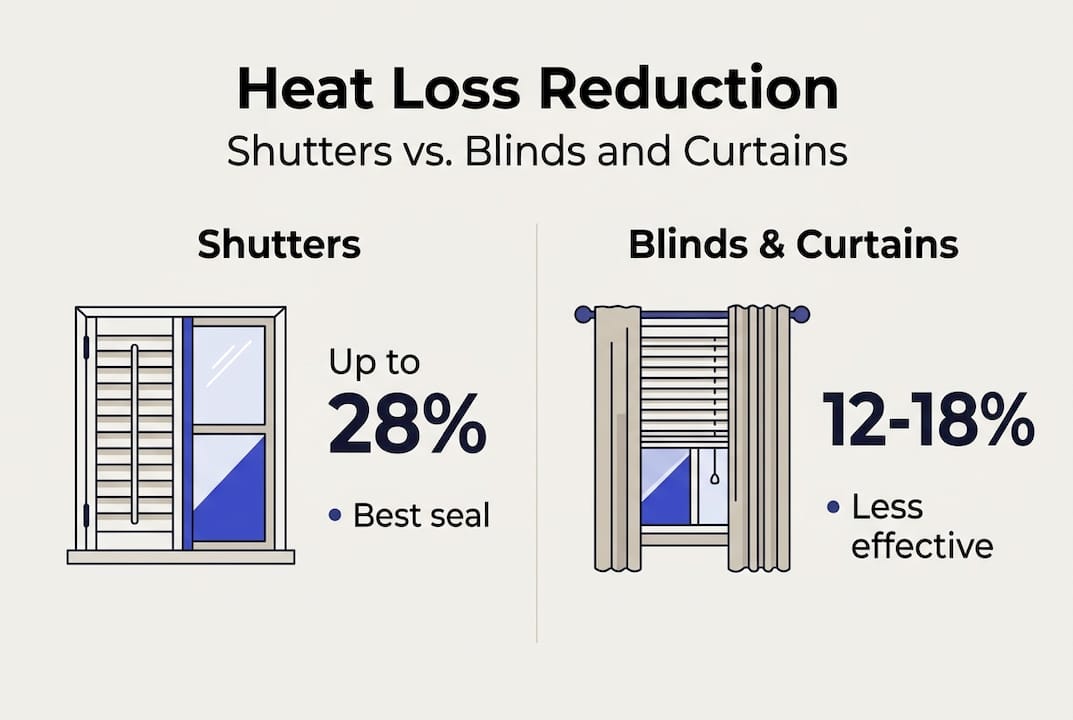
Curtains perform better than blinds in many cases, particularly heavy, floor-length curtains with thermal linings. But they introduce their own limitations. They must be drawn fully to be effective, they can block radiators placed beneath windows, and they tend to trap dust and allergens over time.
Here is how the main options compare:
| Window covering | Heat loss reduction | Light control | Durability | Fit precision |
|---|---|---|---|---|
| Plantation shutters | Up to 28% | Excellent | Very high | Bespoke |
| Thermal curtains | Up to 14% | Moderate | Medium | Standard |
| Roller blinds | Up to 7% | Good | Medium | Standard |
| Venetian blinds | Minimal | Good | Medium | Standard |
The advantages of shutters extend well beyond insulation:
- Precise light control. Adjustable louvres let you manage natural light without sacrificing privacy or warmth.
- Longevity. Quality shutters last decades, making them a sound long-term investment compared to blinds that fade and warp.
- Aesthetic value. Shutters add architectural character that curtains and blinds simply cannot replicate.
- Easy maintenance. A quick wipe keeps shutters looking pristine, unlike fabric alternatives that require regular washing.
For homeowners who want to reduce energy bills with shutters, the comparison is decisive. And for those weighing up the full picture, our guide to energy-efficient interior shutters covers the details thoroughly.
Maximising energy savings with custom-made internal shutters
Knowing the data is one thing. Getting the best possible results in your own home requires a few deliberate choices. Here is a practical framework for maximising the insulation benefit of your shutters.
- Choose the right material for your needs. Solid hardwood shutters offer excellent thermal mass and durability, making them ideal for living rooms and bedrooms. MDF-based options with a polypropylene coating, such as our Seattle range, provide strong performance at a more accessible price point. Polyurethane-core louvres deliver the best insulation figures if thermal performance is your primary goal.
- Prioritise a close, precise fit. Research confirms that custom shutters fitted precisely to the window recess improve insulation significantly compared to loose or ill-fitting alternatives. Every millimetre of gap around the frame is a path for heat to escape. Bespoke manufacturing eliminates this problem in a way that off-the-shelf products simply cannot.
- Close shutters at dusk. The greatest heat loss through windows occurs overnight. Closing your shutters as the sun goes down traps the warmth already in the room and prevents cold air from chilling the glass and radiating inward.
- Use shutters in combination with your heating schedule. Open shutters fully during daylight hours to capture passive solar gain, then close them before your heating switches off for the evening. This simple habit compounds the insulation benefit considerably.
- Avoid common mistakes. Leaving louvres partially open overnight negates much of the insulation benefit. Similarly, fitting shutters outside the window recess rather than within it reduces the quality of the air cavity formed.
Pro Tip: For north-facing rooms that receive little direct sunlight, prioritise shutters with the thickest louvre option available. These rooms lose heat fastest and benefit most from a robust insulating barrier.
For further practical guidance, our resources on how to enhance comfort with shutters and energy savings with shutters offer room-by-room advice tailored to UK homes.
What most guides miss about shutters and insulation
Most articles on shutters and insulation focus heavily on headline statistics, and those figures are genuinely useful. But in our 25 years of experience fitting bespoke shutters across the UK, we have learned that real-world results depend on factors that rarely appear in laboratory studies.
A shutter tested under controlled conditions will always outperform the same shutter fitted poorly in a draughty Victorian bay window. The gap between the published figure and what a homeowner actually experiences comes down to craftsmanship, material quality, and the precision of the installation. This is why we believe buying on insulation claims alone is a mistake.
The homeowners who get the most from their shutters are those who balance thermal performance with light control, privacy, and the character of their space. A beautifully fitted set of hardwood shutters that you actually use consistently will outperform a technically superior product that you leave open because it feels too dark or heavy.
We also caution against dismissing the aesthetic dimension as superficial. A shutter that suits your home and your lifestyle is one you will close every evening without thinking about it, and that consistent behaviour is where the real energy saving accumulates. Our range of energy efficient shutters UK is designed with exactly this balance in mind.
Upgrade your insulation with bespoke shutters
If the evidence in this guide has convinced you that custom-made interior shutters are the right investment for your home, we are ready to help you take the next step.
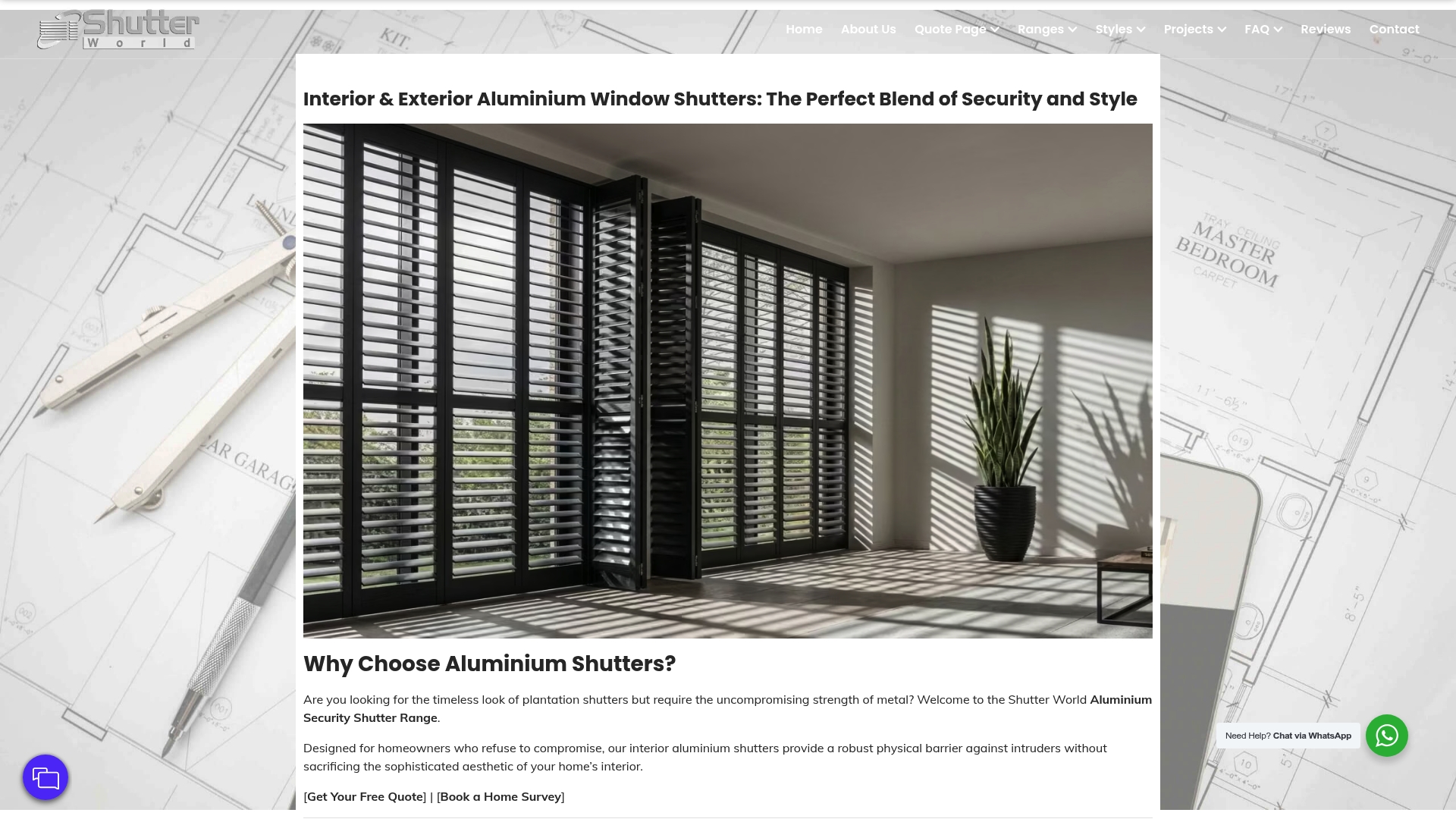
At Shutter World, our plantation shutters are crafted to fit your windows precisely, ensuring the tight, consistent air cavity that delivers genuine insulation results. For contemporary properties or rooms requiring a sleek, low-maintenance finish, our aluminium window shutters offer outstanding durability alongside excellent thermal performance. Whatever your window shape or interior style, our team will guide you through every option. Explore our full collection of [bespoke internal window shutters](https://shutterworld.co.uk/bespoke internal window shutters tailored to your needs) or book your free in-home survey today and discover what a difference a perfectly fitted shutter makes.
Frequently asked questions
Do shutters really reduce energy bills?
Yes. Independent UK research shows that internal shutters reduce heat loss by 28% on double-glazed windows, which directly reduces the energy needed to keep your home warm and lowers heating costs over time.
Are shutters better than curtains or blinds for insulation?
On average, properly fitted internal shutters outperform both standard roller blinds and thermal curtains for heat loss reduction, as confirmed by BBSA comparative research on window coverings.
Can shutters be fitted to any window type?
Custom-made shutters can be crafted for virtually all window shapes and sizes, including bay windows, arched frames, and skylights, ensuring a precise fit that maximises both insulation and visual appeal.
Do shutters keep homes cooler in summer as well?
Yes. Because shutters create a stable insulating air cavity at the window, they moderate indoor temperatures year-round, reducing unwanted heat gain during warmer months just as effectively as they reduce heat loss in winter.
Recommended
- The Real Shutters Impact on Heating Bills for UK Homes
- 5 Benefits of Energy Efficient Shutters for Your Home
- Shutters and Insulation: A 2025 Guide for Stylish, Energy-Efficient Homes | Shutter World
- Boosting Home Comfort: Shutters Keep the Heat In and Cold Out
- Stylish blinds: boost energy savings & home style