
Noise Blocking Shutters: Enhanced Comfort at Home

Living in West Yorkshire means welcoming the charm of British towns but often struggling with constant outside noise that disturbs indoor comfort. For homeowners tired of traffic sounds or neighbourhood activity filtering through thin windows, finding a practical solution feels necessary. This guide makes sense of noise blocking shutters and shows how tailored options can enhance privacy, warmth, and tranquillity in homes with distinctive architectural features.
Table of Contents
- Noise Blocking Shutters Explained Clearly
- Types of Noise Reducing Shutters Compared
- How Noise Blocking Shutters Actually Work
- Effectiveness, Benefits, and Limitations
- Expert Installation and Common Pitfalls
- Comparing Alternatives and Real-World Use
Key Takeaways
| Point | Details |
|---|---|
| Effective Sound Reduction | Noise blocking shutters can reduce external noise by 30-50%, significantly enhancing acoustic comfort in homes. |
| Importance of Professional Installation | Precise installation is crucial for maximising noise reduction, as gaps can greatly diminish effectiveness. |
| Types of Shutters | Homeowners can choose between solid panel, louvred, and tier-on-tier shutters, each offering different levels of sound insulation and light control. |
| Additional Soundproofing Strategies | Combining noise blocking shutters with other methods like double glazing can optimise acoustic performance further. |
Noise Blocking Shutters Explained Clearly
Noise blocking shutters represent an innovative architectural solution designed to create peaceful and tranquil home environments by reducing unwanted external sounds. Sound transmission techniques demonstrate how these specialised window coverings effectively minimise noise intrusion.
These advanced shutters function through several strategic mechanisms:
- Physical sound wave blocking
- Dense material construction
- Tight installation preventing noise leakage
- Creating substantial acoustic barriers
The primary effectiveness of noise blocking shutters lies in their ability to interrupt and absorb sound waves before they penetrate interior living spaces. Unlike traditional window treatments, these shutters are engineered with specific acoustic properties that transform how external noise interacts with your home’s architectural envelope.
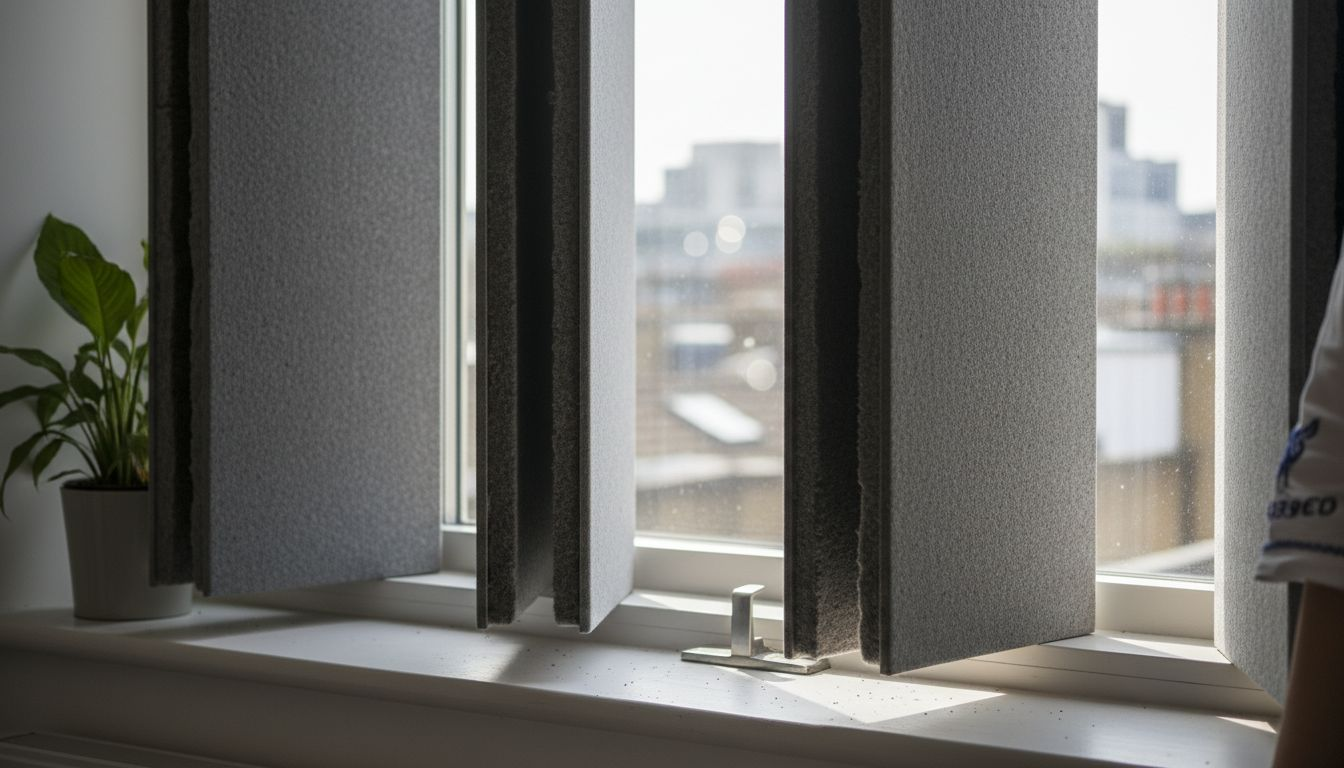
Key acoustic performance characteristics include material density, installation precision, and complete window coverage. Homeowners can expect significant noise reduction when shutters are professionally measured and installed with minimal gaps or potential sound transmission points. Professional installation ensures maximum sound dampening capabilities by creating a comprehensive acoustic barrier.
Pro tip: Combine noise blocking shutters with additional soundproofing methods like double glazing for optimal acoustic performance in high-noise environments.
Types of Noise Reducing Shutters Compared
Nowadays, homeowners have several noise reducing shutter options to enhance acoustic comfort within their living spaces. Soundproof shutters offer distinct variations designed to address different noise mitigation requirements across residential environments.
The primary types of noise reducing shutters include:
- Solid Panel Shutters
- Maximum sound absorption
- Dense construction
- Ideal for high-noise urban areas
- Louvred Shutters
- Adjustable sound blocking
- Flexible light control
- Moderate noise reduction
- Tier-on-Tier Shutters
- Independent top and bottom sections
- Customisable noise blocking
- Enhanced versatility
Each shutter type presents unique acoustic performance characteristics that cater to specific residential noise challenges. Solid panel shutters provide the most comprehensive sound insulation, creating an almost impenetrable barrier against external noise. Their compact, uninterrupted design ensures minimal sound wave transmission through the window covering.
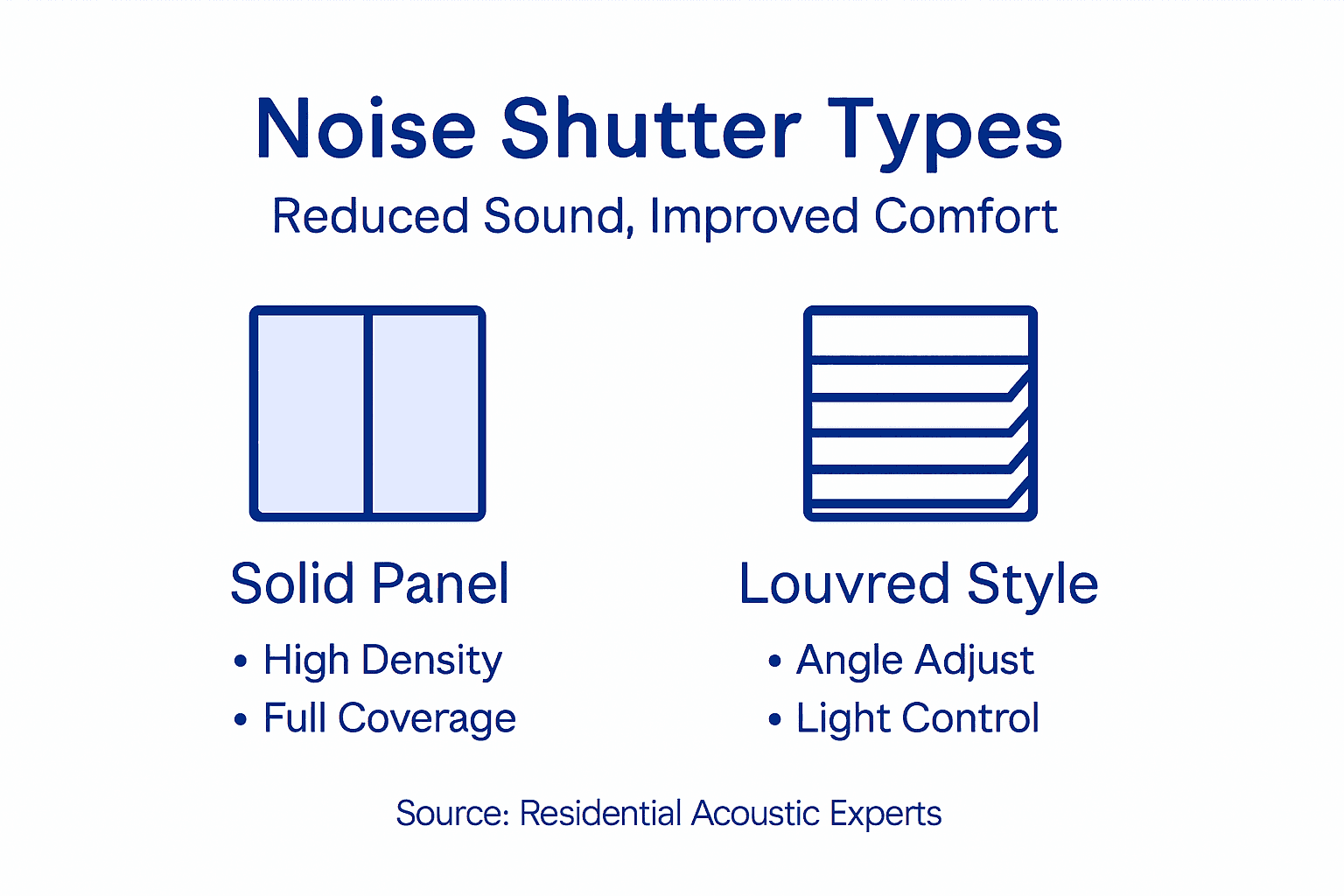
Louvred shutters offer a more dynamic approach to noise reduction. By allowing precise angle adjustments, homeowners can strategically manage sound penetration while maintaining ventilation and natural light. These shutters balance acoustic performance with aesthetic flexibility, making them particularly attractive for spaces requiring nuanced noise management.
Here’s a concise comparison of the main types of noise reducing shutters for quick reference:
| Shutter Type | Best Suited For | Acoustic Strength | Light Control |
|---|---|---|---|
| Solid Panel | Busy city environments | Excellent noise block | Limited |
| Louvred | Flexible living areas | Good, adjustable | Highly adjustable |
| Tier-on-Tier | Bedrooms and offices | Customisable | Versatile, independent |
Pro tip: Consider your specific noise environment and window configuration when selecting noise reducing shutters to maximise acoustic performance and visual appeal.
How Noise Blocking Shutters Actually Work
Understanding the acoustic science behind noise blocking shutters reveals a sophisticated approach to sound management. Sound transmission principles demonstrate how these innovative window coverings effectively interrupt and absorb unwanted external noise.
The noise blocking mechanism operates through several critical principles:
- Sound Wave Interference
- Disrupts incoming sound frequencies
- Reduces acoustic energy transmission
- Minimises vibration transfer
- Material Density
- Thick materials absorb sound waves
- Prevents sound wave penetration
- Creates acoustic barrier effect
- Structural Design
- Tight-fitting installation
- Eliminates sound transmission gaps
- Maximises acoustic performance
At the core of noise blocking functionality is the principle of sound wave impedance. When sound waves encounter a dense, strategically designed shutter surface, they are either reflected, absorbed, or significantly diminished. The shutters’ multi-layered construction acts like an acoustic shield, preventing sound energy from directly passing through the window space.
The physical properties of the shutter materials play a crucial role in noise reduction. Dense materials with higher mass naturally obstruct sound wave transmission more effectively. By creating multiple layers of sound-resistant surfaces and minimising potential transmission points, noise blocking shutters can reduce external noise levels by up to 50% compared to standard window treatments.
Pro tip: Combine noise blocking shutters with additional sound-absorbing materials like heavyweight curtains for maximum acoustic insulation in challenging noise environments.
Effectiveness, Benefits, and Limitations
Noise blocking shutters offer a multifaceted solution for homeowners seeking enhanced acoustic comfort. Noise reduction strategies reveal a range of benefits that extend far beyond simple sound management.
The primary benefits of noise blocking shutters include:
- Enhanced Privacy
- Creates visual and acoustic barriers
- Prevents external sound and sight intrusion
- Increases personal living space comfort
- Thermal Insulation
- Reduces heat loss
- Improves home energy efficiency
- Provides additional temperature regulation
- Aesthetic Improvement
- Adds architectural elegance
- Complements interior design
- Increases property visual appeal
While highly effective, noise blocking shutters are not a complete soundproofing solution. They typically reduce external noise by approximately 30-50%, with effectiveness varying based on materials, installation quality, and specific environmental conditions. Low-frequency sounds like heavy traffic or industrial noise can be more challenging to mitigate completely.
The limitations of noise blocking shutters are primarily technical and financial. Professional installation is crucial to minimise sound transmission gaps, and high-quality shutters represent a significant investment. Homeowners must balance acoustic performance with budget constraints, understanding that not all noise can be eliminated entirely.
Pro tip: Combine professional shutter installation with additional acoustic treatments like double-glazing to maximise noise reduction effectiveness.
Expert Installation and Common Pitfalls
Successful noise blocking shutter implementation requires meticulous planning and professional expertise. Precise installation techniques are crucial for maximising acoustic performance and avoiding potential technical challenges.
Common installation challenges include:
- Measurement Accuracy
- Precise window dimension mapping
- Accounting for architectural irregularities
- Eliminating potential sound transmission gaps
- Material Selection
- Choosing appropriate density levels
- Matching shutter materials to noise environment
- Balancing acoustic performance with aesthetic requirements
- Technical Fitting Considerations
- Ensuring complete window coverage
- Minimising structural sound bridges
- Creating seamless acoustic barriers
Professional installers understand that noise blocking effectiveness depends on multiple interconnected factors. Improper measurement can create microscopic gaps that significantly compromise acoustic performance. Even a 2-3 millimetre opening can reduce noise reduction capabilities by up to 30%, rendering expensive shutters substantially less effective.
Quality installation goes beyond simple fitting. Experienced technicians assess individual room acoustics, window configurations, and specific noise challenges to develop tailored solutions. They use specialised techniques like acoustic sealants, precise mounting methods, and strategic material selection to create comprehensive noise blocking environments.
Pro tip: Request a comprehensive acoustic assessment during your initial consultation to identify potential sound transmission points before shutter installation.
Comparing Alternatives and Real-World Use
Homeowners have multiple strategies for managing noise intrusion beyond traditional noise blocking shutters. Acoustic window solutions offer diverse approaches to mitigating external sound challenges.
Key alternative noise reduction methods include:
- Secondary Glazing
- Adds additional glass layer
- Improves overall window insulation
- Moderate noise reduction capabilities
- Acoustic Window Boxes
- Removable sound-blocking panels
- Flexible installation
- Suitable for heritage properties
- Sound-Absorbing Curtains
- Cost-effective solution
- Easy to install
- Limited acoustic performance
Noise blocking shutters distinguish themselves through superior customisation and aesthetic flexibility. Unlike secondary glazing, which permanently alters window structures, shutters provide a reversible solution that maintains architectural integrity while delivering substantial acoustic improvements. Their ability to blend seamlessly with existing interior design makes them particularly attractive for homeowners seeking both functional and visual enhancements.
The table below summarises the strengths and limitations of popular noise reduction solutions:
| Solution | Noise Reduction Level | Key Advantage | Main Limitation |
|---|---|---|---|
| Noise Blocking Shutters | 30–50% | Visually appealing, reversible | High initial cost |
| Secondary Glazing | Up to 45% | Strong insulation | Permanent installation |
| Acoustic Window Boxes | Moderate | Removable, flexible | May impact appearance |
| Sound-Absorbing Curtains | Limited | Budget-friendly, easy to fit | Modest performance |
Real-world applications demonstrate that noise blocking shutters are especially effective in urban environments with consistent external sound challenges. Professional installers can calibrate these solutions to address specific acoustic environments, whether dealing with traffic noise, neighbourhood disturbances, or industrial sound pollution. The adaptability of modern noise blocking shutters allows for targeted noise management that traditional soundproofing methods cannot achieve.
Pro tip: Conduct a thorough acoustic assessment of your specific environment before selecting noise reduction strategies to ensure optimal results.
Discover How Bespoke Noise Blocking Shutters Can Transform Your Home
If you are struggling with persistent outside noise and want to enhance your home’s comfort with expertly crafted window solutions then West Yorkshire shutters Archives | Shutter World has exactly what you need. Our bespoke noise blocking shutters use dense materials and precise installation techniques referenced in this article’s acoustic science to create an effective sound barrier that reduces external noise by up to 50 percent. Experience improved privacy, better thermal insulation, and stylish window coverings all tailored to your unique home environment.
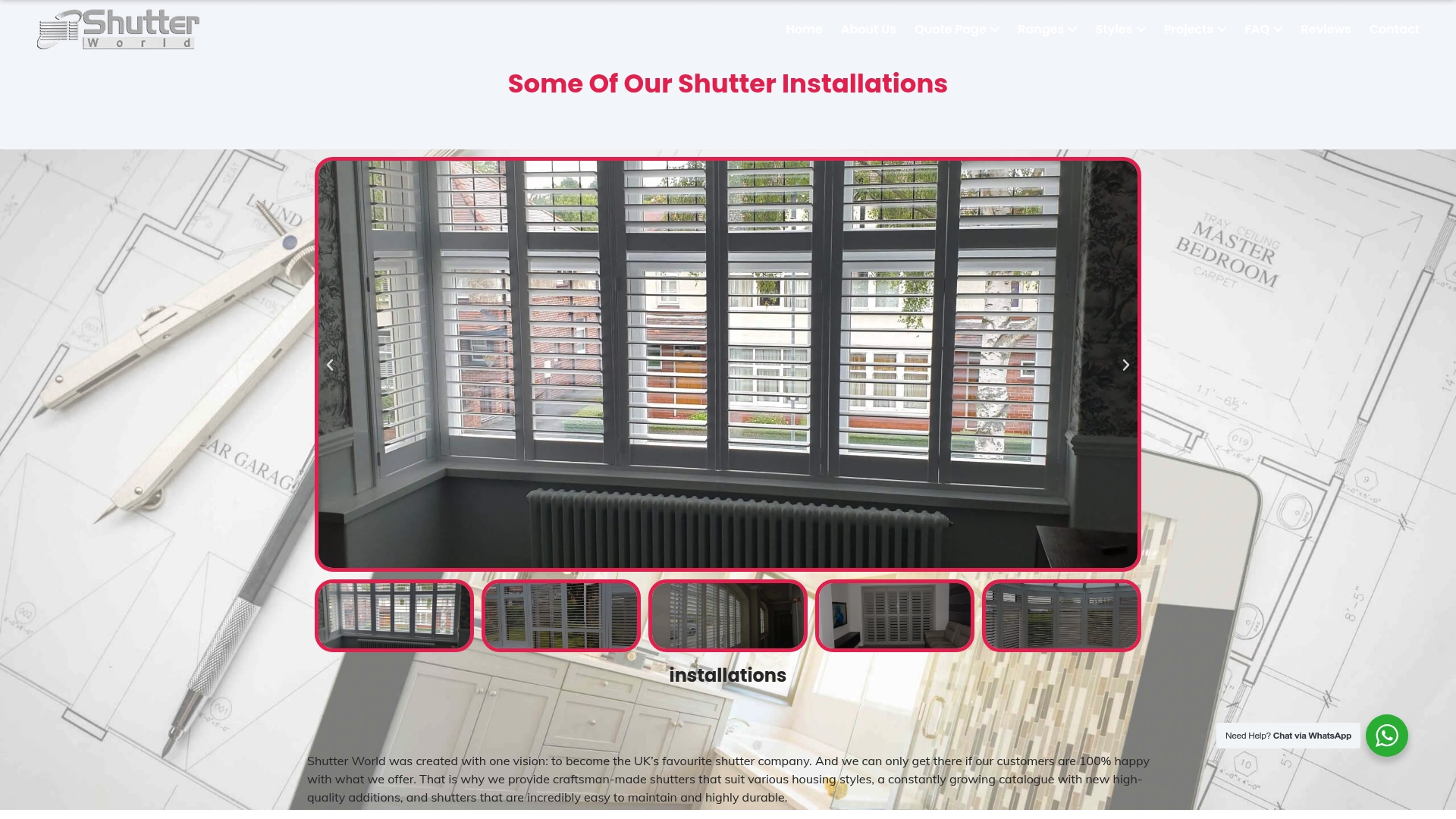
Explore the wide selection of custom window shutters at Shutter World where we specialise in made-to-measure designs including unusual and complex window shapes. Our full service from professional survey to expert installation ensures your noise blocking shutters fit perfectly delivering maximum acoustic performance and lasting durability. Don’t let noise disturbances reduce your living comfort find out how our specialist solutions can help by visiting Uncategorized Archives | Shutter World for inspiration and advice. Take the first step today toward a quieter home with www.shutterworld.co.uk.
Frequently Asked Questions
What are noise blocking shutters and how do they work?
Noise blocking shutters are specialised window coverings designed to reduce unwanted external sounds. They work by interrupting and absorbing sound waves through mechanisms such as sound wave interference, material density, and tight-fitting installations that minimise noise leakage.
What types of noise reducing shutters are available?
The main types of noise reducing shutters include solid panel shutters, which offer maximum sound absorption; louvred shutters, which provide adjustable sound blocking and light control; and tier-on-tier shutters, which allow independent operation of the top and bottom sections for customisable noise management.
How effective are noise blocking shutters at reducing sound?
Noise blocking shutters can reduce external noise levels by approximately 30-50%, depending on factors such as material density, installation quality, and specific environmental conditions. They are particularly effective against mid to high-frequency sounds but may be less effective for low-frequency noises like heavy traffic.
Why is professional installation important for noise blocking shutters?
Professional installation is crucial for maximising the acoustic performance of noise blocking shutters. It ensures accurate measurements, tight-fitting installations, and the elimination of sound transmission gaps, which can significantly compromise sound reduction capabilities.