
Shutters vs blinds and value in 2026

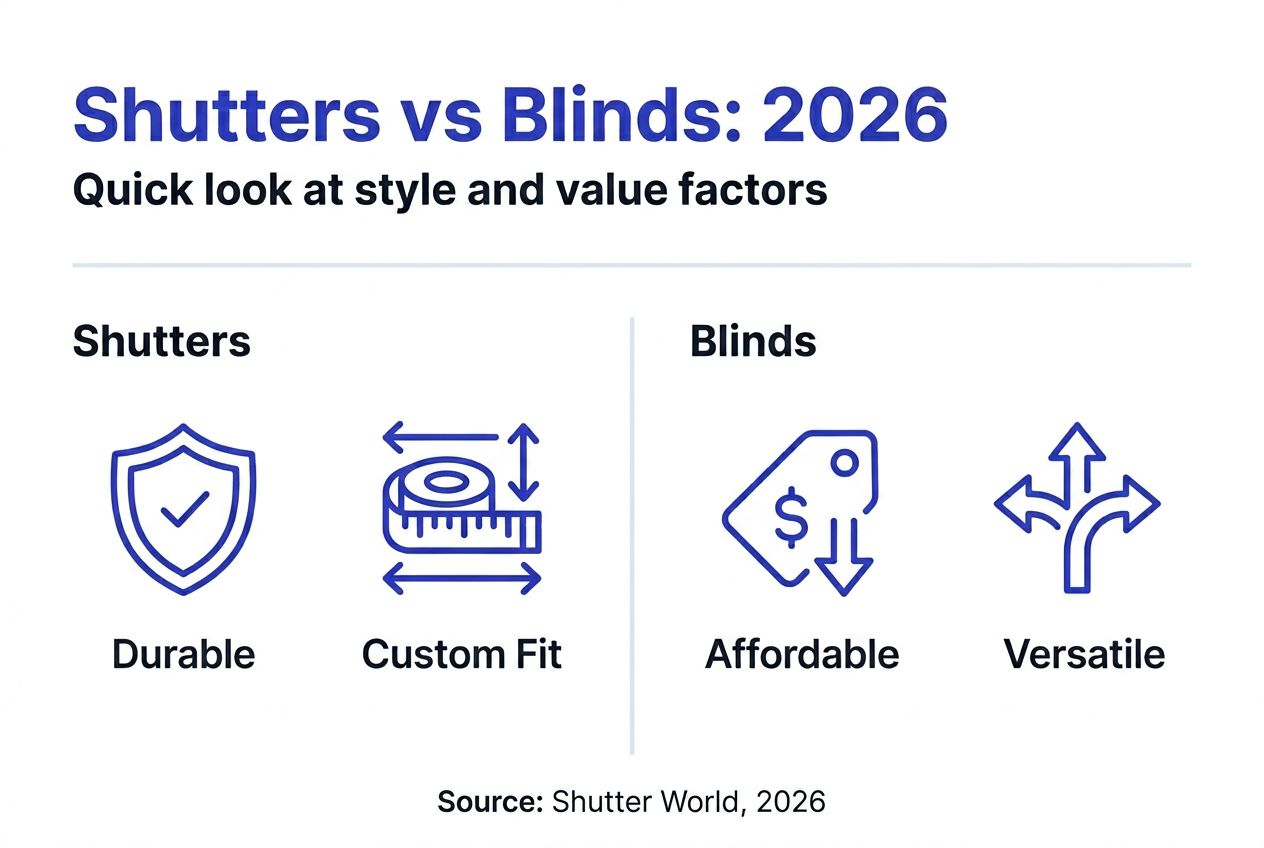
Shutters vs blinds
Think blinds cost less and perform just as well? Bespoke shutters can increase UK property value by up to 5%, despite higher upfront costs. For homeowners seeking premium solutions for unique architectural windows, the choice between shutters and blinds involves more than price tags. This guide clarifies the differences in light control, insulation, durability, and long-term value to help you make an informed decision for your home.
Table of Contents
- Introduction To Shutters And Blinds
- Light Control And Privacy: How Shutters And Blinds Compare
- Thermal Insulation And Energy Efficiency
- Durability, Maintenance And Long-Term Value
- Cost, Installation And Fit Precision
- Impact On Property Value And Architectural Enhancement
- Common Misconceptions About Shutters Vs Blinds
- Conclusion: Choosing The Right Solution For Your Home
- Find Your Perfect Bespoke Shutters With Shutter World
Key takeaways
| Point | Details |
|---|---|
| Bespoke shutters offer superior control | Adjustable louvers and full frame coverage provide precise light and privacy management beyond what most blinds achieve. |
| Shutters fit complex window shapes | Custom-made shutters accommodate arches, bays, triangular and other irregular windows where blinds struggle. |
| Higher initial cost pays long-term dividends | Premium shutters last 20+ years, require minimal maintenance, and add measurable property value. |
| Professional installation ensures quality | Expert fitting eliminates gaps, maximises insulation efficiency, and delivers polished aesthetics. |
| Blinds provide style variety at lower entry cost | Multiple fabric and slat options suit varied budgets but typically offer shorter lifespan and less precise fit. |
Introduction to shutters and blinds
Shutters are bespoke wood or composite panels installed within window frames that become permanent architectural features. They consist of solid frames with adjustable louvers or panels, custom-fitted to your exact window dimensions.
Popular shutter styles include:
- Full-height shutters covering the entire window
- Café shutters covering only the lower portion
- Tier-on-tier designs allow independent control of upper and lower sections
- Solid panel shutters without louvres for maximum privacy
Blinds offer a different approach to window dressing. These typically consist of fabric or slats hung inside or above the window recess, attached via brackets or rails. Common blind types include roller, venetian, vertical, and cellular varieties, each with distinct operational mechanisms.
Blinds come in an extensive range of colours, patterns, and materials, giving homeowners considerable style flexibility. However, they often lack the precise architectural fit that shutters provide for complex window shapes.
Understanding these fundamental differences sets the foundation for evaluating which option best serves your specific window requirements and style preferences. The choice extends beyond aesthetics to functional performance in daily use.
Light control and privacy: how shutters and blinds compare
Shutters excel at light management through their integrated louvre systems. You adjust the slats to any angle, directing sunlight precisely where you want it whilst blocking unwanted glare. The frame-mounted design means shutters cover the entire window opening, eliminating edge gaps that compromise privacy.

Blinds vary widely in their control mechanisms. Roller blinds offer all-or-nothing coverage, whilst venetian blinds allow slat adjustment similar to shutters. However, most blinds leave visible gaps at the sides, top, or bottom where they mount outside the window recess. These gaps admit light and reduce privacy, particularly problematic in bathrooms or ground-floor rooms.
| Feature | Shutters | Blinds |
|---|---|---|
| Edge coverage | Complete seal within frame | Often gaps at mounting points |
| Light precision | Infinitely adjustable louvres | Limited to slat angle or full open/close |
| Privacy control | Full window coverage ensures complete privacy | Partial coverage or edge gaps reduce privacy |
| Night-time darkness | Solid panels or closed louvres block all light | Light leakage is common around edges |
Tier-on-tier shutters provide exceptional flexibility for rooms requiring both natural light and privacy. You can open the top section to admit daylight whilst keeping the lower section closed for street-level privacy. This design proves particularly valuable in living areas with large windows.
Pro Tip: Choose tier-on-tier shutters for bay windows to maximise natural light in upper areas whilst maintaining privacy at eye level, especially effective in Victorian and Edwardian homes with prominent street-facing bays.
For detailed comparisons of specific blind types, explore shutters versus roller blinds to understand operational differences. Additional light control comparisons demonstrate how frame-mounted shutters outperform bracket-hung blinds in sealing light and draughts.
Thermal insulation and energy efficiency
Shutters create an insulating air pocket between the window glass and your room. When closed, shutters trap air to provide a thermal barrier that reduces heat loss in winter and blocks solar gain in summer. Solid shutter panels deliver the strongest insulation, whilst louvred designs still outperform most blind options.
Material choice significantly affects insulating performance. Hardwood shutters offer natural insulation properties, whilst quality MDF with polymer coatings provides excellent thermal barriers at lower cost. Thickness matters too, with 64mm and 89mm louvres delivering superior insulation compared to thinner alternatives.
Cellular blinds provide some insulation through their honeycomb structure that traps air. However, they generally underperform compared to solid shutter panels fitted flush to the window frame. Standard fabric or venetian blinds offer minimal insulating value.
Enhancing insulation with shutters involves several practical steps:
- Select appropriate materials based on your climate priorities, with solid panels for maximum insulation or adjustable louvres for ventilation flexibility
- Ensure professional installation eliminates gaps between shutter frames and window recesses where draughts penetrate
- Use tiered designs to control airflow whilst maintaining insulation, opening upper sections for ventilation without compromising lower-level thermal barriers
- Consider split-tilt louvers allowing independent control of upper and lower louvres for precise temperature management
- Maintain shutter mechanisms annually to ensure tight closure that preserves insulating performance
Pro Tip: Professional shutter fitting maximises insulation efficiency by ensuring frames sit flush within the window recess, eliminating the air gaps that undermine DIY installations and reduce thermal performance.
Discover how shutters improve insulation to keep heat in during cold months and maintain comfortable temperatures in summer, directly reducing your heating and cooling costs throughout the year.
Durability, maintenance and long-term value
Premium hardwood shutters can last 20 years or more with minimal maintenance, retaining their appearance and smooth operation throughout their lifespan. Quality composite materials like MDF with polymer coatings offer similar durability at a lower price point, resisting warping, fading, and moisture damage.
Blinds face different longevity challenges. Fabric blinds exposed to sunlight fade and degrade within 5 to 10 years. Venetian blind mechanisms can fail, slats can bend, and cords can fray with regular use. Vinyl coatings on cheaper blinds peel and crack, particularly in humid environments like kitchens and bathrooms.
Shutters require straightforward upkeep. Occasional dusting with a soft cloth keeps louvres clean, whilst periodic hinge lubrication ensures smooth operation. The solid construction means no fragile components to replace, no cords to retangle, and no fabric to launder or replace.
Maintaining shutters for maximum lifespan involves:
- Wipe louvers monthly with a slightly damp microfibre cloth to remove dust buildup
- Lubricate hinges annually using a silicone-based spray to prevent squeaking and ensure smooth opening
- Check tightening screws every few years as natural wood movement may loosen fittings
- Avoid harsh chemicals or abrasive cleaners that damage finishes
- Address any moisture issues promptly, particularly in bathrooms, to prevent wood swelling
The reduced maintenance frequency translates to lower hassle and cost over time. You won’t replace shutters every decade like blinds, avoiding repeated measurement, purchase, and installation cycles. This reliability particularly appeals to homeowners seeking permanent architectural solutions.
Learn why shutters remain popular in UK homes despite higher initial costs, with their combination of durability, timeless style, and minimal ongoing maintenance contributing to sustained homeowner satisfaction.
Cost, installation and fit precision
Bespoke shutters typically cost 20% to 50% more than comparable blinds due to custom manufacturing, premium materials, and professional installation requirements. A standard window might cost £300 to £600 for quality blinds versus £500 to £1,200 for made-to-measure shutters, depending on size, material, and complexity.
Professional installation proves essential for bespoke shutters to achieve the precise fit that maximises their benefits. Expert fitters ensure frames sit perfectly within window recesses, louvers operate smoothly, and all components align correctly. This precision directly impacts aesthetics, insulation, and long-term performance.
Blinds often accommodate DIY installation, reducing initial costs. However, achieving a professional finish requires skill, and mistakes leave visible gaps or uneven hanging. Off-the-shelf blinds rarely fit architectural windows perfectly, forcing compromises in coverage or appearance.
Assessing installation needs and budget impact:
- Measure all windows requiring treatment, noting any unusual shapes, sizes, or depths that affect complexity
- Request quotes from multiple suppliers, ensuring they include materials, manufacturing, and professional fitting
- Calculate total cost of ownership over 15 to 20 years, factoring in blind replacements every 5 to 8 years versus one shutter installation
- Consider financing options if available, spreading the higher upfront shutter cost across manageable payments
- Evaluate property value increases from shutters against the additional investment compared to blinds
| Factor | Shutters | Blinds |
|---|---|---|
| Initial cost | £500-£1,200 per standard window | £300-£600 per standard window |
| Installation difficulty | Requires professional fitting | Often DIY-friendly |
| Fit precision | Custom-made for exact window dimensions | Standard sizes may leave gaps |
| Complex window suitability | Excellent for arches, bays, angles | Limited options for unusual shapes |
| Long-term cost | Single investment lasting 20+ years | Replacements needed every 5-8 years |
Explore bespoke internal window shutters tailored to your specific windows, where custom manufacturing ensures a perfect fit regardless of size, shape, or architectural style, delivering both immediate aesthetic impact and lasting value.
Impact on property value and architectural enhancement
Bespoke shutters visually integrate with your home’s architecture in ways blinds cannot match. They frame windows from within, emphasising proportions and creating visual interest. The permanent installation signals quality and attention to detail that appeals to potential buyers.
Studies indicate shutters can increase property value by up to 5%, a significant return on investment for homes in competitive markets. Estate agents consistently report that properties with quality shutters photograph better, attract more viewings, and command higher offers than comparable homes with standard blinds.
“Quality window shutters represent one of the few home improvements that simultaneously enhance daily living comfort and deliver measurable financial returns when selling. The combination of visual appeal, functional benefits, and perceived luxury creates tangible value that UK homebuyers recognise and pay for.”
Homeowner testimonials repeatedly highlight satisfaction beyond aesthetics. Buyers specifically seek properties with shutters, viewing them as indicators of overall quality and eliminating the need for immediate window treatment purchases after moving in.
Customisation options amplify these benefits. You can select finishes that complement Georgian proportions, Victorian detailing, or contemporary minimalism. Paint colours match existing woodwork, creating cohesive interior design that feels intentional rather than afterthought.
The architectural enhancement extends to problem windows that challenge other treatments. Shutters transform awkward angles into features, turn oversized openings into statement pieces, and provide practical solutions for skylights or bi-fold doors where blinds prove impractical.
Discover how shutters impact resale value through their combination of visual appeal, functional performance, and the quality signal they send about overall property maintenance and attention to detail.
Common misconceptions about shutters vs blinds
Myth 1: Blinds always cost less. Whilst initial purchase prices favour blinds, the total cost of ownership tells a different story. Shutters’ durability and added property value often justify higher upfront costs when calculated over 15 to 20 years. Multiple blind replacements, maintenance, and missed property value gains accumulate significantly.
Myth 2: Blinds and shutters provide equal light control. Reality show shutters offer superior coverage through full-frame installation and adjustable louvres that eliminate edge gaps. Blinds mounted on brackets leave openings where light and draughts penetrate, particularly problematic for rooms requiring complete darkness.
Myth 3: Shutters require complicated maintenance. Actually, shutters need minimal upkeep after professional installation. A quick dust every few weeks and occasional hinge lubrication maintains their appearance and function. Compare this to blind cord replacements, fabric cleaning, or slat straightening that blinds demand regularly.
Clearing these misconceptions:
- Calculate total ownership costs, including replacements, not just initial purchase price
- Test light sealing by visiting showrooms or viewing installed examples in different lighting conditions
- Request maintenance requirements in writing before purchasing to compare actual upkeep demands
- Consider resale implications, as shutters add value, whilst dated blinds may require removal
- Evaluate suitability for your specific windows, particularly if you have unusual shapes or sizes
Pro Tip: Assess total cost of ownership by multiplying blind replacement frequency (typically every 6 to 8 years) by unit cost, then compare against single shutter installation cost plus minimal maintenance expenses over the same period.
Explore a comprehensive bespoke shutters guide that addresses common questions about materials, installation, and performance to help you make decisions based on facts rather than assumptions or outdated information.
Conclusion: choosing the right solution for your home
Selecting between bespoke shutters and blinds depends on several interconnected criteria. Consider your architectural fit requirements, particularly if you have bay windows, arches, or unusual shapes that challenge standard treatments. Evaluate your priorities for light control, privacy, and insulation against your budget and timeline.
Bespoke shutters prove ideal for homeowners pursuing premium aesthetics, long-term value, and solutions for complex windows. Their higher upfront investment delivers measurable returns through property value increases, energy savings, and decades of maintenance-free operation. The permanent installation creates architectural features rather than temporary coverings.
Blinds suit situations requiring lower initial costs, maximum style flexibility, or temporary solutions. They offer legitimate advantages in rental properties, budget-conscious projects, or rooms where frequent style changes align with decorating preferences. However, understand the tradeoffs in fit precision, durability, and long-term value.
Key decision steps for homeowners:
- Audit all windows, noting sizes, shapes, and any architectural features requiring special consideration
- Define your priorities: immediate budget constraints versus long-term value, style flexibility versus permanent quality
- Request professional consultations for accurate measurements and quotations that reflect your specific windows
- Calculate the total cost of ownership over 15 to 20 years, including replacements, maintenance, and property value impacts
- Visit showrooms or view installed examples to experience operational differences and visual appeal firsthand
- Make your decision based on a comprehensive evaluation rather than initial price alone
For complex windows, premium aesthetics, or long-term value, professional consultation ensures you select treatments that genuinely serve your needs. Expert guidance prevents costly mistakes and identifies solutions you might not have considered independently.
Find your perfect bespoke shutters with Shutter World
Shutter World specialises in creating bespoke interior window shutters for the unique architectural windows that define UK homes. From challenging bay configurations to elegant arches and skylights, their expert craftsmen deliver precision-fitted solutions that transform both appearance and functionality.
Their extensive range includes plantation shutters in premium hardwood and durable composite materials, offering styles from traditional to contemporary that complement any interior design. Professional in-home surveys ensure accurate measurements, whilst transparent quotations eliminate surprises.
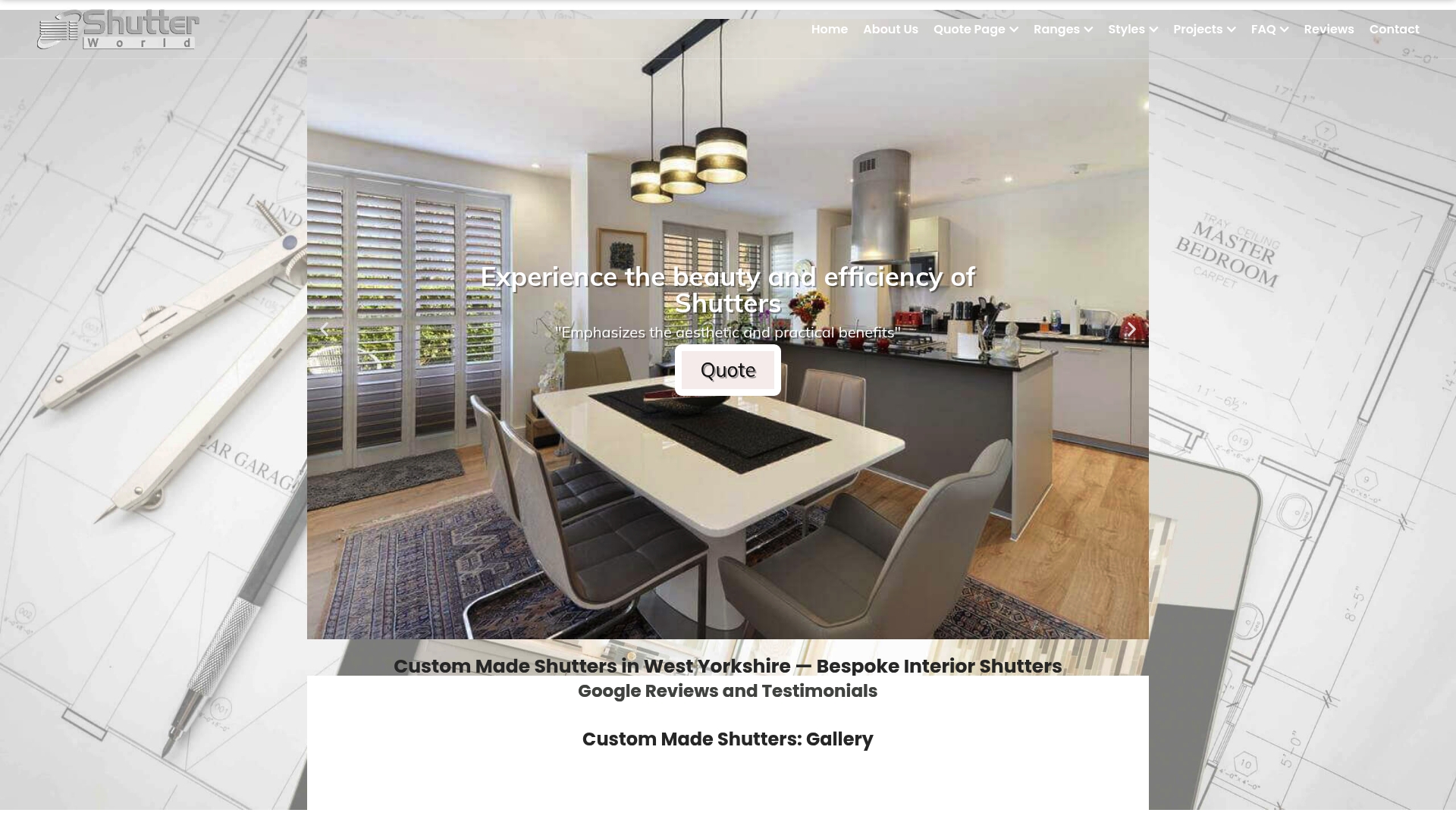
With over 25 years of experience, Shutter World’s complete service covers design consultation, custom manufacturing, and expert installation by skilled fitters who ensure flawless results. Their product and workmanship guarantees provide long-term confidence in your investment.
Explore how beautiful window shutters refresh your home’s character whilst delivering practical benefits in light control, insulation, and privacy. Book a consultation to discuss your specific windows and discover solutions tailored precisely to your needs.
Pro Tip: Schedule your consultation during quieter months to secure preferred installation timing and benefit from extended planning discussions that ensure every detail aligns with your vision and requirements.
FAQ
Are shutters really better than blinds for unique window shapes?
Yes, bespoke shutters accommodate arches, bay windows, triangular and other complex shapes through custom manufacturing that creates perfect fits. Blinds struggle with irregular dimensions, often leaving gaps or requiring multiple units that compromise appearance. Shutters’ frame-mounted design integrates seamlessly with architectural features.
Do shutters really save money on heating and cooling bills?
Shutters demonstrably reduce heat loss in winter and block solar gain in summer, lowering your energy consumption throughout the year. The insulating air pocket they create between the glass and room delivers measurable efficiency improvements. Homeowners typically notice reduced heating requirements and more stable indoor temperatures after installation.
Are bespoke shutters worth the higher initial cost?
Despite 20% to 50% higher upfront prices, bespoke shutters deliver superior long-term value through 20+ year lifespans, minimal maintenance requirements, and property value increases up to 5%. When calculated over the total ownership period, including blind replacements every 6 to 8 years, shutters often prove more economical whilst offering better performance and aesthetics.
How long does professional shutter installation take?
Typical installations are complete within 4 to 8 hours, depending on window quantity and complexity. Simple installations with standard windows proceed quickly, whilst complex shapes or whole-house projects require more time. Professional fitters work efficiently to minimise disruption, and the permanent nature means you won’t face repeated installation cycles like blind replacements demand.
Can shutters work in modern minimalist interiors?
Absolutely. Contemporary shutter designs with clean lines, hidden fixings, and smooth painted finishes complement minimalist aesthetics perfectly. White or grey shutters create subtle architectural detail without visual clutter, whilst their functional benefits align with modern priorities for energy efficiency and low-maintenance living. The key lies in selecting appropriate styles and finishes during consultation.