
Side-hinged vs sliding shutters: find the best fit

Side-hinged vs sliding shutters
TL;DR:
- Choosing between side-hinged and sliding shutters depends on your room layout, style preferences, and functional needs. Side-hinged shutters offer timeless elegance and full panel control, while sliding shutters suit wider openings with minimal space requirements. Carefully assess your space and consult a specialist to select a future-proof, personalized window treatment.
Choosing between side-hinged and sliding shutters feels straightforward until you’re standing in your living room, measuring tape in hand, wondering which option will actually work with your layout, your lifestyle, and your home’s character. Many homeowners focus almost entirely on how shutters look in a catalogue photograph, overlooking how the mechanics of each type affect daily living, energy performance, and long-term comfort. This guide cuts through that confusion, comparing both shutter styles across every dimension that matters, so you can make a confident, well-informed decision rather than an expensive guess.
Table of Contents
- Understanding side-hinged and sliding shutters
- Key comparisons: style, functionality, and installation
- Shutter impact: energy efficiency and privacy
- Which is best for your space? Practical application for UK homes
- What most guides miss about shutter selection
- Discover bespoke shutters tailored for your home
- Frequently asked questions
Key Takeaways
| Point | Details |
|---|---|
| Design impacts function | Side-hinged and sliding shutters affect your home’s style and usability in different ways. |
| Energy efficiency matters | Choosing the right shutter can improve insulation and reduce heating costs. |
| Privacy customisation | Both shutter types offer unique privacy options, so match them to your needs. |
| Space and installation | Sliding shutters are ideal for tight spaces, while side-hinged work well in traditional layouts. |
| Consult bespoke experts | Personalised advice ensures you pick shutters that fit both your design vision and lifestyle. |
Understanding side-hinged and sliding shutters
Before weighing up the pros and cons, it helps to understand exactly how each system works and why that matters in a real home setting.
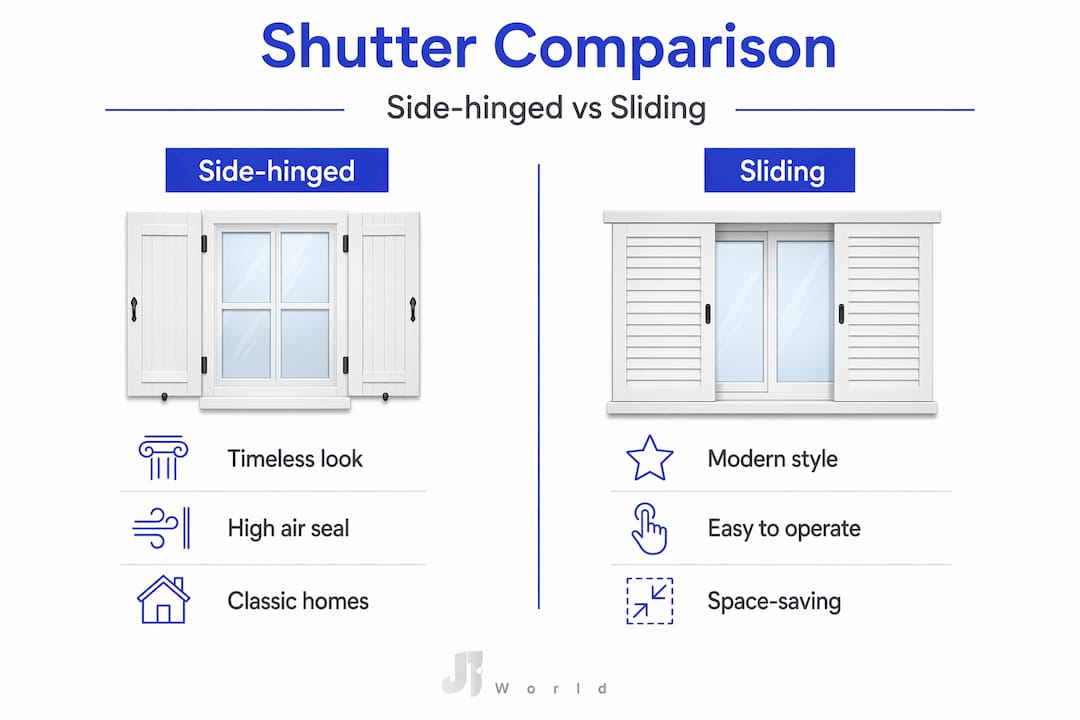
Side-hinged shutters operate on vertical hinges fixed to the window frame or a surrounding border frame. The panels swing outwards or inwards, much like a pair of doors, giving you full and immediate access to the glazing behind. This familiar, door-like action makes them intuitive to use and incredibly satisfying to open on a bright morning. They work particularly well on standard rectangular windows, sash windows, and casement frames, and their classic visual appeal suits both period properties and contemporary interiors. Explore how beautiful window shutters can genuinely refresh a room’s character to understand their full visual potential.
Sliding shutters, by contrast, glide horizontally along a track system mounted above and below the window opening. Rather than swinging out into the room, they move neatly to one side or stack behind each other in a bi-pass configuration. This is precisely why they suit wider windows, patio doors, and rooms where furniture placement leaves no room for a swing arc. Many homeowners also choose sliding designs for a sleeker, more architectural finish that complements modern and Scandinavian-inspired interiors.
Key characteristics of each type at a glance:
- Side-hinged: Hinged panels, swings open like a door, suits standard windows, traditional or contemporary aesthetic, full-panel light control
- Sliding: Glides on a track, moves laterally, suits wide or patio openings, modern aesthetic, layered privacy options
- Both types: Available in solid or louvred panels, fully customisable, made-to-measure for precise fit
Pro Tip: Before you decide, walk through your room at its busiest moment and consider how much clearance exists in front of the window. Tight spaces, furniture placed close to glazing, or rooms with awkward traffic flow almost always favour a sliding design.
Thinking about which option suits a specific room? Reviewing shutter types for bedrooms offers excellent room-specific guidance that applies across the home.
Key comparisons: style, functionality, and installation
Once you understand the mechanics, the real decisions centre on aesthetics, usability, and what installation actually involves for your property.
Style and aesthetic impact
Side-hinged shutters carry a timeless quality that many homeowners find irresistible. Their symmetrical panels, often finished with working louvres or fixed solid boards, echo the craftsmanship of Georgian and Victorian architecture while adapting beautifully to modern interiors. If you are working with a period property or want to introduce warmth and texture into a neutral scheme, side-hinged panels are a natural choice. Rustic shutter styles in particular benefit enormously from the traditional swing-open format.
Sliding shutters, meanwhile, project a clean, uncluttered confidence. Their horizontal movement and flush profiles suit open-plan kitchens, garden rooms, and contemporary lounges where every element is expected to earn its place visually. Fewer visible hinges and a simpler panel structure give them a distinctly architectural quality.
Privacy and light control
Both systems offer superb light control, but they do so differently. Side-hinged shutters allow you to open one panel while keeping the other closed, or tilt louvres independently on each side. This flexibility is genuinely useful in street-facing rooms where you want morning light without sacrificing privacy. Sliding shutters, particularly those covering wide glazing, can be positioned at any point along the track to balance light and privacy simultaneously, making them especially effective in garden rooms or alongside bifold doors. Thoughtful guidance on incorporating shutters in interiors can help you plan this balance with precision.
Installation requirements
Side-hinged shutters require a solid frame into which hinges can be anchored securely. The installation is relatively straightforward for experienced fitters, and the main structural consideration is ensuring the frame or border sits square and level. Sliding shutters need accurate track placement, with both the head track and floor guide requiring precise alignment. Any deviation will cause the panels to stick or run unevenly over time. This is why professional measurement and fitting is not just recommended but essential for a sliding system.
What homeowners often overlook: Sliding shutters require regular track cleaning to maintain smooth operation, particularly in rooms with high dust levels or near cooking areas. Factoring in this minor maintenance habit from the outset prevents frustration later.
Considering property styling tips alongside your shutter choice can also inform how the overall room composition should be planned around your new window treatment.
| Category | Side-hinged shutters | Sliding shutters |
|---|---|---|
| Visual style | Traditional to contemporary | Modern, architectural |
| Space requirement | Swing clearance needed | Minimal room intrusion |
| Light control | Per-panel and louvre adjustment | Lateral positioning along track |
| Privacy | Excellent, flexible | Excellent, especially wide windows |
| Installation complexity | Moderate | Higher precision required |
| Maintenance | Low | Low to moderate (track cleaning) |
| Best window type | Standard, sash, casement | Wide, patio, bifold openings |
Shutter impact: energy efficiency and privacy
This is where shutter selection moves beyond aesthetics into genuinely measurable home improvement. Energy-efficient shutters can reduce heat loss and improve privacy in ways that blinds and curtains simply cannot match, and the difference between a well-fitted shutter and a poorly fitted one is significant.
Thermal performance compared
Side-hinged shutters, when closed fully, create a sealed barrier across the window that traps a layer of still air between the shutter face and the glass. This air layer acts as natural insulation, slowing heat loss through the glazing during colder months. The tighter the fit between panel and frame, the more effective this barrier becomes. Premium hardwood options, such as our Montana range, offer exceptional density and thermal mass that amplifies this effect considerably.
Sliding shutters, because their panels move along tracks rather than sealing against a fixed frame, can allow slightly more air movement at the edges unless specifically designed with sealing profiles. However, modern sliding systems with well-engineered track tolerances perform admirably. For wide glazing areas where side-hinged panels might be impractical, a high-quality sliding design is still far superior to curtains or standard roller blinds. Explore energy-saving shutter options to understand how material and fit interact with thermal performance.
| Energy metric | Side-hinged shutters | Sliding shutters |
|---|---|---|
| Air seal quality | High (when fully closed) | Moderate to high (track dependent) |
| Insulation layer | Strong still-air pocket | Good, varies by track tolerance |
| Best performance scenario | Standard windows, cold rooms | Wide windows, conservatories |
| Draught reduction | Excellent | Good |
Privacy control: a step-by-step approach
Choosing shutters for privacy is not as simple as picking the option that blocks the most light. Different rooms have genuinely different needs, and getting this right matters for daily comfort.
- Identify the room’s primary use. A bathroom or ground-floor bedroom needs full, consistent privacy at all times. A first-floor lounge may only need privacy in the evenings.
- Consider the window’s position relative to neighbours and the street. Side-on windows at ground floor level often benefit from fixed louvres that block direct sight lines while still admitting light.
- Choose your louvre angle and panel configuration accordingly. Sliding shutters on a large rear window can be partially open during the day and fully closed at night.
- Factor in the direction of sunlight. South-facing rooms need finer control over harsh afternoon light, making adjustable louvres on either type especially valuable.
Our dedicated guides on shutter privacy benefits and privacy solutions offer room-specific advice that goes into considerably more depth on this topic.
Pro Tip: For maximum thermal and acoustic performance, choose shutters with the tightest possible fit and consider a layered approach, pairing shutters with a secondary window treatment for rooms that face particularly harsh conditions.
Which is best for your space? Practical application for UK homes
Theory is useful, but what most homeowners actually need is a clear, room-by-room picture of which shutter type will serve them best.
Room-by-room guidance
- Kitchens: Sliding shutters excel here. They suit the wide windows and bifold doors common in modern kitchen extensions, and their easy lateral movement means you can open them wide for ventilation without panels swinging into worktops or appliances.
- Bedrooms: Side-hinged shutters are the classic choice for bedrooms, offering a warm, cocoon-like feel when closed and a satisfying, full-open position during daylight hours. They suit sash windows beautifully.
- Living rooms and lounges: Either type can work, but the deciding factor is window width and furniture layout. A wide bay window might benefit from a combination of hinged and fixed panels, while a single large picture window may suit a sliding design.
- Bathrooms: Side-hinged shutters in moisture-resistant materials, such as our Seattle MDF range with its polypropylene coating, are ideal. The enclosed, sealed feel adds privacy and insulation simultaneously.
- Conservatories and garden rooms: Sliding shutters almost always win here, as the glazing areas are typically very wide and the architectural style tends toward the contemporary.
How to evaluate your space and make the decision
- Measure your clearance. Stand at the window and mark how far a side-hinged panel would swing. Is there furniture, a radiator, or a wall nearby? If the swing arc is compromised, sliding is the better fit.
- Assess your window shape. Unusual shapes, arches, or angled frames can be addressed by bespoke engineering in both types, but your specialist will advise which system accommodates the geometry more elegantly.
- Define your style priorities. Gather images of rooms you admire and note whether the windows feature swing-open or lateral shutter designs. Your instinctive preference is a reliable guide.
- Set your functional requirements. Privacy level, light control precision, and energy efficiency weighting should all be ranked before you finalise.
- Shortlist and consult. Narrow your choice to one or two options, then speak to a specialist who can assess your space in person and confirm the right approach.
For further inspiration on balancing privacy and style options, our dedicated guide covers both types in the context of real UK homes.
What most guides miss about shutter selection
We have read a great many articles on this subject, and most of them stop at surface-level comparisons. They tell you what the two types look like. They show you installation diagrams. What they rarely address is how your home will evolve around your shutters over the next decade.
The uncomfortable truth is this: most homeowners choose shutters based on how their home looks today, not how it might function in five years. A growing family might knock through walls to create open-plan living. A home office might become a guest room. A conservatory might be converted into a permanent living space. These changes fundamentally alter the demands you place on your window treatments, and a shutter choice that felt perfect in a closed-off dining room may feel restrictive after the wall comes down.
Sliding shutters have a meaningful advantage here. Their lateral movement integrates naturally into open-plan layouts, where the visual boundary between room zones needs to be flexible rather than fixed. They can be partially drawn to suggest a separation without imposing one. Side-hinged shutters, with their door-like swing, can actually work against open-plan fluidity if positioned where traffic flows through.
Our honest recommendation, shaped by over 25 years of fitting shutters in homes across the UK, is this: think about the shutter type that suits your current space, but always ask about reconfiguration and upgrade possibilities. A truly bespoke provider will design systems that can be adapted as your home changes, not ones that lock you into a single configuration. Reviewing our bespoke shutter guide will help you understand exactly what to look for when commissioning a truly future-proof installation.
Discover bespoke shutters tailored for your home
Understanding the differences between side-hinged and sliding shutters is the essential first step. Taking that knowledge into a personalised consultation is where the real transformation begins.
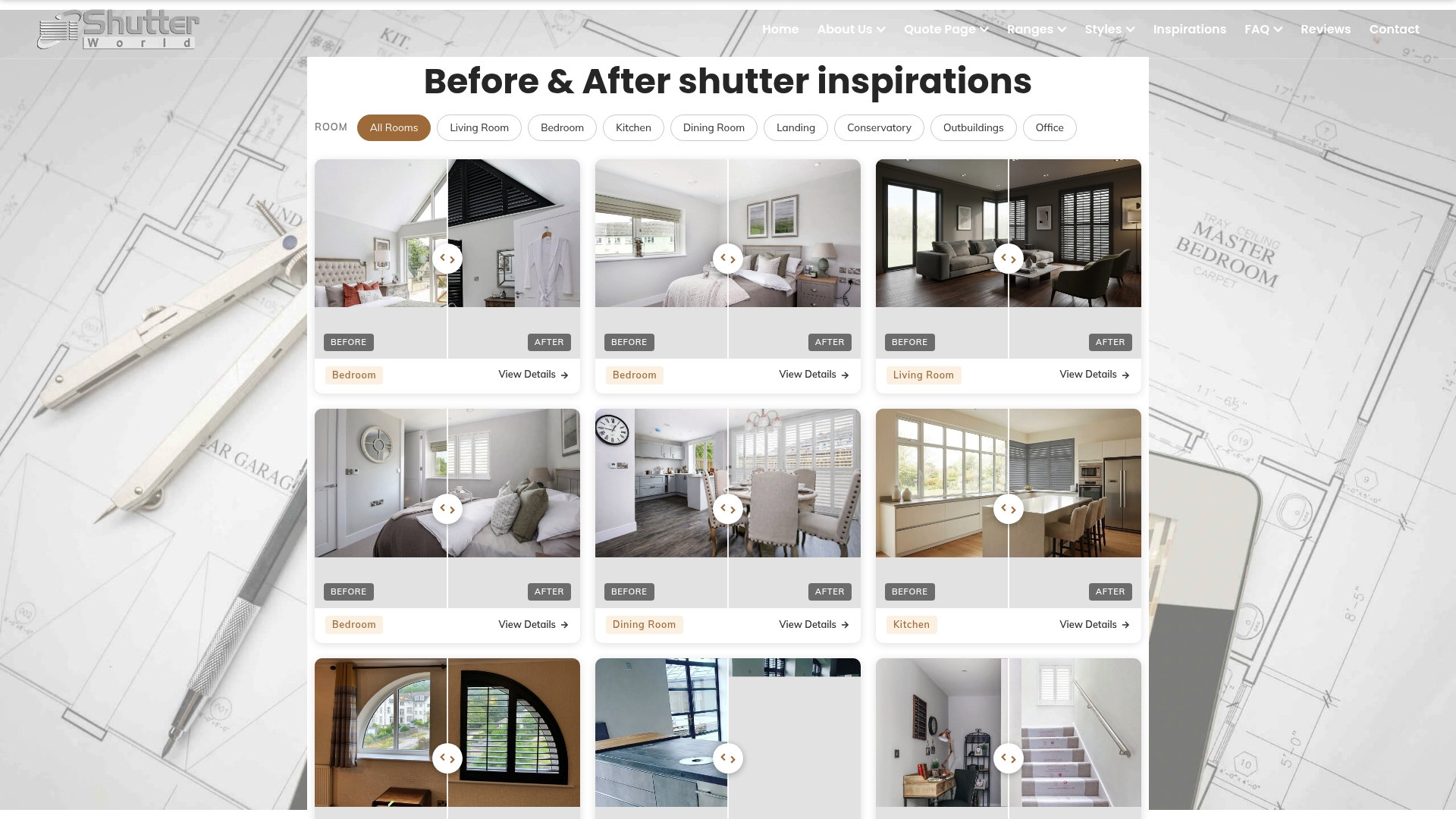
At Shutter World, we design and install bespoke shutters that are engineered precisely for your windows, your rooms, and your lifestyle. Whether you are drawn to the timeless elegance of side-hinged panels or the clean, architectural flow of a sliding system, our team will survey your space, guide your decision with genuine expertise, and install your shutters to an exceptional standard. Every set of made-to-measure shutters we produce comes backed by our full product and workmanship guarantee. Book your free in-home survey today and discover how the right shutters can transform your home style in ways you may not yet have imagined.
Frequently asked questions
Are side-hinged shutters easier to install than sliding shutters?
Side-hinged shutters are generally simpler to install as they require only a secure hinge frame, while sliding shutters demand precise track alignment and greater fitting accuracy for smooth, reliable operation.
Do sliding shutters provide better privacy than side-hinged shutters?
Both types deliver excellent privacy, but sliding shutters can cover large glazing areas with fewer visible gaps, whereas side-hinged shutters offer more flexible, per-panel privacy adjustment throughout the day.
Which shutter type is more energy efficient?
Both types reduce heat loss when properly fitted, and energy-efficient shutters perform best when they are precisely made to minimise gaps around the frame, regardless of whether they are hinged or sliding.
Can I use side-hinged shutters in rooms with limited space?
Sliding shutters are generally the more practical choice in compact rooms, as they move laterally along a track and require no swing clearance in front of the window.
How do I choose the right shutter for my home?
Assess your room layout, window size and shape, privacy requirements, and style preferences, then consult a bespoke shutter specialist who can survey your space and recommend the most suitable, future-proof solution.