
UK window covering regulations: safe, stylish homes guide

Window covering regulations
TL;DR:
- UK regulations require bespoke shutters to meet child safety, fire standards, and installation rules.
- Compliance involves standards like EN 13120, EN 16433, and EN 16434, applicable to all window coverings.
- Ongoing documentation, inspections, and awareness ensure long-term safety, value, and peace of mind.
Choosing bespoke interior shutters is one of the most rewarding upgrades you can make to your home. Yet many homeowners are surprised to discover that window coverings, including made-to-measure internal shutters, carry real legal and safety obligations. These are not bureaucratic formalities you can quietly sidestep. From child safety requirements to fire risk standards, the rules exist to protect the people who live in your home. This article cuts through the confusion, explains exactly which regulations apply to bespoke shutters, and gives you the practical knowledge to make confident, fully compliant decisions.
Table of Contents
- Why window covering regulations matter in the UK
- Key UK safety standards for window coverings
- How regulations affect bespoke interior shutters
- Practical compliance tips for homeowners
- Why compliance is a long-term investment, not a one-off box-tick
- Get peace of mind with expert-fitted shutters
- Frequently asked questions
Key Takeaways
| Point | Details |
|---|---|
| Safety standards apply | UK law requires all window coverings to meet strict safety and quality regulations. |
| Documentation is essential | Keep installation and compliance certificates to protect your home and future sales. |
| Custom shutters need checks | Bespoke solutions come with special regulatory requirements—discuss these with your installer. |
| Compliance protects value | Regulation-friendly shutters help maintain home value and ease insurance claims. |
Why window covering regulations matter in the UK
Window covering regulations are not simply a concern for commercial properties or large-scale developers. They apply directly to homeowners, landlords, and anyone upgrading their interiors with new window treatments, including bespoke shutters. The regulations cover three core areas: child safety, fire risk, and installation standards. Understanding the difference between statutory requirements (legal obligations) and non-statutory guidance (best practice recommendations) is the essential first step.
Statutory requirements are enforceable by law. Non-statutory guidance, while not legally binding, is widely used by courts and insurers to assess whether a homeowner acted responsibly. In practice, ignoring best practice guidance can expose you to liability even when you have technically met the minimum legal threshold.
Bespoke interior shutters are subject to both sets of rules, and the triggers for compliance are more varied than most people realise:
- Selling your home: Buyers’ solicitors increasingly request evidence of compliant window coverings, particularly in properties with young children.
- Renting your property: Landlords have a duty of care that extends to all fixed window coverings.
- Major renovations: Replacing or upgrading window treatments in a significant refurbishment can require fresh compliance documentation.
- New-build completions: Developers must ensure all installed coverings meet current standards before handover.
As window shutter regulations UK guidance confirms, proper installation of shutters should always follow the UK’s safety and quality regulations. The consequences of non-compliance range from voided home insurance policies to personal legal liability if an accident occurs. The government’s Make It Safe campaign has raised public awareness significantly, meaning insurers and conveyancers are more alert to these issues than ever before.
“Regulations are not a barrier to beautiful interiors. They are the foundation on which genuinely safe, lasting homes are built.”
Taking compliance seriously from the outset protects your family, your investment, and your peace of mind.
Key UK safety standards for window coverings
With the broad context established, let’s look at the specific legal standards you need to meet when planning any new window covering installation.
Three European standards, adopted into UK law, form the backbone of window covering safety:
- EN 13120 governs the performance and safety of internal blinds and shutters, covering everything from operating forces to structural integrity.
- EN 16433 addresses the specific risk of strangulation from looped cords, setting mandatory requirements for cord safety devices.
- EN 16434 covers safety devices and breakaway mechanisms for corded systems.
EN 13120 requires all new blinds and curtains to meet particular safety standards, and this applies equally to shutters fitted with any form of operating cord or chain. Cordless shutter systems, which are increasingly popular in bespoke installations, sidestep many of the cord-specific requirements, making them a strong choice for homes with young children.
Here is a practical comparison of regulatory requirements across different window covering types:
| Covering type | EN 13120 applies | Cord safety rules | Child safety devices required |
|---|---|---|---|
| Corded blinds | Yes | Strict | Yes |
| Corded shutters | Yes | Strict | Yes |
| Cordless shutters | Yes | Minimal | Recommended |
| Manual panel shutters | Yes | N/A | Recommended |
To check whether your planned shutters are compliant, follow these five steps:
- Confirm your supplier references British window covering standards in their product specifications.
- Ask whether the shutters are cordless or, if corded, what safety devices are included.
- Request written confirmation that the installation will meet EN 13120 and any relevant child safety standards.
- Check that your installer holds current trade credentials and carries appropriate liability insurance.
- Obtain a fitting certificate and retain all product documentation after installation.
For installing shutters safely, the quality of both the product and the installer matters enormously.
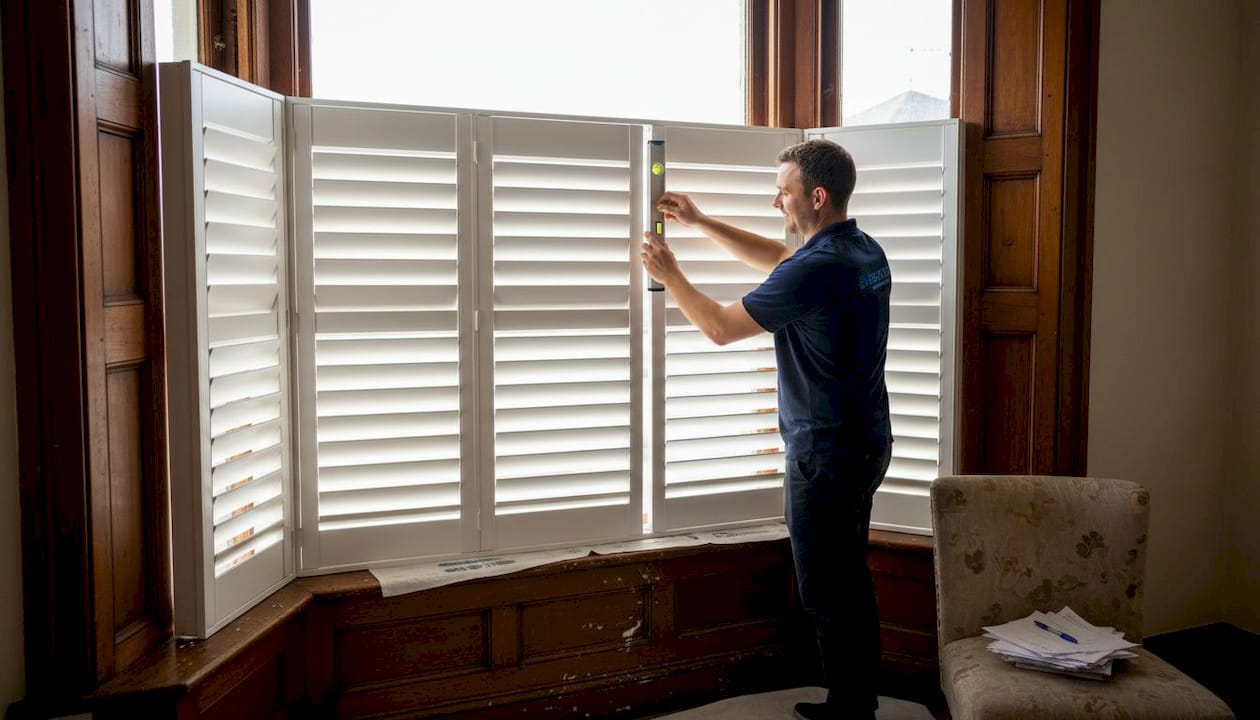
Pro Tip: If you are a landlord or selling your home, keep a dedicated compliance folder with certificates, product data sheets, and installer credentials. This documentation can accelerate property transactions and satisfy tenancy inspections without delay.
How regulations affect bespoke interior shutters
With the core safety standards established, this section translates them into practical guidance for anyone opting for bespoke interior shutters.
Bespoke shutters, by their very nature, are designed to fit windows that standard off-the-shelf products cannot accommodate. Arched frames, deep bay windows, and angled skylights all require custom engineering. This precision is one of the great strengths of made-to-measure shutters, but it also introduces specific compliance considerations that do not arise with mass-produced alternatives.
Custom shutters present unique compliance considerations in design and fitting, especially for child safety and fire risk mitigation. For unusual shapes, the documentation requirements are more detailed because standard test data may not directly apply. Your supplier should be able to provide evidence that the bespoke design has been assessed against the relevant standards.
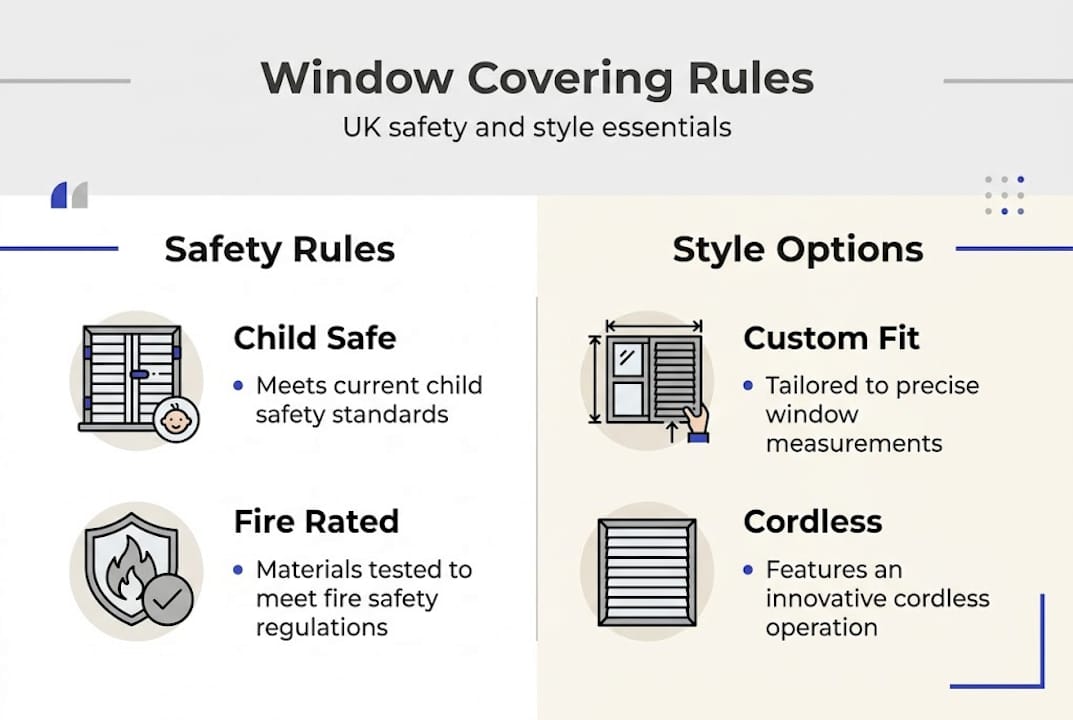
Material choice also plays a significant role in regulatory status. Here is an overview of how popular shutter materials align with key obligations:
| Material | Fire classification | Child safety notes | Regulatory considerations |
|---|---|---|---|
| Premium hardwood | Class C or better | Cordless recommended | Finish must meet fire standards |
| MDF with PP coating | Class B or better | Cordless recommended | Coating must be non-toxic |
| Composite | Class B or better | Cordless recommended | Verify supplier certification |
| PVC | Class B or better | Cordless recommended | Check fire standards for coverings |
When choosing window shutter materials, always ask your supplier for the fire classification certificate for the specific product you are ordering, not just a generic range certificate.
When briefing your installer or supplier, make sure you address the following:
- Confirm the window’s specific measurements and request a written record of how the bespoke design meets EN 13120.
- Specify whether the property has children or vulnerable adults, so the installer can recommend appropriate safety features.
- Ask about fire resistance ratings for the materials being used, particularly in rooms adjacent to kitchens or stairwells.
- Request a full compliance pack including product data sheets, fitting certificates, and any test reports.
- Clarify the warranty terms and whether ongoing compliance support is available if regulations change.
Our custom decorative shutters guide provides further detail on how we approach these considerations for every project we undertake.
Practical compliance tips for homeowners
Relating regulations to bespoke shutters is vital, but practical steps ensure lasting safety and compliance over the long term.
Compliance is not a single event that ends the moment your shutters are fitted. It is an ongoing responsibility, and the homeowners who manage it best are those who treat it as a structured process from the very start of their project.
Follow these steps from order to installation to ensure full compliance:
- Verify installer credentials before signing any contract. Ask for proof of trade association membership and current liability insurance.
- Request a written specification that references the relevant standards (EN 13120, EN 16433, EN 16434) and confirms how your bespoke design meets them.
- Obtain all product documentation at the point of delivery, including fire classification certificates and child safety device information.
- Arrange a post-installation inspection to confirm that all fittings are secure, operating mechanisms function correctly, and safety devices are properly engaged.
- File all documentation in a dedicated folder, both physical and digital, for easy retrieval during property sales, tenancy renewals, or insurance reviews.
As homeowners should regularly review fittings and keep compliance certificates on record, building this habit into your annual home maintenance routine is genuinely worthwhile.
For multi-generational households or homes with young children, consider specifying cordless shutter systems throughout. These eliminate the strangulation risk associated with looped cords and reduce the ongoing compliance burden considerably. Older adults and those with limited dexterity also benefit from the simpler operation of cordless designs.
If you are also thinking about the broader performance of your window coverings, it is worth noting that compliant shutters can contribute meaningfully to energy efficiency window coverings improvements, which the government actively encourages through its energy efficiency improvements guide.
Pro Tip: Schedule an annual compliance review every autumn, before the heating season begins. Check for wear on operating mechanisms, loose fittings, and any signs that safety devices have been bypassed or damaged. A 20-minute check can prevent significant problems down the line.
Why compliance is a long-term investment, not a one-off box-tick
Most homeowners approach window covering compliance as a hurdle to clear once and then forget. We understand that impulse. Regulations can feel abstract when you are focused on choosing the perfect louvre width or deciding between painted hardwood and a natural timber finish. But this mindset carries real risk.
Regulations evolve. Standards that were current five years ago may have been superseded, and a shutter installation that was fully compliant at the time of fitting may need updating to remain so. This matters enormously when you come to sell or let your property, because buyers and tenants are increasingly informed about these obligations.
The popularity of shutters has grown precisely because homeowners recognise their long-term value. Compliance is part of that value. Documented, up-to-date compliance signals to buyers, insurers, and letting agents that your home has been maintained to a high standard. It is not red tape. It is proof of quality. Homeowners who treat compliance as a living responsibility, rather than a one-time formality, consistently find that it pays dividends in property value, insurability, and family safety.
Get peace of mind with expert-fitted shutters
If you want full confidence that your new shutters will be as safe and compliant as they are beautiful, Shutter World is here to help.

We design and install bespoke shutters with UK regulations built into every stage of the process, from the initial survey through to the final fitting certificate. Our team advises on material choices, safety features, and documentation so you never have to navigate compliance alone. Explore the hidden benefits of bespoke shutters and discover our full range of internal window shutters, including our beautifully crafted plantation shutters for UK homes. Contact us today for a free compliance review and a no-obligation custom quote.
Frequently asked questions
Are there specific UK laws for child safety and window shutters?
Yes, UK standards mandate that new window coverings must include child safety features, particularly for corded and chain-operated designs. Mandatory child safety standards cover all new window coverings sold and installed in the UK.
What certificates should I get from my shutter installer?
You should receive fitting certificates confirming safety and compliance with relevant standards, plus product information for record-keeping. Installers should provide documentation of regulatory compliance at the point of installation.
Do window covering regulations differ between England, Scotland, and Northern Ireland?
The main safety rules are UK-wide, but there can be small local variations, so always check with your installer and the most current standards. Minor regional differences in implementation exist, particularly around building regulations and planning conditions.
Do regulations apply to window shutters in new-build homes?
Yes, developers and homeowners must ensure new installations follow the latest UK window covering standards for safety and quality. New builds must comply with up-to-date window covering standards at the point of handover and beyond.
Recommended
- 6 Most Effective Child Friendly Window Treatments
- Bespoke interior design window solutions for unique UK homes
- Best Window Coverings for Developers: Stylish Choices for UK Homes | Shutter World
- Layering Window Treatments: Modern UK Ideas for 2025 Homes | Shutter World
- Security Lighting: Conductive Electric Home Safety