
UV protection shutters: Enhance your windows with style

UV protection shutters
TL;DR:
- Standard window treatments allow harmful UV rays to pass through, causing fading and damage over time. UV protection shutters, especially external ones, provide superior physical barriers that intercept solar radiation before it reaches furnishings. A layered approach combining bespoke shutters with window films offers the most effective and long-lasting home protection.
Many homeowners assume that a pair of curtains or a set of off-the-shelf blinds is more than enough to guard their interiors from the sun. Yet the reality is far more nuanced. Ordinary window treatments allow a significant proportion of harmful ultraviolet radiation to pass straight through, slowly fading your furnishings, damaging your flooring, and raising indoor temperatures without you ever noticing. According to Department of Energy guidance, external shades and shutters offer superior UV and solar gain protection compared to internal solutions. This article explains why UV protection shutters deserve serious consideration, how they work, and how to choose the right fit for your home.
Table of Contents
- Why UV protection matters for your home
- How UV protection shutters work
- Shutters vs alternative UV solutions: What works best?
- Choosing custom-made shutters for unique UK windows
- Our perspective: Why a layered, tailored approach works best
- Ready to enhance and protect your home?
- Frequently asked questions
Key Takeaways
| Point | Details |
|---|---|
| Comprehensive UV defence | Shutters prevent fading and heat by blocking UV rays before they enter your home. |
| Custom fit for all windows | Bespoke shutters protect even tricky windows like bays and arches in UK homes. |
| Better comfort and savings | UV protection shutters lower cooling costs and maintain a comfortable indoor environment. |
| Combine solutions for best results | Layered strategies using both shutters and films offer the highest level of protection. |
Why UV protection matters for your home
Most people associate sun damage with sunburn and think little of what is happening inside their homes every single day. Ultraviolet rays travel through standard glazing and silently attack everything in their path. The effects are cumulative and often irreversible.
Consider what UV exposure actually costs you over time:
- Soft furnishings and upholstery fade noticeably within a few years of direct sun exposure, forcing expensive replacements
- Hardwood and laminate flooring bleach unevenly, creating patchy, aged-looking surfaces that are costly to restore
- Artwork, photographs, and cherished mementoes suffer irreversible colour degradation when exposed without protection
- Curtains and blinds themselves weaken and discolour faster than the surfaces they are supposed to protect
Beyond fading, solar gain is an equally pressing concern. When sunlight pours through unprotected windows, it warms your rooms far beyond comfortable levels in summer. This forces you to run fans or air conditioning units for longer, pushing up your energy bills unnecessarily. According to Department of Energy guidance, window films and exterior shutters significantly reduce solar heat gain and UV damage, making them among the most effective investments you can make for your home.
“Protecting your interiors from UV is not just about preserving aesthetics. It is about safeguarding your investment in your home and the comfort of everyone who lives there.”
The benefits of UV protection shutters extend well beyond what most window treatments can offer. Unlike thin fabrics or basic roller blinds, well-fitted shutters form a physical barrier that intercepts solar radiation before it reaches your furnishings. Understanding the UV risks and shutter solutions available to you is the first step towards making a genuinely informed decision about your windows.
How UV protection shutters work
Understanding the mechanics behind UV protection shutters helps you appreciate why they outperform most alternatives. At the most fundamental level, shutters work by physically blocking, reflecting, or absorbing solar radiation before it can penetrate your living space. The degree of protection depends on several factors, including placement, material, and the precision of the fit.
Internal versus external shutters
Internal shutters, fitted within your window reveal, intercept sunlight after it has already passed through your glazing. They are highly effective at reducing glare and limiting the amount of UV that reaches your furnishings, and they are also the most practical solution for most UK homes where external fitting is restricted by planning rules or building construction. External shutters stop solar radiation before it even reaches your glass, which is why external solar-control shutters are considered the gold standard for preventing heat build-up.
How materials influence performance
The material your shutters are made from plays a significant role in determining how well they block UV and manage solar heat. Here is a quick overview:
| Material | UV blocking ability | Thermal performance | Durability |
|---|---|---|---|
| Hardwood | High when painted or stained | Good | Excellent with care |
| MDF with polypropylene coating | Very high | Very good | Excellent, moisture-resistant |
| Aluminium | Very high | Excellent | Outstanding |
| Composite | High | Very good | Outstanding, low maintenance |
Hardwood shutters such as those in our Montana range offer outstanding UV resistance when finished correctly. The MDF-based Seattle range, with its extruded polypropylene coating, delivers superb moisture resistance and UV-blocking performance, making it an ideal choice for south-facing rooms and conservatories.
The importance of fit
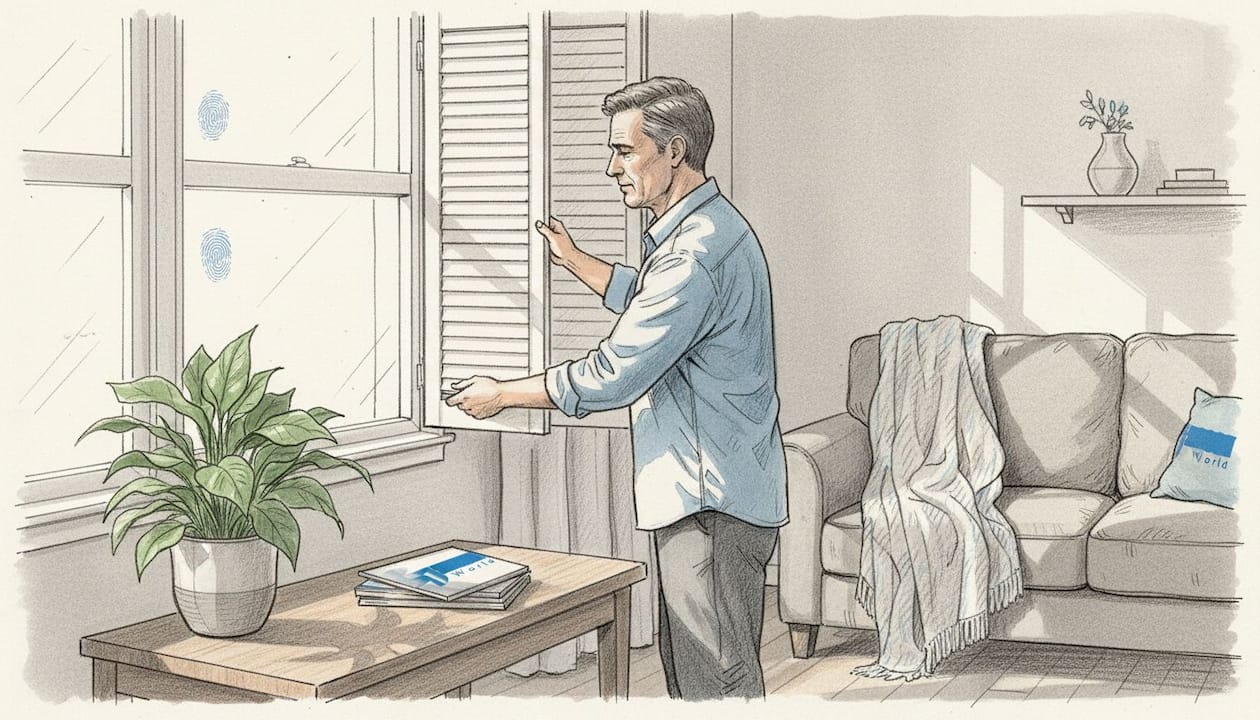
A shutter that does not sit perfectly within its frame is a shutter that allows UV rays to sneak through the gaps. Meticulous measurement and bespoke engineering are not optional luxuries here; they are essential to achieving reliable protection. The shutter mechanisms for UV defence only perform at their best when every panel closes flush against the window reveal with no gaps.
Pro Tip: When assessing shutter materials and effectiveness, always ask whether the louvre angle can be adjusted precisely. A full 180-degree louvre adjustment allows you to redirect light upwards towards the ceiling, flooding the room with natural brightness without any direct UV striking your furnishings.
Shutters vs alternative UV solutions: What works best?
With so many window treatments on the market, it is worth looking honestly at how each option performs when UV protection is a priority.
- Window films are applied directly to glazing and can block a very high percentage of UV rays. They are relatively affordable and unobtrusive. However, they do nothing for privacy, offer limited solar heat control in isolation, and require professional replacement once they begin to bubble or peel.
- Roller blinds and cellular shades offer modest UV protection at best. Even blackout variants allow UV to enter around the edges when not fitted with precision. They lack the rigidity and thermal mass to make a significant impact on solar gain.
- Heavy curtains provide reasonable UV protection when fully closed but offer nothing when open, which is most of the day for most homeowners. They also trap heat close to the window, which can cause condensation and fabric degradation over time.
- UV protection shutters stand apart by combining structural UV defence with privacy control, light management, and insulating properties within a single, elegant solution.
“Window films applied to glazing can block most UV, but shutters add fit, style, and additional solar and privacy benefits that films simply cannot match.”
Here is how the main options compare at a glance:
| Solution | UV protection | Solar gain reduction | Privacy | Aesthetics | Longevity |
|---|---|---|---|---|---|
| Window film | High | Moderate | None | Minimal | 5-10 years |
| Roller blinds | Low to moderate | Low | Moderate | Basic | 3-7 years |
| Curtains | Moderate when closed | Low | Good when closed | Variable | 5-10 years |
| UV protection shutters | Very high | High | Excellent | Premium | 20+ years |
For many UK homes, the most sensible approach combines window films with interior shutters. The film handles the UV filtering at glazing level, while the shutter manages solar gain, privacy, and temperature far more effectively than either solution alone. The energy efficiency of shutters is particularly impressive in south-facing or west-facing rooms, where afternoon sun would otherwise overheat spaces and drive up cooling costs throughout summer. Exploring the shutter advantages in detail will show you just how much value a well-specified shutter adds beyond simple UV defence.
Choosing custom-made shutters for unique UK windows
One of the most common challenges UK homeowners face is finding window treatments that actually fit. Victorian terraces, Edwardian semis, and modern architect-designed homes all share one trait: non-standard windows. Bay windows, arched frames, circular porthole windows, angled roof lights, and slender lancet windows are all common in British properties, and none of them work well with off-the-shelf solutions.
This is where bespoke craftsmanship becomes genuinely transformative rather than merely aspirational. Custom-made shutters are engineered to your exact window dimensions, so every panel fits flush, every louvre angle aligns correctly, and every edge sits tight against the frame. The result is not just a better-looking window treatment; it is one that actually performs as intended, with no gaps where UV can sneak through.
Key considerations when choosing custom shutters for unusual windows include:
- Bay windows require carefully jointed panels that follow the angles of the bay precisely, maintaining both aesthetic continuity and effective light control across all sections
- Arched windows can be fitted with shaped top panels or static shaped sections that complement the arch while keeping the operational louvres below fully functional
- Circular and porthole windows are fitted with precisely shaped panels that rotate or open as a unit, preserving the visual character of the window while offering full UV control
- Roof lights and skylights benefit from shutters designed to lie flat against the glazing plane, reducing solar gain dramatically in loft conversions and sunrooms
- Conservatory roofs and side panels can be fitted with specialised shutters that manage both UV and temperature far more effectively than blinds or films alone
According to Department of Energy guidance, bespoke shutters provide high UV and solar control benefits especially for uniquely shaped or large windows where standard solutions leave gaps and underperform. You can explore all the options for covering unusual window shapes and discover the full range of bespoke shutter options available to suit your home’s character.
Pro Tip: For south-facing bay windows, consider specifying a mid-rail on your shutters. This allows you to close the lower panels for privacy and UV protection at floor level while keeping the upper panels open for natural light, giving you precise daily control without sacrificing comfort or style.
Our perspective: Why a layered, tailored approach works best
After more than 25 years of working with UK homeowners, we have come to a firm conclusion: the biggest mistake people make is treating UV protection as a single-solution problem. They install a window film, or they fit a set of shutters, and they assume the job is done. In reality, the most effective approach almost always involves layers.
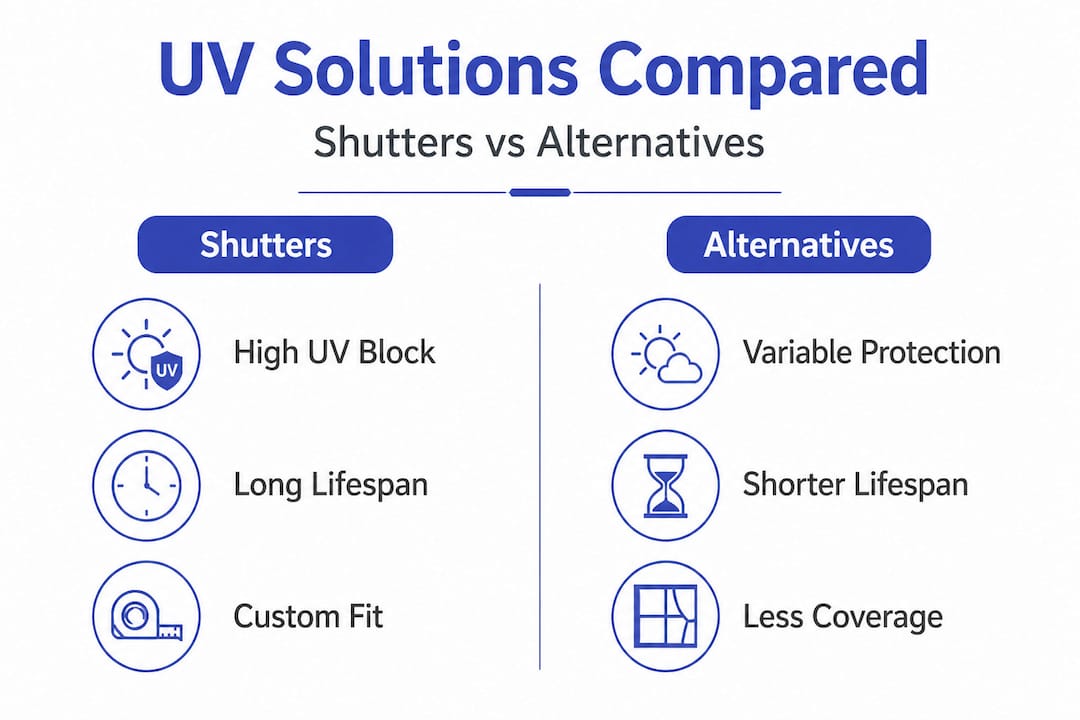
Think of it this way. A window film handles the UV filtering at the glass itself, catching the wavelengths that cause the most fading before they enter the room. A well-fitted bespoke shutter then manages the solar heat gain, controls the privacy, and delivers the aesthetic quality that transforms a window from a functional aperture into a genuine design feature. Neither solution alone achieves what both achieve together.
We also see homeowners underestimate the importance of tailoring their approach to each room rather than treating the whole house the same way. A north-facing bedroom has very different requirements from a south-facing kitchen diner. The latter may need both film and shutters working together, while the former may need shutters primarily for privacy and insulation rather than UV defence. Layered strategies genuinely do address both aesthetics and total UV reduction in ways that single methods cannot.
What we find equally telling is how often homeowners overlook the maintenance dimension. Even the finest shutters need attention over time to remain fully effective. Knowing how to protect shutters from sun and maintaining them properly ensures your investment continues to perform at its best for decades. A shutter with a warped panel or a stiff louvre is not just less attractive; it is less protective, and that matters when you have invested in quality.
Our advice is always to resist the temptation to pick the cheapest single solution and instead invest thoughtfully in a layered, tailored approach that serves your specific home, your specific windows, and your specific lifestyle. The long-term savings in fading, energy costs, and replacement cycles make that investment genuinely worthwhile.
Ready to enhance and protect your home?
If this article has prompted you to think more seriously about how well your current window treatments are actually protecting your home, that is exactly the right response. The good news is that achieving outstanding UV protection and beautiful interiors at the same time is entirely possible with the right expertise behind you.
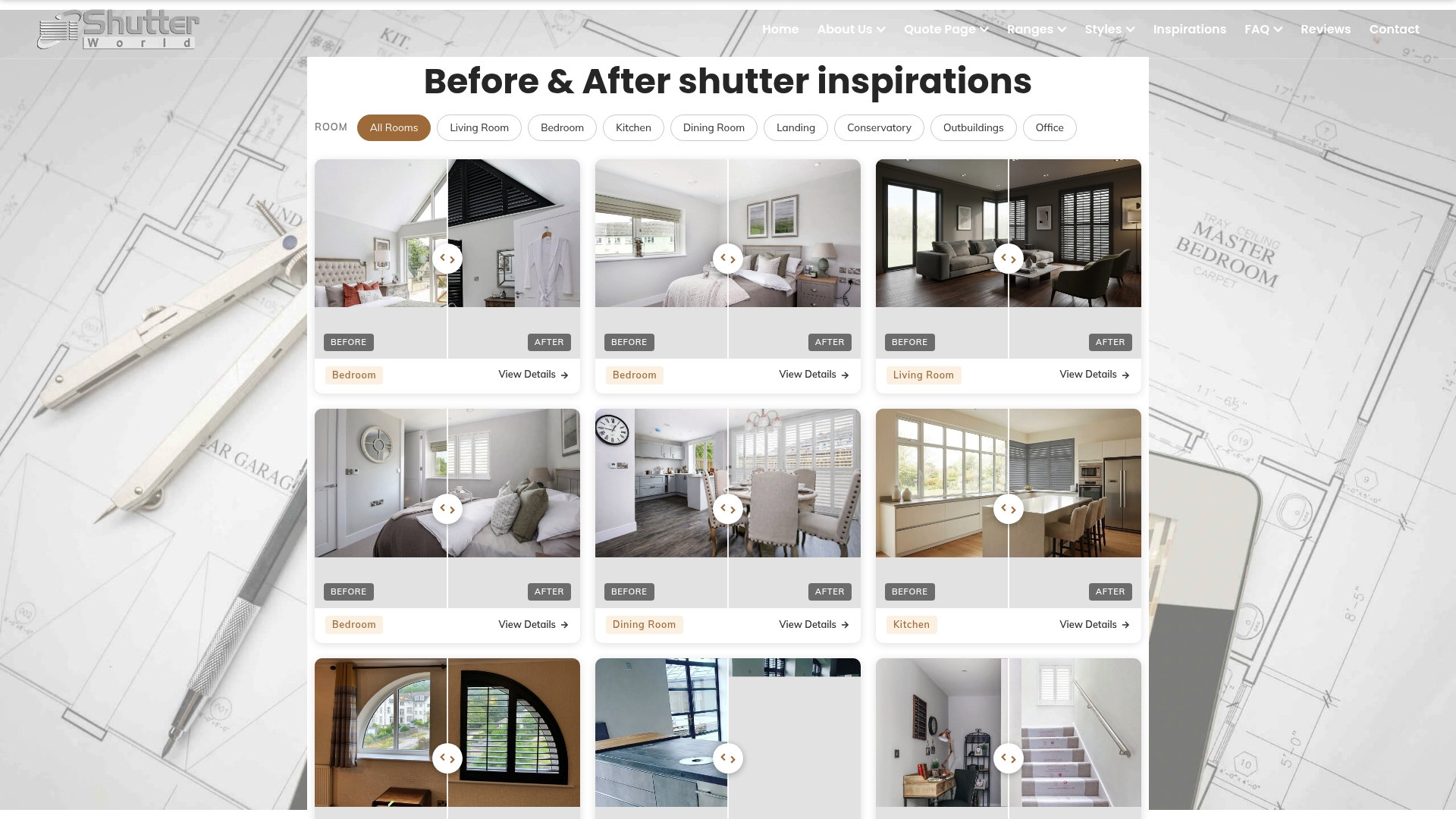
At Shutter World, we bring over 25 years of bespoke shutter expertise to every home we work with. Whether your windows are straightforward or architecturally complex, we design, manufacture, and install shutters that fit flawlessly and perform brilliantly. Explore the hidden benefits of custom shutters and get to know everything you need via our complete UK homeowner shutter guide. Book your free in-home survey today and let our team show you exactly what is possible for your home. ✨
Frequently asked questions
Do shutters really block all UV rays?
While shutters greatly reduce UV exposure, pairing them with window films can offer near-total UV protection for sensitive areas. According to Department of Energy guidance, window films plus shutters provide the highest achievable UV protection for your home.
Are custom-made shutters necessary for irregular UK windows?
Yes, bespoke shutters are by far the best solution for uniquely shaped windows such as bay windows and arches, as they fit precisely with no gaps. According to Department of Energy guidance, bespoke shutters provide high UV control, especially for unique windows where standard products fail.
Will UV protection shutters help reduce my energy bills?
Shutters that block solar gain significantly lower indoor temperatures and can reduce summer cooling costs over the course of a season. Window coverings that reduce solar gain consistently cut cooling bills, making shutters a sound long-term financial investment.
How do I care for UV protection shutters to keep them effective?
Clean your shutters regularly with a soft, damp cloth and inspect each panel for any warping or gaps around the frame. Maintaining a proper, flush fit is essential to preserving full sunlight-blocking performance year after year.