
Victorian bay window shutters: style, privacy and function

Victorian bay window shutters
Victorian bay windows are stunning architectural features, but they often leave homeowners scratching their heads about how to dress them stylishly without sacrificing privacy or light control. Off-the-shelf curtains and blinds rarely fit these angled, multi-faceted shapes properly, creating awkward gaps and uneven coverage. Bespoke shutters offer an elegant solution, tailored precisely to your bay window’s unique geometry while enhancing your home’s period charm. This guide walks you through selecting, measuring, installing, and maintaining shutters that transform your Victorian bays into functional, beautiful focal points.
Table of Contents
- Key takeaways
- Understanding Victorian bay window shutters
- Measuring and fitting bespoke shutters on bay windows
- Choosing styles and materials for Victorian bay window shutters
- Maintaining your Victorian bay window shutters for lasting beauty
- Enhance your home with bespoke bay window shutters
- Frequently asked questions about Victorian bay window shutters
Key Takeaways
| Point | Details |
|---|---|
| Bespoke fit for bays | Bespoke shutters are tailored to the exact geometry of Victorian bay windows for precise coverage where standard coverings fail. |
| Boost privacy and light | Louvres can be adjusted to block street views while still admitting natural light. |
| Enhance period style | Custom shutters preserve historical character while delivering modern functionality for living spaces. |
| Improve energy efficiency | A solid insulating barrier creates an air pocket that reduces heat loss and enhances room warmth. |
| Straightforward maintenance | Shutters are easy to clean and require periodic checks to keep operation smooth. |
Understanding Victorian bay window shutters
Victorian bay windows typically feature angled or multi-faceted shapes that protrude from the main wall, creating a distinctive architectural element. These windows often include three, four, or five panels set at varying angles, making standard window coverings nearly impossible to fit properly. Understanding shutters for period homes reveals why bespoke solutions are essential for these complex shapes.
Bespoke shutters preserve your home’s historical character while delivering modern functionality. Unlike generic blinds that hang limply or curtains that bunch awkwardly in corners, custom shutters follow every angle precisely. Each panel is measured and crafted to match your bay’s exact dimensions, ensuring seamless operation and a polished appearance that respects the original architectural intent.
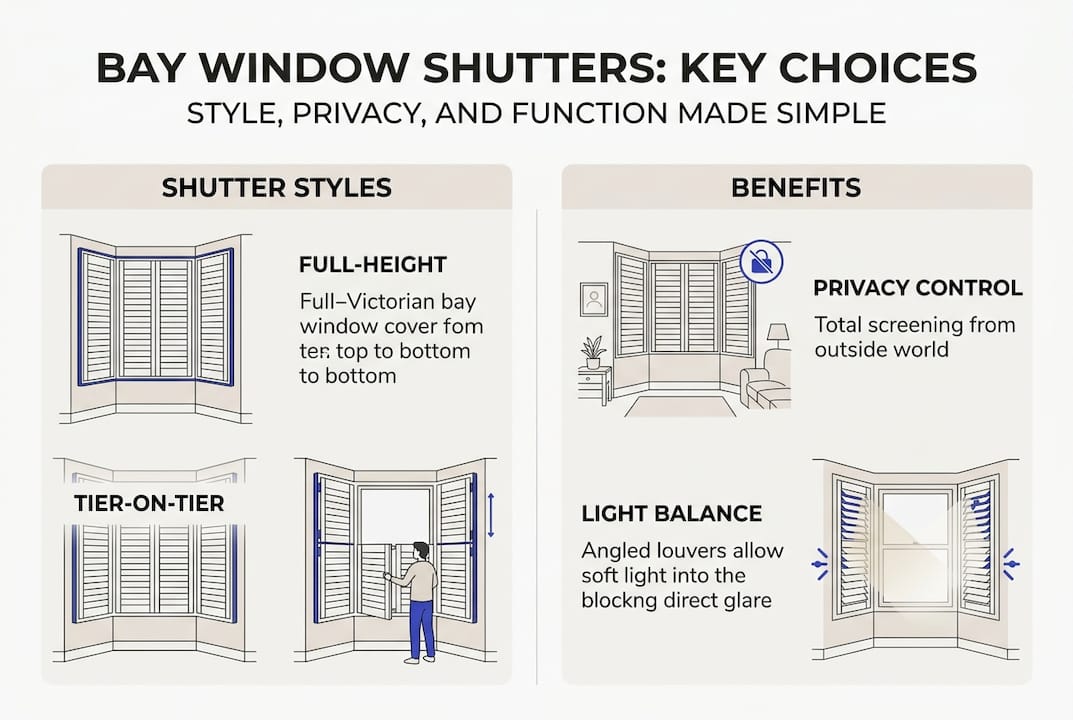
Privacy control becomes effortless with shutters. You can adjust louvres to block street-level views while still allowing natural light to flood your room. This flexibility is particularly valuable in Victorian terraces where homes sit close to pavements. Morning light can stream in through tilted slats, whilst evening privacy is secured with fully closed panels.
Insulation benefits matter significantly in period properties. Victorian homes often have single-glazed windows and draughty frames. Shutters add a solid barrier against heat loss, creating an air pocket between the window and your room. This thermal buffer reduces energy bills and improves comfort during cold months, making your home more sustainable without compromising its character.
Common shutter styles that complement Victorian architecture include:
- Full-height shutters covering the entire window for maximum privacy and insulation
- Café-style shutters on the lower half, preserving upper window views whilst screening street level
- Tier-on-tier shutters with independently operating top and bottom sections for versatile light control
- Plantation shutters featuring wider louvres that suit larger Victorian bay panels
Pro Tip: Choose shutter colours that echo your home’s existing woodwork or interior palette. White and cream shutters brighten rooms and create a classic look, whilst painted or stained finishes add warmth and character that harmonises with period features like cornicing and skirting boards.
Measuring and fitting bespoke shutters on bay windows
Accurate measurements form the foundation of successful shutter installation. Bay windows present unique challenges because each panel sits at a different angle, and even minor measurement errors multiply across multiple sections. Accurate measurements of bay windows are crucial for bespoke shutter fit and function, ensuring panels operate smoothly and look seamless.
Follow this process for precise bay window measurements:
- Measure each window panel separately, recording width, height, and depth at three points (top, middle, bottom) to account for irregularities in older frames.
- Note the angle where each panel meets its neighbour, using a protractor or angle finder for accuracy.
- Check the recess depth to determine whether shutters will fit inside the window frame or require face-mounting outside it.
- Document any obstacles like window handles, locks, or protruding sills that might affect shutter operation.
- Photograph your bay from multiple angles to provide visual context for your shutter supplier.
Professional measuring services eliminate guesswork and guarantee accuracy. Many bespoke shutter companies offer free home surveys where experienced fitters assess your windows, discuss style preferences, and provide exact specifications. This investment in professional expertise prevents costly mistakes and ensures your shutters fit perfectly from day one.
Choosing the right frame style accommodates bay window geometry. L-shaped frames work well for angled bays, creating neat joints where panels meet. Continuous frames run along the entire bay perimeter, providing a unified appearance. Post frames divide each window section with vertical supports, offering structural stability for larger bays whilst maintaining clean sightlines.
Smooth operation within corners and angled edges requires careful hinge placement and clearance planning. Shutters must open fully without catching on adjacent panels or window frames. Quality fittings and precise installation ensure louvres tilt smoothly and panels fold back neatly, maximising your usable window space.
Typical installation timelines span four to eight weeks from initial measurement to final fitting. Custom manufacturing takes time as each shutter is crafted to your exact specifications. Factor in potential delays if you choose specialist finishes or materials. Most professional installations complete within a single day, though complex bays with multiple panels may require additional time.
Pro Tip: Request a detailed installation plan before work begins. Understanding how fitters will access your bay, protect your furnishings, and manage any necessary frame adjustments helps you prepare your home and set realistic expectations for the installation day.
How to measure bay windows UK guide and how to measure window shutters bespoke fit provide additional resources for homeowners considering DIY measurements or wanting to understand the process before consulting professionals.
Choosing styles and materials for Victorian bay window shutters
Style selection dramatically impacts both aesthetics and functionality. Full-height shutters create a grand, cohesive look that suits formal reception rooms and provides maximum privacy. Café-style shutters cover only the lower portion, maintaining upper window views whilst screening street-level sightlines, ideal for kitchens and dining areas. Tier-on-tier shutters offer ultimate flexibility with independently operating top and bottom sections, letting you adjust privacy and light control separately throughout the day.
Different shutter materials and styles suit varied décor goals, with plantation shutters a popular choice for balancing elegance and function. Plantation shutters feature wider louvres, typically 63mm to 89mm, that suit Victorian bay windows’ larger panes whilst maximising light flow and creating an airy, sophisticated appearance.
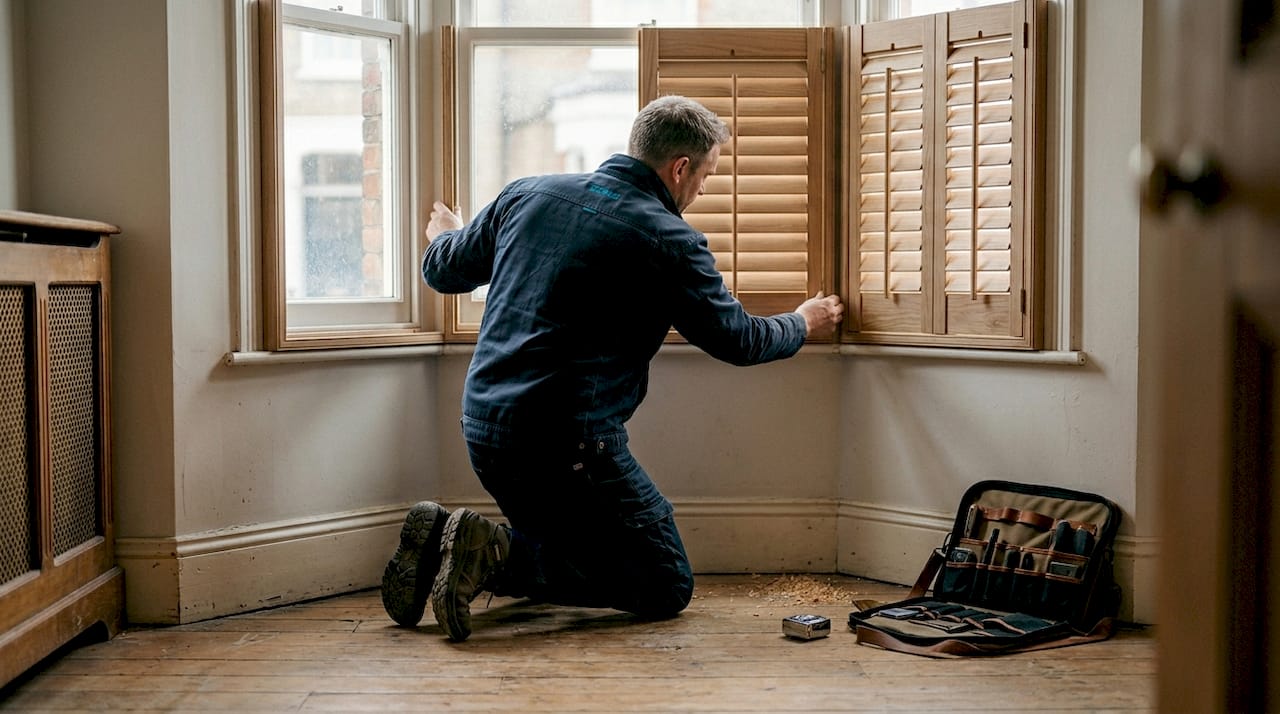
Material choices affect durability, maintenance, and aesthetics:
| Material | Advantages | Considerations |
|---|---|---|
| Hardwood | Premium appearance, natural grain, highly durable, can be stained or painted | Higher cost, requires occasional maintenance, heavier weight |
| MDF composite | Cost-effective, moisture-resistant, smooth finish, lightweight, stable in varying temperatures | Less authentic appearance than wood, cannot be restained, may lack character |
| Engineered wood | Balances wood aesthetics with enhanced stability, resists warping, good value | Mid-range cost, finish quality varies by manufacturer |
Finishes significantly influence how shutters integrate with Victorian interiors. Painted finishes in whites, creams, and soft greys complement period mouldings and create bright, fresh spaces. Natural wood stains in oak, walnut, or mahogany tones add warmth and richness that harmonises with traditional furniture and exposed woodwork. Distressed or antiqued finishes enhance period authenticity, particularly in restored Victorian homes where modern perfection might feel out of place.
Louvre size controls light and privacy balance. Smaller louvres (47mm) provide tighter closure and enhanced privacy but restrict light flow when open. Larger louvres (89mm) maximise natural light and create contemporary elegance whilst offering adequate privacy when angled correctly. Consider your room’s primary function and your privacy needs when selecting louvre dimensions.
Colour selection extends beyond simple aesthetics. Light colours reflect natural light, making rooms feel larger and brighter, particularly valuable in north-facing bays. Dark colours create dramatic contrast and suit bold, contemporary interiors within period shells. Matching shutter colours to existing woodwork creates seamless integration, whilst contrasting colours make shutters architectural features in their own right.
Pro Tip: Request material samples to view in your actual bay window before committing. Natural light, surrounding colours, and your home’s specific character all influence how materials and finishes appear. What looks perfect in a showroom might feel different in your space, so testing samples ensures you make choices you will love for years.
Bay windows and window shutters to refresh your home showcase diverse style options and inspire design decisions that suit your Victorian property’s unique character.
Maintaining your Victorian bay window shutters for lasting beauty
Proper maintenance preserves your shutters’ appearance and functionality for decades. Cleaning methods vary by material but generally remain straightforward. Dust shutters weekly with a soft cloth or vacuum brush attachment, working along louvre slats to remove accumulated particles. For deeper cleaning, wipe painted or sealed shutters with a barely damp cloth and mild detergent, then dry immediately to prevent moisture damage.
Wood shutters benefit from occasional conditioning. Apply wood polish or conditioner annually to nourish natural timber and maintain its lustre. Avoid silicone-based products that create buildup and attract dust. MDF composite shutters require less intensive care but still need regular dusting and occasional damp wiping to maintain their smooth finish.
Paint touch-ups address minor chips and scratches before they become noticeable. Keep leftover paint from your original installation for quick repairs. Clean the damaged area, apply a thin coat with a fine brush, and feather the edges to blend seamlessly. For larger damage, consult your shutter supplier about professional refinishing services.
Moisture management prevents warping and deterioration in Victorian homes where condensation and dampness are common. Ensure adequate ventilation in rooms with shutters, particularly bathrooms and kitchens. Wipe condensation from shutters promptly during cold weather. If you notice persistent moisture issues, address underlying problems like inadequate heating or poor ventilation before they damage your shutters.
Hardware inspection catches problems early:
- Check hinges for looseness or squeaking, tightening screws and applying light lubricant as needed
- Test louvre tilt rods to ensure smooth operation without sticking or excessive force
- Examine magnetic catches or latches for proper alignment and secure closure
- Look for paint buildup around moving parts that might impede operation
Seasonal adjustments accommodate wood’s natural movement in response to temperature and humidity changes. Slight expansion during humid summer months or contraction in dry winter conditions is normal. If panels become difficult to close or louvres bind, minor hinge adjustments usually resolve the issue. Persistent problems may indicate more significant moisture issues requiring professional assessment.
Regular maintenance extends the life and appearance of bespoke shutters on period windows. Establishing simple routines prevents major problems and keeps your investment looking pristine. Most maintenance tasks take just minutes and require no special tools or expertise.
Pro Tip: Schedule an annual maintenance review each spring to inspect shutters thoroughly, address any minor issues, and prepare them for the year ahead. This proactive approach catches problems whilst they remain small and inexpensive to fix, avoiding costly repairs or premature replacement. Shutter maintenance tips provides detailed guidance for keeping your shutters in optimal condition.
Enhance your home with bespoke bay window shutters
Transforming your Victorian bay windows with bespoke shutters combines period authenticity with modern practicality. Shutter World specialises in custom solutions for complex window shapes, ensuring your shutters fit perfectly and operate flawlessly.

Our expert team measures, designs, and installs bespoke internal window shutters tailored precisely to your home’s unique architecture. Whether you need full-height shutters for maximum privacy, café-style solutions for kitchen bays, or tier-on-tier flexibility for living spaces, we offer materials and finishes that complement your Victorian property’s character. From initial consultation through professional installation, we guide you towards shutters that enhance style, improve privacy, and deliver lasting value. Explore our bay windows bespoke shutters or discover our popular plantation shutters installations to see how custom solutions transform homes throughout the UK.
Frequently asked questions about Victorian bay window shutters
How long does bespoke shutter installation take?
Custom manufacturing typically requires four to eight weeks from final measurements to delivery. Installation itself usually completes within one day for standard bays, though complex multi-panel configurations may need additional time. Your supplier provides specific timelines based on your chosen materials and finishes.
Can shutters increase my home’s energy efficiency?
Yes, shutters create an insulating air gap between your window and room, reducing heat loss through glass and frames. This thermal barrier is particularly effective in Victorian homes with single glazing, potentially lowering heating costs whilst improving comfort during cold months.
Are plantation shutters suitable for all bay window shapes?
Plantation shutters adapt well to most bay configurations, including angled, curved, and multi-faceted designs. Their wider louvres suit larger Victorian window panes whilst maintaining elegant proportions. Bespoke manufacturing ensures proper fit regardless of your bay’s specific geometry.
What is the average cost range for bespoke Victorian bay window shutters?
Prices vary significantly based on materials, size, and complexity. Expect MDF composite shutters to start around £250 per square metre, whilst premium hardwood options range from £400 to £600 per square metre. Complex bay configurations with multiple angles typically cost more due to increased manufacturing precision required.
Do I need professional help to measure my bay windows?
Professional measuring is strongly recommended for bay windows due to their complex angles and potential irregularities in period properties. Experienced fitters identify issues that affect installation and ensure accurate specifications, preventing costly mistakes and guaranteeing proper fit and operation.