
Waterproof shutters for West Yorkshire homes

Waterproof shutters for West Yorkshire
TL;DR:
- Waterproof shutters made from polymer composites, ABS, or polycarbonate withstand high humidity and temperature cycling in West Yorkshire’s damp environments. Proper hardware, such as marine-grade stainless steel or nylon polymer, is essential to ensure long-term durability and avoid corrosion, especially in moisture-prone rooms. Features like split-tilt rails and Perfect Fit designs enhance ventilation, privacy, and ease of installation in region-specific homes.
Waterproof shutters are moisture-resistant window coverings engineered from polymer composites, ABS, or polycarbonate materials to withstand prolonged humidity, steam, and temperature cycling without warping, yellowing, or corroding. For homeowners across West Yorkshire, where frequent humidity and dampness create persistent challenges for standard window treatments, these shutters deliver both practical protection and refined interior style. Unlike fabric blinds or standard PVC roller shades, waterproof window shutters combine louvre control, corrosion-proof hardware, and durable finishes that genuinely stand the test of time. Shutterworld, based in Ossett, West Yorkshire, has spent over 25 years helping homeowners find the right solution for exactly these conditions.
Which materials make shutters truly waterproof in humid environments?
The material a shutter is made from determines everything: its lifespan, its appearance after five years, and whether it survives a steamy bathroom or a condensation-prone kitchen window. Three materials dominate the waterproof shutter market, and they are not equal.
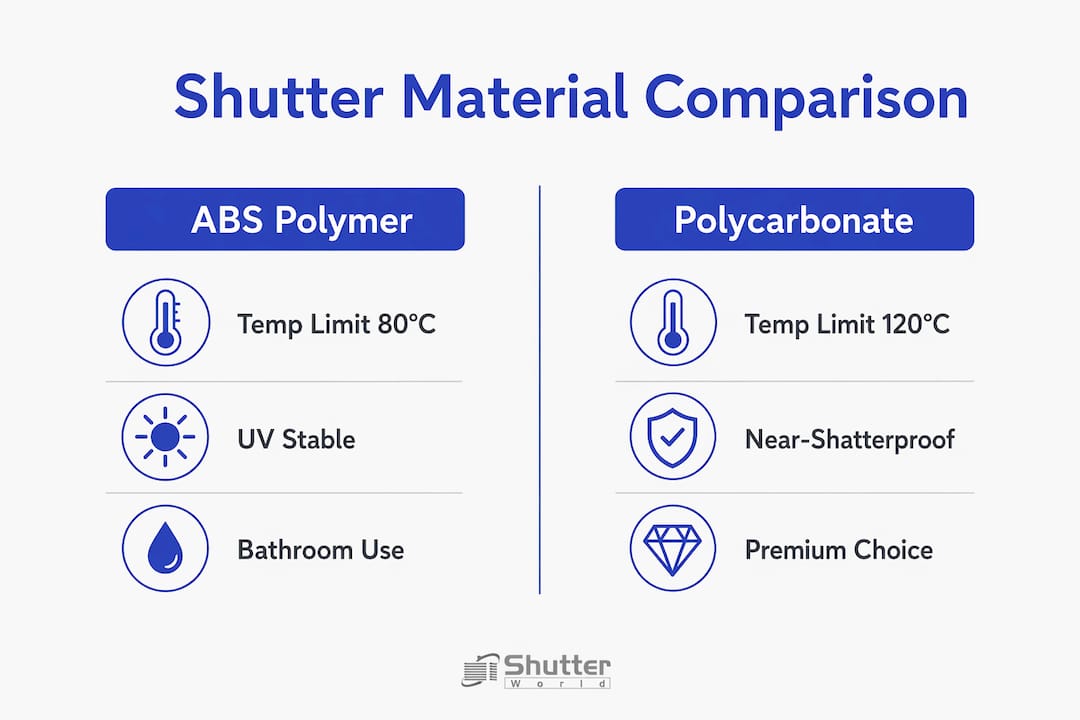
ABS polymer is the workhorse choice for most West Yorkshire bathrooms. ABS polymer shutters handle temperatures up to 80°C and carry built-in UV stabilisers, making them well suited to shower-adjacent windows that are not in direct sunlight. They offer better impact resistance than standard PVC and hold their colour reliably over years of steam exposure. For most homeowners, ABS represents the optimal balance of cost and durability.
Polycarbonate sits at the premium end. Polycarbonate shutters withstand temperatures up to 120°C and offer near-shatterproof strength with superior UV stability. If your bathroom or kitchen faces south or west and receives direct afternoon sun, polycarbonate is the correct specification. The higher thermal tolerance prevents the micro-warping that can occur in sun-facing windows over time. For guidance on matching shutter materials to sun exposure, Shutterworld’s sunlight control guide is worth consulting.
Standard residential PVC is the option most commonly oversold on price. Standard PVC tends to yellow with UV exposure and has a lower temperature stability of approximately 70°C, making it the weakest performer in high-moisture, sun-exposed areas. It is lighter and cheaper, but the degradation timeline is measurably shorter.
Hardware is where many otherwise good shutters fail. Zinc-plated components fail structurally within 6 to 18 months in wet conditions, while marine-grade stainless steel or solid nylon polymer hardware withstands years of exposure. This is not a minor detail. Every louvre pin, bracket, and hinge must be specified correctly from the outset.
| Material | Temperature limit | UV stability | Best application |
|---|---|---|---|
| ABS polymer | Up to 80°C | Good, with stabilisers | Bathrooms, shower-adjacent windows |
| Polycarbonate | Up to 120°C | Premium | South/west-facing, direct sunlight |
| Standard PVC | Up to 70°C | Poor, yellows over time | Low-moisture, shaded rooms only |
| Hardware: nylon polymer | N/A | Excellent | All wet environments |
| Hardware: marine-grade 316 SS | N/A | Excellent | Direct spray, coastal or high humidity |
Pro Tip: Always ask your supplier to confirm hardware specification in writing before ordering. Specifying marine-grade 316 stainless steel or solid nylon polymer brackets at the point of purchase protects you from receiving zinc-plated components that will corrode within the first year.
How do waterproof shutters compare to other window treatments for wet rooms?
The comparison between waterproof shutters and alternative window treatments is not close once you account for long-term performance in moisture-prone rooms. Fabric blinds absorb steam and develop mould within months in a poorly ventilated bathroom. Aluminium blinds resist moisture better than fabric, but their slats trap water at the bottom rail and the mechanism corrodes in sustained humidity. Neither offers the louvre-tilt ventilation control that polymer shutters provide.
Faux wood shutters occupy a middle ground. They look convincing and resist light moisture, but most faux wood products use MDF cores with a painted finish. In a genuinely wet environment, that core can swell if the finish is breached. Solid injection-moulded polymer composites carry no such risk because there is no absorbent core to compromise.
Here is a direct comparison of the most common options:
- Polymer composite shutters: Fully waterproof, louvre tilt for ventilation and privacy, corrosion-proof with correct hardware, long lifespan, higher upfront cost
- Faux wood shutters: Moisture-resistant but not waterproof, attractive finish, unsuitable for direct steam or spray
- Aluminium shutters: Durable but prone to condensation pooling and mechanism corrosion in sustained humidity
- Fabric roller blinds: Affordable, zero moisture resistance, mould risk within months in bathrooms
- PVC roller shades: Water-resistant surface but zinc-plated brackets fail within 6 to 18 months in shower conditions
The functional advantage of polymer shutters over sealed roller blinds is significant. A roller blind, even a waterproof one, offers two states: open or closed. A polymer shutter with adjustable louvres lets you manage airflow, light, and privacy independently. In a West Yorkshire bathroom without a separate extractor fan, that ventilation control is genuinely useful for managing condensation.
What design features matter most for waterproof shutters in West Yorkshire?
Choosing the right material is only part of the decision. The design features built into a shutter determine how well it performs day to day in your specific home.
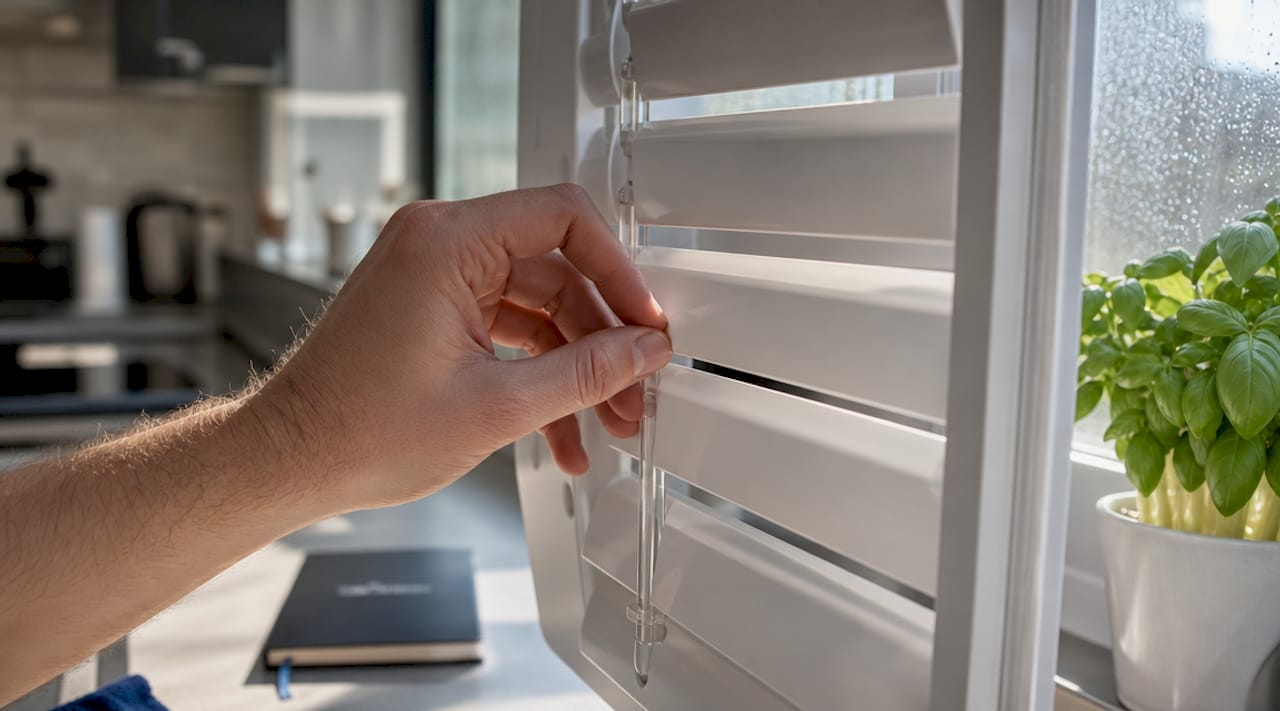
The split-tilt rail is the single most useful feature for moisture-prone rooms. Polymer composite shutters with split-tilt rails allow the upper louvres to open for air exchange while the lower louvres remain closed for privacy. This is particularly valuable in West Yorkshire homes where bathrooms often face neighbouring properties. You get ventilation without exposure, which is a combination that sealed blinds simply cannot offer.
Perfect Fit shutters are worth considering if your windows are uPVC framed, which is common across West Yorkshire’s housing stock. Perfect Fit shutters clip directly to uPVC frames without drilling, making them a practical water-resistant option for bathrooms and conservatories. There is no frame to seal around, which removes one potential point of moisture ingress.
When it comes to aesthetics, waterproof shutters enhance interior style while protecting window frames and walls from moisture damage. Colour options in polymer ranges typically include white, off-white, and a selection of contemporary greys, all of which complement the stone and brick interiors common in West Yorkshire properties. Slat sizes of 63mm or 89mm suit most standard window proportions.
Here are the key design decisions to work through before ordering:
- Choose split-tilt rail configuration for any room where ventilation and privacy must coexist
- Confirm whether Perfect Fit or a traditionally framed mount suits your window type
- Select slat size based on window height: 63mm for smaller windows, 89mm for larger spans
- Specify finish colour to complement existing room tones, particularly in period properties
- Confirm that all hardware is nylon polymer or marine-grade stainless steel before finalising the order
Pro Tip: In rooms with direct steam exposure, such as directly above a bath or shower, opt for solid injection-moulded polymer panels rather than louvred shutters. The absence of louvre pins and moving parts eliminates the most common corrosion points entirely.
How does the West Yorkshire climate affect shutter choice and maintenance?
West Yorkshire’s climate is characterised by above-average rainfall, persistent low-level humidity, and significant temperature variation between seasons. These conditions accelerate the deterioration of window treatments that are not specified for moisture resistance. A shutter that performs adequately in a dry southern county may show signs of wear within two years in a Bradford or Halifax bathroom.
UV exposure is a secondary but real concern. South and west-facing windows in West Yorkshire receive meaningful direct sunlight during spring and summer, which compounds the thermal stress on shutter materials. This is why the distinction between ABS (rated to 80°C) and polycarbonate (rated to 120°C) matters in practice, not just on a specification sheet.
Maintenance in a wet climate follows a straightforward rhythm:
- Monthly: Wipe louvres with a damp cloth to remove soap residue and mineral deposits from hard water
- Quarterly: Inspect all hardware points, particularly louvre pins and bracket fixings, for early signs of corrosion
- Annually: Check frame seals and any silicone applied around the shutter perimeter; reseal if cracking is visible
- As needed: Tilt louvres fully open and allow the room to ventilate after bathing to reduce residual moisture on shutter surfaces
Marine-grade hardware is not optional in this region. It is the specification that separates a shutter that looks the same after ten years from one that shows rust streaks and stiff louvres within eighteen months. When ordering from any supplier, request written confirmation of hardware grade before the order is placed.
Pro Tip: Hard water is prevalent across much of West Yorkshire. Limescale deposits on louvres are cosmetic but can stiffen the tilt mechanism over time. A monthly wipe with a diluted white vinegar solution keeps the mechanism moving freely without damaging the polymer finish.
What practical steps should homeowners follow when selecting and installing waterproof shutters?
Selecting and installing weatherproof window shutters correctly from the start avoids the most common and costly mistakes. The process is straightforward when approached methodically.
- Measure accurately. Measure window width and height at three points each: top, middle, and bottom for width; left, centre, and right for height. Use the smallest measurement to avoid a shutter that cannot fit. For bay windows or arched frames, professional measurement is strongly recommended.
- Specify your material. Confirm whether ABS polymer or polycarbonate suits your window’s orientation and moisture exposure level. For best shutter material guidance in bathrooms specifically, consult a specialist before committing.
- Confirm hardware in writing. Request written confirmation that all louvre pins, brackets, and hinges are marine-grade 316 stainless steel or solid nylon polymer. Marine-grade hardware must be explicitly specified when ordering to guarantee corrosion-proof installation.
- Choose your installation method. Decide between a traditionally framed mount and a Perfect Fit clip-in system based on your window frame type. uPVC frames suit Perfect Fit; timber or plaster reveals suit a traditionally framed shutter.
- Book a professional survey. DIY measurement is possible for straightforward rectangular windows, but professional installation ensures the shutter sits flush, the frame is level, and the louvre mechanism operates correctly from day one. Shutterworld’s installation guide covers the full process in detail.
- Verify warranty terms. A reputable supplier will offer a product guarantee covering both materials and workmanship. Confirm the warranty covers moisture-related failure specifically, not just manufacturing defects.
Key takeaways
Waterproof shutters in West Yorkshire require polymer composite materials, marine-grade hardware, and design features like split-tilt rails to deliver lasting performance in the region’s humid climate.
| Point | Details |
|---|---|
| Material specification matters | ABS polymer suits most bathrooms; polycarbonate is required for south or west-facing windows with direct sun. |
| Hardware is the weak point | Zinc-plated components fail within 6 to 18 months; always specify nylon polymer or marine-grade 316 stainless steel. |
| Split-tilt rails add real value | Upper and lower louvres operate independently, providing ventilation and privacy simultaneously in moisture-prone rooms. |
| West Yorkshire climate demands care | Monthly cleaning and quarterly hardware checks extend shutter lifespan significantly in this high-humidity region. |
| Professional installation pays off | Accurate measurement and expert fitting prevent the gaps and misalignment that allow moisture to reach window frames. |
Why I think most homeowners get this decision wrong
I have seen the same mistake repeated more times than I can count: a homeowner invests in a good-looking polymer shutter, specifies the right material, and then accepts whatever hardware the supplier includes as standard. Six months later, the louvre pins are showing rust streaks and the tilt mechanism is stiff. The shutter itself is fine. The hardware has failed.
The uncomfortable truth about waterproof shutters is that the shutter panel is rarely the problem. Polymer composites are genuinely durable. What fails is the metal. Zinc-plated brackets, standard steel louvre pins, and off-the-shelf hinges are the components that corrode first, and they are the components that most suppliers use unless you specifically ask otherwise. In West Yorkshire’s climate, that is not a risk worth taking.
The second mistake I see regularly is choosing a shutter based on appearance alone without considering the split-tilt rail option. Homeowners assume they want full louvre control from a single tilt rod, which is the standard configuration. But in a bathroom that faces a neighbouring property, a single tilt rod forces a choice between privacy and ventilation. A split-tilt rail removes that compromise entirely. It costs marginally more and makes a noticeable difference to daily use.
My recommendation for most West Yorkshire bathrooms is ABS polymer with nylon polymer hardware and a split-tilt rail. It is not the cheapest option, but it is the one that still looks and functions well after a decade. For south-facing windows, upgrade to polycarbonate. The price difference is modest relative to the installation cost, and the thermal tolerance gap between 80°C and 120°C is meaningful in a sun-facing room.
— Ken
Discover bespoke waterproof shutter solutions from Shutterworld
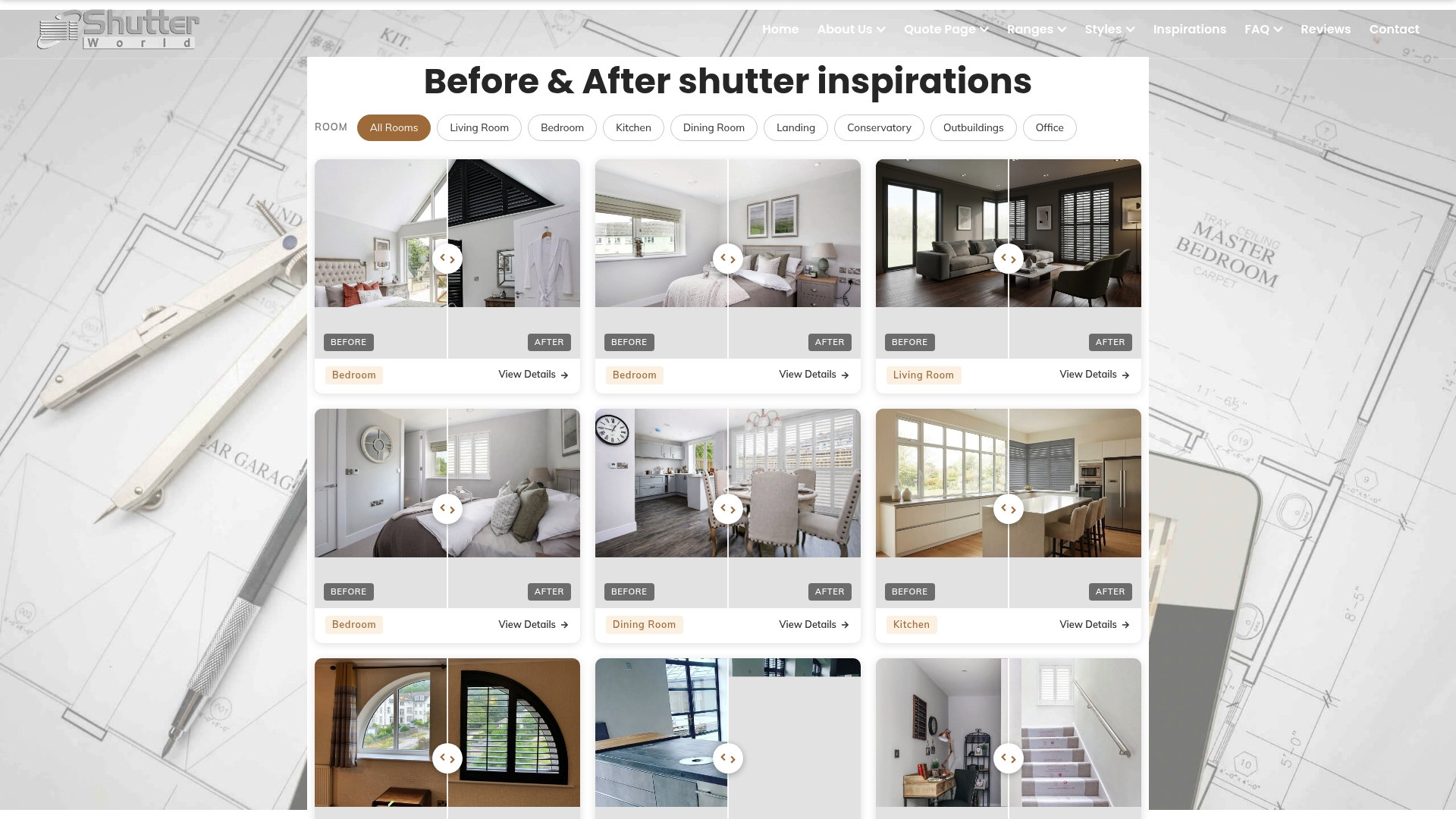
Shutterworld designs and installs bespoke plantation shutters across West Yorkshire, with a full range of polymer composite options specified for moisture-prone rooms. Every shutter is made to measure, with hardware confirmed to marine-grade or nylon polymer specification as standard. Based in Ossett, Shutterworld offers a complete service from professional in-home survey through to expert installation, backed by product and workmanship guarantees. Whether you need a straightforward bathroom window or a complex bay or arched frame, the team brings over 25 years of experience to every project. Book your free survey today and get a clear, competitive quotation with no surprises.
FAQ
What are waterproof shutters made from?
Waterproof shutters are made from polymer composites, ABS, or polycarbonate materials, combined with nylon polymer or marine-grade stainless steel hardware to prevent corrosion in humid environments.
Are waterproof shutters suitable for West Yorkshire bathrooms?
Yes. ABS polymer shutters with nylon hardware are the recommended choice for most West Yorkshire bathrooms, offering reliable moisture resistance and durability in the region’s humid climate.
How long do waterproof shutters last in a wet room?
Polymer composite shutters with correctly specified hardware last well over a decade in wet rooms. Zinc-plated hardware, by contrast, fails within 6 to 18 months in sustained moisture conditions.
What is a split-tilt rail and do I need one?
A split-tilt rail divides the shutter panel into upper and lower sections that tilt independently, allowing ventilation through the top louvres while the lower louvres remain closed for privacy. It is particularly useful in West Yorkshire bathrooms facing neighbouring properties.
Can waterproof shutters be fitted to uPVC windows without drilling?
Yes. Perfect Fit shutters clip directly to uPVC frames without drilling, making them a practical option for West Yorkshire homes with uPVC windows in bathrooms and conservatories.