
Waterproof shutters: uses, benefits, and best materials

TL;DR:
- Waterproof shutters made from moisture-resistant materials are ideal for humid environments like bathrooms, kitchens, and coastal properties, where traditional window treatments quickly deteriorate. Properly fitted with stainless steel hardware and designed for each room’s conditions, they offer long-lasting privacy, light control, and ventilation benefits while protecting window frames from moisture damage. Choosing bespoke solutions ensures precise fit and optimal performance, making them a low-maintenance, durable alternative to fabric or standard blinds.
Waterproof shutters are window coverings made from moisture-resistant materials, specifically engineered to withstand humid and wet environments without warping, swelling, or deteriorating over time. The term “waterproof shutters” is widely used by homeowners, but the recognised industry term is moisture-resistant plantation shutters, which covers a range of materials including solid PVC, ABS composite, and PolyCore aluminium-core constructions. Waterproof shutters use cases span bathrooms, kitchens, coastal properties, and any room where steam, condensation, or salt air would destroy a standard fabric blind or timber shutter within months. Shutterworld, with over 25 years of experience fitting bespoke shutters across the UK, recommends these materials as the definitive long-term solution for moisture-prone rooms.
What is the best waterproof shutters use for your home?
The most common and practical use of waterproof shutters is in the bathroom, where steam from showers and baths creates a persistently damp microclimate that destroys fabric blinds and causes untreated wood to warp. Kitchens present a similar challenge, with cooking steam, grease, and frequent temperature changes degrading standard window treatments rapidly. Coastal properties face a third distinct threat: salt-laden air accelerates corrosion and material degradation far beyond what inland humidity alone can cause.
Shutters on bathroom windows deliver privacy without sacrificing daylight, a combination that curtains and frosted glass alone cannot achieve. Shutters on kitchen windows solve the grease and condensation problem while adding a clean, architectural finish that wipes down in seconds. For casement windows in particular, shutters on casement windows offer a flush, tailored fit that standard roller blinds cannot replicate, especially in older UK properties where window reveals are deep and irregular.
The waterproof shutters benefits extend beyond the obvious. They protect window frames themselves. Waterproof shutters prevent condensation build-up on timber sash windows by acting as a barrier to moisture exposure, reducing the need for repainting or costly frame renovation. That single benefit alone can justify the investment in a period property.
What materials are used in waterproof shutters and how do they perform?
Material choice is the single most important decision when selecting moisture-resistant plantation shutters. Four materials dominate the market: solid PVC, ABS composite, PolyCore, and treated hardwood. Each performs differently under sustained humidity, and choosing the wrong one for your room is a costly mistake.
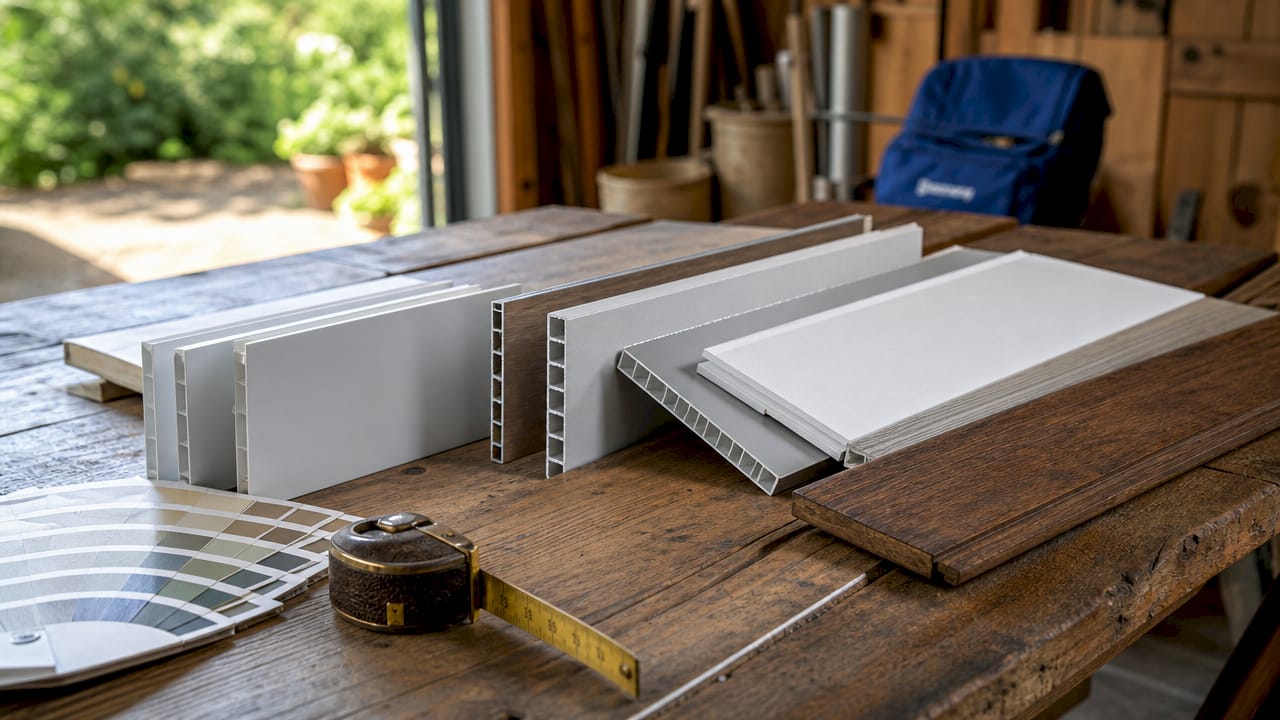
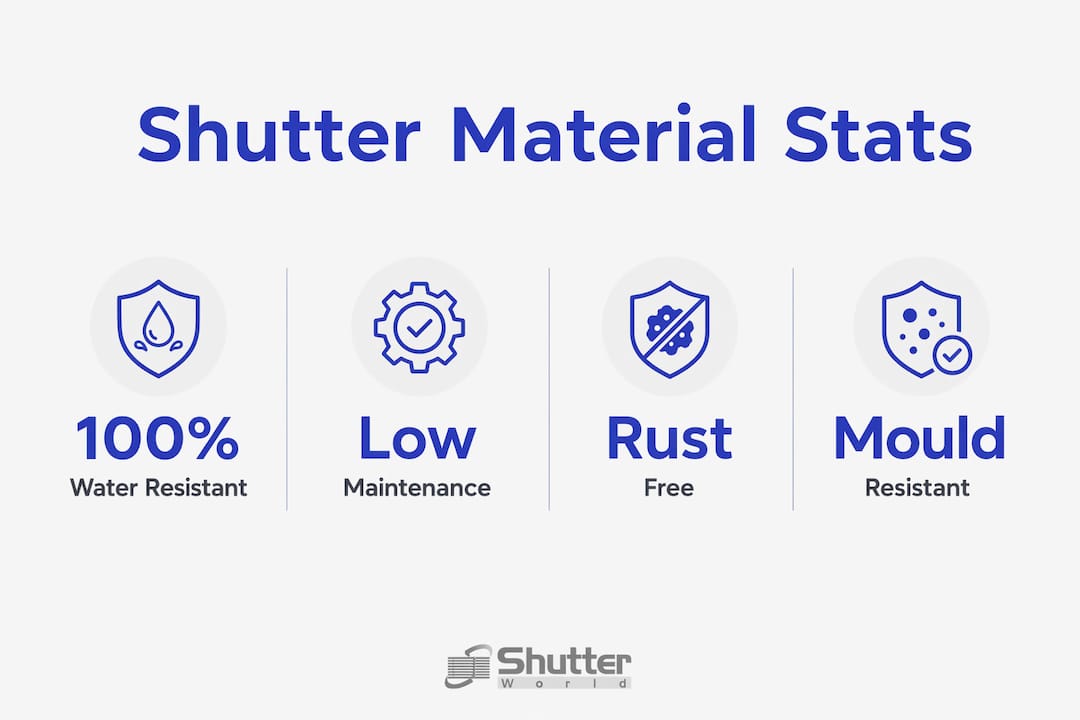
Solid PVC plantation shutters are highly durable, easy to clean, rustproof, and mould resistant, making them the safest long-term option for bathrooms and kitchens. PVC does not absorb moisture and maintains structural integrity despite repeated steam exposure. This makes it the most practical entry-level choice for high-humidity rooms.
ABS composite shutters are completely impervious to water, highly stable against temperature changes, and feature smooth painted finishes that resist staining. ABS maintains dimensional stability under the temperature fluctuations common in kitchens and bathrooms, preventing warping and louvre misalignment over time. This material is the preferred choice when both moisture resistance and a premium painted finish are priorities.
PolyCore shutters feature an aluminium core wrapped in a polymer coating, offering fire resistance, low emissions, and the ability to withstand persistent humidity better than treated hardwood. PolyCore is GREENGUARD® certified, which matters for families concerned about indoor air quality in enclosed rooms like bathrooms. It represents the premium tier of moisture-resistant shutter materials.
Treated hardwood, such as Shutterworld’s Montana range, remains a beautiful option for rooms with moderate humidity, but it requires more careful maintenance and is not recommended for direct splash zones or coastal properties without additional protective treatment.
| Material | Water resistance | Maintenance | Ideal room |
|---|---|---|---|
| Solid PVC | 100% waterproof | Wipe clean with damp cloth | Bathroom, en suite |
| ABS composite | 100% waterproof | Wipe clean, stain resistant | Kitchen, bathroom |
| PolyCore | Excellent, fire resistant | Low maintenance | Coastal, wet rooms |
| Treated hardwood | Moderate | Regular oiling required | Living room, bedroom |
Pro Tip: For shower enclosures or splash zones, always specify stainless steel hardware. Standard hinges rust rapidly in wet conditions, degrading shutter movement even when the shutter material itself is fully waterproof.
How do shutters improve privacy, light, and ventilation in humid rooms?
Moisture-resistant plantation shutters deliver three functional advantages simultaneously in humid rooms: privacy, daylight control, and active ventilation. This combination is what separates them from frosted glass, roller blinds, and curtains, none of which offer all three at once.
The split tilt configuration is the most popular custom setting for bathroom shutters as of 2026. It allows the top louvres to remain open for natural daylight while the bottom section stays closed for privacy. This means you can bathe in natural light without any compromise on modesty, which is genuinely difficult to achieve with any other window treatment.
Adjustable louvres also give you direct control over airflow. Proper ventilation through adjustable louvres reduces trapped humidity and condensation, actively limiting mould growth in humid rooms. Opening the louvres slightly after a shower draws moist air away from the glass and frame, reducing the condensation that causes black mould to form on window reveals over time.
The advantages of water-resistant shutters in functional terms include:
- Privacy without obscuring light: The split tilt feature gives you independent control of the top and bottom panels, unlike a blind that operates as a single unit.
- Mould prevention: Controlled airflow through open louvres reduces the humidity that feeds mould growth on walls and frames.
- Frame protection: Shutters act as a physical barrier between steam and timber window frames, reducing moisture contact and extending frame life.
- Grease resistance in kitchens: Shutters in kitchen windows have smooth, non-porous surfaces that wipe clean, unlike fabric blinds that absorb cooking odours and grease permanently.
- Year-round comfort: In winter, closed louvres add a layer of thermal insulation at the window, reducing heat loss from the room.
For shutters in kitchen windows specifically, the louvre angle also controls glare from low winter sun without blocking the view entirely, which is a practical daily benefit that most homeowners only discover after installation.
What should you consider when selecting and installing waterproof shutters?
Selecting the right moisture-resistant shutters requires more than choosing a material. Fit, hardware, and installation method each determine whether your shutters perform for a decade or fail within two years.
- Commission a professional survey. Many older UK properties have windows that are not perfectly square. Custom measuring is the only way to avoid gaps that compromise both privacy and moisture resistance. Off-the-shelf shutters rarely account for the irregular reveals common in Victorian and Edwardian terraces.
- Account for thermal expansion. Bathrooms and kitchens cycle through significant temperature changes daily. Materials like ABS composite and PolyCore are engineered to remain dimensionally stable, but the frame and fixing method must also accommodate slight movement to prevent binding.
- Specify stainless steel hardware throughout. In shower rooms or coastal properties, stainless steel hinges and hardware are not optional. Standard zinc or steel fittings corrode within months in persistently damp conditions, causing louvres to stick and frames to stain.
- Choose the right frame style for your reveal depth. A full-height frame suits deep reveals and provides a clean, built-in appearance. A face-fix frame suits shallower reveals but requires precise measurement to avoid light gaps at the edges.
- Insist on professional installation. Properly sealed frames and professional fitting prevent binding, gaps, and premature wear. Poor installation is the leading cause of waterproof shutter failure, regardless of material quality.
Pro Tip: Ask your installer to check whether your window frames are square before ordering. A difference of even 5mm between the top and bottom width of a reveal will cause a standard shutter panel to sit unevenly, creating a visible gap that undermines both aesthetics and privacy.
Faux wood shutters, which combine PVC or composite materials with a wood-effect finish, are an excellent choice for homeowners who want the warmth of a timber aesthetic without the maintenance demands of real wood in a damp room. Shutterworld’s Seattle range uses durable MDF with an extruded polypropylene coating that achieves exactly this balance.
How do you maintain waterproof shutters for lasting performance?
Moisture-resistant plantation shutters are among the lowest-maintenance window treatments available, but a consistent cleaning routine keeps them looking pristine and extends their working life significantly. The smooth, non-porous finishes on PVC and ABS composite shutters discourage mould and allow easy wipe-down cleaning, which is their core maintenance advantage over fabric alternatives.
Follow these practical steps to keep your shutters in peak condition:
- Weekly wipe-down: Use a damp microfibre cloth to remove dust and light condensation from louvres and frames. This prevents build-up that can become harder to shift over time.
- Monthly deep clean: Mix a small amount of mild washing-up liquid with warm water and wipe each louvre individually. Rinse with a clean damp cloth and dry thoroughly to prevent water marks.
- Avoid abrasive cleaners: Scouring pads, bleach-based sprays, and solvent cleaners can damage painted finishes and degrade the surface coating on ABS and PolyCore shutters. Stick to pH-neutral products.
- Check hinges and louvre pins: Every three to six months, inspect the hardware for any signs of stiffness or discolouration. In coastal properties, this check should be monthly.
- Ventilate after cleaning: After wiping down shutters in a bathroom, open the louvres slightly to allow air circulation and prevent moisture from sitting between the panels and the frame.
For detailed guidance on caring for your shutters long-term, Shutterworld’s shutter maintenance and cleaning resource covers specific advice for different materials and room types. If you have timber shutters in a lower-humidity room, the wooden shutter maintenance guide provides material-specific care instructions.
Key takeaways
Waterproof shutters made from PVC, ABS composite, or PolyCore are the most durable and practical window treatment for bathrooms, kitchens, and coastal properties, provided they are custom-fitted with stainless steel hardware and professionally installed.
| Point | Details |
|---|---|
| Material determines performance | PVC and ABS composite are fully waterproof; PolyCore adds fire resistance for premium wet rooms. |
| Custom fit is non-negotiable | Off-the-shelf shutters fail in irregular UK window reveals; professional measuring prevents gaps and binding. |
| Stainless steel hardware is essential | Standard hinges corrode rapidly in damp conditions, degrading shutter operation regardless of panel material. |
| Split tilt maximises bathroom function | Independent top and bottom louvre control delivers daylight and privacy simultaneously. |
| Maintenance is minimal but consistent | A weekly wipe-down with a damp cloth and monthly hardware checks keep shutters performing for years. |
Why I always recommend going bespoke for wet rooms
Having spent years advising homeowners on shutter installations across the UK, the single most common regret I hear is this: “I wish I’d gone custom from the start.” People buy an off-the-shelf PVC shutter, it looks reasonable in the shop, and then it arrives home to a bathroom window that is 4mm narrower at the top than the bottom. The gaps let in light, undermine privacy, and the whole thing looks wrong. The material was fine. The fit was the problem.
The second misconception I encounter regularly is that all waterproof shutters are the same. They are not. A solid PVC shutter in a family bathroom is a sensible, cost-effective choice. A PolyCore shutter in a coastal property or a steam-heavy wet room is a different product entirely, engineered for a more demanding environment. Choosing PVC for a shower room that runs hot and steamy for an hour every morning is asking it to perform beyond its design intent.
What I find genuinely underappreciated is the ventilation benefit. Most homeowners think about privacy and aesthetics first. But the ability to crack the louvres open after a shower and draw humid air away from the glass is one of the most practical things a shutter does. It protects the window frame, reduces mould risk, and keeps the room fresher. No blind or curtain does that.
My honest recommendation: always use a specialist who measures in person, specifies the right material for your specific room conditions, and installs with stainless steel hardware throughout. The upfront investment is higher than a DIY blind. The long-term performance is incomparably better.
— Ken
Bespoke waterproof shutters from Shutterworld
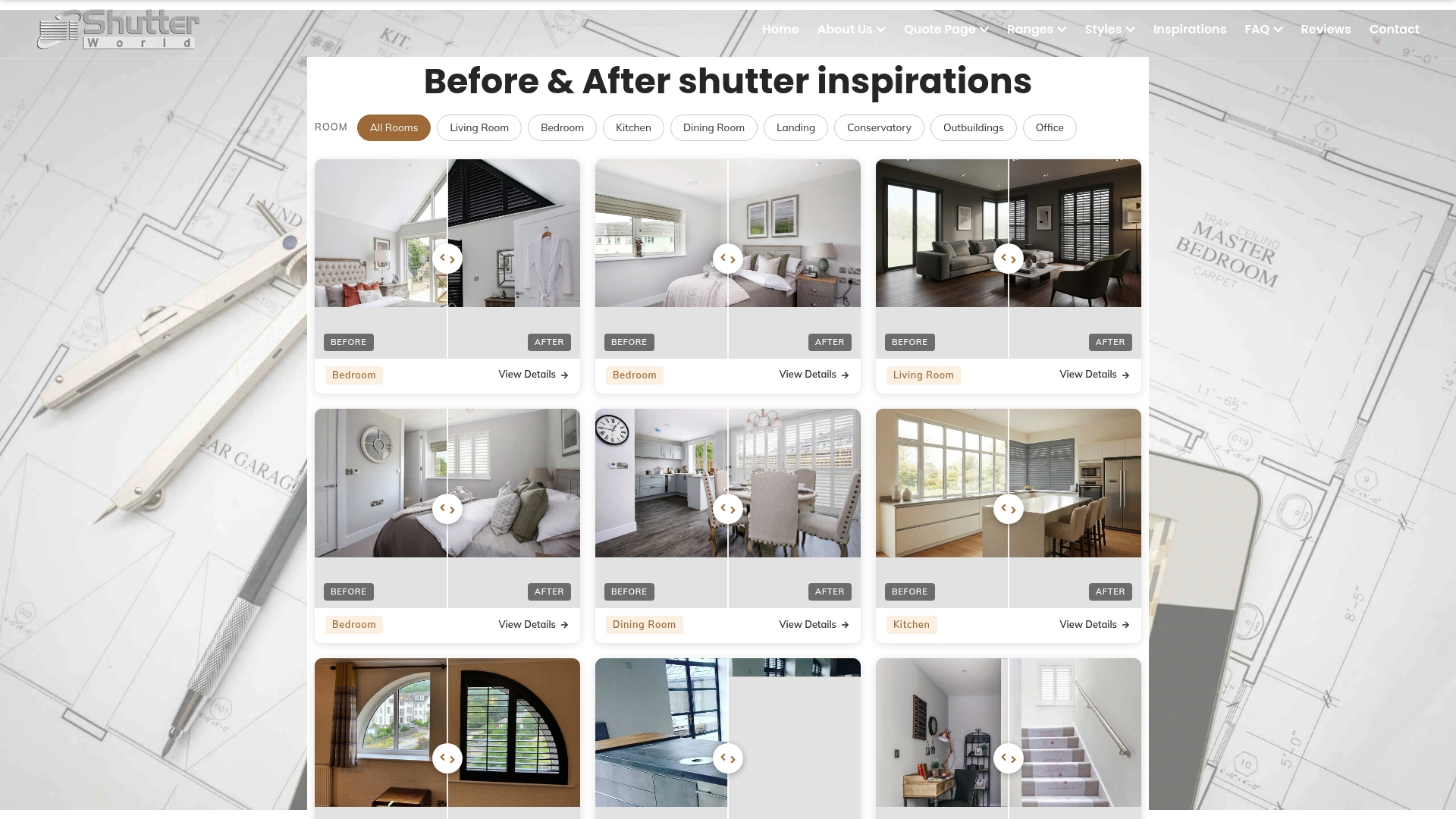
Shutterworld designs and installs made-to-measure moisture-resistant plantation shutters for bathrooms, kitchens, and coastal properties across the UK. Every shutter is precision-engineered to fit your exact window dimensions, specified with the right material for your room conditions, and fitted by experienced installers who understand the demands of humid environments. From the entry-level Seattle range to the premium PolyCore options, Shutterworld’s bespoke plantation shutters are built to perform for years without warping, staining, or hardware failure. If you are ready to replace tired blinds with a window treatment that genuinely stands up to moisture, explore Shutterworld’s full range or book a free in-home survey today.
FAQ
What rooms are waterproof shutters best suited to?
Waterproof shutters are best suited to bathrooms, en suites, kitchens, and coastal properties where persistent humidity, steam, or salt air would degrade standard window treatments. They also perform well in utility rooms and conservatories.
Are PVC and ABS composite shutters truly 100% waterproof?
Yes. Both solid PVC and ABS composite shutters are completely impervious to water and do not absorb moisture, making them structurally stable even with repeated steam exposure in bathrooms and kitchens.
Do waterproof shutters work on casement windows?
Shutters on casement windows are a practical and popular choice, provided they are custom-measured to fit the reveal precisely. A bespoke frame ensures the shutters clear the window handle and open without obstruction.
How long do waterproof shutters last in a bathroom?
With correct material selection, stainless steel hardware, and professional installation, moisture-resistant plantation shutters typically last well over a decade in a bathroom environment with minimal maintenance required.
Can waterproof shutters help prevent mould in bathrooms?
Yes. Adjustable louvres allow controlled ventilation after bathing, reducing trapped humidity and condensation on window frames, which are the primary conditions that promote mould growth in bathrooms.