
Why shutters are durable: a UK homeowner’s guide

Why shutters are durable
TL;DR:
- Durable shutters, made from materials like poly-resin, composite, or aluminium, outperform blinds and curtains over decades due to resistance to warping, fading, and moisture. Proper construction, professional installation, and protective finishes significantly extend their lifespan, making shutters a sustainable, long-term investment. Unlike other treatments, shutters can be repaired easily, ensuring they serve homeowners reliably for 20 to 30 or more years.
Most homeowners replace their blinds every few years without questioning whether there is a better alternative. Curtains fade, roller blinds snap, and Venetian blinds warp at the slightest hint of moisture. But shutters are fundamentally different, and understanding why shutters are durable changes the way you think about window coverings entirely. This is not about aesthetics alone. It is about choosing a window treatment that is built as a permanent fixture of your home, one that performs beautifully for decades rather than seasons.
Table of Contents
- How shutter materials affect durability
- Protective coatings and finishes enhancing shutter lifespan
- Shutter construction and professional installation’s role in durability
- Climate, maintenance, and usage: factors influencing shutter durability
- Comparing shutters with other window treatments for long-term value
- Rethinking durability: why true value lies beyond lifespan
- Discover bespoke durable shutters for your home
- Frequently asked questions
How shutter materials affect durability
Understanding shutter material properties lays the foundation for appreciating why shutters outperform other window treatments over time. Not all shutters are created equal, and the material you choose directly determines how well your shutters resist the wear, moisture, and light exposure that are part of everyday UK home life.
Poly-resin and composite shutters can last over 30 years, are waterproof, fade-resistant, and require no refinishing. This makes them a particularly strong choice for kitchens and bathrooms, where steam and condensation are a daily reality. Composite materials combine the visual warmth of wood with engineering that resists moisture absorption, meaning they hold their shape and finish far longer than traditional timber in humid conditions.
Aluminium shutters are the most durable, followed by wood and composite, then vinyl. Each material suits a different environment and budget, and understanding the distinction helps you invest wisely. Our shutter materials comparison guide covers this in detail, but here is a practical overview:
| Material | Typical lifespan | Best suited for | Key durability trait |
|---|---|---|---|
| Aluminium | 30+ years | High-humidity or external use | Maximum resistance to moisture and corrosion |
| Hardwood | 20 to 30 years | Living rooms, bedrooms | Natural strength and timeless appearance |
| Composite/poly-resin | 25 to 30+ years | Kitchens, bathrooms | Waterproof, warp-resistant, fade-resistant |
| Vinyl | 10 to 15 years | Budget applications | Lightweight but less resilient under UV exposure |
The benefits of durable shutters become clearest when you consider shutter material longevity against the constant replacement cycle of blinds and curtains. Key material advantages include:
- Resistance to warping from temperature fluctuations, particularly relevant in older UK properties with uneven heating
- Fade resistance that keeps colours true for years, rather than the bleached appearance common in fabric window treatments
- Moisture tolerance that prevents swelling, cracking, and mould growth in rooms prone to condensation
- Structural rigidity that prevents the sagging and slumping that make blinds look tired within a few years
Choosing the right material for the right room is not just a style decision. It is a durability decision that determines how long your shutters serve you without needing attention.
Protective coatings and finishes enhancing shutter lifespan
Having explored materials, it is worth examining how protective finishes preserve shutter integrity across varied UK climates. Even the finest hardwood will deteriorate prematurely without the right surface protection, and this is an area where modern shutter manufacturing has advanced considerably.
UV radiation is one of the most underestimated threats to any window treatment. Research confirms that UV absorbers in wood coatings convert harmful radiation to heat, preventing the lignin photo-oxidation that causes cracking and fading. In plain terms, the coating acts as a shield, absorbing damaging energy before it can break down the wood’s structure. Without this protection, even quality hardwood shutters would grey, crack, and lose their finish within a decade of regular sunlight exposure.
Modern coatings go further than simple paint or varnish. Bio-based formulations and nanoparticle-enhanced finishes now offer a level of UV protection and surface hardness that was not available even ten years ago. These advances mean that today’s shutters, whether hardwood or composite, arrive with finishes designed to remain stable and attractive far longer than older product generations.
“The right finish does not just protect the surface of a shutter. It preserves the structural integrity of the material beneath, ensuring that years of light exposure do not compromise the shutter’s fit, operation, or appearance.”
Pro Tip: For south-facing rooms that receive direct sunlight for much of the day, ask your shutter supplier specifically about the UV rating of their finish. A higher-grade coating can add years of life in particularly bright spaces. Our guide on how to protect shutters from sun covers practical steps you can take at home too.
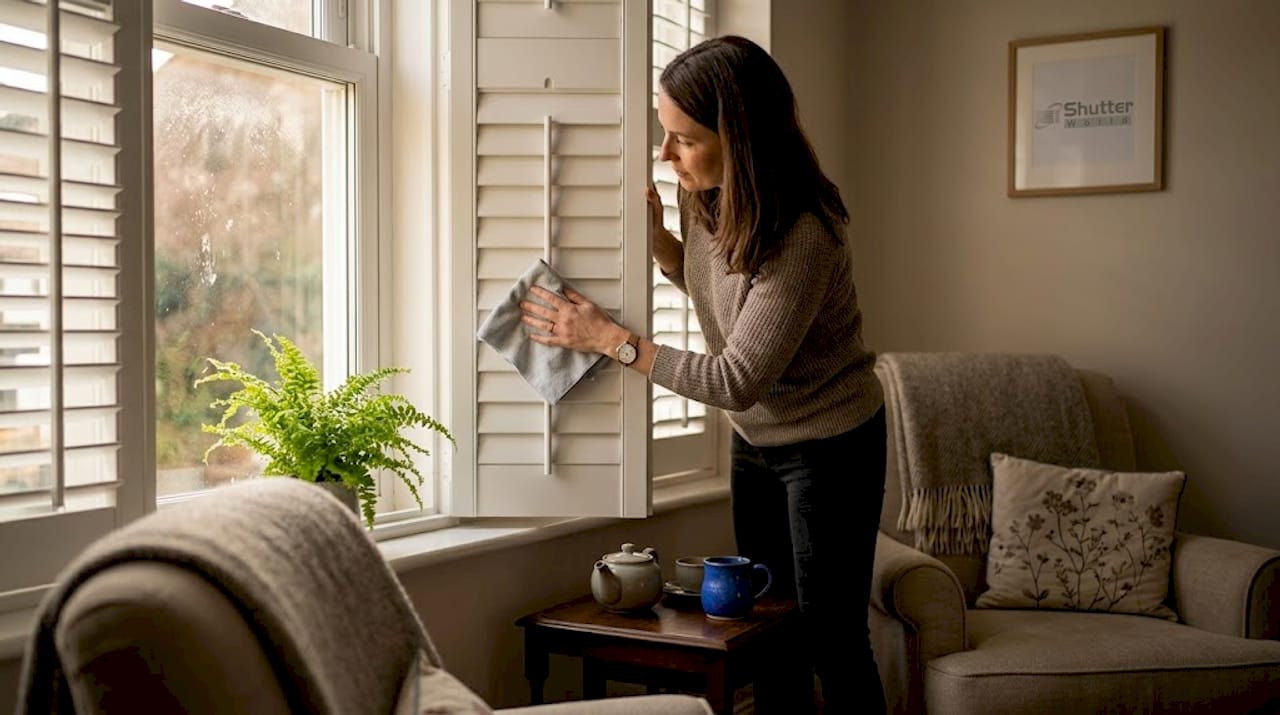
Maintenance of the finish also matters. Wiping shutters with a lightly damp cloth rather than harsh cleaning products preserves the coating’s integrity. This small habit, done regularly, is one of the most effective ways to sustain long-term protection.
Shutter construction and professional installation’s role in durability
Material protection alone is not enough. How shutters are built and installed profoundly affects their longevity and daily performance. This is where bespoke craftsmanship genuinely separates quality shutters from budget alternatives.
Solid construction with thick louvres, sturdy frames, and quality hardware withstands daily use better than any other window treatment. Louver thickness matters more than most people realise. Thinner louvres flex and develop stress fractures over time, particularly in homes with children or pets where shutters are opened and closed repeatedly throughout the day. Thicker, well-engineered louvres maintain their shape and operation across thousands of cycles.
The key construction features that contribute to why shutters are durable include:
- Mortise-and-tenon joinery in the frame, which creates a rigid, stable structure that does not loosen over time
- Stainless steel or brass hardware on hinges and tilt rods, which resists corrosion and operates smoothly for decades
- Reinforced corner blocks that absorb stress at the most vulnerable points of the frame
- Correctly sized panels that account for the specific dimensions of your window, preventing binding, rubbing, and uneven wear
Professional installation is equally important. A shutter that fits imprecisely will place constant stress on its hinges and frame, accelerating wear and creating operational problems within a few years. Our shutter maintenance tips include advice on checking for early signs of fitting issues, but the best way to avoid them is to have your shutters installed by experienced fitters from the outset.
Pro Tip: During installation, ensure your fitter checks the operation of every panel before leaving. A shutter that opens and closes with consistent, even resistance is correctly fitted. Any binding or stiffness at installation will only worsen over time and should be addressed immediately.
Climate, maintenance, and usage: factors influencing shutter durability
With a clear understanding of construction and installation, it is equally important to consider how your own habits and the UK climate affect shutter durability over time. Even the finest shutters require a small degree of care to perform at their best across decades.
Sun exposure, humidity, and temperature swings impact shutter materials differently, and choosing suitable materials alongside consistent maintenance significantly extends their life. The UK’s climate is particularly demanding in this respect. Our winters bring sustained moisture and condensation, while summer months in south-facing rooms can generate significant heat build-up. Selecting the right material for your specific room environment is therefore not a minor consideration.
Regular cleaning and gentle usage greatly extend shutter lifespan. Here is a straightforward maintenance routine that takes very little time but pays dividends over the years:
- Dust louvers weekly using a soft cloth or a purpose-made shutter duster, working from top to bottom to prevent dust from settling on cleaned areas.
- Wipe with a lightly damp cloth monthly to remove any build-up of grease or condensation, particularly in kitchens and bathrooms.
- Check hinges and hardware twice yearly for any signs of loosening or corrosion, tightening screws as needed before minor issues become structural problems.
- Open and close panels gently, using the tilt rod or centre rail rather than forcing individual louvers, which places unnecessary stress on the joinery.
- Ventilate high-humidity rooms adequately to reduce sustained moisture exposure, even if your shutters are rated as moisture-resistant.
Practical guides such as our advice on clean and maintain wooden shutters provide room-specific advice, but the underlying principle is consistent: light, regular care prevents the build-up of conditions that degrade even premium materials.
Comparing shutters with other window treatments for long-term value
To fully appreciate shutter durability, it is worth comparing them directly with alternative window dressings. The numbers tell a clear story about which option truly serves UK homeowners best over time.
Quality shutters last 20 to 30+ years, while curtains and blinds typically need replacing every 3 to 8 years with maintenance. Over a 30-year period, a homeowner using curtains or blinds could face four to ten replacement cycles, each carrying its own cost in materials, fitting, and disruption. A single investment in quality shutters, by contrast, can serve the entire period without replacement.
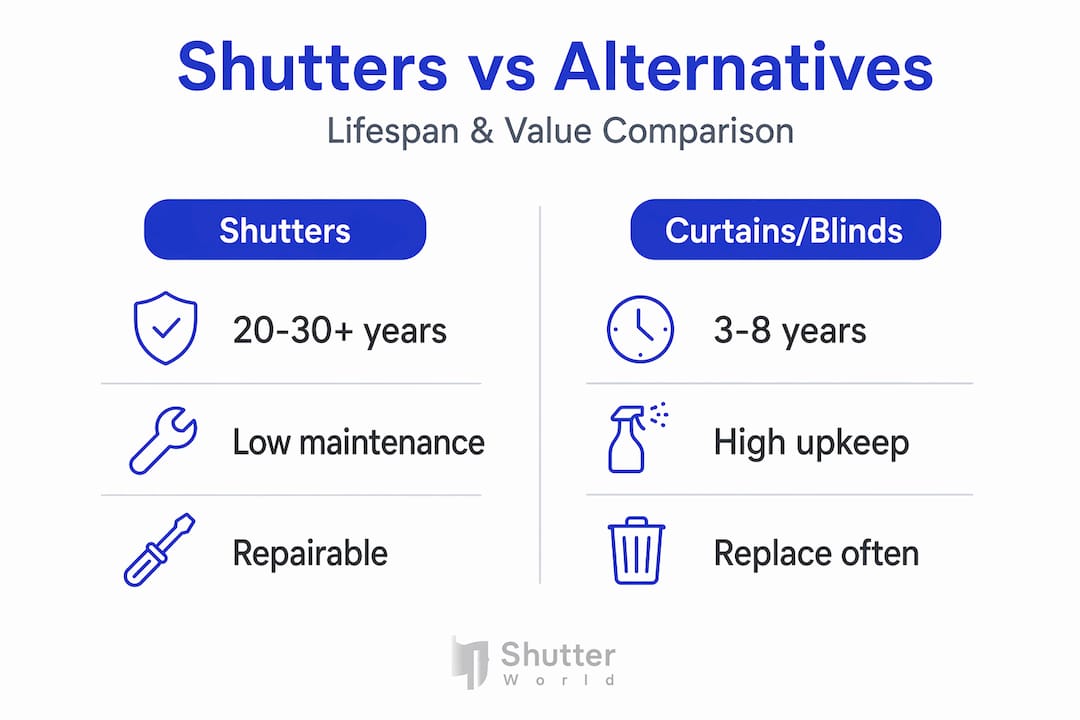
Shutters provide better durability, aesthetic appeal, light control, and insulation than other window treatments, making the question of whether shutters are worth the investment one with a clear answer for most homeowners.
| Window treatment | Average lifespan | Replacement cycles (30 years) | Added home value |
|---|---|---|---|
| Quality shutters | 20 to 30+ years | 0 to 1 | Significant |
| Roller blinds | 3 to 5 years | 6 to 10 | Minimal |
| Curtains | 5 to 8 years | 4 to 6 | Minimal |
| Venetian blinds | 5 to 7 years | 4 to 6 | Minimal |
The benefits of durable shutters extend beyond simple lifespan comparisons. Consider what shutters offer that blinds and curtains simply cannot match:
- Thermal insulation that reduces heat loss in winter and limits heat gain in summer, contributing to lower energy bills
- Light control precision that can be adjusted without moving the entire panel, giving you far more flexibility than curtains
- Privacy without sacrificing natural light, tilting louvers to let in daylight while blocking direct sightlines from outside
- Long-term aesthetic consistency, as quality shutters look as considered and polished on day 3,000 as they do on day one
Understanding why shutters are popular across UK homes is partly about aesthetics, but it is increasingly about homeowners recognising this genuine long-term value.
Rethinking durability: why true value lies beyond lifespan
Here is something we rarely see discussed in the world of window treatments: durability is not just about how many years something lasts. It is about how well it adapts, how easily it can be repaired, and how sustainably it fits into the long-term story of your home.
Shutters are one of the very few window treatments that can be repaired rather than replaced. A damaged louver on a roller blind means a new blind. A damaged louver on a quality shutter can typically be replaced individually, often at a fraction of the cost of full replacement. This repairability is built into the very fabric of how shutters are engineered, and it is a form of durability that never appears on a spec sheet.
Bespoke shutters also age differently from off-the-shelf alternatives. Because they are designed and manufactured to the exact dimensions of your window, they do not develop the operational problems that mass-produced products suffer when forced into imperfect spaces. A perfect fit means less mechanical stress, fewer adjustments, and a shutter that continues to look intentional and considered regardless of how many years pass.
There is also an environmental dimension that is increasingly relevant for UK homeowners. Choosing a window covering that lasts 30 years instead of replacing blinds every five years represents a genuine reduction in material consumption and waste. Premium hardwood shutters from responsibly sourced timber, finished with modern low-VOC (low volatile organic compound) coatings, represent a more sustainable long-term choice than the accumulated waste of multiple generations of synthetic blinds.
The question of why choose durable window coverings, therefore, has an answer that goes beyond cost savings. It is about investing in something that serves your home with integrity, can be maintained and repaired, and contributes to a considered approach to how you live in your space.
Discover bespoke, durable shutters for your home
With a thorough understanding of shutter durability, you are now well-placed to choose window coverings that will genuinely serve your home for decades to come. The difference between a shutter that performs for 30 years and one that disappoints within a few lies in the quality of materials, the precision of manufacture, and the expertise of installation.
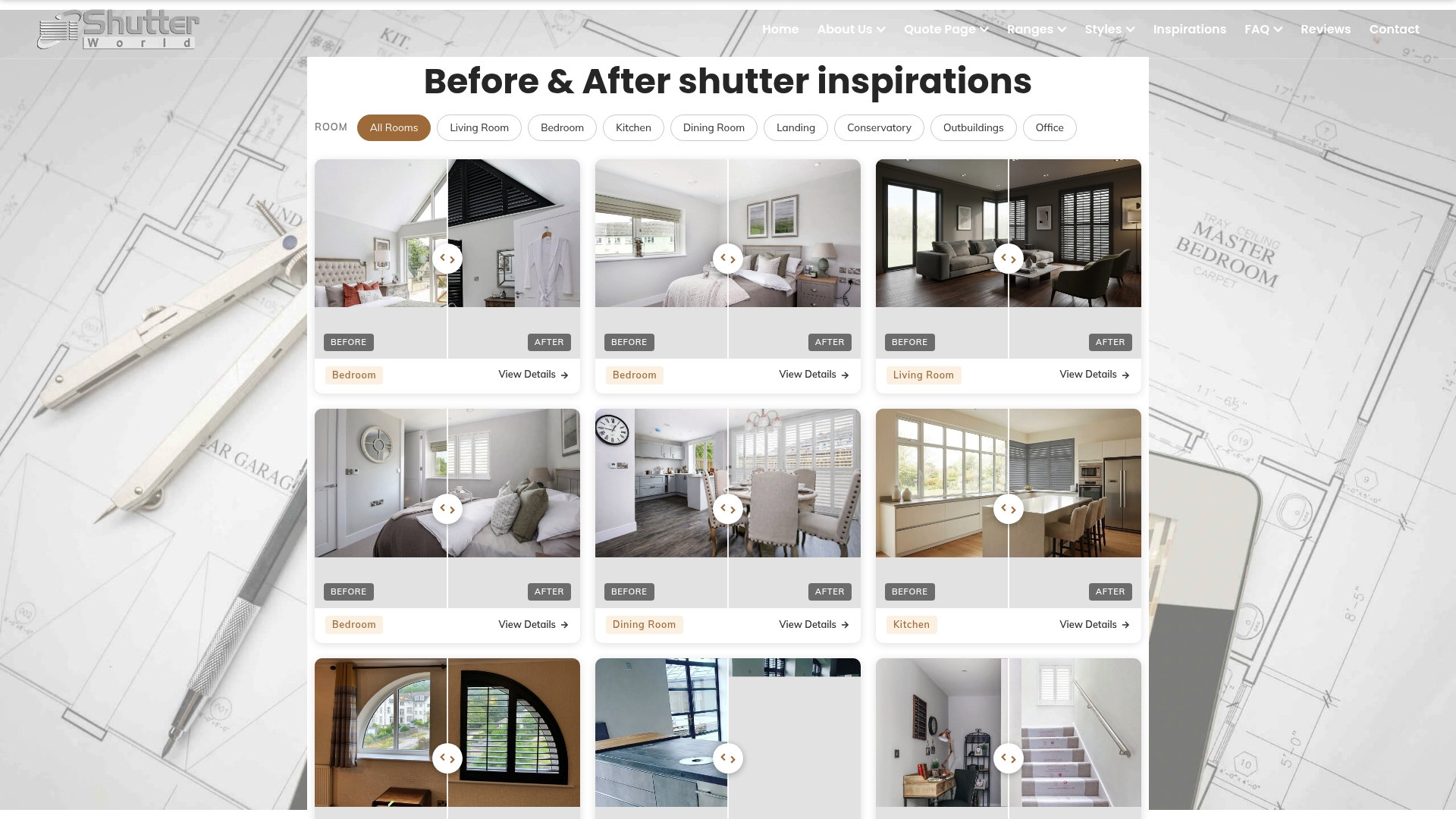
At Shutter World, every shutter we create is bespoke, built to the exact specifications of your windows and your home. From our bespoke internal window shutters to our full range of plantation shutters, each product is engineered for durability and finished to the highest standard. Our experienced team handles everything from initial survey to professional installation, ensuring your shutters fit perfectly and operate flawlessly from day one. If you are ready to see how interior window shutters can transform your home, we would love to help you find the right solution. Book your free home survey today and take the first step towards window coverings that truly last.
Frequently asked questions
How long do durable shutters typically last in UK homes?
High-quality plantation shutters can last 20 to 30 years or more with proper care, far outperforming most alternative window treatments. With the right material choice and regular maintenance, many homeowners find their shutters still look excellent after three decades.
What materials make shutters most durable against UK weather conditions?
Poly-resin and composite shutters represent the gold standard for moisture resistance, making them ideal for the UK’s damp winters and humidity-prone rooms. Aluminium offers maximum structural resilience, while premium hardwood with quality coatings suits drier living spaces beautifully.
How does professional installation affect shutter durability?
Professional installation ensures proper fit, smooth operation, and minimised mechanical stress, all of which are critical to long-term shutter performance. A poorly fitted shutter places constant strain on its frame and hardware, shortening its lifespan considerably.
Can shutters be repaired if damaged or worn?
Most issues with shutters can be repaired rather than requiring complete replacement, thanks to their modular, sturdy construction. Individual louvers, hinges, or tilt rods can often be replaced independently, making shutters a far more economical long-term choice than blinds or curtains.