
Window Shutter Regulations UK: Ensuring Safety and Compliance

Window shutter regulations UK
Most British homeowners in West Yorkshire are surprised to learn that over 90% of window shutter installations must comply with strict UK building regulations for safety and energy efficiency. Navigating these legal standards matters even more if your property features unique or non-standard window shapes. This article guides you through the rules and certifications required for bespoke shutters, ensuring your home remains stylish and fully compliant while enhancing insulation and privacy.
Table of Contents
- What Are Window Shutter Regulations UK?
- Key Legal Standards for Interior Shutters
- Building Regulations for Bespoke Shutters
- Fire Safety, Insulation, and Ventilation Rules
- Certifications, Installer Obligations, and Risks
Key Takeaways
| Point | Details |
|---|---|
| Compliance is Mandatory | Adhering to window shutter regulations is not optional; it is a legal requirement in the UK to ensure safety and performance. |
| Use Qualified Professionals | Shutters must be installed by certified professionals to minimise risks and ensure compliance with building regulations. |
| Request Documentation | Homeowners should always request compliance certificates from installers to verify adherence to safety and performance standards. |
| Understand Regulatory Framework | Familiarity with various regulations, such as the Health and Safety at Work Act and building regulations, is crucial for legal compliance. |
What Are Window Shutter Regulations UK?
Window shutter regulations in the United Kingdom represent a comprehensive framework designed to ensure safety, performance, and compliance for residential and commercial properties. These regulations are not merely optional guidelines but legally mandated standards that address critical aspects of window shutter installation, operation, and maintenance.
Under current UK building regulations, window shutters are classified as “controlled fittings” which must adhere to specific safety and performance criteria. Building regulations for window installations encompass multiple essential factors, including thermal performance, safety glazing, ventilation requirements, and emergency escape routes. Homeowners and installers must ensure their shutters meet these stringent standards to guarantee occupant safety and energy efficiency.
Legal compliance involves understanding multiple regulatory frameworks. The Health and Safety at Work Act 1974, Workplace Regulations 1992, and the Provision and Use of Work Equipment Regulations 1998 (PUWER) provide comprehensive guidelines for shutter safety. These regulations mandate that shutters must be:
- Properly installed by qualified professionals
- Regularly serviced and maintained
- Operated only by trained personnel
- Inspected for potential safety risks
- Constructed using approved materials and manufacturing standards
Compliance can be achieved through two primary routes: using installers registered under competent person schemes or obtaining direct approval from local building control authorities. This ensures that every shutter installation meets the requisite technical and safety standards established by UK regulatory bodies.
Below is a summary of common UK window shutter regulations by regulatory focus area:
| Regulatory Focus | Main Requirement | Typical Impact on Property |
|---|---|---|
| Safety | Qualified professional installation | Minimises accidents and hazards |
| Thermal Performance | Meets minimum energy conservation targets | Reduces heating costs |
| Glazing Standards | Uses safety-approved glazing | Lowers risk of injury |
| Ventilation | Ensures adequate airflow | Improves indoor air quality |
Pro tip: Always request certification documentation from your shutter installer to verify full compliance with current UK building regulations and safety standards.
Key Legal Standards for Interior Shutters
Interior shutters in the United Kingdom are subject to comprehensive legal standards that ensure safety, performance, and regulatory compliance across residential and commercial settings. These standards are not simply recommendations but mandatory requirements that protect users and establish clear guidelines for manufacturers, installers, and homeowners.

The legal framework governing interior shutters is multifaceted, drawing from several critical pieces of legislation. Industrial safety regulations mandate specific safety features and compliance protocols. Key legislative requirements include CE marking, comprehensive risk assessments, and the implementation of essential safety mechanisms such as emergency stops, safety edges, and anti-fall devices.
Specific legal standards for interior shutters encompass multiple critical aspects:
- Mandatory safety mechanism installations
- Rigorous risk assessment protocols
- Regular maintenance and inspection requirements
- Compliance with Building Regulations and Construction Products Regulation
- Proper documentation and certification of installation processes
Non-compliance with these regulations can result in significant legal consequences, including potential fines, invalidated insurance policies, and legal prosecution under the Health and Safety at Work Act. Homeowners and commercial property managers must therefore ensure that their shutter installations meet all prescribed safety and performance standards, working exclusively with certified professionals who understand and implement these comprehensive regulatory requirements.
Pro tip: Always request a detailed compliance certificate from your shutter installer, which should explicitly outline how the installation meets current UK safety regulations and standards.
Building Regulations for Bespoke Shutters
Bespoke shutters in the United Kingdom are subject to stringent building regulations that ensure safety, performance, and structural integrity across residential and commercial properties. These comprehensive standards go far beyond simple aesthetic considerations, addressing critical aspects of design, installation, and functional performance.
Building regulations for window treatments cover multiple essential regulatory domains that directly impact shutter design and installation. Key regulatory frameworks include:
- Part K: Addressing impact protection and safety requirements
- Part B: Focusing on fire safety standards
- Part F: Regulating ventilation specifications
- Part L: Governing energy conservation and thermal performance
- Part M: Ensuring accessibility for different user capabilities
Each regulatory section imposes specific technical requirements that bespoke shutter manufacturers and installers must meticulously follow. Fire resistance, thermal efficiency, safety glazing, and appropriate installation techniques are paramount. Installers must demonstrate compliance through detailed documentation, professional certification, and adherence to precise technical specifications.
Compliance involves working with registered professionals who understand the intricate details of building regulations. FENSA-registered installers provide additional assurance, guaranteeing that bespoke shutters meet required U-values, incorporate appropriate safety features, and maintain the structural integrity of the building envelope while providing optimal performance.
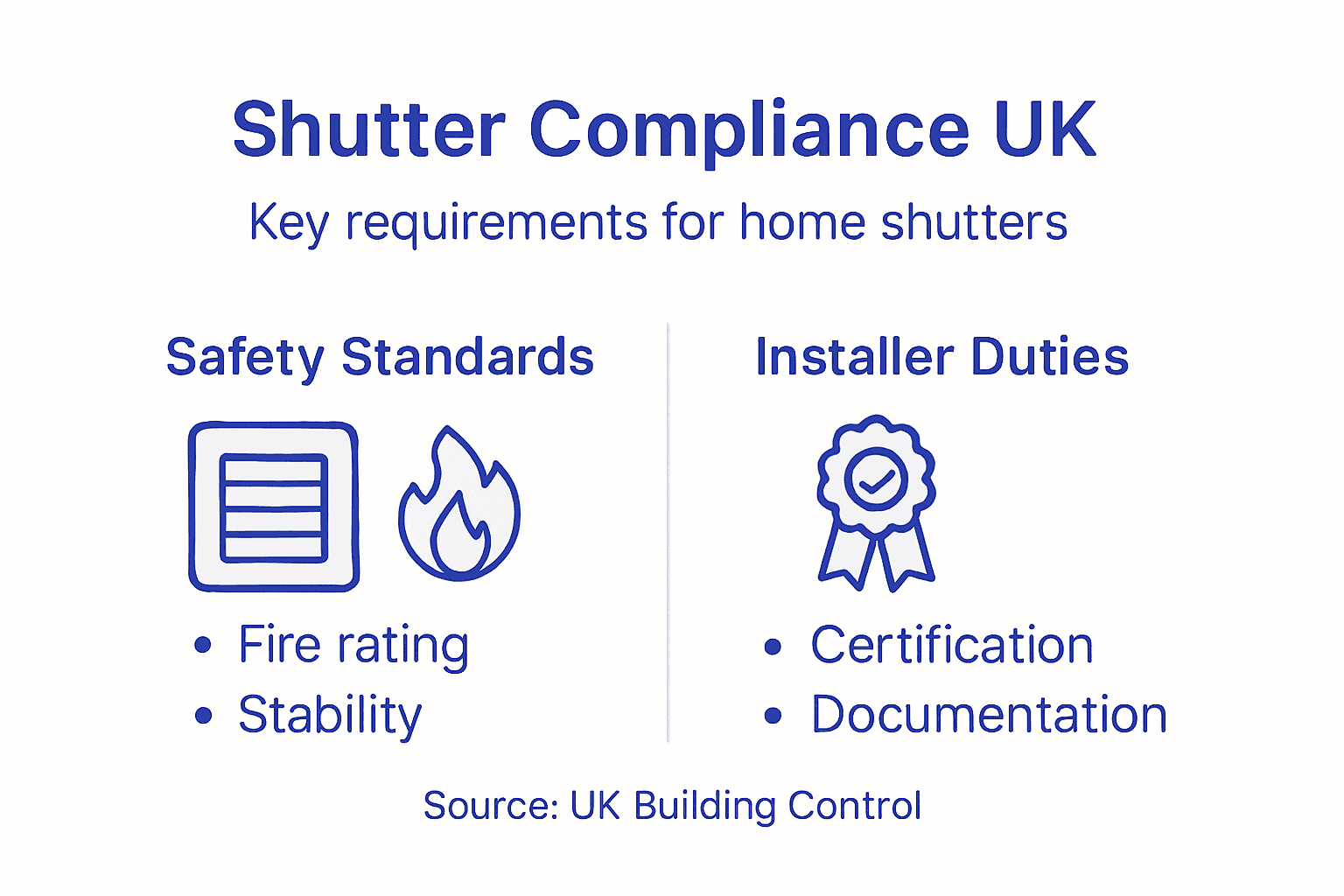
Pro tip: Request a comprehensive compliance documentation from your shutter installer, detailing how the specific installation meets each relevant building regulation section.
Fire Safety, Insulation, and Ventilation Rules
Window shutter regulations in the United Kingdom encompass critical safety, insulation, and ventilation requirements that protect homeowners and ensure optimal building performance. These comprehensive standards go beyond aesthetic considerations, addressing fundamental aspects of structural integrity and occupant protection.
Fire safety and building regulations impose stringent guidelines across multiple critical domains. The regulatory framework covers three primary areas of concern:
- Fire safety standards (Part B)
- Energy conservation requirements (Part L)
- Ventilation specifications (Part F)
Fire safety regulations are particularly rigorous, mandating specific design features that minimise fire risks and facilitate safe evacuation. Shutters must incorporate fire-resistant materials, maintain minimum openable areas for emergency escape, and align with European safety standards such as BS EN 13501. This ensures that window treatments do not compromise the building’s overall fire protection infrastructure.
Insulation and ventilation requirements are equally comprehensive. Building regulations specify precise U-value limits to reduce heat loss, promoting energy efficiency and reducing carbon emissions. Ventilation standards require strategic design elements like trickle vents or mechanical systems that ensure adequate air exchange while maintaining thermal performance. Homeowners must work with professionals who understand these intricate technical specifications to guarantee full compliance with UK building regulations.
Pro tip: Request a detailed thermal performance and fire safety compliance certificate from your shutter installer, confirming adherence to current UK building regulation standards.
Certifications, Installer Obligations, and Risks
Window shutter installations in the United Kingdom involve complex legal and professional obligations that extend far beyond simple product placement. Professionals in this field must navigate a sophisticated landscape of regulatory requirements, safety standards, and potential liability risks that demand meticulous attention to detail.
Installer certification requirements are comprehensive and strictly enforced. Registered installers must demonstrate expertise through recognised schemes such as FENSA, which validate their ability to meet critical building regulation standards. These certifications cover multiple dimensions of professional competence, including:
- Energy efficiency compliance
- Safety performance standards
- Ventilation regulation adherence
- Technical installation protocols
- Ongoing professional development
The legal implications of non-compliance are significant and potentially devastating for both installers and homeowners. Failure to use certified professionals can result in substantial financial penalties, enforcement notices, and potentially invalidated home insurance policies. Regulatory bodies take a rigorous approach to ensuring that window treatments meet precise technical and safety specifications.
Professional obligations extend beyond initial installation, requiring continuous maintenance, risk assessment, and documentation. Installers must provide comprehensive operational training, maintain detailed service records, and ensure that all equipment meets current safety legislation. This includes adhering to regulations such as the Provision and Use of Work Equipment Regulations (PUWER) and the Health and Safety at Work Act.
Pro tip: Always request and verify an installer’s current professional certification and request a detailed compliance documentation before proceeding with any window shutter installation.
The following table contrasts individual and scheme-based installer certification for window shutters in the UK:
| Certification Route | Process Overview | Advantages | Typical Risks |
|---|---|---|---|
| Competent Person Scheme | Registered installer handles all paperwork | Faster approval, trusted expertise | Missed standards if uncertified |
| Local Authority Approval | Direct application and checks | Full regulatory oversight | Longer approval times |
Ensure Your Window Shutters Meet UK Safety and Compliance Standards with Shutter World
Navigating the complex window shutter regulations in the United Kingdom can feel overwhelming. Between strict safety requirements and detailed building regulations, ensuring your shutters are installed correctly and legally is critical. Shutter World understands these challenges and specialises in bespoke interior shutters that not only meet but exceed these standards. Whether you need precision-fit solutions for unusual window shapes or certified installations that guarantee compliance with fire safety, thermal performance, and ventilation rules, our expert team is here to help.
Discover the peace of mind that comes with professional surveys, expert installation, and full compliance documentation at Shutter World. Explore our range of West Yorkshire Shutters Archives | Shutter World to see how we expertly handle complex projects. If you want to learn more about our process or have questions on British regulations for window shutters, visit our FAQ page. Don’t risk costly mistakes or safety hazards. Contact Shutter World today to secure beautiful, safe, and compliant window shutters tailored to your home.
Frequently Asked Questions
What are the key regulations for installing window shutters?
Window shutters must comply with UK building regulations, which cover safety, thermal performance, glazing standards, and ventilation requirements. Installers must ensure that the shutters are properly installed, regularly maintained, and constructed using approved materials.
How can I ensure that my window shutters meet safety standards?
To ensure compliance with safety standards, homeowners should work with qualified professionals, request certification documentation, and ensure that regular inspections and maintenance are conducted. Installers should be registered under competent person schemes or obtain local building control approval.
What are the potential consequences of non-compliance with window shutter regulations?
Non-compliance can lead to significant legal consequences, including fines, invalidated insurance policies, and legal prosecution under safety legislation. It is vital to follow regulations to avoid potential liabilities.
What types of certifications should I look for in a window shutter installer?
Look for installers with certifications from recognised schemes like FENSA, which validate their ability to meet building regulation standards, including energy efficiency, safety performance, and ventilation regulation adherence.