
Wood grain vs smooth shutters: which finish suits your home?

Wood grain vs smooth shutters
TL;DR:
- Wood grain shutters add natural warmth and character, ideal for dry rooms and traditional interiors. Smooth shutters provide a uniform, modern look and are more resistant to moisture and easier to customize with paint. Choosing the right finish depends on room environment, aesthetic preference, and long-term durability needs.
Wood grain shutters display the natural texture and warmth of real timber, while smooth shutters offer a clean, uniform finish achieved through painted or lacquered surfaces. The choice between the two shapes not only how a room feels but also how your shutters perform over years of daily use. Shutterworld, with over 25 years of bespoke shutter expertise, works with both finishes across the full range of UK home styles. Understanding wood grain vs smooth shutters from the outset saves you from costly regrets and helps you choose a finish that works as hard as it looks.
What are the aesthetic differences between wood grain and smooth shutters?
Wood grain shutters deliver a depth of character that a painted surface simply cannot replicate. Real hardwood shutters provide subtle grain and natural warmth, integrating particularly well with upscale interiors and traditional décor schemes. That warmth comes from the way light catches the grain at different times of day, creating a living quality that shifts with the seasons.
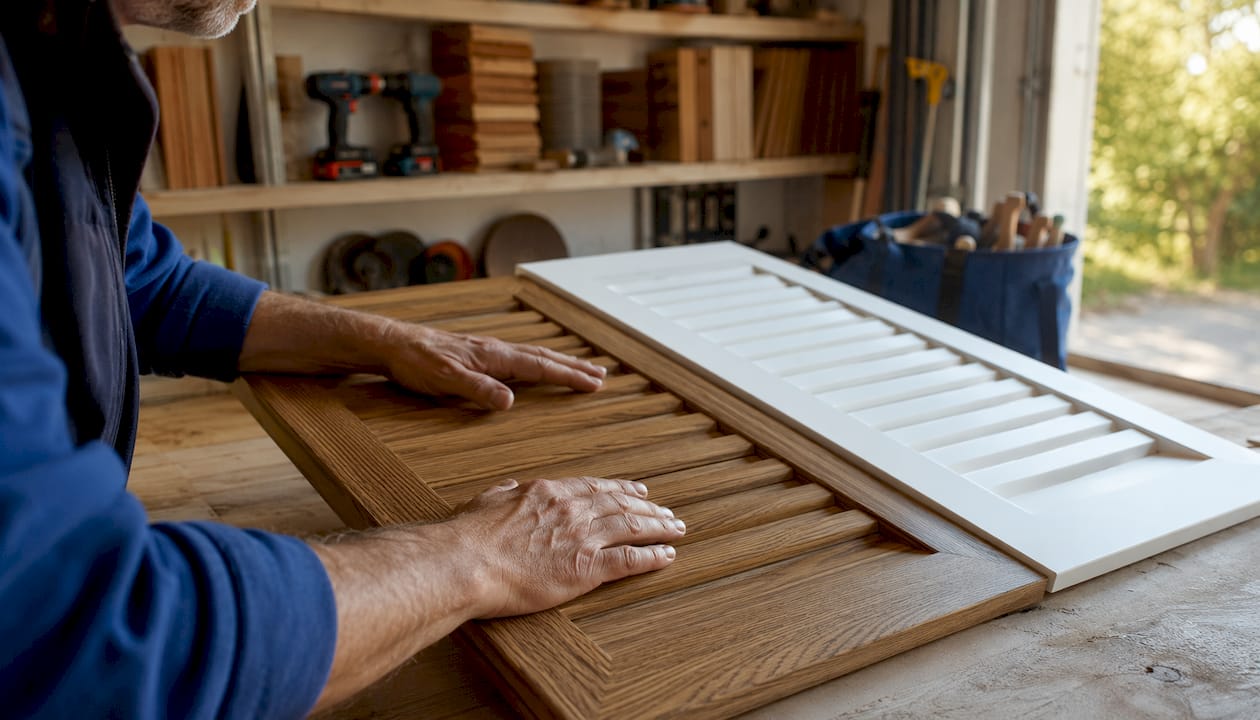
Smooth shutters, by contrast, offer a crisp, uniform appearance that suits modern and minimalist interiors. Their appeal lies in consistency: no grain variation, no tonal shift between panels, just a clean face that reads as architectural detail rather than natural material. This makes them the preferred choice for contemporary new builds and renovated Victorian terraces where painted woodwork is the dominant finish.
Finish sheen plays a significant role in how smooth shutters read in a room. Satin finishes provide a subtle sheen appreciated in both traditional and contemporary interiors, sitting between the flatness of matte and the reflectivity of gloss. A gloss finish amplifies light and suits bathrooms or kitchens where brightness is a priority, while matte works beautifully in bedrooms and studies where a softer atmosphere is the goal.
Colour matching is where smooth shutters hold a clear practical advantage. Because the surface is uniform, they can be painted to match skirting boards, door frames, and architraves with precision. Wood grain shutters, on the other hand, accept stains rather than paints, meaning the final colour depends on the underlying timber tone. Timber stains range from pale oak to rich mahogany, and the chosen finish should complement flooring and wall undertones for genuine design harmony.
- Wood grain shutters excel in: living rooms with timber flooring, studies with traditional furniture, conservatories with natural light, and formal dining rooms
- Smooth shutters excel in: open-plan kitchen-diners, contemporary bedrooms, hallways with painted woodwork, and rooms where a bespoke colour match is required
Pro Tip: Hold a stain sample against your existing timber floor in natural daylight before committing. Artificial lighting shifts undertones significantly, and what looks warm in a showroom can read orange or grey at home.
How do wood grain and smooth shutters differ in durability and maintenance?
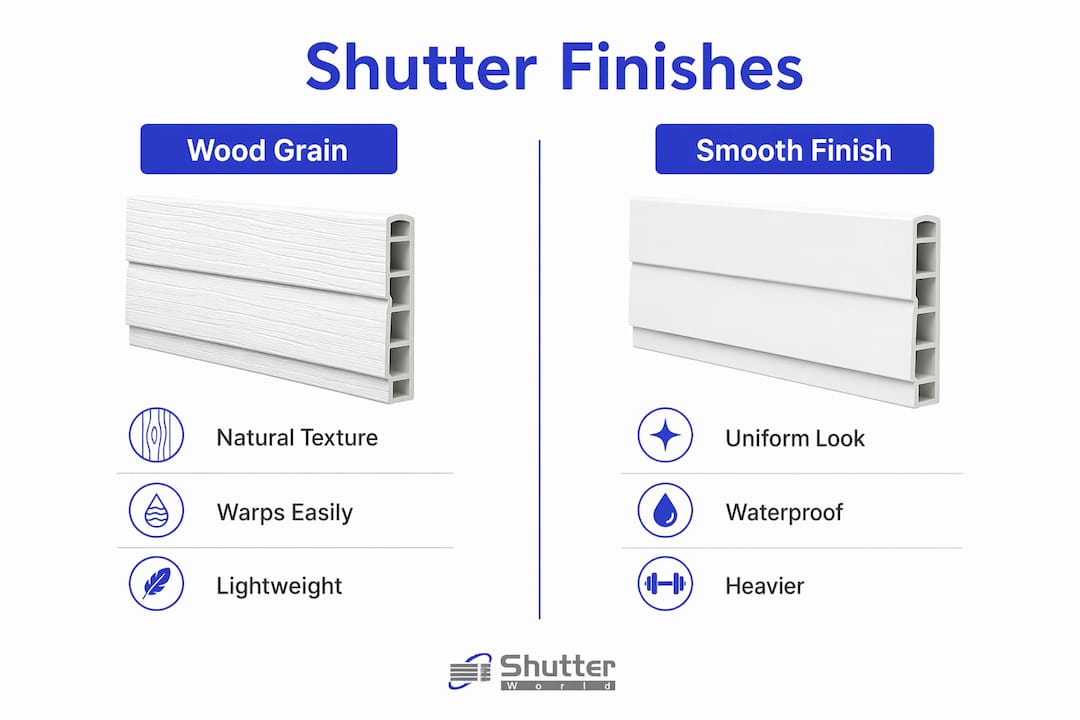
The most important practical difference between textured and smooth finish shutters is their response to moisture. Wood shutters are not recommended for bathrooms or kitchens where sustained humidity causes louver binding, finish cracking, and warping. This is not a minor caveat. In a room where steam is generated daily, real timber expands and contracts with every humidity cycle, and the cumulative effect degrades both the finish and the structural integrity of the louvers.
Smooth finish polymer and composite shutters address this directly. Composite shutters are fully waterproof, maintaining their integrity in high-humidity rooms where natural timber fails. Many polymer shutters also incorporate aluminium reinforcements, which prevent the panels from bowing under their own weight over time. That structural stability matters particularly in wider window openings where unsupported panels are prone to sagging.
Weight is a factor that homeowners rarely consider until installation day. Real wood’s lighter weight improves shutter operation over wide windows, reducing hinge strain and making the panels easier to open and close over years of use. Composite shutters, while durable, can be heavier, which places greater demand on the frame and hinges. For very large windows, this is worth discussing with a specialist before you order.
| Factor | Wood grain shutters | Smooth finish shutters |
|---|---|---|
| Moisture resistance | Low. Warps and cracks in humid rooms | High. Fully waterproof options available |
| Weight | Lighter, suits large windows | Can be heavier, check hinge capacity |
| Finish longevity | May need refinishing over time | Painted finish holds well with basic care |
| Cleaning | Dust and wipe; avoid excess moisture | Dust and wipe; moisture-tolerant |
| Structural reinforcement | Natural timber integrity | Often aluminium-reinforced |
Routine dusting and occasional wiping suffice for both shutter types in low-humidity rooms. The difference emerges in high-use or moist environments, where smooth finish shutters require far less vigilance. For wood grain shutters in dry rooms, an annual application of a suitable timber conditioner preserves the finish and prevents the surface from drying out and cracking.
Pro Tip: For wood grain shutters in living rooms, use a microfibre cloth rather than a feather duster. Microfibre lifts dust from the grain rather than redistributing it, keeping the texture looking crisp between deeper cleans.
Which rooms suit wood grain versus smooth shutters?
Room function is the single most reliable guide to shutter material selection. Wood grain shutters belong in dry rooms where their natural character can be appreciated without the risk of moisture damage. Smooth finish shutters, particularly polymer and composite options, are built for rooms where humidity is a daily reality.
The best shutters for bathroom windows are always moisture-resistant. Real timber in a bathroom is a long-term maintenance problem waiting to happen. The same logic applies to kitchens, where cooking steam and splashback moisture create conditions that accelerate timber degradation. Smooth polymer shutters handle both environments without any special treatment.
For living rooms, bedrooms, and formal spaces, wood grain shutters are genuinely the superior choice on aesthetic grounds. The natural depth of the grain adds warmth that painted surfaces cannot match, and in rooms with timber flooring or period furniture, the visual connection between materials creates a cohesion that feels considered rather than coincidental.
Natural light and window size also influence the decision. Large south-facing windows flood a room with light that reveals every surface detail. In these conditions, the grain of a timber shutter becomes a feature. In north-facing rooms with limited light, a smooth white or off-white finish reflects more light back into the space, making the room feel brighter.
- Choose wood grain shutters for: living rooms, bedrooms, dining rooms, studies, conservatories, and rooms with timber flooring or period features
- Choose smooth finish shutters for: bathrooms, en-suites, kitchens, utility rooms, and any room where moisture is a regular presence
- Consider smooth finish for: north-facing rooms where light reflection is a priority, and rooms where an exact colour match to painted woodwork is required
For rooms that sit between these categories, such as a kitchen-diner that opens into a living space, a shutter materials comparison from a specialist will clarify which material performs best across the full environment.
How do cost and customisation options compare?
Understanding the cost and customisation differences between wood grain and smooth shutters helps you plan your project budget with confidence.
- Real hardwood shutters carry a higher base cost. Premium timber species such as basswood require careful sourcing, seasoning, and finishing. That process is reflected in the price, but the result is a shutter with genuine furniture-grade quality and a finish that can be refinished rather than replaced.
- Composite and polymer shutters offer strong value at mid-range price points. Their manufacturing process is more consistent, which reduces material waste and keeps costs more predictable. For larger projects covering multiple rooms, the saving across a full house can be meaningful.
- Wood grain shutters offer extensive stain customisation. Stains penetrate the timber and interact with the natural grain, producing results that vary subtly between panels. This variation is part of the appeal for homeowners who want a finish that feels genuinely handcrafted rather than manufactured.
- Smooth shutters accept a wider range of paint colours. Because the surface is uniform, any RAL or BS colour can be applied with consistent results. This makes smooth shutters the practical choice when matching a specific interior colour scheme is a priority.
- Longevity affects the true cost of ownership. A well-maintained hardwood shutter in a dry room will last decades. A composite shutter in a bathroom will outlast timber in that environment by a considerable margin. Choosing the right material for the right room is the most cost-effective decision you can make. Shutterworld’s bespoke shutter options cover both material types with full customisation at every price point.
Energy efficiency is a secondary but real financial consideration. Bespoke shutters in modern homes contribute to reduced heat loss, and a well-fitted shutter, regardless of finish, adds a layer of thermal insulation that standard blinds or curtains cannot match.
Key takeaways
Wood grain shutters suit dry, character-rich rooms, while smooth finish shutters are the practical and aesthetic choice for moisture-prone spaces and contemporary interiors.
| Point | Details |
|---|---|
| Moisture is the deciding factor | Choose smooth polymer or composite shutters for bathrooms, kitchens, and utility rooms without exception. |
| Wood grain adds warmth and depth | Real hardwood shutters suit living rooms, bedrooms, and period properties where natural character matters. |
| Finish sheen affects room mood | Satin suits most interiors; gloss amplifies light; matte creates a softer, quieter atmosphere. |
| Weight influences long-term performance | Real wood is lighter than many composites, reducing hinge strain on large or wide window panels. |
| Customisation differs by material | Wood grain shutters accept stains; smooth shutters accept any paint colour for precise colour matching. |
What I have learned after years of advising on shutter finishes
The question I hear most often is: “Which is better, wood grain or smooth?” My honest answer is that neither is universally better. The better question is: “Which is right for this specific room?”
The most common regret I encounter is timber shutters installed in a kitchen or bathroom. The homeowner chose them because they looked beautiful in the showroom, and they did. Six months later, the louvers were binding and the finish was lifting at the edges. The shutter itself was not at fault. The material was simply placed in the wrong environment.
The insight that most articles miss is this: smooth shutters are not a compromise. In a contemporary interior with painted woodwork, a smooth white shutter in a satin finish is the more considered choice. It reads as part of the architecture rather than a window covering placed in front of it. Wood grain shutters, when used in the right room, do the same thing from the opposite direction. They bring the warmth of natural material into a space that would otherwise feel cold.
I also think homeowners underestimate the value of getting a physical sample into the room before ordering. Photographs and showroom lighting are both misleading. A stained timber sample held against your actual floor in your actual light will tell you more in thirty seconds than any catalogue.
Shutterworld’s approach, which I respect, is to survey the home before recommending a material. That process exists precisely because the right answer changes room by room, window by window.
— Ken
Shutterworld’s bespoke range: wood grain and smooth finishes made to measure
Shutterworld offers both wood grain and smooth finish shutters across its full range, from the Seattle range in durable MDF with a polypropylene coating to the Montana range in premium hardwood.

Every shutter is made to measure, which means the finish you choose is applied to panels engineered for your exact window dimensions. Whether you are fitting plantation shutters across a period property or specifying smooth composite shutters for a newly renovated bathroom, Shutterworld’s in-home survey service takes the guesswork out of material selection. Book a free consultation and receive a clear, competitive quotation with no surprises.
FAQ
Are wood grain shutters more expensive than smooth shutters?
Real hardwood shutters generally carry a higher price than composite or polymer smooth finish shutters. The cost reflects the quality of the timber, the finishing process, and the longevity of the material in suitable environments.
Can smooth shutters look as good as wood grain in a traditional home?
Smooth shutters work well in traditional homes when finished in a warm white or off-white that complements period paintwork. They lack the natural grain depth of timber but offer a clean, cohesive look that suits many classic interiors.
Which shutters are better for a bathroom?
Composite shutters are fully waterproof and the correct choice for bathrooms. Real wood shutters warp and crack under sustained humidity, making them unsuitable for wet rooms regardless of how they are finished.
Do wood grain shutters require more maintenance than smooth shutters?
Both types need only routine dusting and occasional wiping in dry rooms. Wood grain shutters in dry environments may benefit from an annual timber conditioner, while smooth finish shutters need no additional treatment beyond standard cleaning.
Can I get a custom colour on a wood grain shutter?
Wood grain shutters accept stains rather than paints, so the colour range is defined by timber tones from pale oak through to rich mahogany. For an exact paint colour match, a smooth finish shutter is the more reliable option.