
Custom Shutters vs Ready Made: Choosing for Your Home

British homes with unique window shapes present real challenges for homeowners who want style and a perfect fit. Over 60 percent of properties in West Yorkshire feature nonstandard windows, which makes one-size-fits-all solutions fall short. The right window covering not only upgrades a home’s appearance but also improves comfort and privacy. This guide explains the difference between custom and ready made shutters so you can create a lasting impression and function tailored to your space.
Table of Contents
- Defining Custom Shutters And Ready Made
- Types, Styles, And Material Choices
- Fit, Functionality, And Aesthetic Outcomes
- Cost, Lead Time, And Installation Process
- Long-Term Value And Common Pitfalls
Key Takeaways
| Point | Details |
|---|---|
| Custom Shutters Offer Tailored Solutions | They are meticulously crafted to fit individual windows, providing superior aesthetics and functionality. |
| Ready Made Shutters Are More Affordable But Limited | While they save on initial costs, they often compromise on fit and long-term durability. |
| Material Quality Matters | Selecting the right materials impacts performance; hardwood offers elegance, while engineered options provide moisture resistance. |
| Consider Long-Term Value | Custom shutters may have a higher initial cost but can enhance home value and reduce energy costs over time. |
Defining Custom Shutters and Ready Made
Custom shutters and ready made window coverings represent two distinctly different approaches to enhancing your home’s interior aesthetics and functionality. While both serve the fundamental purpose of light control and privacy, their manufacturing process, design flexibility, and overall quality diverge significantly.
Custom shutters are precision engineered window treatments crafted specifically for individual windows, tailored to match exact measurements and architectural nuances of your home. Bespoke shutters defined require professional measurement, design consultation, and skilled manufacturing to create a seamless, personalised window solution. These shutters are built from premium materials like hardwood or durable engineered composites, ensuring longevity and superior performance.
Ready made shutters, by contrast, are mass-produced window coverings manufactured in standard sizes and limited design configurations. These pre-fabricated options are designed to fit a range of window dimensions but lack the precision and customisation of bespoke solutions. While typically more affordable upfront, ready made shutters often compromise on fit, aesthetic harmony, and long-term durability.
Pro tip: When evaluating window treatments, measure your windows precisely and consider consulting a professional to understand the true value difference between custom and ready made shutters.
Here is a summary comparing custom and ready made shutters across several key criteria:
| Aspect | Custom Shutters | Ready Made Shutters |
|---|---|---|
| Fit | Precisely tailored to each window | Standard sizes may leave gaps |
| Material Quality | Premium hardwoods, composites | Basic materials, less durable |
| Design Flexibility | Fully customisable by panel/style | Limited configurations |
| Installation Process | Professional, seamless finish | Basic, DIY possible |
| Long-Term Durability | High resistance to wear and tear | Prone to warping and fading |
Types, Styles, and Material Choices
Home shutters come in a diverse array of types, styles, and material options that cater to different architectural preferences, functional requirements, and aesthetic sensibilities. Understanding these variations helps homeowners make informed decisions when selecting window treatments that complement their interior design and practical needs.
In terms of types, shutters range from full-height and café-style to tier-on-tier and tracked designs. Modern interior window treatments showcase the versatility of these configurations, allowing homeowners to select options that provide varying degrees of light control and privacy. Full-height shutters offer complete window coverage, while café-style shutters cover only the lower half, creating an elegant, continental aesthetic perfect for street-facing rooms.
Material choices significantly impact a shutter’s performance, durability, and visual appeal. Hardwood shutters represent the pinnacle of traditional craftsmanship, offering rich textures and timeless elegance. Engineered wood and polymer options provide enhanced moisture resistance and stability, making them ideal for kitchens and bathrooms. Each material brings unique characteristics: hardwood delivers warmth and natural beauty, while composite materials offer practicality and consistent performance across different environmental conditions.
Pro tip: Consider your room’s humidity levels, sunlight exposure, and aesthetic requirements when selecting shutter materials to ensure optimal long-term performance and visual harmony.
The following table outlines the main shutter types and their ideal applications:
| Shutter Type | Key Feature | Best Used In |
|---|---|---|
| Full-Height | Complete coverage | Bedrooms, living rooms |
| Café-Style | Covers lower half only | Street-facing kitchens |
| Tier-on-Tier | Independent upper/lower panels | Versatile family spaces |
| Tracked Shutters | Sliding mechanism for wide spans | Patio doors, large windows |
Fit, Functionality, and Aesthetic Outcomes
The performance of window shutters extends far beyond mere decoration, encompassing critical aspects of fit, functionality, and aesthetic integration that can dramatically transform a living space. Custom shutter options represent a precision approach to window treatments, offering homeowners unparalleled control over their interior environment.
Custom shutters distinguish themselves through exceptional fit and tailored design. Unlike ready-made alternatives that often create unsightly gaps or require compromising modifications, bespoke shutters are meticulously measured and crafted to seamlessly integrate with unique window architectures. This precision ensures optimal light control, enhanced insulation, and a clean, sophisticated aesthetic that complements the room’s existing design elements. The ability to select specific panel configurations, louvre sizes, and frame styles allows for a truly personalised window solution that reflects individual taste and architectural character.
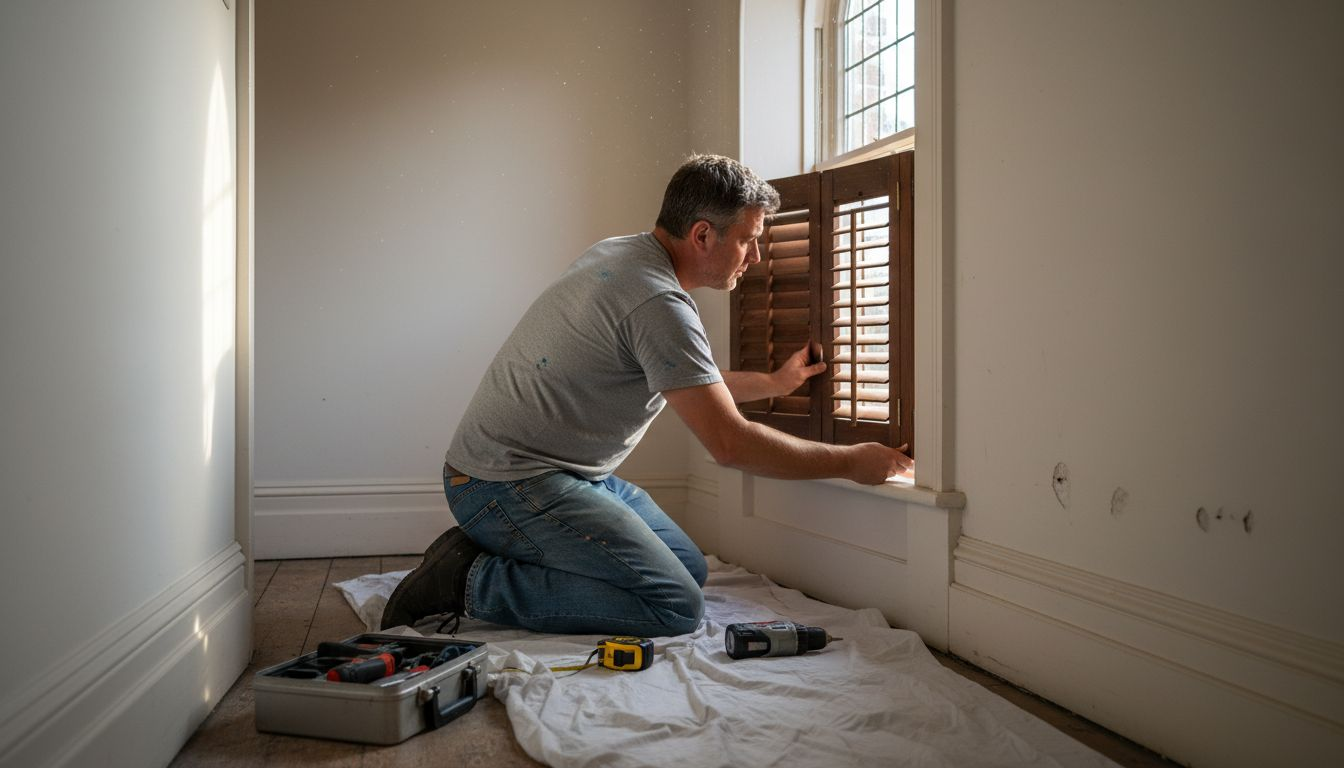
Functionality represents another critical differentiator between custom and ready-made shutters. Bespoke designs can incorporate specialised features such as motorised operation, split-panel configurations for nuanced light management, and materials specifically chosen to withstand particular environmental conditions. These advanced functional capabilities transform shutters from simple window coverings into sophisticated interior design elements that actively contribute to a home’s comfort and efficiency.
Pro tip: Arrange a professional consultation to understand how custom shutters can be precisely tailored to address your specific light control, privacy, and aesthetic requirements.
Cost, Lead Time, and Installation Process
Navigating the financial and logistical aspects of window shutter selection requires a comprehensive understanding of the nuanced differences between custom and ready-made options. Shutter installation costs present a complex landscape of considerations that extend beyond initial price points, encompassing long-term value, material quality, and installation intricacies.
Custom shutters typically command a higher upfront investment, with prices ranging from £180 to £320 per square metre depending on material complexity and design specifications. Hardwood options represent the premium end of the spectrum, while vinyl provides a more budget-friendly alternative. The extended lead time for bespoke shutters averages 11-13 weeks, reflecting the meticulous craftsmanship involved in creating precision-fitted window treatments. This duration allows for detailed consultation, precise measurements, and expert manufacturing that ensures a perfect architectural fit.
The installation process for custom shutters represents a significant differentiator from ready-made alternatives. Professional installers conduct comprehensive on-site surveys, taking precise measurements and assessing unique architectural challenges. Installation fees typically add 25-35% to material costs, but this investment guarantees a seamless integration that ready-made shutters simply cannot match. The process involves careful mounting, alignment, and finishing that transforms window treatments from mere coverings to integral design elements of your living space.
Pro tip: Request detailed quotations that break down material, manufacturing, and installation costs to understand the full financial investment of your custom shutter project.
Long-Term Value and Common Pitfalls
The decision between custom and ready-made shutters extends far beyond initial aesthetics, encompassing critical long-term considerations that significantly impact home value and functionality. Custom versus ready-made shutters reveal a complex landscape of potential investment returns and potential compromises.
Custom shutters generate substantial long-term value through precision engineering and superior material selection. Unlike ready-made alternatives prone to warping and rapid deterioration, bespoke shutters are crafted with materials specifically chosen to resist environmental degradation. The precise architectural fit minimises heat loss, potentially reducing energy expenditure and creating more effective thermal insulation. This meticulous approach translates into enhanced home comfort, reduced utility costs, and a marked improvement in overall property aesthetics that can positively influence resale potential.
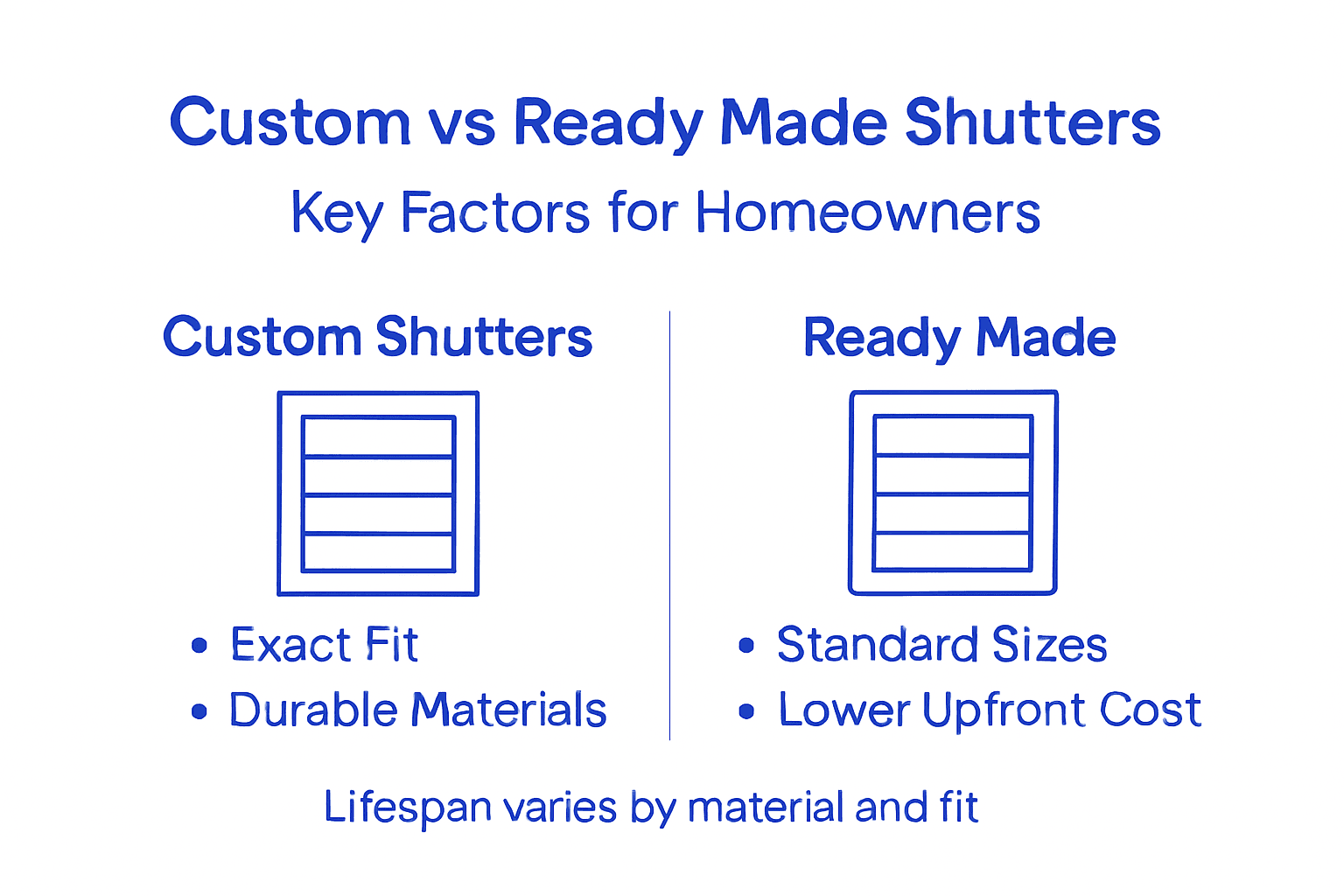
Conversely, ready-made shutters present numerous potential pitfalls that can undermine their initial cost advantages. Common issues include inconsistent sizing, light leakage through improper fits, limited design flexibility, and accelerated material degradation. These shortcomings often result in premature replacement, hidden maintenance costs, and a diminished visual appeal that can detract from a property’s overall presentation. The seemingly economical choice can ultimately prove more expensive when considering the cumulative expenses of repeated replacements and potential aesthetic compromises.
Pro tip: Calculate the total lifecycle cost of your shutters by considering material quality, potential energy savings, and replacement frequency, not just the initial purchase price.
Discover the Perfect Fit: Custom Shutters Tailored Just for You
Choosing between custom shutters and ready made options can be challenging when you want precision fit, durability, and a stylish finish that truly complements your home. This article highlights the pitfalls of ready made shutters like poor fit and limited design choices, and the advantages of bespoke shutters offering superior material quality, bespoke styles, and lasting value. If you seek a window treatment that avoids common issues such as warping or light leakage, and instead enhances light control, privacy, and insulation, customised shutters are your answer.
At Shutter World, based in West Yorkshire, we understand these specific challenges. Our West Yorkshire shutters Archives showcase how expertly made-to-measure shutters can transform spaces with a perfect balance of elegance and practicality.
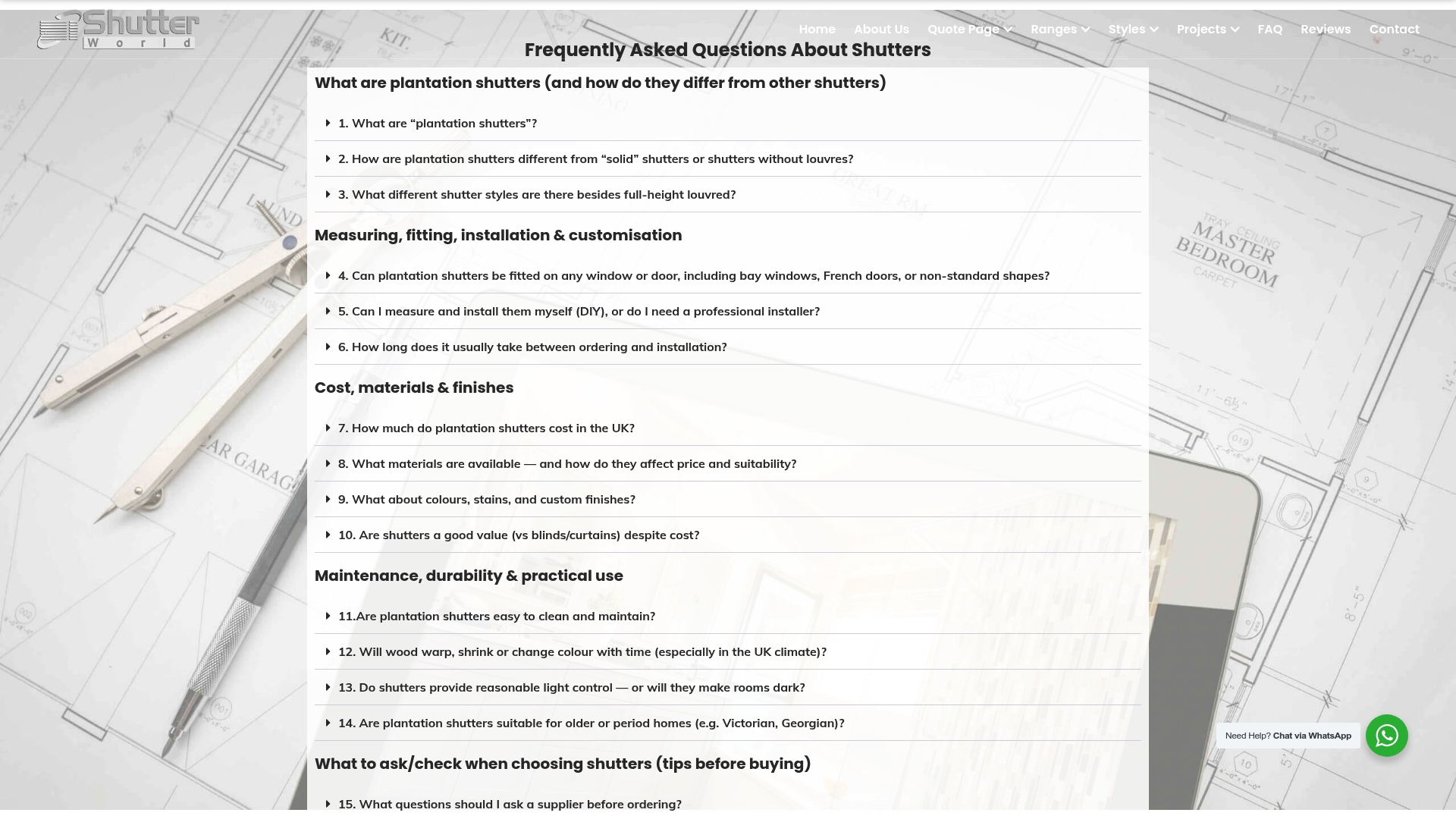
Take the next step to elevate your home with shutters designed precisely for your windows. Benefit from our comprehensive service that covers everything from an accurate survey to expert installation. Explore our bespoke ranges and solutions for complex window shapes, all backed by over 25 years of craftsmanship. To find answers to common queries and understand why custom shutters offer outstanding long-term value, visit our FAQ page and see how Shutter World can deliver the perfect shutters made just for your home.
Frequently Asked Questions
What are the main differences between custom shutters and ready made shutters?
Custom shutters are tailored specifically to each window and offer a precise fit, premium materials, and extensive design flexibility. Ready made shutters are mass-produced in standard sizes with limited design options, which may result in less optimal fit and aesthetic integration.
How do I choose the right shutter type for my home?
Consider factors such as the desired level of light control, privacy, and aesthetics. Full-height, café-style, tier-on-tier, and tracked shutters all offer different functionalities and styles, allowing you to select the perfect fit for your room’s purpose and design.
What materials are available for window shutters, and how do they affect performance?
Shutters are commonly made from hardwood, engineered wood, and polymer. Hardwood provides a warm, timeless look but may be less moisture-resistant, while engineered and polymer materials offer durability and moisture resistance, making them suitable for areas like kitchens and bathrooms.
How does the installation process differ between custom and ready made shutters?
Custom shutters require professional installation to ensure precise measurements and a seamless fit. This process involves careful mounting and alignment, typically adding 25-35% to material costs. In contrast, ready made shutters often allow for basic DIY installation but may not achieve the same level of integration or aesthetic quality.
Recommended
- Perfect shutters for perfect homes | Shutter World
- Shutters vs Curtains: Choosing the Best Window Style for 2025 | Shutter World
- Enhance Your Space: Choosing Interior Shutters for 2025
- Bespoke Internal Window Shutters: Tailored to Your Needs | Shutter World
- Master Weatherizing Your Louisville Home for Ultimate Comfort – HVAC Service and Repair | Louisville, KY | Project Heating & Cooling